A peony farm in full flower is one of the quietest spectacles in luxury travel. There is no queue, no ticketed viewpoint, no crowd pressing forward for the same photograph. The air smells faintly of rose and green leaves, the petals are so layered they look folded rather than grown, and the farm itself works at the slow pace of a place that has done this for generations.
Peonies reward a traveller who plans around the flower, not around a calendar date. Tree peonies open first, in mid-spring, with woody stems and enormous, tissue-thin blooms. Herbaceous peonies follow a few weeks later, lower to the ground and far more numerous, and it is their cutting season that fills the export trade.
Below are nine peony farm retreats worth considering in 2027, from the ancient peony city of Luoyang to the long summer evenings of Alaska, where the season runs weeks later than anywhere else. Each one is described by what it does well, what to watch for, and who it suits best, so you can choose a farm by the flower you want to see, not just by the country it happens to be in.
Key takeaways
- Peony season is short, usually two to three weeks per region, and tree peonies bloom weeks before herbaceous peonies on the same farm.
- The best retreats are working farms, not gardens, and the most interesting hours are dawn cutting, grading, and the evening walk through the rows.
- Alaska and Hokkaido bloom latest, Luoyang and the Loire earliest, so the season can be followed north for almost three months.
- Peony farms are muddy, uneven, and often far from towns, so sturdy shoes and a flexible schedule matter more than smart clothes.
- No farm can guarantee a exact bloom date, and a cold snap or a heatwave can shift the peak by a week in either direction.
What a peony farm retreat actually is
A peony farm retreat is a stay built around a working flower farm during bloom season. The farm grows peonies for cut flowers, for roots, or for both, and the retreat is usually a farmhouse, a converted barn, or a small cluster of guest rooms on the land itself. Days start early, because peonies are cut before the sun is high, and they end early too, because the work is physical and the light goes quickly.
What separates a real peony farm retreat from a hotel near a flower show is access to the work. On a good farm you will walk the rows with the grower, learn to tell a bud that will open tomorrow from one that needs three more days, and see how a stem is cut at an angle, stripped, and stood in cold water within minutes. Some farms let guests join the grading table, where stems are sorted by length, bud size, and straightness. Others keep the harvest to staff and offer the slower pleasures instead: petal tea in the farm kitchen, a walk through the oldest beds, and an evening among the flowers when the light turns gold.
Peonies themselves are worth the trip. Tree peonies, which grow on woody stems and can live for decades, produce the largest flowers. Herbaceous peonies die back to the ground each winter and return in spring, and it is their stems that fill the cut-flower trade. Knowing which kind a farm grows tells you what the visit will feel like, and when to go.
How we chose these retreats and what to look for
Look first at the bloom calendar. A farm that grows both tree and herbaceous peonies gives you a longer window, sometimes five weeks instead of two, and a farm that states its usual peak week honestly is more useful than one that promises flowers all season.
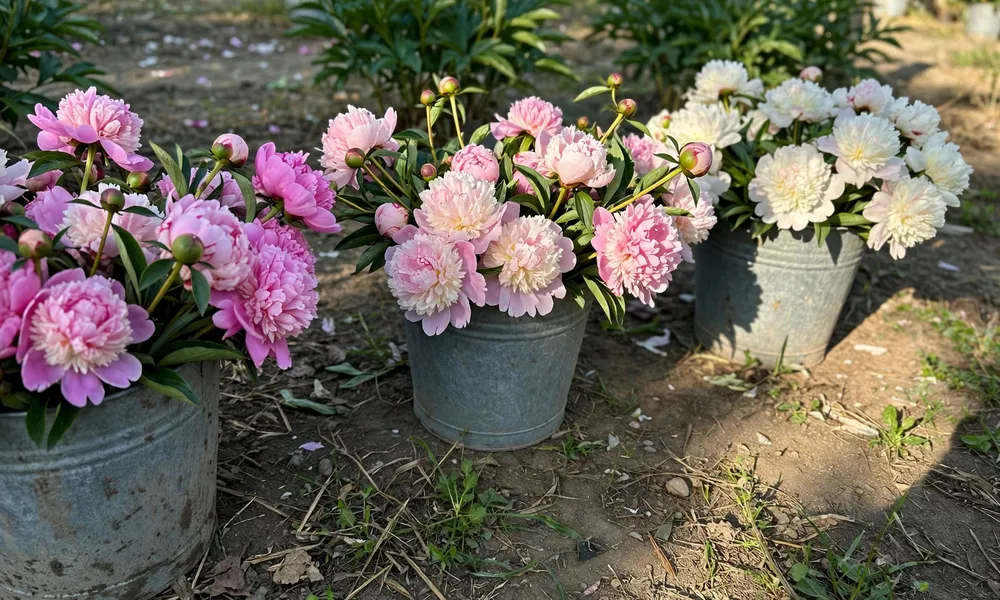
Look next at how the farm treats its guests. The best retreats keep groups small, usually under a dozen people, and put a grower or a family member in charge of the field walks, not a hired guide reading from a script. A farm that offers a cutting session, a grading demonstration, or a meal made from the farm kitchen is offering the real work, and that is what makes the stay memorable.
Finally, look at the practical details. Peony farms are rural, the ground is uneven and often muddy, and the nearest town can be an hour away. Our guide to luxury lotus farm retreats covers the same kind of working-farm stay, and the same rule applies here: the farm comes first, the room second.
The 9 best luxury peony farm retreats of 2027
Peony Fields of Luoyang, China
What we like: The oldest peony culture in the world, with tree peonies grown here for more than a thousand years, enormous blooms, and a spring festival that turns the whole city into a flower market.
What to consider: The festival weeks are busy, the best farms sit outside the city, and the tree peony peak can pass in ten days. Best for: Travellers who want peony history as well as flowers. Material: Courtyard farmhouse rooms beside the oldest beds. Price range: Around $180 to $420 a night, approximate. Standout feature: Century-old tree peonies with blooms wider than a dinner plate.
Peony Farms of Heze, Shandong, China
What we like: The largest peony-growing region in China, with thousands of acres, a deep cutting trade, and farms that welcome visitors to the grading sheds where export stems are prepared.
What to consider: Heze is a working agricultural region, not a resort town, and English is limited outside the main farms. Best for: Travellers who want to see the peony trade at full scale. Material: Simple guest rooms in working farm compounds. Price range: Around $90 to $240 a night, approximate. Standout feature: The grading sheds, where thousands of stems are sorted by hand each morning.
Peony Fields of the Loire Valley, France
What we like: Herbaceous peonies grown alongside vineyards and chateaux, long May evenings, and farms that pair the bloom season with garden lunches and local wine.
What to consider: The season is short, usually late May, and the best farms book out a year ahead. Best for: Travellers who want flowers with food, wine, and a gentle pace. Material: Stone farmhouses and converted barns among the vines. Price range: Around $220 to $520 a night, approximate. Standout feature: Garden lunches served between the peony rows at long wooden tables.
Peony Farms of the Cotswolds, England
What we like: Classic English garden peonies in walled farm gardens, cream teas, and a June bloom that coincides with the best walking weather of the year.
What to consider: English weather is unreliable, the farms are small, and the bloom can be cut short by a wet week. Best for: Travellers who want a quiet, garden-led stay. Material: Honey-coloured stone cottages with walled gardens. Price range: Around $200 to $480 a night, approximate. Standout feature: Walled gardens where peonies have grown for generations.
Peony Fields of Lisse, Netherlands
What we like: Peonies grown in the same bulb country as tulips, with flat, open fields, bicycle paths between the rows, and a bloom that follows the tulip season by a few weeks.
What to consider: The fields are vast and open, so wind and rain are felt fully, and the farms are working businesses with limited guest rooms. Best for: Travellers who want to cycle between flower fields. Material: Brick farmhouses with glasshouses beside the fields. Price range: Around $160 to $380 a night, approximate. Standout feature: Bicycle routes that run straight through the peony fields.
Peony Farms of Hokkaido, Japan
What we like: Late-blooming peonies in cool northern air, tree peonies grown in the Japanese style, and a season that runs into early summer when the rest of Japan has finished.
What to consider: Hokkaido is far from Tokyo, the season is short, and the farms are small family businesses. Best for: Travellers who want the Japanese garden tradition in a cooler climate. Material: Timber farmhouses with soaking baths and garden views. Price range: Around $190 to $460 a night, approximate. Standout feature: Tree peonies trained in the Japanese style, with single stems staked like sculpture.
Peony Fields of Alaska, United States
What we like: The latest peony season anywhere, with blooms into July, enormous stems grown in the long northern daylight, and farms that ship to florists around the world.
What to consider: Alaska is remote and expensive to reach, the weather is changeable, and the season depends on a late spring. Best for: Travellers chasing the very end of the peony season. Material: Timber lodges with views over the fields and the mountains. Price range: Around $240 to $580 a night, approximate. Standout feature: Peonies blooming under twenty hours of daylight, with stems taller than anywhere else.
Peony Farms of the Adelaide Hills, Australia
What we like: Southern hemisphere peonies blooming in October and November, cool-climate farms among vineyards, and a season that runs opposite to the northern hemisphere.
What to consider: The season is in spring, not summer, so it suits travellers who can travel in October, and the farms are small. Best for: Travellers who want peonies when the north is out of season. Material: Weatherboard farmhouses among the vines. Price range: Around $170 to $420 a night, approximate. Standout feature: A peony season that runs while the northern hemisphere is heading into winter.
Peony Fields of Canterbury, New Zealand
What we like: Export-grade peonies grown on the Canterbury Plains, with crisp southern light, farm stays that include cutting sessions, and a November bloom.
What to consider: New Zealand is a long journey for most travellers, and the farms are working export businesses first. Best for: Travellers who want export-grade flowers and wide-open landscapes. Material: Modern farm lodges with verandas facing the fields. Price range: Around $180 to $440 a night, approximate. Standout feature: Cutting sessions where guests learn export grading from the growers themselves.
Which peony region suits you best
Choose Luoyang or Heze if you want history and scale, and if you are comfortable travelling in China in spring. These are the oldest and largest peony regions, and they suit travellers who care about the flower itself more than the comfort of the room.
Choose Lisse if you want to cycle between fields, Hokkaido if you want the Japanese garden tradition, and Alaska if you want the very latest blooms of the year. The Adelaide Hills and Canterbury suit travellers who can travel in October and November, and who want a second peony season when the north has finished. Our guide to luxury tulip farm retreats follows the same logic.
Wherever you go, book the farm, not the town. A room in the nearest city will not give you the dawn cutting, the grading shed, or the evening walk, and those are the hours that make a peony farm retreat worth the journey.
The caveats that matter
Peony season is short and weather-dependent. A cold spring delays the bloom, a hot week rushes it, and no farm can promise a exact date months ahead. Book a stay that spans a week rather than a weekend if you can, and choose a farm that grows several varieties, so a missed peak for one is not a missed trip.
| Detail | What is known |
|---|---|
| Best time to go | Mid-April to early May in China and France, June in England and the Netherlands, July in Alaska, October and November in Australia and New Zealand |
| How long the bloom lasts | Two to three weeks per region, longer on farms that grow both tree and herbaceous peonies |
| Who should book early | Anyone visiting Luoyang, the Loire, or the Cotswolds, where the best farms book out a year ahead |
| What to wear | Sturdy closed shoes, layers for cool mornings, and clothes you do not mind getting muddy |
| What to avoid | Booking a single night at the very start or end of the stated season, when the bloom is most uncertain |
| Children | Welcome on most farms, but the work is delicate and the rows are narrow, so younger children need close supervision |
| Photography | Allowed on most farms, but tripods and drones are usually restricted in the working rows |
| What a farm cannot promise | A exact bloom date, dry weather, or a full field on the day you arrive |
If you have pollen allergies, check with the farm before you book. Peonies are not the worst offenders, but a field in full flower carries a lot of pollen, and a long walk through the rows can trigger symptoms. A stay on a working farm is also not a hotel stay: meals are often set menus, rooms are simple, and the farm’s schedule, not yours, sets the day.
Checklist: planning a peony farm retreat honestly
Use these checks before you book, and again a month before you travel.
- Check the bloom calendar: ask the farm which varieties it grows and its usual peak week, not just the advertised season.
- Check the farm stay: confirm whether you sleep on the farm or nearby, and whether meals are included.
- Check the access: ask whether guests can join the cutting and grading, or only watch from the paths.
- Check the ground: pack sturdy closed shoes and layers, because farm rows are uneven and often muddy.
- Check the weather plan: ask what happens on a rainy day, and whether the farm offers indoor sessions.
- Check the booking terms: ask about refunds or date changes if the bloom shifts by a week.
Frequently asked questions
When is the best time to visit a peony farm?
It depends on the region. Luoyang and the Loire peak in April and May, the Cotswolds and Lisse in June, Alaska in July, and the Adelaide Hills and Canterbury in October and November.
Can I join the peony harvest?
On many farms, yes, at least for a morning. Cutting is skilled work, so guests usually cut under supervision and in small groups, and some farms limit the harvest to staff.
What is peony tea made from?
Peony tea is usually made from dried peony petals, sometimes blended with green tea, and it is served on many Chinese peony farms.
Is a peony farm retreat suitable for children?
Often yes, and children usually love the scale of the flowers, but the work is delicate and the rows are narrow. Farms that welcome families will say so, and younger children will need close supervision around the cutting tools and the grading tables.
What should I wear on a working peony farm?
Sturdy closed shoes, layers for cool mornings, and clothes you do not mind getting muddy. A hat and sunscreen matter by mid-morning, and a light waterproof jacket is worth packing, because farm rows are exposed and the weather can turn quickly.
Can I visit a peony farm as a day trip?
Yes, many farms offer day visits, but you will miss the dawn cutting and the evening walk, which are the best hours. A farm stay is the better choice if you want the full experience, and a day trip suits travellers who are passing through a region rather than planning around the bloom. Our guide to luxury ramie farm retreats makes the same point, because working farms reward the guest who stays, not the guest who passes through.
The bottom line
The best luxury peony farm retreat in 2027 is not the grandest room or the most famous region. It is the farm that grows the peonies you want to see, that lets you into the work, and that is honest about its bloom calendar. Luoyang for history, Alaska for the latest season, the Loire for a gentle stay, Canterbury for hands-on cutting: each one earns its place for a different reason, and the right choice is the one that matches your dates and your appetite for farm life.
Book early, pack for mud, and plan around the flower, not around a holiday date. A peony field in full bloom lasts two or three weeks a year, and the farms on this list are the places to see it properly, at dawn, in the rows, with the grower beside you.