A rose farm retreat is a different kind of luxury trip. There is no spa menu to work through, no beach to lie on, and no city to tick off. You wake before dawn, walk rows of roses while the petals are still cool, and watch the harvest happen in front of you.
The problem is that rose country is not one place. The great rose valleys are spread across Bulgaria, France, Turkey, Saudi Arabia, Iran, Lebanon, Morocco, India and Australia, and each one grows a different rose, harvests it at a different time, and makes something different from it. Bulgaria distils damask roses into oil. Taif grows roses for rose water. Grasse grows centifolia roses for perfume houses.
Below are nine rose farm retreats worth considering in 2027, from the famous Rose Valley of Bulgaria to the smaller rose farms of the Yarra Valley in Australia. Each one is described by what it is good at, what to watch for, and who it suits best, and together the nine cover the great rose traditions and the smaller valleys worth the trip.
Key takeaways
- Rose farm retreats are built around the harvest, which lasts only a few weeks a year, so the date matters more than the destination.
- Damask roses are grown for oil and rose water, centifolia roses for perfume, and rugosa roses for hips and tea, and each valley specialises in one of them.
- The best visits start at dawn, when pickers gather petals before the sun takes the oil, so plan for early mornings, not late ones.
- Book the farm stay first and the flights second, because the good farmhouses in the small valleys have very few rooms.
- No rose farm guarantees a bloom, and a cold spring or a hot week can move the harvest by days, so keep one flexible day in the plan.
What a rose farm retreat actually is
A rose farm retreat is a stay on or beside a working rose farm, built around the short harvest season. The farm grows roses as a crop, not as decoration. Guests sleep in a farmhouse, a converted barn, or a small guesthouse in the valley, and the days are organised around the work: dawn picking, distillation, grading, and the farm kitchen. It is closer to a working farm stay than to a hotel with a rose garden.
What makes it luxurious is not the thread count. It is the access. On a good retreat you stand beside the still while the first rose water runs, you pick a basket of petals with the same pickers who do it every morning, and you eat food cooked from the valley. The scent is the constant. Roses in a field do not smell like roses in a vase. In the open air, at dawn, the scent is cooler and greener, and by midday it turns heavy and sweet.
The season is short everywhere. Most rose valleys harvest for three to five weeks, usually in late spring or early summer, and the exact dates move with the weather. That is why these retreats are planned around a window, not a date.
How we chose these rose farm retreats
We looked first at whether the farm actually grows and processes roses, rather than simply sitting near a rose garden. A real rose farm retreat has a still, a grading table, or a drying room, and guests can watch the work happen.
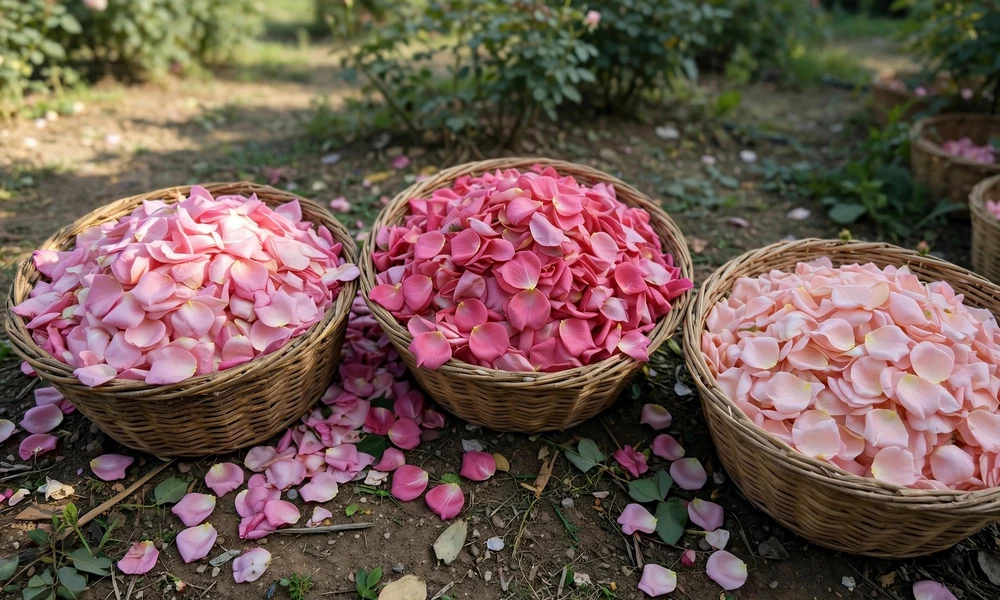
We looked next at the rose itself. Each valley below grows a named rose and makes a named product from it, and the entry says which. That matters because the experience is different. A damask rose valley in Bulgaria is about oil and the dawn picking. A centifolia rose farm near Grasse is about perfume and the grading table. A Taif rose garden is about rose water and the morning market. Knowing the rose tells you what the days will actually hold.
Finally, we looked at how easy the valley is to reach and stay in. The best rose valleys are rural, and the good farmhouses have few rooms. Our guide to peony farm retreats follows the same approach, because flower farm trips share the same rule: the bloom sets the schedule, not the traveller.
The 9 best luxury rose farm retreats of 2027
Rose Valley of Kazanlak, Bulgaria
What we like: The most famous rose valley in the world, with damask roses grown for oil for centuries, a proper harvest festival, and farm stays that put you in the rows at dawn. What to consider: The valley is busy during the Rose Festival, rooms go early, and the harvest can shift by a week with a cold spring. Best For: First-time rose travellers who want the classic damask harvest. Material: Stone farmhouse rooms and timber barns. Price Range: Around $120 to $280 per night, approximate. Standout Feature: The dawn picking, followed by the copper stills running in the village.
Rose Fields of Grasse, France
What we like: Centifolia roses grown for the perfume houses, with a grading table culture and a town that has made scent for three hundred years. What to consider: Grasse is a perfume town first and a farm stay second, so the farm experience is smaller and more structured than in Bulgaria. Best For: Perfume lovers who want to see where centifolia goes after the field. Material: Stone village houses and converted perfumeries. Price Range: Around $180 to $420 per night, approximate. Standout Feature: Watching centifolia roses graded by hand for the perfume houses.
Rose Farms of Isparta, Turkey
What we like: Vast damask rose fields around Lake Egirdir, with family farms that distil on site and a harvest that feels unhurried. What to consider: Isparta is less set up for visitors than Kazanlak, so English is thinner on the ground and the stays are simpler. Best For: Travellers who want the damask harvest without the festival crowds. Material: Whitewashed farmhouses and lakeside guest rooms. Price Range: Around $70 to $180 per night, approximate. Standout Feature: Family stills running in the farmyard, with rose water sold at the gate.
Rose Gardens of Taif, Saudi Arabia
What we like: Taif roses grown for rose water in the mountains above Mecca, with a dawn market and a distillation tradition that goes back centuries. What to consider: The season is short and hot, the stays are simple, and the valley is best visited with a local guide. Best For: Travellers interested in rose water and the mountain rose harvest. Material: Stone mountain houses and shaded garden rooms. Price Range: Around $90 to $220 per night, approximate. Standout Feature: The dawn rose market, where petals are sold by the basket before the stills start.
Rose Valley of Kashan, Iran
What we like: Mohammadi roses grown for rose water in the desert foothills, with a harvest festival and distilleries that open their doors to visitors. What to consider: Travel logistics are more involved, and the season is short, so the trip needs planning well ahead. Best For: Travellers who want the oldest rose water tradition still in daily use. Material: Mud-brick guesthouses and courtyard rooms. Price Range: Around $60 to $150 per night, approximate. Standout Feature: The rose water festival, with stills running in the open air.
Rose Fields of the Bekaa Valley, Lebanon
What we like: Small damask rose farms in a fertile valley between two mountain ranges, with family stays and a harvest that is still mostly done by hand. What to consider: The valley is less visited than the famous rose regions, so farm stays are few and need booking directly. Best For: Travellers who want a quiet, hands-on harvest in a mountain valley. Material: Stone farmhouses and vineyard guest rooms. Price Range: Around $80 to $200 per night, approximate. Standout Feature: Picking damask roses with the same families who have farmed the valley for generations.
Rose Fields of the Atlas Mountains, Morocco
What we like: The Valley of the Roses, where damask roses grow along a river gorge, with kasbah stays and a harvest festival in May. What to consider: The valley is remote, the roads are slow, and the harvest window is short, so the trip needs a full week. Best For: Travellers who want roses combined with mountains, gorges and kasbahs. Material: Mud-brick kasbah rooms and riverside guesthouses. Price Range: Around $70 to $190 per night, approximate. Standout Feature: Rose picking in the gorge at dawn, with the Atlas Mountains behind the fields.
Rose Gardens of Pushkar, India
What we like: Rose gardens around a holy lake, with petals used for temples, weddings and rose water, and guesthouses that sit among the fields. What to consider: The heat is strong, the gardens are small, and the experience is more about the town than the farm. Best For: Travellers who want roses as part of a wider Rajasthan trip. Material: Painted guesthouses and lakeside rooms. Price Range: Around $40 to $130 per night, approximate. Standout Feature: Fresh rose petals sold at dawn in the flower market by the lake.
Rose Farms of the Yarra Valley, Australia
What we like: Small rose farms in a wine valley, with garden stays, rose products made on site, and a harvest that runs into the Australian summer. What to consider: The farms are small and the rose season is shorter than in the northern hemisphere, so the harvest days are few. Best For: Travellers who want a rose farm stay combined with wine country. Material: Timber cottages and vineyard guest rooms. Price Range: Around $140 to $320 per night, approximate. Standout Feature: Rose gardens beside the vines, with farm-made rose water and dried petals.
Which rose region suits your trip
Choose by the rose first, not by the country. If you want damask roses and the classic oil harvest, Bulgaria, Turkey, Lebanon and Morocco all grow the same rose, and the difference is scale and setting. Bulgaria is the biggest and best organised, Turkey is calmer and cheaper, Lebanon is the most hands-on, and Morocco is the most dramatic. If you want centifolia and perfume, Grasse is the only serious choice. If you want rose water, Taif and Kashan are the two great traditions.
Choose by the month next. The northern hemisphere harvest runs from late April in Taif to June in Bulgaria, with Grasse in May and the Atlas Mountains in May. The southern hemisphere is the other way round, with the Yarra Valley harvesting in the Australian summer. A trip that tries to cover two valleys in one go usually fails, because the windows do not line up. Pick one valley and give it the week.
Finally, choose by how much work you want to do. Some travellers want to pick at dawn and spend the day at the still. Others want to walk the rows, visit the market, and sleep well. Both are fine, but say so when you book. Our guide to lotus farm retreats makes the same point, because every farm stay works better when the farm knows what you came for.
The caveats that matter
Rose farm retreats are working farms, and the harvest is weather. A cold spring can delay the bloom by a week. A hot week can shorten it by days. A farm that promises an exact date in January is guessing, and a farm that lets you move your booking when the bloom moves is telling you the truth.
| Detail | What is known |
|---|---|
| Best time to visit | Late April to June in the northern hemisphere; Australian summer in the Yarra Valley |
| How long the harvest lasts | Usually three to five weeks, and the exact dates move with the weather |
| What you will do | Dawn picking, watching distillation, grading, and the farm kitchen |
| Who should book early | Anyone visiting Bulgaria, Grasse or Taif, where farm rooms are few |
| What to pack | Long sleeves and gloves for the thorns, layers for dawn, and closed shoes for the rows |
| What to check before paying | Whether the booking can move if the bloom shifts, and what the deposit covers |
| Who should be careful | People with rose or pollen allergies, and anyone who cannot walk uneven field paths |
| What it does not offer | It is not a spa or a resort; the luxury is the setting, the access and the slowness |
If you have a rose or pollen allergy, take it seriously. A rose field in full bloom is a lot of pollen, and the distillation rooms are full of steam and scent. Antihistamines help some people, but if your allergy is strong, a rose farm in harvest week is the wrong trip. A tulip farm retreat is a gentler alternative for allergy-prone travellers, because tulips shed far less pollen into the air.
Checklist: planning a rose farm retreat honestly
Use these checks before you book, and again before you travel.
- Check the harvest window, not just the month, and ask the farm when it expects the bloom this year.
- Check the moving policy: can you shift the booking if the bloom moves, and what does it cost?
- Check the farm actually distils or grades on site, and ask what guests can watch or join.
- Check the room: farmhouses are simple, so confirm the bed, the bathroom, and the heating or cooling.
- Pack for the work: long sleeves, gloves, closed shoes, and layers for the cold dawn.
- Keep one day free in the plan, so a late bloom or a slow morning does not cost you the harvest.
Frequently asked questions
When do roses actually bloom in the main rose valleys?
Taif starts first, usually in late March or April. Grasse follows in May, and Bulgaria, Turkey and the Atlas Mountains harvest from late May into June. Kashan and the Bekaa Valley fall in May and June as well. The Yarra Valley harvests in the Australian summer, around December and January.
How long does the rose harvest last?
Usually three to five weeks in one valley, but the peak picking lasts about two weeks. If you can only spare a few days, aim for the middle of the window, not the start.
Can children join the dawn picking?
Often yes, on family farms, and children are usually welcome in the rows if they can walk the paths and handle the thorns. The dawn start is the hard part, and younger children may do better with a later morning visit to the grading table instead.
What is the difference between damask and centifolia roses?
Damask roses are the oil roses, grown in Bulgaria, Turkey, Lebanon and Morocco, and distilled into rose oil and rose water. Centifolia roses, also called May roses, are grown around Grasse for perfume, and they are picked for a few weeks in May.
Can I visit a rose farm outside the harvest season?
Yes, and the valleys are still worth visiting, but the experience is different. Outside the harvest there is no picking and no distillation, so the stay becomes a quiet farm visit with gardens, walks and the farm kitchen.
What should I buy at a rose farm?
Rose oil and rose water made on the farm are the best buys, because they are fresh and the farm can tell you exactly when they were distilled. Dried petals and rose jam are good too, and they travel well. Buy on the last morning, after you have seen the still working.
The bottom line
The best luxury rose farm retreat in 2027 is not the most famous valley. It is the one whose rose, harvest window and style of stay match the trip you want. Bulgaria is the classic damask harvest, Grasse is the perfume story, Taif and Kashan are the rose water traditions, and the smaller valleys suit travellers who want the work and the quiet. Pick one valley, book the farm stay first, and let the bloom set the schedule.
Go at dawn, wear long sleeves for the thorns, and keep one day free. The roses will not wait for a fixed itinerary, and the farms that tell you so are the ones worth trusting.