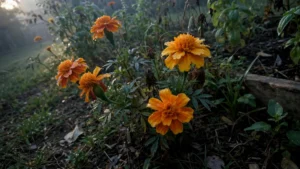
Marigolds are not a quiet flower. They arrive in orange and gold, in fields that stretch to the horizon, grown for a purpose: garlands for Diwali, petals for the Day of the Dead, oil for the lutein trade. A marigold farm retreat puts you in the middle of that working world, not beside it. You stay near the fields, you walk the rows at dawn, and you see the harvest that most travellers only ever meet as a finished garland in a market stall.
The problem is that marigold country is not one place. The flower is grown commercially in Mexico, India, Kenya, Thailand, Egypt and Nepal, and each region grows it for a different reason, at a different time of year, with a different welcome for visitors. A garland farm in Tamil Nadu is not the same kind of stay as a lutein farm in Naivasha.
Below are nine marigold farm retreats worth considering in 2027, from the cempasúchil fields of Mexico to the garland farms of India and the lutein fields of Kenya. Each is described by what it suits best, so you can choose by season and festival, not by a photograph.
Key takeaways
- Marigold farm retreats are working-farm stays, and the best ones are timed to a harvest or a festival, not to a hotel calendar.
- Mexico grows marigolds for the Day of the Dead, India grows them for Diwali and weddings, and Kenya grows them for lutein oil, so the trip is different in each place.
- African marigolds are tall, large-headed and grown for garlands and oil; French marigolds are low, small-headed and grown for gardens and borders.
- Harvest happens at dawn, garlands are strung by hand, and most farms ask visitors to book the working parts of the day in advance.
- Marigold pollen and sap can irritate sensitive skin and trigger allergies in people sensitive to the daisy family.
What a marigold farm retreat actually is
A marigold farm retreat is a stay built around a flower farm, not a hotel with a flower garden attached. The farm grows marigolds as its crop, and the retreat lets visitors into the working day. That usually means a room near the farmhouse, meals from the farm kitchen, and guided time in the fields. You are there to see the rows, the picking and the stringing, and what a flower bought by the bunch actually costs in labour.
What makes marigolds different is how public the crop is. Roses are grown for perfume and cut flowers, often behind walls. Marigolds are grown for festivals, and festivals are public. In India they leave on lorries for temple towns, in Mexico the petals are scattered on ofrendas, and in Kenya the harvest is measured in tonnes, not bouquets. A retreat that is honest about this will show you the weighing, the grading and the lorry, not just the bloom.
Marigolds are a short-cycle crop, ready to pick in eight to ten weeks, and farms sow in waves so the harvest lasts. The great flushes follow the festivals: late October into early November for the Day of the Dead in Mexico, October and November for Diwali in India, and October for Tihar in Nepal. Our guide to luxury rose farm retreats makes the same point about roses, because flower farms are seasonal in a way hotels are not, and the date you choose decides what you actually see.
How we chose these retreats and what to look for
Look first at what the farm grows them for. A garland farm in Karnataka is organised around temple supply, and its best days are the weeks before Diwali, when the fields are picked twice a day and the sheds run late. A lutein farm in Kenya is organised around extraction, and its best days are the harvest weeks. A Day of the Dead farm in Puebla is organised around a single week, and its best days are the days before the festival, when the fields are cut and the markets are at their busiest. The farm’s purpose is the trip.

Look next at how the farm handles visitors. A good farm has a named person who meets you, a clear plan for the morning in the fields, and a place to sit and string garlands without getting in the way of the workers. It will tell you what you can pick and what you cannot, and it will not pretend that a working harvest is a photo shoot. If a farm will not say how many visitors it takes in a day, it is not used to visitors.
Finally, look at the stay itself. The best marigold retreats are simple: a clean room near the fields, food from the farm, and a host who knows the crop. Luxury here is not a spa. It is waking to the smell of fresh flowers, eating breakfast while the picking starts, and having a guide who can tell you why one row is picked and the next is left. Our guide to luxury peony farm retreats uses the same test.
The 9 best luxury marigold farm retreats of 2027
Cempasúchil Fields of Puebla, Mexico
What we like: The most famous marigold country in the world, grown for the Day of the Dead, with fields that turn solid orange in late October and a harvest that feeds the ofrendas of Mexico City. What to consider: The week of the festival is crowded and the fields are working hard, so book the stay and the farm visit well ahead. Best for: Travellers who want the festival itself, not just the flower. Material: Open cempasúchil rows on dark volcanic soil. Price range: Around $120 to $260 a night. Standout feature: Dawn picking in the days before the Day of the Dead.
Day of the Dead Marigold Farms of Michoacán, Mexico
What we like: Smaller, family-run fields around Pátzcuaro and the lake towns, where the marigold harvest is tied to the night vigils in the cemeteries. What to consider: The roads around the lake are busy during the festival, and the best farm visits need a local guide. Best for: Travellers who want the cemetery vigils as well as the fields. Material: Terraced marigold rows on lakeside slopes. Price range: Around $90 to $220 a night. Standout feature: Petal paths laid from the fields to the cemetery gates.
Marigold Garland Farms of Karnataka, India
What we like: The largest garland-growing region in India, with fields that supply the temples and weddings of Bangalore and Mysore, and stringing sheds that run from dawn. What to consider: The harvest peaks before Diwali, and the sheds are hot, busy and not built for sightseeing. Best for: Travellers who want to see the garland trade at full speed. Material: Flat marigold beds on red soil, with open stringing sheds. Price range: Around $60 to $180 a night. Standout feature: Hand-stringing garlands with the farm’s own workers.
Marigold Fields of Tamil Nadu, India
What we like: Temple-town marigolds, grown for the daily offerings at Madurai and the wedding halls of the south, with a long season and warm weather for most of the year. What to consider: The heat is serious for much of the year, and the field work starts very early. Best for: Travellers who want temple culture alongside the farm. Material: Irrigated marigold rows on flat temple-town land. Price range: Around $50 to $160 a night. Standout feature: Morning offerings of fresh garlands at the temple gates.
Marigold Farms of West Bengal, India
What we like: The marigold belt around Kolkata, where the flower markets are among the largest in Asia and the fields are picked for the city’s daily worship and weddings. What to consider: The flower markets are crowded and early, and the best farm visits start before dawn. Best for: Travellers who want the market as well as the field. Material: Low marigold beds on the Hooghly floodplain. Price range: Around $55 to $170 a night. Standout feature: A dawn visit to the wholesale flower market after the picking.
Lutein Marigold Farms of Naivasha, Kenya
What we like: Commercial marigold farming on a different scale, grown for lutein extraction, with wide fields, drying sheds and a harvest measured in tonnes. What to consider: This is an industrial crop, not a garden, and the farm visits are about the process, not the romance. Best for: Travellers who want to understand the crop as a business. Material: Wide marigold blocks on the Rift Valley floor. Price range: Around $110 to $240 a night. Standout feature: The drying sheds, where the flowers are prepared for extraction.
Marigold Fields of Chiang Mai, Thailand
What we like: Cool-season marigold fields in the northern hills, grown for temple offerings and the flower markets of Chiang Mai, with a gentle climate and easy farm visits. What to consider: The season is short, and the best fields are outside the city, so plan the transfer. Best for: Travellers who want an easy, gentle farm visit. Material: Hillside marigold rows in cool-season soil. Price range: Around $70 to $190 a night. Standout feature: Temple offerings made from the morning’s picking.
Marigold Farms of the Nile Delta, Egypt
What we like: Old marigold country on the delta, where the flowers are grown for oil and for the Cairo flower trade, with a long history and a warm, dry climate. What to consider: The farms are working farms, and the visitor infrastructure is thin, so a local guide is essential. Best for: Travellers who want history with their harvest. Material: Delta marigold beds on rich river soil. Price range: Around $80 to $200 a night. Standout feature: Marigold oil, pressed from the same fields that supply the markets.
Marigold Gardens of Kathmandu Valley, Nepal
What we like: Marigolds grown for Tihar, the festival of lights, when the flowers are strung across doorways and offered to brothers and sisters, with the valley’s hills behind the fields. What to consider: Tihar is a short festival, and the best fields are booked quickly, so plan months ahead. Best for: Travellers who want a festival stay in the hills. Material: Terraced marigold beds on valley slopes. Price range: Around $65 to $180 a night. Standout feature: Garlands strung for Tihar, hung across the farmhouse door.
Which marigold retreat suits your trip
If the festival is the reason you are travelling, choose the region that grows for it. Mexico for the Day of the Dead, India for Diwali, Nepal for Tihar. These are the trips where the field and the festival are the same thing, and the farm stay is only half the experience. Book these early, because the farms fill first.
If the crop is the reason you are travelling, choose Kenya or Egypt. These are the trips where the flower is a business, and the interest is in the picking, the drying and the pressing. You will not get a festival, but you will see how a flower becomes an oil, a supplement or a market stall.
If you want a gentle first visit, choose Chiang Mai or Tamil Nadu. The fields are smaller, the climate is kinder, and the farm visits are easy to arrange without a festival deadline. Our guide to luxury sunflower farm retreats makes the same distinction.
The caveats that matter
Marigold farms are working farms. The flowers are picked at dawn, the sheds are hot, and the work is physical. If you have sensitive skin, wear long sleeves and gloves when you handle the flowers, because marigold sap and pollen can irritate skin. These are small precautions, but a rash or a sneezing fit will end your morning in the fields.
| Detail | What is known |
|---|---|
| Best time to go | Late October to early November for Mexico, India and Nepal; the cool season for Thailand |
| What the farm grows for | Garlands and festivals in India, Mexico and Nepal; lutein oil in Kenya; oil and markets in Egypt |
| When the picking happens | At dawn, when the flower heads are cool and heavy |
| Who should take care | People sensitive to the daisy family, and anyone with sensitive skin or asthma |
| What to wear in the fields | Long sleeves, closed shoes, gloves for picking, and a hat for the sun |
| How far ahead to book | Months ahead for festival weeks; a few weeks ahead outside the festivals |
| What to bring home | Seeds and dried petals, not fresh flowers, which wilt on a long journey |
| What a retreat is not | It is not a resort stay; the luxury is the field, the food and the host, not a spa |
Festival weeks are also the weeks when the farms are least able to look after visitors, because the harvest is at full speed. If you go in festival week, expect to fit around the work, not the other way round. That is part of the experience, and the farms that are honest about it are the ones worth booking. A farm that promises a quiet, private morning in the fields during Diwali week is not a working farm.
Checklist: planning a marigold farm retreat honestly
Use these checks before you book, and again before you travel.
- Check the festival or harvest date first, and book the farm around it, not the other way round.
- Check what the farm grows the marigolds for, and whether the working parts of the day are open to visitors.
- Check who meets you, what the morning plan is, and how many visitors the farm takes in a day.
- Check your skin and allergies: wear long sleeves and gloves for picking, and ask about pollen in the sheds.
- Check the transfer from the nearest town, and whether the farm arranges it or you need a local driver.
- Check what you can bring home: seeds and dried petals travel well, fresh flowers do not.
Frequently asked questions
When do marigold fields bloom at their best?
It depends on the region and the reason the flowers are grown. In Mexico, India and Nepal the great flush is late October into early November, timed to the Day of the Dead, Diwali and Tihar. In Thailand the best fields are in the cool season, roughly November to February. In Kenya and Egypt the harvest runs in waves for much of the year, because the crop is grown for oil.
What is the difference between African and French marigolds?
African marigolds are tall, with large, full flower heads, and they are the ones grown for garlands and for lutein oil. French marigolds are low and bushy, with smaller heads, and they are mostly grown for gardens and borders. On a farm visit you will almost always see African marigolds, the commercial crop.
Which marigold region should a first-time visitor choose?
Chiang Mai in Thailand or Tamil Nadu in India are the easiest first visits. The fields are smaller, the farm visits are easy to arrange, and there is no festival deadline to miss. Save Puebla or Karnataka for a second trip, when you want the festival at full speed.
Are marigold farms open to visitors year-round?
Most farms take visitors for much of the year, but the fields are only at their best in season. Outside the harvest weeks the rows may be newly sown or resting. Ask the farm what will be growing when you visit.
How much does a marigold farm stay usually cost?
Most of the retreats in this guide run from around $50 to $260 a night, depending on the region and the season. Festival weeks are the most expensive and the hardest to book. The price usually includes meals and the farm visit, but check whether the transfer is included.
Can I buy fresh garlands directly from the farm?
Yes, and most farms are glad to sell them. Fresh garlands are strung in the farm sheds and sold the same day, usually for a small price. They will not survive a long journey home, so take seeds or dried petals instead.
The bottom line
The best luxury marigold farm retreat in 2027 is not the one with the most orange flowers in the photograph. It is the one whose farm grows the flowers for a reason you care about, when the harvest is actually happening, and whose host will let you into the working day. For most people, that means timing the trip to a festival in Mexico, India or Nepal, and accepting early mornings and busy fields.
Choose one region, book it around the harvest, pack for the fields, and expect to be up at dawn and covered in pollen by breakfast. That is the honest way to see a marigold farm.