A sunflower field in full bloom is one of the few landscapes that makes people slow down without being asked. The flowers stand taller than a person, they all face the same way, and the whole field turns gold for a few short weeks each summer. A stay on a sunflower farm is built around that window: a working farm, a simple room, and fields you can walk through in the morning before the heat arrives.
These retreats are not resorts with a sunflower theme. They are farms that open a handful of rooms, cottages, or converted barns to guests, usually for a short season that follows the bloom. The best of them keep the farm at the centre of the stay: breakfast with food grown nearby, a walk through the fields with the farmer, and evenings that are quiet because there is nothing else to do. That simplicity is the point, and the risk: booked at the wrong time, it is just a farm stay in a plain green field.
Below are nine sunflower farm retreats worth considering in 2027, from a farm stay in the rolling fields of Provence to a field lodge in the Hokkaido countryside. Each one is described by what it does well, what to watch for, and who it suits best.
Key takeaways
- Sunflower bloom is short, usually two to four weeks, and the exact dates move with the weather, so book around the bloom, not a fixed calendar date.
- The best stays are working farms with a handful of rooms, where the fields, the food, and the walks are part of the stay, not an add-on.
- Morning is the best time in the fields, for the light, the cooler air, and the bees, which are active and harmless if you keep your distance.
- Sunflower country is rural country: check the drive, the nearest town, and what is open nearby before you book, especially in the evening.
- No farm can guarantee a field in full bloom on your dates, and a late spring or a hot spell can shift the whole season by a week or more.
What a sunflower farm retreat actually is
A sunflower farm retreat is a stay on a working farm that grows sunflowers as a crop. The flowers are not planted for decoration. They are grown for seed and oil, and the farm opens its doors to guests for the weeks when the fields are at their best. Most farms grow sunflowers on a rotation, so the field you walk this year may be wheat next year.
The stay itself is usually simple: a farmhouse room, a converted barn, or a small cottage, with breakfast made from local produce and a host who knows the land. Some farms add a pool or a terrace, but the honest ones do not pretend to be a resort. The luxury here is space, quiet, and access: a field you can walk at dawn and a host who will tell you which path to take.
What separates a good sunflower farm retreat from a farm stay that happens to have sunflowers is timing and access. A good one tells you the expected bloom dates, warns you when they might shift, and lets you walk the fields rather than photographing them from a fence. A poor one books guests all summer and hopes the flowers cooperate. Before you book, ask when the flowers are expected to peak and whether guests can walk the fields.
How we chose these retreats and what to look for
Look first at the bloom. A sunflower farm that publishes an expected bloom window, and updates it as the season approaches, is a farm that takes the flowers seriously. A farm that promises sunflowers all summer is either growing several fields in succession, which is possible on a large farm, or it is not thinking about the crop at all. Ask which fields will be in bloom on your dates.
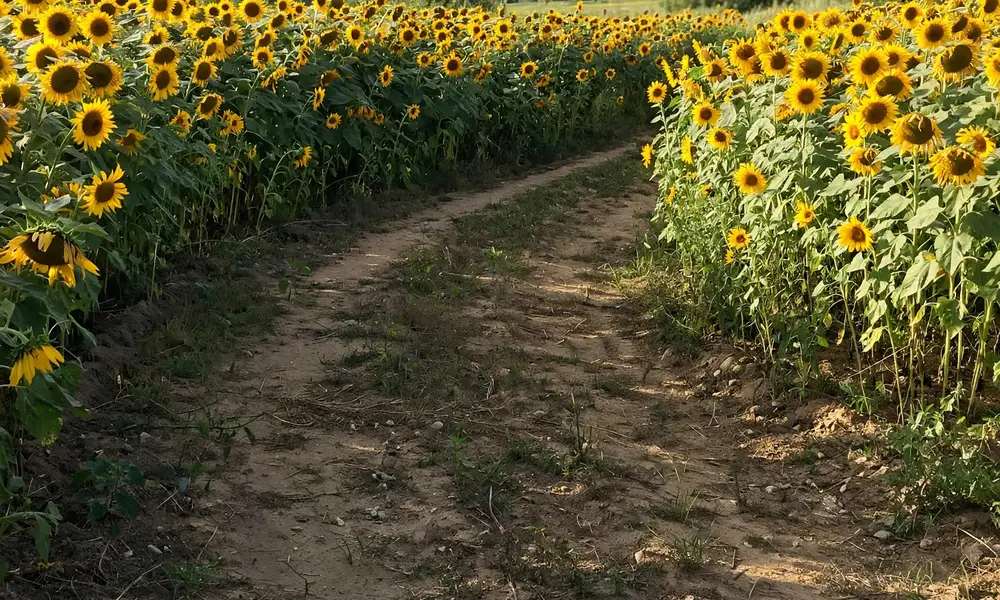
Look next at the stay itself. The best farm retreats keep the rooms few and the food local. A farmhouse with four rooms and a shared breakfast table will give you a better stay than a large complex with a sunflower logo. Check whether breakfast is included, whether dinner is available, and how far the nearest restaurant or shop is, because a rural farm at night can be very quiet. Our guide to lavender farm retreats uses the same test, and it works just as well here: a farm that feeds you well and lets you walk the land is doing the job.
Finally, look at the access. Can guests walk the fields, or only view them? Is there a guided walk, a harvest visit, or a seed-oil tasting? A field viewed from a car window is a photograph. A field walked at dawn, with the farmer explaining the crop, is a memory.
The 9 best luxury sunflower farm retreats of 2027
A sunflower farm stay in the rolling fields of Provence, France
What we like: Long rows of sunflowers against pale stone farmhouses, warm evenings, and a farm that serves breakfast from its own garden. The light in late June is the reason photographers come here.
What to consider: Provence is popular, and the bloom weeks book early. The midday heat can be strong, so plan field walks for the morning. Best for: Couples and photographers. Style: Farmhouse rooms in a working farm. Price range: Around $250 to $450 per night. Standout feature: Sunrise walks through fields that stretch to the horizon.
This is the classic sunflower stay, and it earns the reputation.
A sunflower farm retreat in Tuscany, Italy
What we like: Sunflowers mixed with cypress trees, vineyards, and hill towns, plus long dinners outdoors and a farm that presses its own oil. The landscape here is softer and more varied than a single flat field.
What to consider: The bloom in Tuscany is often shorter than in Provence, and the farm roads can be rough. A car is essential. Best for: Food lovers and slow travellers. Style: Converted farmhouse with a terrace. Price range: Around $280 to $500 per night. Standout feature: A seed-oil tasting in the farm’s own press room.
Tuscany suits people who want the flowers as part of a wider stay.
A sunflower farm stay on the plains of Andalusia, Spain
What we like: Huge, open fields under a wide sky, whitewashed farm buildings, and a dry heat that makes the evenings feel endless. The scale of the sunflower country here is unlike anywhere else in Europe.
What to consider: Andalusia is hot, and the fields are exposed, with little shade. Bring a hat, water, and sunscreen for every walk. Best for: Travellers who want space and quiet. Style: Whitewashed cortijo with a shaded courtyard. Price range: Around $200 to $400 per night. Standout feature: Endless fields that turn the whole plain gold.
A sunflower field lodge in the Loire Valley, France
What we like: Sunflowers beside the river, chateaux a short drive away, and a lodge that mixes farm life with easy day trips. It suits people who want flowers and culture in the same trip.
What to consider: The Loire bloom can be uneven from field to field, so ask which fields will be at their best on your dates. Best for: First-time visitors to rural France. Style: Lodge rooms on a working farm near the river. Price range: Around $220 to $420 per night. Standout feature: Cycling paths that run straight through the sunflower fields.
The Loire is the easiest sunflower stay to combine with sightseeing.
A sunflower farm retreat in the Alentejo, Portugal
What we like: Slow, wide-open countryside, cork oaks, and a farm that grows sunflowers alongside olives and wheat. The retreat is quiet, the food is simple, and the stars at night are worth the trip alone.
What to consider: The Alentejo is remote, and the nearest town can be a long drive. Check what is open nearby in the evening. Best for: People who want to switch off completely. Style: Restored farmhouse with a pool and a shaded terrace. Price range: Around $180 to $380 per night. Standout feature: Dark skies and a silence you can actually hear.
A sunflower farm stay in the Texas Hill Country, USA
What we like: Big American fields, warm hospitality, and a farm that grows sunflowers for seed and oil alongside pecan trees. The scale is generous, and the hosts are usually happy to talk about the crop.
What to consider: Texas heat is serious, and the bloom window is short. Morning walks are the only sensible option in midsummer. Best for: Families and road-trippers. Style: Ranch-style guest rooms with a porch. Price range: Around $180 to $350 per night. Standout feature: A farm tour that ends with fresh-pressed sunflower oil to take home.
A sunflower field retreat in the Cotswolds, England
What we like: Sunflowers against honey-coloured stone villages, gentle walks, and a retreat that pairs the fields with cream teas and country pubs. It is the softest, most English version of the sunflower stay.
What to consider: The English bloom is short and weather-dependent, and rain is always possible. Bring layers and a waterproof jacket. Best for: Short breaks and first-time farm stays. Style: Country inn rooms on the edge of the fields. Price range: Around $200 to $400 per night. Standout feature: Village walks that start and end in the sunflower fields.
The Cotswolds stay is the gentlest introduction to a sunflower farm retreat.
A sunflower farm stay in the Rhine Valley, Germany
What we like: Sunflowers along the river, vineyards on the slopes, and a farm that combines field walks with river cruises and wine tastings. The mix of farm and river makes it feel like two trips in one.
What to consider: The Rhine bloom comes later than in southern Europe, often in late July or August, so check the dates carefully. Best for: Couples who want flowers and wine in one trip. Style: Family-run guesthouse with a garden terrace. Price range: Around $160 to $320 per night. Standout feature: A river cruise past sunflower fields in full bloom.
A sunflower farm retreat in the Hokkaido countryside, Japan
What we like: Vast fields of sunflowers under a northern sky, cool summer air, and a farm stay that pairs the flowers with local dairy, fresh produce, and quiet country roads made for cycling.
What to consider: Hokkaido is a long way from Tokyo, and the bloom window is short. Plan the travel carefully and book the farm early. Best for: Travellers who want a sunflower stay unlike any other. Style: Simple farm lodge with shared meals. Price range: Around $150 to $300 per night. Standout feature: Fields so large they look like a yellow sea.
Which sunflower farm retreat is right for you
Choose by what you want the trip to feel like, not by the photographs. If you want the classic image, Provence and Andalusia give you the big, open fields. If you want food and landscape together, Tuscany and the Rhine Valley are the better choices. If you want quiet above all, the Alentejo and Hokkaido are the stays that will actually give it to you. Travelling with children? Texas and the Cotswolds are the easiest, because the farms are used to families.
Think about the season, too. Southern Europe blooms first, usually in late June and early July. Northern Europe and England follow in July, and Hokkaido often peaks in late July or August. A farm that grows several fields in succession can stretch its season, but most farms have one true peak, and that is the week to aim for. Our guide to vanilla plantation retreats makes the same point about harvest timing, and it applies here as well: the crop sets the calendar, not the other way round. A stay among orchard retreats follows the same seasonal logic.
Finally, be honest about how rural you want to be. A sunflower farm is, by definition, in the countryside. The nearest shop may be a drive away, the evenings may be quiet, and the Wi-Fi may be slow. If that sounds like a holiday, you will love it. If it sounds like a problem, choose a farm near a town, like the Loire or the Rhine.
The caveats that matter
Sunflower farm retreats are seasonal, rural, and weather-dependent, and those three facts shape everything about the stay. The bloom is short, the farms are working farms, and the weather can shift the season by a week. None of that is a reason not to go. It is a reason to book with your eyes open and to have a plan for the days when the flowers are not at their best.
| Detail | What is known |
|---|---|
| Typical bloom length | Two to four weeks per field, with the peak lasting about a week |
| Best time of day in the fields | Early morning, for soft light, cooler air, and fewer insects |
| Who should book early | Anyone travelling in the peak bloom week, especially in Provence and Tuscany |
| What to check before booking | Expected bloom dates, field access, and what happens if the bloom shifts |
| Transport | A car is usually essential, as farms are rural and public transport is limited |
| Allergies | Sunflower pollen is generally low-allergy, but bees are active in the fields |
| What the stay does not include | Resort facilities, late-night dining, or guaranteed bloom on your exact dates |
| Best for | Slow travellers, photographers, and anyone who wants quiet countryside |
Bees deserve a special mention. A sunflower field in bloom is full of bees, and they are working, not aggressive. Keep your distance and avoid strong perfume. If you are allergic to bee stings, carry your medication and tell the farm when you book.
Checklist: booking a sunflower farm retreat honestly
- Check the bloom: ask the farm for the expected bloom dates and how they will update you if they shift.
- Check the access: confirm guests can walk the fields, and ask which paths are open.
- Check the food: confirm whether breakfast and dinner are included, and where the nearest restaurant is.
- Check the drive: confirm the distance from the nearest town, airport, or station, and whether you need a car.
- Check the room: ask what is included, whether there is air conditioning or heating, and how quiet it is at night.
- Check the weather plan: ask what the farm offers on a rainy day, and what the fields look like after the bloom.
Frequently asked questions
When do sunflowers bloom?
Southern Europe usually blooms in late June and early July, northern Europe and England in July, and Hokkaido in late July or August. The exact dates move with the spring weather, so ask the farm for its expected window.
How long does a sunflower field stay in bloom?
A single field is at its best for about a week, with the full bloom lasting two to four weeks. Large farms that plant several fields in succession can stretch the season, but most farms have one true peak week.
Are sunflower farm retreats good for families?
Yes, especially the larger farms in Texas and the Cotswolds, which are used to children. Keep young children on the paths, bring water and sun protection, and check whether the farm has family rooms.
Do I need to book far ahead?
For the peak bloom week in Provence or Tuscany, yes, book months ahead. For quieter regions like the Alentejo or the Rhine Valley, a few weeks is usually enough.
Can I visit a sunflower farm without staying overnight?
Some farms offer day visits, but many only welcome overnight guests during the bloom. Do not arrive unannounced at a working farm. A stay on the farm is the simplest way to get proper access to the fields.
What should I wear to a sunflower field?
Light, comfortable clothes you do not mind getting dusty, a hat, sunscreen, and sturdy shoes. The fields are uneven underfoot, and the paths can be muddy after rain. Avoid strong perfume, which attracts bees.
The bottom line
The best sunflower farm retreat in 2027 is not the one with the most famous photographs. It is the one whose bloom matches your dates and whose farm lets you walk the fields. Provence and Andalusia give you the classic image, Tuscany and the Rhine give you food and culture, and the Alentejo and Hokkaido give you quiet.
Book around the bloom, not the calendar. Ask the farm when the flowers are expected to peak, confirm you can walk the fields, and plan your mornings around the light.