A cedarwood perfume is a fragrance built around cedarwood, one of the oldest and most widely used woody notes in perfumery. It is not a single ingredient, and it is not a single smell. The word cedarwood on a bottle can mean Atlas cedar, Virginia cedar, Texas cedar, or a laboratory-made cedar molecule, and each one smells different.
Cedarwood is almost always a base note, which means it appears late in a perfume’s life on skin and stays the longest. It is the note that makes a fragrance feel finished rather than fleeting. Without it, many perfumes would smell bright for an hour and then vanish. With it, they settle into a warm, dry trail that lasts from morning to evening, which is why perfumers reach for it so often, and why so many classic fragrances depend on it.
This guide explains what a cedarwood perfume is, how the note is made, how it differs from other woody notes, and how to choose one that suits you. It covers the three main cedar types, the synthetics that support them, and the practical details that matter when you are standing at a counter deciding between two bottles that both promise cedarwood.
Key takeaways
- A cedarwood perfume is a fragrance built around cedarwood as a base note, and the note can come from Atlas, Virginia or Texas cedar, or from a synthetic cedar molecule.
- Atlas cedar is soft, warm and slightly sweet; Virginia cedar is dry and pencil-like; Texas cedar is smoky and resinous.
- Cedarwood gives a perfume structure and longevity, because base notes appear late and last longest on skin.
- It pairs well with citrus, cardamom, amber, vanilla, sandalwood, vetiver and leather, and the supporting notes decide whether a cedarwood perfume reads fresh, warm or bold.
- No cedarwood perfume smells the same on two people, and the drydown after twenty minutes is the true test, not the first spray.
What a cedarwood perfume actually is
A cedarwood perfume is any fragrance in which cedarwood is a named, structural part of the composition, usually in the base. It does not have to be the loudest note, and it often is not.
That is different from a perfume that merely contains a trace of cedarwood. Many fragrances list cedarwood in the base because a small amount was used to fix the scent and extend its life, but the cedarwood itself is not something you would notice. A true cedarwood perfume is one where the wood is part of the character, where you can smell dry timber, pencil shavings or warm sawdust in the drydown and recognise it as cedar.
Cedarwood perfumes are usually sold as eau de parfum, because the note needs concentration to carry through a full day. Eau de toilette versions exist and can be lovely, especially the fresh, citrus-led ones, but they tend to fade to a faint woodiness by the afternoon. Our guide to what a woody perfume is places cedarwood in the wider woody family, alongside sandalwood, vetiver and oud, and explains why woody scents are the longest-lasting family in perfumery.
How cedarwood is made and what to look for
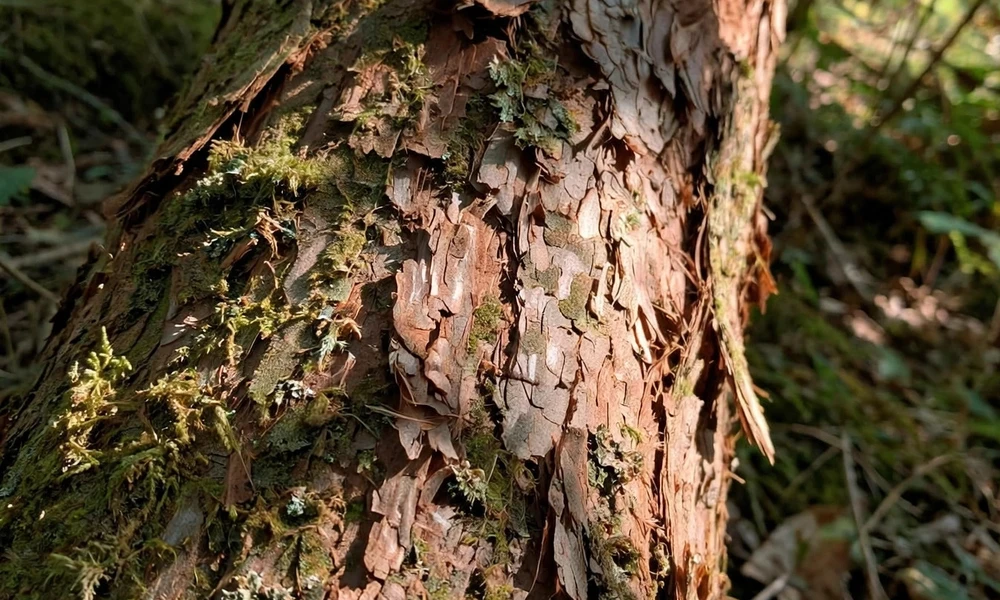
Cedarwood oil is made by steam-distilling the wood of cedar and juniper trees. Atlas cedar oil comes from the Atlas Mountains of Morocco, Virginia cedar oil from juniper trees in the eastern United States, and Texas cedar oil from junipers in the American southwest. The oil is thick, amber-coloured and strongly woody, and a little goes a long way. Perfumers use it in small amounts, usually between one and five percent of a formula, because too much turns a perfume sharp and medicinal.
Most modern cedarwood perfumes also use synthetic cedar molecules. Cedramber, Iso E Super and Cashmeran are the three most common. They are not shortcuts in a bad sense. They stretch the cedarwood, smooth its rough edges, and help it last longer on skin. A perfume that lists only natural cedarwood oil can smell rougher and fade faster than one that blends natural oil with synthetics, which is why even luxury houses use them.
When you are choosing a cedarwood perfume, look at the base notes first, not the marketing. If the base lists cedarwood with amber, vanilla or tonka, expect warmth. If it lists cedarwood with vetiver, grapefruit or cardamom, expect dryness and freshness. If it lists cedarwood with leather, smoke or oud, expect boldness. The base is where the cedarwood lives, and it tells you more about the perfume than the name on the bottle ever will. And if you want a cedarwood that lasts, read our guide on how to make perfume last longer, because moisturised skin and the right spray points matter more than the price of the bottle.
9 facts about cedarwood perfume
Atlas cedar is the softest cedarwood
What it shows: Atlas cedar smells warm, slightly sweet and creamy, with an amber-like softness that sits close to the skin. It is the cedarwood most often used in warm, enveloping perfumes.
What to consider: It can read too soft if you want a dry, pencil-like cedarwood, and it is sometimes overshadowed by stronger base notes such as vanilla or musk. Best for: Warm, evening and autumn wear. Material: Steam-distilled oil from Atlas cedar timber. Price range: Mid to premium, as a note in finished perfumes. Standout feature: The warmest cedarwood, with a natural amber quality no other cedar type shares.
Virginia cedar is the driest cedarwood
What it shows: Virginia cedar smells dry, clean and pencil-like, with a sharp, fresh woodiness that most people picture when they hear the word cedar. It is technically a juniper, not a true cedar.
What to consider: It can smell sharp or almost medicinal if overused, and on very warm skin it can turn soapy. Best for: Daytime, office wear and fresh woody perfumes. Material: Steam-distilled oil from Virginia juniper timber. Price range: Mid to premium, as a note in finished perfumes. Standout feature: The most recognisable cedarwood smell, the classic pencil-shaving note.
Texas cedar is the smokiest cedarwood
What it shows: Texas cedar smells smoky, resinous and leathery, with a bold, almost campfire quality. It is the cedarwood most often used in evening and cold-weather perfumes.
What to consider: It is the strongest cedarwood, so it can dominate a composition and overwhelm lighter notes such as citrus or florals. Best for: Evening wear, winter and bold woody perfumes. Material: Steam-distilled oil from Texas juniper timber. Price range: Mid to premium, as a note in finished perfumes. Standout feature: The boldest cedarwood, with a smoky, leathery edge the other types do not have.
Cedarwood is a base note, not a top note
What it shows: Cedarwood appears late in a perfume’s life on skin and lasts longest, which is why it gives a fragrance structure and staying power rather than an opening impression.
What to consider: You cannot judge a cedarwood perfume from the first spray, because the cedarwood has barely appeared yet. Wait twenty minutes for the drydown. Best for: Anyone who wants a perfume that lasts all day. Material: Natural cedarwood oil and synthetic cedar molecules. Price range: All price ranges, from affordable to luxury. Standout feature: Cedarwood is the reason many woody perfumes last eight to twelve hours on skin.
Synthetic cedar molecules do most of the work
What it shows: Molecules such as cedramber, Iso E Super and Cashmeran stretch natural cedarwood, smooth its rough edges, and help it last longer, and they are used in almost every modern cedarwood perfume, including luxury ones.
What to consider: A perfume that relies heavily on synthetics can smell smoother but less characterful than one with a strong natural cedarwood oil, and some noses find Iso E Super hard to smell at all. Best for: Long-lasting, polished woody perfumes. Material: Laboratory-made aroma molecules. Price range: All price ranges. Standout feature: Synthetics are why a cedarwood perfume can smell velvety rather than rough, and last all day.
Cedarwood and sandalwood are classic partners
What it shows: Cedarwood’s dryness balances sandalwood’s creaminess, and the two woods together create a warm, polished woody accord that is the backbone of many classic perfumes, from Santal 33 to Tam Dao.
What to consider: The combination can turn very warm and heavy in summer, so it is best kept for cooler weather unless the perfume also has citrus or a fresh top note. Best for: Autumn, winter and evening wear. Material: Natural cedarwood and sandalwood oils. Price range: Mid to premium. Standout feature: The most reliable woody pairing in perfumery, warm without being sweet.
Cedarwood and vetiver make the driest combination
What it shows: Vetiver’s grassy, earthy dryness and cedarwood’s pencil-like woodiness together create the driest, most transparent woody accord, often paired with grapefruit or cardamom for freshness.
What to consider: The combination can read austere or almost severe on some skin, and it suits daytime and office wear better than evenings. Best for: Daytime, work and warm weather. Material: Natural cedarwood and vetiver oils. Price range: Mid to premium. Standout feature: The driest woody pairing, with a clean, grassy freshness. If you like this pairing, our vetiver perfumes roundup covers the best vetiver-led scents in the same dry, elegant style.
Cedarwood smells different on everyone
What it shows: Skin chemistry changes how cedarwood smells. On oily skin it tends to smell warmer and last longer. On dry skin it can smell sharper and fade faster. On warm skin it can turn soapy, and on cool skin it stays dry and woody.
What to consider: A paper strip tells you almost nothing about a cedarwood perfume. Always test on your own skin, wait twenty minutes, and smell the drydown before deciding. Best for: Anyone choosing a cedarwood perfume for the first time. Material: Your skin, and how it interacts with the perfume. Price range: Free to test, expensive to get wrong. Standout feature: Cedarwood is one of the most skin-dependent notes, which is why testing matters more than reviews.
Cedarwood is one of the oldest perfume notes
What it shows: Cedarwood has been used in fragrance for thousands of years, from Egyptian embalming oils and temple incense to the first modern woody perfumes of the twentieth century, and it remains one of the most widely used base notes in the world.
What to consider: Its age means it appears in almost every fragrance family, so a cedarwood perfume can be anything from a fresh cologne to a rich evening scent, and the label alone tells you very little. Best for: Anyone who wants a note with real history behind it. Material: Cedar and juniper timber, distilled for centuries. Price range: All price ranges, from affordable to luxury. Standout feature: Few notes have been used as long, or as widely, as cedarwood.
Cedarwood compared with other woody notes
Cedarwood is often confused with sandalwood, but they are easy to tell apart once you know what to listen for. Sandalwood is creamy, soft and almost milky, with a smooth, warm sweetness. Cedarwood is dry, sharp and pencil-like, with a cleaner, more architectural quality. A perfume built on sandalwood feels like velvet. A perfume built on cedarwood feels like polished timber.
Vetiver is the closest cousin. Both are dry, but vetiver is grassy and earthy, with a green, root-like quality, while cedarwood is woody and clean. Oud is warmer, richer and more animalic than cedarwood, and it dominates a composition where cedarwood supports one. Pine and cypress are fresher and more resinous, with a green, almost medicinal sharpness that cedarwood does not have.
The caveats that matter
Cedarwood is generally well tolerated, but it is a strong base note, and strong base notes can behave unexpectedly on skin. A perfume that smells dry and elegant on a paper strip can turn sharp, soapy or almost medicinal on warm skin, especially in the first ten minutes. Always test on skin, wait at least twenty minutes, and smell the drydown before deciding.
| Detail | What is known |
|---|---|
| What it is | A fragrance built around cedarwood as a structural base note |
| Main cedar types | Atlas cedar is soft and warm, Virginia cedar is dry and pencil-like, Texas cedar is smoky and resinous |
| Where it sits | Almost always a base note, appearing late and lasting longest |
| Best seasons | Autumn and winter for rich cedarwoods, spring and cool summer evenings for lighter blends |
| How long it lasts | Eight to twelve hours for eau de parfum, four to six for lighter colognes |
| Who should test carefully | People with sensitive skin or fragrance sensitivity, and anyone who finds woody scents turn soapy on them |
| Best partners | Citrus and cardamom for brightness, amber and vanilla for warmth, vetiver and leather for dryness and depth |
| What it does not do | It does not smell the same on everyone, and it does not fix a perfume whose top notes you dislike |
If you have sensitive skin, eczema, or a known fragrance sensitivity, patch-test any new perfume on your inner arm first and wait a day before wearing it on your neck or chest. If you are pregnant or breastfeeding, ask your clinician before using a new fragrance, especially one with a high concentration of essential oils. These are simple checks, but they save weeks of irritation.
Checklist: understanding a cedarwood perfume honestly
Use these checks before you buy, and again after a week of wear.
- Check the cedar type: Atlas for warmth, Virginia for dryness, Texas for smoke, and ask the brand if the listing is vague.
- Check the base notes: cedarwood with amber reads warm, with citrus reads dry, with leather reads bold.
- Test on skin, not paper: spray your wrist, wait twenty minutes, and judge the drydown, not the opening.
- Test in the right season: a rich cedarwood that smells perfect in November can feel heavy in July.
- Spray less than you think: two to three sprays is enough, and cedarwood builds quietly over the first hour.
- Store it well: keep the bottle upright, away from light and heat, and use it within two years of opening.
Frequently asked questions
What is a cedarwood perfume?
A fragrance built around cedarwood as a structural base note. The cedarwood can come from Atlas, Virginia or Texas cedar, or from a synthetic cedar molecule, and it gives the perfume a dry, warm, woody character with long-lasting power.
What does cedarwood smell like?
Dry, warm and woody, with pencil-shaving, sawdust and sun-warmed timber facets. Atlas cedar is softer and slightly sweet, Virginia cedar is drier and more pencil-like, and Texas cedar is smokier and more resinous.
Is cedarwood a top, heart or base note?
Almost always a base note. It appears late in a perfume’s life on skin and lasts longest, which is why it gives a fragrance structure and staying power rather than an opening impression.
How long does a cedarwood perfume last?
Usually eight to twelve hours for an eau de parfum, because cedarwood is a base note and base notes last longest. Lighter colognes last four to six hours. Oily skin holds cedarwood longer than dry skin, so moisturise first if your skin is dry.
Can I wear cedarwood perfume in summer?
Yes, if you choose a lighter blend with citrus, cardamom or vetiver. Rich, amber-leaning cedarwoods are better kept for autumn and winter, when cold air keeps them from turning heavy.
Is cedarwood safe for sensitive skin?
Cedarwood is generally well tolerated, but any fragrance can irritate sensitive skin. Patch-test on your inner arm first, wait a day, and avoid spraying on broken or freshly shaved skin. If redness or itching appears, stop using it and choose a fragrance-free option instead.
The bottom line
A cedarwood perfume is a fragrance built around one of the oldest, driest and most reliable notes in perfumery. It is not a single smell, because Atlas, Virginia and Texas cedar each have their own character, and because synthetics stretch and smooth the natural oil. What they share is a dry, warm woodiness that gives a perfume structure, depth and staying power, and that is why cedarwood appears in so many classic fragrances.
If you are choosing your first cedarwood perfume, start with the drydown. Test it on skin, wait twenty minutes, and ask yourself whether the wood you smell is the wood you want to wear all day. If it is, you have found a scent that will last from morning to evening, and that will still smell like itself a year from now.