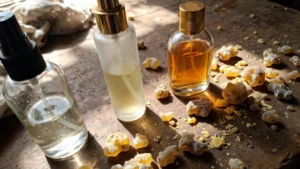
A pine perfume is a fragrance built around the scent of pine, in its needles, its resin or its wood, and it is one of the oldest ideas in perfumery. Long before pine was a perfume note, it was a smell people knew from forests, from firewood and from the resin that seals a wound in a tree trunk.
The confusion starts because pine is not one smell, and it is not one ingredient. A perfumer can use pine needle oil, pine resin, or a synthetic molecule that smells like pine, and each one behaves differently. Knowing which kind of pine you are smelling is the difference between buying a bottle you love and buying one that smells like a cleaning product.
This guide explains what a pine perfume actually is, where the note comes from, how it behaves on skin, and how to choose one that suits you.
Key takeaways
- A pine perfume is built around pine needle oil, pine resin or pine wood, and it smells green, resinous and a little sharp.
- Pine is usually a top or heart note, so it is the first thing you smell, and it fades faster than the woods in the base.
- Juniper and cypress are pine’s closest cousins in perfumery, and they are often used alongside pine or in its place.
- Pine pairs best with citrus, herbs and soft woods, and it is almost always sold as a unisex scent.
- No pine perfume smells exactly like a real forest, and a pine that smells medicinal or soapy on your skin is not the right one for you.
What a pine perfume actually is
A pine perfume is a fragrance in which pine is the defining note, the one you notice first and the one the perfume is built around. That does not mean pine is the only note. Most pine perfumes pair it with citrus, herbs or woods, because pine on its own is too sharp to wear comfortably. But the pine is the point.
Pine perfumes sit in the woody family, alongside cedarwood, sandalwood and vetiver, but they are the greenest members of that family. Where cedarwood is dry and warm, and sandalwood is creamy and soft, pine is bright and resinous, with a cool edge that reads as fresh.
The note itself comes from the pine tree, and from a small family of related conifers. Pine needle oil is steam-distilled from the needles and smells green and sharp. Pine resin, sometimes called rosin, is the sticky sap that seals a wound in the bark, and it smells darker, warmer and slightly sweet. Pine wood, used less often, is dry and quiet.
How to read a pine perfume and what to look for
Look first at the note list. If pine, pine needle or pine resin is listed among the top notes, the perfume will open green and bright, and the pine will be obvious from the first spray.

Look next at what sits around the pine. Citrus and herbs, such as bergamot, rosemary and sage, keep pine bright and easy to wear. Soft woods, such as cedarwood and sandalwood, round it out and make it last. Resin and amber make it darker and warmer, and incense and leather make it smoky and serious. Our guide to woody perfumes explains how those supporting notes work, because pine is a woody note first and a green note second.
Finally, look at the concentration and the size. Pine is a strong note, so an eau de toilette is often enough for a bright pine, and an eau de parfum is worth it for a dark, resinous one. Buy the smallest bottle first, wear it for a week in the season you will actually use it, and only then decide whether it deserves a place on your shelf.
9 things a pine perfume shows you
Pine comes from needles, resin and wood, not just one part
What it shows: A pine perfume can smell green, dark or dry depending on which part of the tree the perfumer used, and the best ones use more than one. What to consider: If a perfume lists only pine needle oil, expect a bright, sharp opening that fades fast. If it lists resin or wood as well, expect more depth and a longer wear. Best For: Anyone who wants to understand why two pine perfumes can smell so different. Material: Pine needle oil, pine resin, pine wood, or synthetic pine molecules. Price Range: Natural pine oil is inexpensive; the price of a pine perfume comes from the other notes and the brand. Standout Feature: The range of the note itself, from green needles to dark resin, all from one tree.
Pine is a top or heart note, so it fades first
What it shows: Pine is volatile, which means it evaporates quickly, so it is usually placed at the top or in the heart of a perfume rather than in the base. What to consider: A bright pine will be strongest in the first hour and largely gone by the fourth, while a resinous pine supported by woods will last longer. Best For: People who want a fresh opening rather than a long, heavy dry-down. Material: Volatile top-note oils, supported by woody base notes. Price Range: No price difference; longevity comes from the base, not the pine. Standout Feature: The way a pine perfume changes over a few hours, from green to woody, which is part of its charm.
Juniper and cypress are pine’s closest cousins
What it shows: Juniper berries and cypress wood belong to the same conifer family as pine, and perfumers use them alongside pine or in its place. What to consider: Juniper is greener and slightly gin-like, while cypress is drier and more aromatic, so a perfume that lists juniper or cypress will smell related to pine but not identical. Best For: Anyone who likes pine but wants a slightly different green. Material: Juniper berry oil, cypress oil, fir balsam. Price Range: Similar to pine; these are all affordable natural oils. Standout Feature: The family resemblance, which lets perfumers build a forest without using pine at all.
Pine pairs best with citrus and herbs
What it shows: Citrus lifts pine and keeps it bright, while herbs such as rosemary, sage and lavender give it a dry, aromatic edge that stops it from smelling medicinal. What to consider: A pine with citrus and herbs is the easiest kind to wear in the day, while a pine on its own can smell harsh. Best For: Daytime wear, warm weather, and first-time pine buyers. Material: Bergamot, lemon, rosemary, sage, lavender. Price Range: Citrus and herb notes are inexpensive, so these perfumes are often mid-priced. Standout Feature: The way a little bergamot can turn a sharp pine into a fresh cologne.
Pine also pairs well with woods and leather
What it shows: Cedarwood, sandalwood and vetiver give pine a base to sit on, while leather and incense take it in a darker, smokier direction. What to consider: These pairings make pine last longer and feel warmer, but they also make the perfume heavier, so it suits evening and cold weather better than a hot day. Best For: Evening wear, cold weather, and people who like dark woody scents. Material: Cedarwood, sandalwood, vetiver, leather, incense. Price Range: Woody and leather bases are often premium, so these perfumes tend to cost more. Standout Feature: The contrast between the green pine and the dark base, which is what makes a resinous pine feel complete.
Pine smells different on skin than on paper
What it shows: Pine is a reactive note, and it changes with skin chemistry, temperature and humidity, so a paper strip only tells you half the story. What to consider: On warm skin, pine can turn sharp or soapy, while on cool, moisturised skin it stays green and calm. Always test on skin before buying. Best For: Anyone who has been disappointed by a pine perfume that smelled wonderful in the shop. Material: Skin chemistry, body heat, and the oils on your skin. Price Range: Testing costs nothing, and it is the best way to avoid wasting money on a full bottle. Standout Feature: The gap between paper and skin, which is wider for pine than for most other notes.
Pine perfumes are almost always unisex
What it shows: Pine is not a gendered note, and most pine perfumes are sold as unisex, because the scent of a forest does not belong to one sex. What to consider: A bright, citrus-led pine suits anyone who likes fresh scents, and a dark, resinous pine suits anyone who likes woody scents, regardless of gender. Best For: Anyone shopping without the men’s or women’s labels, and anyone sharing a bottle. Material: The note itself, which has no floral or gourmand character to push it one way or the other. Price Range: Unisex pine perfumes span every price, from mid-range colognes to luxury niche bottles. Standout Feature: The freedom of the note, which lets you choose by smell rather than by label.
Real pine oil costs less than synthetic pine molecules
What it shows: Natural pine needle oil is abundant and inexpensive, while some synthetic pine molecules are made to be more stable and longer-lasting, which can make them more expensive. What to consider: A cheap pine perfume is not necessarily a bad one, and an expensive one is not necessarily more natural. Judge by smell, not by the price tag. Best For: Anyone who assumes a higher price means a better pine. Material: Natural pine needle oil, pine resin, or synthetic molecules such as pinene derivatives. Price Range: Pine oil itself is cheap; the cost of a pine perfume comes from the brand and the other notes. Standout Feature: The fact that one of the cheapest natural oils in perfumery can still smell extraordinary in the right hands.
How to test a pine perfume before buying
What it shows: The right test is simple: one spray on the wrist, worn for a full day, in the season you will actually wear it. What to consider: Do not judge a pine perfume on the first spray, which is the sharpest moment. Wait an hour, and judge it on the dry-down. Best For: Anyone about to spend money on a full bottle of a pine perfume. Material: Your wrist, a full day, and the weather you will wear it in. Price Range: A sample or a small bottle costs little and saves a lot. Standout Feature: The one-hour rule, which is the single most useful test in all of perfumery.
Which pine note suits you best
Start with the kind of pine you like. If you like green and bright, look for pine needle oil with citrus and herbs, the kind of pine that smells like a cold forest walk. If you like dark and warm, look for pine resin with woods and amber, the kind of pine that smells like resin on a hot day. If you like dry and quiet, look for pine wood or cypress, the kind of pine that smells like a planed plank rather than a living tree.
Think about when you will wear it, too. A bright pine suits the day, the office and warm weather, when its freshness feels like a lift. A dark pine suits the evening and cold weather, when its resin and wood feel like shelter. The best vetiver perfumes are a useful comparison here, because vetiver is another green, woody note that behaves in a similar way, bright at first and darker as it dries down.
Finally, think about what you already own. If you have a cedarwood or sandalwood perfume you love, a pine perfume will layer well over it, and it will give you a greener version of a scent you already enjoy. The right pine note is the one that feels like an addition to your shelf, not a stranger on it.
The caveats that matter
Pine is a natural essential oil in many of these perfumes, and like any strong natural note it can irritate sensitive skin. A pine perfume can also trigger headaches in people who are sensitive to strong green scents, especially in a warm room or a small space.
| Detail | What is known |
|---|---|
| What it is | A fragrance built around pine needle oil, pine resin or pine wood |
| Where the pine sits | Usually a top or heart note, so it is strongest in the first hour |
| Closest cousins | Juniper, cypress and fir, all from the same conifer family |
| Best pairings | Citrus and herbs for brightness; woods and leather for warmth |
| Who it suits | Anyone who likes fresh or woody scents; almost always sold as unisex |
| How long it lasts | Bright pine, three to five hours; resinous pine, six to eight hours |
| How to test it | One spray on the wrist, worn for a full day, in the right season |
| What it does not do | It does not smell exactly like a real forest, and it will not suit every skin |
If you are pregnant, breastfeeding, or using prescription skincare, check with your clinician or dermatologist before using a new fragrance on skin, especially one with a high concentration of natural essential oils.
Checklist: trying a pine perfume honestly
Use these checks before you buy, and again after a week of wear.
- Check the note list: pine, pine needle or pine resin should be listed, not just implied by the name.
- Check the balance: citrus, herbs or soft woods should support the pine, not fight it.
- Check the season: test it in the weather you will wear it in, because pine changes with the air.
- Test on skin: one spray on the wrist, worn for a full day, before you judge it.
- Wait an hour: judge a pine perfume on its dry-down, not on the sharp first spray.
- Start with one spray: pine is strong, and a little goes a long way, especially with resinous pines.
Frequently asked questions
What is a pine perfume?
A fragrance built around the scent of pine, from its needles, resin or wood. It smells green, resinous and a little sharp, and it is usually balanced with citrus, herbs or soft woods so it reads as fresh rather than medicinal.
Is pine the same as cedarwood?
No, though they are related. Pine is green, resinous and sharp, while cedarwood is dry, warm and woody. They pair well together, and many woody perfumes use both, but a pine perfume will always smell greener than a cedarwood one.
How long does a pine perfume last?
Bright pine lasts three to five hours, because the green top notes are volatile. Dark, resinous pine lasts six to eight hours, because the resin and wood sit in the base. Our guide to making perfume last longer explains the full routine, from moisturiser to storage.
Can I wear pine perfume every day?
Yes, if you choose the right one. A bright, citrus-led pine is an easy everyday scent. A dark, resinous pine is better kept for evenings and cold weather, because it is heavier and more demanding.
Why does pine perfume smell medicinal on me?
Because pine on its own can smell like a chest rub, especially on warm skin. Try a pine softened with sandalwood or vanilla, spray less, and give it an hour to settle.
Are pine perfumes unisex?
Almost always. Pine is not a gendered note, and most pine perfumes are sold as unisex. The bright pines suit anyone who likes fresh scents, and the dark pines suit anyone who likes woody scents.
The bottom line
A pine perfume is a fragrance built around one of the oldest scents in perfumery, the smell of a pine tree, in its needles, its resin or its wood. It is green, resinous and a little sharp, and it works best when it is balanced with citrus, herbs or soft woods, tested on skin, and worn in the season where it feels at home.
Choose a pine by its kind, bright needle or dark resin, test it for a full day, and judge it on the dry-down, not the first spray. That is the honest way to find a pine perfume that smells like a forest you want to visit, rather than a cleaning product you want to avoid.