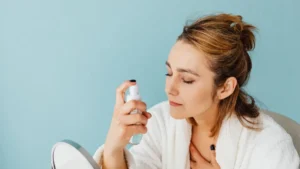
A setting spray is the last step of a makeup routine: a fine mist sprayed over a finished face to help everything stay put. It adds no colour or coverage. Instead, it lays a whisper-thin film over foundation, concealer, blush and powder, so the layers fade more slowly and transfer less onto clothes and phones.
It is also one of the most misunderstood products in a makeup bag. People expect it to waterproof a full face, replace primer or powder, or rescue makeup that is already sliding off by midday. It can do none of those things. What it does well is narrower: it seals a good base, softens the powdery look powder leaves behind, and buys a few extra hours of wear.
This guide explains what a setting spray is, how it works, how it differs from primer, powder and face mist, which finish suits which skin, and how to use it. It is an explainer, not a shopping list: no rankings, only what to look for when you choose one.
Key takeaways
- A setting spray is a fine mist applied after all makeup is finished. It forms a thin film that slows fading, smudging and transfer.
- It is not a primer, powder or face mist: primer prepares skin, powder absorbs oil, face mist only hydrates.
- Finish matters more than brand. Matte suits oily skin and humid days, dewy suits dry skin, and a natural finish suits almost everyone.
- Technique decides the result. Hold the bottle eight to ten inches away, mist in an X and then a T, and let it dry untouched.
- No spray can rescue a base that was wrong from the start, and wear-time claims come from controlled tests, not real days.
What a setting spray actually is
A setting spray is a water-based mist applied over completed makeup as the final step. Its core ingredients are film-forming polymers, the same family of ingredients used in hairspray, in gentler concentrations and in formulas designed for skin. Once it lands, the liquid evaporates and the polymers stay behind as a thin, transparent layer.
That layer is the whole point. It does not glue makeup to the skin or bond chemically with pigment. It holds the separate layers of a finished look together so they move as one surface rather than breaking down at different rates. Each layer wears away differently; the film slows that process, which is why a set face still looks coherent in the evening.
Most formulas add something else to the film. Hydrating sprays include glycerin or hyaluronic acid to keep skin comfortable. Mattifying sprays include silica or starches that absorb oil as it reaches the surface. The polymer base is what makes it a setting spray; the extras decide the finish and who it suits. Finishing, fixing and setting sprays are usually the same product under different labels.
How setting spray works on skin
The mechanism is physical, not chemical, and that explains both what the spray can do and where it stops. The mist deposits water, solvent and polymer evenly across the face. As the liquid evaporates, the polymer forms a flexible, breathable film a fraction of a millimetre thick. It cuts friction, so makeup rubs off less on collars and phones, and slows oil and sweat reaching the makeup.

The film also changes how makeup looks. Powder sits on the surface and can look dry or chalky, especially on mature or dehydrated skin. A fine mist melts the powder layer back into the skin visually, restoring a natural finish without adding coverage. This is the effect most people notice first.
What the film cannot do matters too. It cannot stop oil production, so very oily skin will still break through, and it cannot make a foundation outlast its own limits. The spray extends what is there; it does not transform it. Give it thirty seconds of still air to set, and do not touch your face while it is wet.
Setting spray vs primer, powder and face mist
These four products sit at different points in a routine and do different jobs. Primer goes on before makeup, powder during it, setting spray after it, and face mist at any point, holding nothing in place.
| Product | When it is applied | Main job | Finish |
|---|---|---|---|
| Primer | Before makeup, after skincare | Smooths skin, gives foundation grip | Natural to blurred |
| Setting powder | After liquid products | Absorbs oil, locks the base | Matte to natural |
| Setting spray | Last step, over finished makeup | Film that slows fading and transfer | Matte, natural or dewy |
| Face mist | Any time, bare or made-up skin | Hydrates and refreshes | Dewy, no hold |
| Fixing spray | Last step, like a setting spray | Stronger hold for long events | Natural to matte |
| Finishing spray | Last step, like a setting spray | Adjusts the final look, often glow | Dewy to natural |
| Powder plus spray | Powder first, spray to finish | Powder controls oil, spray seals | Balanced, skin-like |
| Primer plus spray | Primer first, spray last | Hold at both ends of the routine | Depends on both formulas |
Primer and setting spray are complements, not substitutes. Primer creates the canvas, smoothing texture and giving foundation grip; spray preserves the finished look. Used together, they protect a look from both ends.
Powder and spray are partners too. Powder absorbs oil straight after the liquid base goes on; spray then seals the powder in and takes away its dry, dusty look. Spray alone leaves oil with nothing to absorb it, while powder alone looks flat and obvious.
Face mist causes the most confusion, because it looks and feels almost identical. The difference is the formula: a face mist is mostly water and humectants, and it evaporates without leaving a film. It can revive a tired base, but it will not extend wear. If a bottle promises hold, it is a setting spray; if it promises only hydration, it is a mist.
The finishes: matte, dewy and natural
Finish is the first decision to make, because it changes how the whole face looks and which skin types a spray suits. A matte finish is shine-free and smooth. It uses oil-absorbing silica or starch to keep the surface flat, and suits oily and combination skin, humid weather and long days. On dry or mature skin, though, a strong matte spray can feel tight and emphasise fine lines.
A dewy finish leaves a radiant, fresh sheen. It pairs humectants such as glycerin and hyaluronic acid with light-reflecting particles, and it suits dry, dehydrated, dull or mature skin, as well as winter, when skin tends to look flat. On oily skin, a dewy spray adds shine where shine is already a problem, and it will not hold up as long in heat. Our round-up of the best setting sprays for 2027 groups formulas by the look they give, which makes the choice easier than reading bottles one by one.
A natural finish sits between the two and looks like skin: no obvious shine, no obvious flatness, just a soft, undetectable seal. It suits most skin types and most days. If you only want one bottle, a natural finish is the safest start.
Choosing a setting spray for your skin type
Oily skin needs oil control first. Look for a matte or oil-control formula with silica or starch, and pair it with powder on the T-zone before you spray, because the spray alone cannot absorb what is already there. Avoid glycerin-heavy dewy mists, which slide off shiny skin within hours.
Dry skin needs hydration and a light touch with powder. Choose a hydrating or dewy formula, use powder only where you truly need it, and let the spray seal the base. A strong matte fixing spray will emphasise dry patches and texture, so it is the one category to avoid. Our guide to the best foundations for dry skin lists hydrating bases that pair well with a dewy finish.
Sensitive and acne-prone skin need a short, gentle ingredient list. Look for fragrance-free and alcohol-free formulas, and avoid essential oils and heavy fragrance, the most common irritants in a spray. Patch-test on your jawline first. Mature skin usually does best with a hydrating or natural finish, since very matte sprays settle into fine lines.
When and how to use setting spray
The classic use is the last step, over a finished face. Once foundation, concealer, blush, powder and eye makeup are all in place, hold the bottle eight to ten inches from your face, close your eyes and mouth, and mist in an X shape across the face, then a T shape down the centre. That covers the face evenly without soaking any one area. Let it dry in still air for about thirty seconds, without touching your face.
A light mist helps at two other moments: between layers, a quick spray after foundation helps the layers knit together, and on your tools, misting a damp sponge before blending softens a heavy base. Both are optional.
Shake the bottle first if the label says to, because mattifying powders settle at the bottom. Closer than six inches and the mist lands in wet spots; further than a foot and most of it drifts away. You should feel a fine fog, not rain. Our guide to how to layer makeup shows where primer, powder and spray each sit so the layers work together.
Before you buy: a quick checklist
- Match the finish to your skin: matte for oily, dewy for dry, natural if unsure.
- Check the mist: fine and even, never a jet of large droplets.
- Read the ingredients: fragrance-free for sensitive skin, non-comedogenic for acne-prone skin.
- Ignore the hour claims: they come from controlled tests, not real weather.
- Try one bottle before buying two: the wrong finish will sit unused.
- Remember its limits: it will not replace primer or powder, or rescue a failing base.
Frequently asked questions
Do you need setting spray if you already use primer?
Not always. Primer prepares skin and helps foundation grip; spray seals the finished look and slows fading. If makeup already lasts all day with primer alone, skip the spray. If it fades by afternoon or looks powdery, a spray is the more useful addition.
Can setting spray replace setting powder?
No, and that is the most common mistake. Powder absorbs oil and locks the base; spray seals the finished face and softens the powder’s look. They work as a pair, and skipping powder entirely leaves oil with nothing to absorb it.
Is setting spray the same as face mist?
No. A face mist hydrates and refreshes, then evaporates without leaving anything behind. A setting spray contains polymers that dry into a thin layer over makeup, which is what extends wear. The bottles look similar, but only one holds makeup in place.
How long does setting spray actually last?
It depends on formula, skin and weather. Most people get a few extra hours of wear and less transfer onto collars and phones. Strong fixing sprays hold up better in heat, but no spray makes makeup last indefinitely.
Can you use setting spray on bare skin?
You can, as a light hydrating step before foundation. But without makeup to seal, the film has nothing to hold, so the effect is a short-lived refresh. A primer does the prep job better.
Does setting spray work for all skin types?
Yes, if the formula matches the skin. Oily skin needs a matte spray, dry skin a hydrating or dewy one, combination skin a natural finish, and sensitive skin a fragrance-free, alcohol-free formula. The wrong finish is the usual reason a spray disappoints.
The bottom line
A setting spray is a finishing mist that lays a thin film over completed makeup, slowing fading and transfer, and softening powder’s chalky finish. It is not a primer, a powder or a face mist, and it cannot replace any of them. In the right finish for your skin, applied lightly and left to dry, it makes a finished face look more like skin and last a few hours longer.
Choose by finish and skin type, not brand or hour claims, test the mist for fineness before you commit, and keep the technique simple. One light pass in an X and a T is enough for most faces. The spray is the final step, not the rescue step.
Note: This article is a general explainer, not personal skincare advice. If you have a skin condition or a reaction to a product, stop using it and speak to a dermatologist or pharmacist.