An angora blend sweater is the softest thing most men will ever put on, and also the fussiest. The halo that makes it feel like a cloud is the same halo that sheds on a dark coat, flattens in the rain, and pills where a bag strap rubs. Men buy it for the feel, and then they learn the rules, usually after the first week of wearing it wrong.
The trick is to treat it as a fibre with a halo, not as an ordinary knit. The halo is the point of the sweater and the problem with it, so the whole job is giving it room to show and keeping everything else out of its way.
Below are nine steps for styling an angora blend sweater for men in 2027, from reading the label before you buy to storing the sweater so the halo survives the season.
Key takeaways
- Angora is rabbit hair with a halo, and the halo is both the luxury and the mess.
- Know the rabbit hair share before you spend anything, because a sweater with a trace of angora is a wool sweater with a fancy name.
- Keep the rest of the outfit flat and smooth, so the halo has nothing to compete with.
- Shake it out and lint-roll it before you leave, because the first few wears shed the most.
- No amount of careful styling makes a 5 percent angora sweater feel like angora.
What an angora-blend sweater is, and why men reach for one
An angora blend sweater mixes rabbit hair with wool or nylon, and men reach for it for one reason above all: the feel. The fibre is finer than cashmere, lighter than wool, and surrounded by a halo of fine hairs that makes the sweater look soft before you even touch it. Put it on and it feels like warmth without weight, which is a combination no other fibre offers in quite the same way.
Rabbit hair on its own cannot hold a knit together. It slips, it stretches, and it sheds, so the wool or nylon beside it is doing the structural work. Wool gives the sweater its memory. Nylon gives it the strength to survive a season of wear.
Men reach for it for a different reason too: it is the warmest thing in the wardrobe that weighs almost nothing. On the coldest morning of the year, an angora blend feels like a blanket you can wear to work, and that is a hard feeling to give up once you have had it. It is also the knit that gets noticed most, because the halo catches the light in a way no flat knit can.
How to choose an angora blend sweater and what to look for
Start with the label, and look for a number beside the rabbit hair. A listing that calls itself an angora blend without a share is asking you to pay for a word, and the honest ones put the number where you can see it.
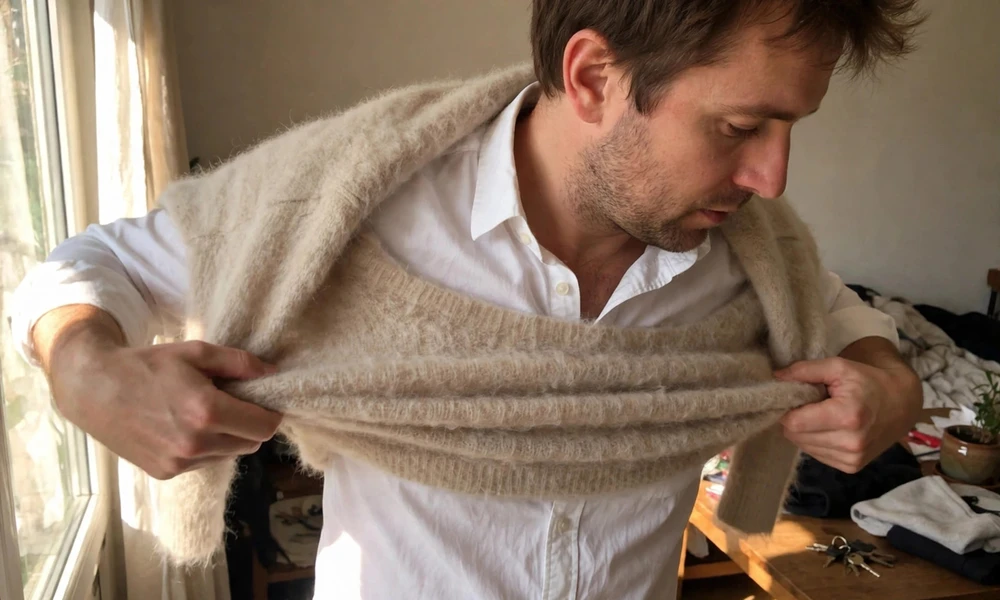
Next, look at the halo itself. An even halo that stands a few millimetres proud of the yarn is a good sign. Patchy fluff, or a halo that is already matted flat on the hanger, means a poor yarn or a sweater that has been handled badly. A crew neck is the easiest shape to start with, because it slips under a coat without any fuss. Our guide to styling a camel hair blend sweater for men covers the flat-handed alternative if you want the warmth without the fluff, and the mohair blend sweater guide is the closest comparison if you want a halo from the Angora goat instead of the rabbit.
Last, look at the weight in your hands. Angora should feel almost weightless for its warmth, and a sweater that feels heavy for its size is either mostly wool or knitted too tightly. The alpaca blend sweater guide covers a fibre that looks much the same on the hanger yet acts differently once worn, and it is worth a read if you are choosing between the two.
How to style an angora blend sweater for men: 9 steps
Work out how much rabbit hair is in the knit before you pay for it
What to do: Read the fibre content on the label or the product page, and look for a number. Buy the share, not the name, and be willing to walk away from a listing that will not state one.
What to avoid: Do not pay an angora price for a sweater that only says “angora” on the tag, and do not assume a high price means a high percentage. Best for: Any man buying his first angora blend. Time needed: Two minutes before you buy. Standout tip: A share under a fifth is wool with a soft name; a share over half is the real thing.
Make the halo the only texture anyone notices
What to do: Treat the halo as the one texture in the outfit and pair it with smooth cotton, flat denim, and smooth leather. The halo needs empty space around it to read as luxury rather than mess.
What to avoid: Do not add a second fluffy texture, like fleece, bouclé, or brushed flannel, or the whole outfit turns into one cloud with no shape. Best for: A man wearing angora for the first time. Time needed: Five minutes deciding in front of the mirror. Standout tip: If anything else in the outfit is fluffy, take it off.
Shake the loose fibres out on the doorstep
What to do: Hold the sweater by the shoulders and shake it gently outdoors, so the loose fibres fall on the ground instead of on your coat. Do it after you put the sweater on and before you put the coat over it.
What to avoid: Do not shake it indoors, or the fluff will settle on every dark surface in the room, and do not snap it hard, or you will break the fibres you are trying to keep. Best for: The first few wears, when shedding is worst. Time needed: Thirty seconds. Standout tip: Shedding is worst in week one and fades fast, so the doorstep habit matters most at the start.
The loose fibres are the ones that were never properly caught in the yarn, and they were always going to come out. Better on the doorstep than on your coat at the office.
Put a lint roller where you actually leave the house
What to do: Keep a lint roller by the front door, not in a drawer, and roll the sweater and the coat after the coat goes on. The coat picks up fluff from the sweater, so it needs the roller as much as the sweater does.
What to avoid: Do not bury the roller in a drawer, because you will not use it, and do not roll before the coat goes on, because the coat adds more fluff after you have finished. Best for: A man who wears dark coats. Time needed: Twenty seconds. Standout tip: Roll the coat too, not just the sweater, because the coat carries the fluff to the office.
Put a smooth leather or wool coat over it, and leave the fluffy layers at home
What to do: Wear a smooth coat over the sweater, with a smooth scarf and smooth gloves. The smooth surfaces slide over the halo without grabbing it, so the sweater stays soft and the coat stays clean.
What to avoid: Do not wear a fleece-lined coat, a bouclé scarf, or a brushed flannel overshirt over angora, because rough and fluffy layers grab the halo and pill it within days. Best for: A cold day when the sweater needs a coat. Time needed: No extra time, just a different coat. Standout tip: A smooth coat protects the halo; a rough one steals it.
A smooth coat does two jobs at once. It keeps the halo clean, and it keeps the fluff off the coat itself, because a smooth surface has nothing for the loose fibres to catch on.
Pair the cloud-soft knit with hard, flat fabrics
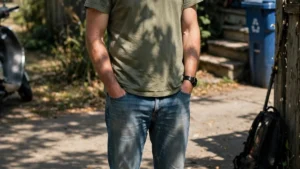
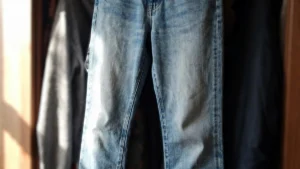
What to do: Wear the sweater with dark indigo denim, flat cotton twill chinos, and smooth leather shoes. The hard, flat fabrics make the softness of the knit stand out, and they do not shed fibres back onto it.
What to avoid: Do not pair it with corduroy or velvet, which rub the halo and leave the sweater looking tired by lunchtime, and do not wear it with a fluffy fleece underneath, or the two textures will fight each other all day. Best for: A weekend outfit built around the sweater. Time needed: Five minutes to choose the trousers. Standout tip: The harder the fabric next to it, the softer the angora looks.
Contrast is what makes angora look expensive. Next to denim and leather, the halo reads as luxury. Next to fleece and velvet, it reads as mess.
Reach for it when the temperature drops, not when it is mild
What to do: Wear the sweater on the coldest days, when the hollow fibres earn their keep. It is the warmest knit you own for its weight, so save it for the mornings when you can see your breath.
What to avoid: Do not wear it on a mild day, when you will overheat indoors and the sweater will feel clammy against your skin, and do not wear it as an extra layer on top of a warm knit, or you will sweat through both. Best for: A man who feels the cold. Time needed: A glance at the forecast. Standout tip: If you need a coat over a coat, the angora was the right call.
Revive a flattened halo with a gentle brush, working in one direction
What to do: Brush the sweater gently in one direction with a soft clothes brush, after wearing it, to lift the halo back up. Do it every few wears, before the halo has a chance to mat flat.
What to avoid: Do not use a stiff brush or a razor, which pulls live fibres out of the yarn and thins the knit, so the next halo comes up thinner and patchier. Best for: A sweater whose halo has gone flat. Time needed: Two minutes, every few wears. Standout tip: A soft brush lifts the halo; a stiff one pulls the fibre out, so keep the brush soft.
Fold it away with cedar and let the fibre breathe
What to do: Fold the sweater loosely and slip it into a breathable cotton bag, with a cedar block beside it, not on top of it. The cotton lets the fibre breathe, and the cedar keeps the moths away.
What to avoid: Do not store it in a plastic bag, which traps the moisture that felts the fibre, and do not hang it, even on a padded hanger, because the shoulders will stretch under the sweater’s own weight. Best for: Any man who wants his angora knit to survive more than one winter. Time needed: One minute after each wear. Standout tip: Moths love angora, so the cedar is doing real work, not decoration.
Which angora blend suits which man
The share decides the wearer. A blend over half rabbit hair is for the man who wants the softest knit he owns and is willing to look after it. A blend under a fifth is for the man who wants a soft wool sweater with a little extra warmth.
The shape decides the occasion. A crew neck goes anywhere. A quarter-zip is a weekend piece. A V-neck belongs with a shirt and tie, and nowhere else.
Money is the last filter. Under $100, the vintage picks are a trial, not a keeper. From $100 to $300, the choice comes down to the Theory V-neck and the Youth sweater.
The caveats that matter
Angora asks more of its owner than wool does. The halo sheds, the fibre felts when it is wet and handled roughly, and the knit loses its shape if it is stored badly. None of that is a reason to avoid it, but all of it is a reason to know the rules before you buy.
| Detail | What is known |
|---|---|
| Best partner texture | Smooth cotton, flat denim, smooth leather; avoid a second fluffy layer |
| Best season | Deep winter, when its warmth earns its keep; too warm for mild days |
| Best layer | Under a smooth coat or on its own; not under a fluffy or fleece-lined coat |
| Shedding | Worst in the first few wears; shake it out and lint-roll it |
| Storage | Folded in a cotton bag, with cedar, away from sun; never in plastic or on a hanger |
| Washing | Hand wash cold, rarely; air it between wears instead |
| Pilling | Expect it at friction points; brush the halo, never shave it |
| What it does not do | It does not hold its shape like wool, and it does not survive rough handling when wet |
The lint roller is the smallest tool in this guide and the one you will use most.
Checklist: styling an angora blend sweater honestly
Use these checks before you put the sweater on, and again when you take it off.
- Check the share on the label before you build an outfit around the fibre.
- Check the halo: one fluffy texture only, with flat fabrics around it.
- Check the doorstep: shake the sweater out before you leave, and lint-roll the coat too.
- Check the coat: smooth on the outside, so the halo stays on the sweater.
- Check the brush: a soft clothes brush after a few wears, never a razor.
- Check the bag: cotton, with cedar, and never plastic.
Frequently asked questions
Is shedding normal for a new angora sweater?
Yes, at first. New angora sheds loose fibres for the first few wears, and the shedding slows down once those fibres have worked their way out. Shaking it out on the doorstep and keeping a lint roller by the front door covers the worst of it.
Why is angora so much softer than wool?
Because the fibre is finer and hollow, with a silky surface and a halo of fine hairs that stand proud of the yarn. Wool fibres are thicker and scalier, which is why wool feels springy and angora feels like a cloud.
Is hand washing an angora knit safe, or should it always be dry cleaned?
Hand washing is safe if you do it gently: cold water, a gentle wool wash, a brief soak, and no wringing. Dry cleaning is the safer choice for a high-percentage blend or a sweater you are nervous about, and it is worth the cost for a designer knit.
How do I stop the fluff getting all over my coat?
Wear a smooth coat, shake the sweater out before you leave, and lint-roll the coat after you put it on. The fluff comes from the sweater, but the coat is what carries it to the office, so the coat needs the roller as much as the sweater does.
Can I wear angora straight against my skin?
Usually, yes. Angora has a silky surface and no lanolin, so it rarely itches the way wool can, and most men can wear a blend straight against the skin. A low-percentage blend is mostly wool, so it feels like wool on the skin.
How is angora collected, and does it hurt the rabbit?
Angora is gathered by combing during the moult, when the rabbit sheds naturally, and the hair is collected from the brush rather than cut from the animal. Some farms have been criticised for rough handling, so look for brands that name their sourcing and describe the collection as moult-based.
The bottom line
Three habits carry an angora sweater: one fluffy texture, a shake at the door, and a cotton bag with cedar at the end of the day. Get those right and the fibre looks after itself.
Choose by the fibre content, wear it when the cold justifies it, and rest it between wears. Kept that way, it stays the softest thing in your wardrobe for years.