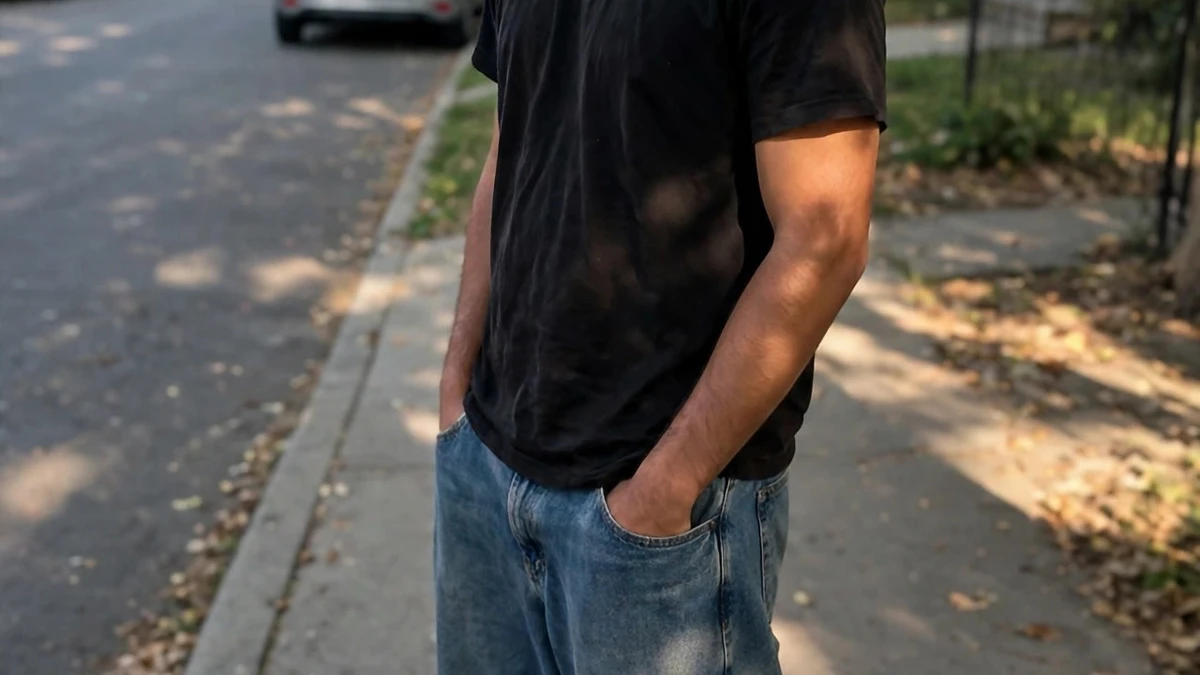

Low-rise jeans for men are easy to get wrong and easy to get right. The difference is rarely the pair itself. It is the fit checks you do before you leave the house: where the waistband sits, what the shirt does over it, and whether the pair stays put when you sit down. Get those three things right and a low rise looks relaxed and current. Get them wrong and you spend the day hitching your jeans up.
This guide is built around those checks. It is not about the early-2000s version of the low rise, and it is not about copying a women’s fit. It is about a men’s low rise in 2027: a rise of about 8 to 9 inches, a waistband that rests on the hip bones, and a cut that works with a man’s frame rather than against it.
The nine steps below cover sizing, the sitting test, the shirt, the belt, the shoes, the occasions that suit the cut, and the care that keeps the waistband in shape. Follow them in order and you will know, before you buy, whether a low rise is right for you.
Key takeaways
- A men’s low rise sits on the hip bones, about 8 to 9 inches, and the fit check that matters most is sitting down in the pair.
- Size the waist to your hips, not to the number you wore in a mid-rise cut — the two numbers rarely match.
- A half-tuck or an untucked shirt that skims the waistband shows the fit; a long shirt hides it entirely.
- The low rise suits evenings, gigs, and casual days; it is the wrong choice for a formal office or a job interview.
- No styling trick fixes a waistband that slides — if the pair will not stay on your hips, it is the wrong pair, not the wrong outfit.
What a low rise actually does to a men’s outfit
A low rise changes the proportions of an outfit before anything else. It lengthens the torso visually, because the waistband sits lower, and it shortens the leg line, because the crotch sits lower too. That is why the rest of the outfit has to work a little harder: the shirt has to end in the right place, the shoes have to carry some weight, and the jacket has to frame the waist rather than hide it.
The other thing a low rise does is make the fit visible. A mid-rise jean forgives a lot, because the waistband sits at the natural waist and a belt holds everything in place. A low rise has no such safety net. The waistband is on the hips, the shirt is shorter, and any gap at the back or slide at the front is on show.
The waistband reads as a detail rather than a boundary, the shirt sits more naturally, and the whole outfit looks less assembled.
How to read the rise before you style the pair
Start with the label, not the look. A men’s low rise measures about 8 to 9 inches from the crotch seam to the top of the waistband, and that number is printed on most product pages, even when the shop floor staff do not know it. If the rise is not listed, measure it yourself with a tape, because a pair sold as low-rise is often a mid-rise cut with a lower price tag and a trendier name.

Then read the back rise, which is the part most men skip. The front rise tells you where the waistband sits when you stand. The back rise tells you whether it stays there when you sit, bend, or drive. A short back rise is the single most common reason a low rise fails, and it is the easiest thing to check: bend forward in front of a mirror, and if the back gaps, the rise is too low for you. Our guide to styling cropped jeans for men uses the same sitting test, because the principle is the same: a jean has to work when you move, not just when you stand still for a photo.
9 steps to styling low-rise jeans for men
Size the pair to your hips and ignore your old waist number
What to do: Measure around your hips where the waistband will sit, and buy that number. What to avoid: Buying your mid-rise waist size and hoping the low rise stretches into it. Best for: First-time low-rise buyers. Time needed: 5 minutes with a tape measure. Standout tip: Try two sizes and keep the one that stays put when you walk.
Your waist size in a mid-rise jean is measured at the natural waist, which is usually the narrowest part of your torso. A low rise sits on the hips, which are wider, so the number is often one size larger.
Use the mirror to check the back rise, not just the front
What to do: Stand sideways in a mirror and check the back rise covers you when you bend. What to avoid: Judging the fit from the front only. Best for: Men who sit most of the day. Time needed: 2 minutes in the changing room. Standout tip: Bend forward; if the back gaps, the rise is too low for you.
The front of a low rise is easy to get right, because you can see it. The back is where the problems hide, and they only show up when you sit, bend, or reach for something. A back rise that is an inch too short will gape every time you sit down, and no shirt is long enough to hide it all day. Check it in the shop, not at home.
Wear a half-tuck so the waistband reads as a detail
What to do: Tuck just the front of the shirt and let the rest hang. What to avoid: A full tuck that pulls the waistband up, or a long shirt that hides the fit. Best for: Casual evenings and weekends. Time needed: 30 seconds. Standout tip: A half-tuck only works if the shirt is not too long.
The half-tuck is the low rise’s best friend, because it shows the waistband without making a fuss of it. A shirt that hangs past the hips hides the low waist entirely, which defeats the point of wearing it. The half-tuck sits in between: it shows a strip of waistband, and that is enough.
Throw a work jacket over the top and leave it open
What to do: Layer an open work jacket or overshirt over the low waist. What to avoid: A jacket that buttons over the waistband and hides it. Best for: Cooler days and layered looks. Time needed: None. Standout tip: The jacket should end at the hip, not below it.
An open layer does two jobs at once. It frames the waistline, so the low rise reads as part of a deliberate outfit, and it gives you somewhere to put your hands that is not your waistband.
Pick a belt in the same leather as your shoes
What to do: Pick a belt in the same leather tone as your shoes. What to avoid: A wide belt that fights the low waistband. Best for: Smarter low-rise outfits. Time needed: None. Standout tip: A slim leather belt in tan or black is the safe choice.
A low rise does not need a belt to stay up, and if it does, the fit is wrong. The belt is a finishing detail, and the rule for it is the same as for any jean: match the leather to the shoes, keep the buckle small and flat, and let the belt sit in the loops rather than cinching the waistband tighter.
Choose footwear with real weight at the sole
What to do: Wear boots or chunky trainers that balance the low waist. What to avoid: Slim, delicate shoes that make the leg look top-heavy. Best for: Autumn and winter outfits. Time needed: None. Standout tip: A boot with a solid sole grounds the low rise.
A low waist moves the visual weight of an outfit upward, because the waistband sits lower and the torso looks longer. The shoes have to answer that by carrying some weight at the bottom. A heavy boot or a chunky trainer does the job.
Save the low rise for the evening and keep days mid-rise
What to do: Wear the low rise to dinners, gigs, and nights out. What to avoid: Wearing it to a formal office or a job interview. Best for: Social evenings. Time needed: None. Standout tip: If the dress code is unclear, choose the mid-rise pair.
The low rise is a casual cut, and it is at its best when the occasion is casual too. Dinners, gigs, bars, and weekends are its natural home. A formal office is not, and a job interview certainly is not, because the first thing an interviewer notices should not be your waistband.
Pair the low waist with a denim jacket and nothing else loud
What to do: Add a denim jacket in a different wash and keep the rest plain. What to avoid: A loud print or a second low-rise statement. Best for: Relaxed weekends. Time needed: None. Standout tip: Two washes of denim work if one is clearly darker.
Double denim works with a low rise because the jacket gives the outfit a top half with some structure, and the low waist gives it a relaxed bottom half. The rule is that only one thing in the outfit should be a statement. The low waist is the statement here, so the jacket should be plain, the tee should be plain, and the shoes should be plain.
Hang them from the waistband, not folded over a rail
What to do: Clip the jeans by the waistband on a hanger. What to avoid: Folding them over a rail, which creases the waistband and weakens it. Best for: Keeping the waistband’s shape. Time needed: 1 minute. Standout tip: A clip hanger on the waistband is the best storage.
A low-rise waistband is the hardest-working part of the jean, and folding it over a rail puts a permanent crease exactly where it needs to stay flat. Clip hangers hold the waistband straight and let the denim hang in its natural shape.
Wearing a low rise through the year
Summer is the low rise’s easiest season. A short-sleeve shirt, a half-tuck, and a pair of clean trainers are all it needs, and the lower waistband is more comfortable in the heat than a mid-rise that sits against the stomach.
Winter needs more thought, because the low waist leaves a gap where a mid-rise would cover you. A longer layer on top, an open work jacket, and a boot with a solid sole are the answer, and a thermal layer underneath should be low-cut, not a high-waisted one that bunches above the waistband. Our guide to styling ripped jeans for men covers the same cold-weather problem, and the fix is the same: layer from the waist up, not from the waist down.
Spring and autumn are the low rise’s best seasons, because the weather suits the layers the cut needs. A denim jacket, an overshirt, or a light blazer all work, and the low waist has room to breathe under them.
The caveats that matter
A low rise is not for every man, and that is fine. If you carry your weight around the stomach, a low waistband will dig in where a mid-rise would sit comfortably. If you have a back problem that makes bending difficult, you will be bending to adjust the waistband all day.
| Detail | What is known |
|---|---|
| Rise to look for | About 8 to 9 inches; below 8 it slides, above 9 it is mid-rise |
| First fit check | Sit down in the pair; the waistband should stay on the hip bones |
| Back rise | Check it in a mirror by bending forward; a gape means the rise is too low |
| Shirt length | Half-tuck or a shirt that skims the waistband; a long shirt hides the fit |
| Belt | Slim, flat, matched to the shoes; a belt is a detail, not a support |
| Shoes | Boots or chunky trainers balance the low waist; slim shoes do not |
| Occasions | Evenings, gigs, casual days; not a formal office or a job interview |
| Storage | Hang from the waistband on a clip hanger; do not fold over a rail |
The other caveat is the one nobody mentions: a low rise shows underwear more easily than a mid-rise, because the waistband sits lower. Low-cut trunks or briefs are the answer, and a high-waisted boxer will show above the waistband every time you sit down.
Checklist: styling low-rise jeans honestly
Use these checks before you leave the house, and again after a week of wear.
- Check the waist size against your hips, not against the number you wore in a mid-rise cut.
- Sit down in the pair and check the back rise in a mirror before you decide to keep it.
- Half-tuck the shirt, or wear one that skims the waistband, so the fit reads as a detail.
- Match the belt to the shoes, keep the buckle small, and never rely on the belt to hold the pair up.
- Wear boots or chunky trainers, so the shoes carry some weight against the low waist.
- Keep the low rise for evenings and casual days, and keep a mid-rise pair for work.
Frequently asked questions
How far below the waist does a men’s low rise sit?
About 8 to 9 inches from the crotch seam to the top of the waistband, which puts it on the hip bones, roughly two inches below the natural waist. A mid-rise jean measures about 10 to 11 inches. The difference sounds small, but it changes where the waistband sits, how the shirt falls, and how the pair behaves when you sit down.
Will a low rise pinch when you are behind the wheel?
It can, if the back rise is short or the seat is tight. A low rise with a longer back rise and a little stretch in the waistband is comfortable for driving, because the waistband stays on the hips instead of riding up.
Will my shirt ride up over a low waistband?
A long, lightweight shirt can ride up, because there is less waistband holding it in place. A half-tuck solves it, and so does a shirt with a little weight that ends at the waistband.
Do low-rise jeans belong anywhere near a job interview?
No. A job interview is the one occasion where the safest choice is always the right one, and a low rise is never the safest choice. Wear a mid-rise or a straight-leg jean in a dark wash, or a pair of chinos, and save the low rise for the evening after you get the job.
What do I do if the waistband keeps rolling over?
The waistband is either too big or too rigid. A waistband that is a size too large folds over because there is nothing holding it flat, and a rigid waistband with no stretch does the same when you sit. Size down, choose a pair with a little elastane, or try a different cut. A rolling waistband is a fit problem, not a styling problem.
Should a shorter man skip the low rise altogether?
Not necessarily. With a taper and a shoe that adds a little height, a low rise works fine under 5ft 8in. A tapered leg keeps the line clean from knee to ankle, and a boot or a trainer with a solid sole lifts the whole outfit. A boyfriend jean for men is the opposite approach, because its loose leg shortens the leg line, so if height is the concern, the taper is the better choice.
The bottom line
Styling low-rise jeans for men comes down to three checks: the waist size against your hips, the back rise in a mirror, and the sitting test in the changing room. Get those right and the rest is simple: a half-tuck, a slim belt matched to your shoes, and a boot or a chunky trainer to balance the low waist.
Keep the low rise for evenings, gigs, and casual days, and keep a mid-rise pair for work. Do that, and the low rise is what it should be: a relaxed, current cut that looks deliberate. Skip the checks, and it is a pair of jeans you spend all day adjusting, which is nobody’s idea of a good outfit.