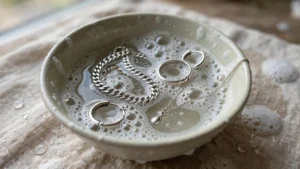
A diamond that dazzled in the shop can look tired within a few months of everyday wear, and the change is so gradual that most people blame the stone. In truth, the diamond is almost never the problem. A thin film of hand cream, foundation, soap residue and dust builds up on the surface and under the setting, and because a diamond sparkles by bending light, even a faint layer dulls it. The good news is that this is one of the easiest jewellery problems to fix.
The trouble starts when people reach for the wrong fix. Harsh household cleaners, toothpaste, baking soda scrubs and boiling water all circulate as advice, and each one carries a real risk to the metal, the setting or the smaller stones around the centre diamond. Knowing what is safe, what is unnecessary and what should be left to a jeweller is the whole skill, and it is a small one.
This guide walks through the cleaning methods that actually work in 2027, from the simple soak that handles most dullness to the professional options worth paying for once or twice a year. It covers rings, earrings, necklaces and bracelets, and explains which settings need extra care. If you are choosing a piece for the first time, our diamond buying guide for 2027 explains the cuts and settings that are easiest to keep looking bright.
Key takeaways
- Warm water with a few drops of mild dish soap is the safest first step for almost every diamond piece, and it solves most dullness on its own.
- A soft brush reaches the dirt trapped under the stone, which is where most of the lost sparkle is hiding.
- Ultrasonic and steam cleaning are powerful, but they are not safe for every setting, so check the stone and the mounting first.
- Clean diamond jewellery little and often, roughly every two weeks, rather than waiting until it looks grey.
- No home method can fix a loose stone, a bent prong or a scratched setting, and cleaning a damaged piece at home can make it worse.
What cleaning diamond jewellery actually covers
Cleaning diamond jewellery means removing the everyday film that sits on the stone and the metal, not changing the diamond itself. Diamonds are the hardest natural gemstone, so they do not scratch easily or fade, but their brilliance depends on light entering the top of the stone and coming back out. Anything that coats the surface, from moisturiser to hairspray, interrupts that path and makes the stone look flat and grey. Dirt also collects in the tiny gaps under the stone and around the prongs.
Safe at-home cleaning covers the surface film and the loose dirt in those gaps, using gentle soap, warm water and a soft brush. What it does not cover is repair. If a prong has moved, a stone wobbles when you press it, or a claw looks thinner than the others, cleaning will not help and the piece should go to a jeweller before it is worn again.
There is also a difference between cleaning and professional servicing. A jeweller checks every setting under magnification, tightens anything loose and polishes out fine scratches. Most jewellers suggest a professional clean and check every six to twelve months for pieces worn daily. That visit is also the moment to ask whether a piece is safe for an ultrasonic cleaner at home.
How to choose the right cleaning method
Choosing a method starts with looking at the piece rather than reaching for a product. A plain solitaire in a sturdy four-prong setting is the most forgiving piece you can own, while a pavé band, a halo ring or a piece with softer side stones needs a gentler hand. Before you clean anything, check that every stone is secure and work over a bowl rather than an open sink.

Below are nine methods and areas to know, each with what it does well and what to watch for, so you can match the approach to the piece in your hand.
1. The warm soapy water soak
Fill a small bowl with warm, not hot, water, add two or three drops of mild dish soap, and leave the piece to soak for twenty to thirty minutes. The soap loosens the film of cream, oil and dust. Rinse in clean warm water and pat dry with a soft, lint-free cloth.
What We Like: Gentle, cheap and safe for almost every diamond piece, and it removes most everyday dullness.
What to Consider: It will not shift stubborn dirt wedged under the stone, so follow it with a soft brush, and never use boiling water.
2. The soft-bristle brush
A soft toothbrush or dedicated jewellery brush makes the soak work properly, because it reaches the underside of the stone where most dirt hides. Use light, short strokes around the prongs and under the setting, and let the bristles do the work. A baby toothbrush is a good choice, since its bristles are especially soft.
What We Like: It targets the exact place where dullness starts, it costs almost nothing, and it is safe for the stone itself.
What to Consider: A stiff brush can loosen small stones or scratch softer metals, so keep the pressure light and replace the brush when bristles splay.
3. A ready-made jewellery cleaning solution
Ready-made solutions are a prepared version of the soapy soak, usually sold with a small basket and brush. They are convenient for a quick clean. Read the label first, because some are made for gold only and are not suitable for pieces with pearls, opals or other soft stones.
What We Like: Quick and tidy, the basket keeps small pieces safe, and the formula is balanced so you do not have to guess the dilution.
What to Consider: It is no stronger than a good soapy soak, so do not expect it to rescue a piece that has not been cleaned in years.
4. An ultrasonic cleaner
An ultrasonic cleaner uses high-frequency sound waves in water to shake loose dirt from places a brush cannot reach. Small home machines are widely available, and many jewellers use larger versions of the same technology. It is excellent for plain solitaires and sturdy settings, but vibrations can loosen stones that are already fragile.
What We Like: It cleans hidden crevices thoroughly, it is fast, and one session can restore a ring that a soak barely improved.
What to Consider: Avoid it for pavé, tension settings, pieces with fractures or any diamond that has already been repaired.
5. Professional steam cleaning
Steam cleaning is the method most jewellers reach for in the workshop, because a jet of hot steam blasts away grime without any chemicals at all. It is usually done as part of a service that includes checking the settings, and it is best saved for a piece that needs a deeper clean than a soak can give.
What We Like: Chemical-free, it reaches deep into the setting, and it is combined with a professional inspection of the prongs and claws.
What to Consider: Steam is very hot and forceful, so it is not suitable for fragile settings or pieces with soft side stones.
6. A polishing cloth for the metal
A polishing cloth is for the metal, not the diamond, and it is the quickest way to bring back shine between proper cleans. Jewellery cloths carry a gentle polishing compound that removes the fine tarnish that makes gold look dull. Rub gently in one direction.
What We Like: It works in under a minute, it needs no water or soap, and it makes the whole piece look cared for.
What to Consider: It will not clean under the stone, and over-polishing can wear the rhodium coating on white gold, so use it lightly.
7. Cleaning pavé and halo settings
Pavé and halo settings hold many small diamonds in tiny beads or claws of metal, and they trap dirt more easily than a plain solitaire. They also have more points of failure, so use the gentlest method you own. A long soak followed by the lightest possible brushing is the right approach, and inspect the piece regularly, because a loose pavé stone is easy to miss until it is gone.
What We Like: A patient soak restores the sparkle of the small stones beautifully, and regular gentle cleaning prevents the build-up that makes pavé look grey.
What to Consider: Never use an ultrasonic cleaner or a stiff brush on pavé, and take the piece to a jeweller if a stone looks uneven.
8. Cleaning studs, necklaces and bracelets
Studs and necklaces collect different dirt from rings, because they sit against skin, hair products and perfume rather than hand cream and soap. Clean studs with the same soak and brush, paying attention to the back of the setting and the post. Brush chains and links gently too, and clean a pendant with its setting facing down so dirt falls away.
What We Like: The same soak works for every piece, so one routine covers the whole collection, and studs respond quickly to a short soak. Our best diamond earrings for 2027 roundup shows which stud and drop styles are simplest to keep clean.
What to Consider: Chains tangle easily when soaked, so lay them out flat, and dry each link before storing the piece.
9. The quick clean before an event
When there is no time for a full soak, a fast clean can still make a visible difference. Hold the piece under warm running water with a drop of mild soap, brush the underside of the stone for thirty seconds, rinse and pat dry, and finish with a polishing cloth. Travel wipes are a stopgap, not a substitute for a proper soak.
What We Like: It takes under two minutes, it is safe for most pieces, and it is enough to restore sparkle for an evening out.
What to Consider: It does not reach the dirt deep under the setting, so do not let quick cleans replace the full routine.
Why diamonds lose their sparkle in the first place
Most people assume a diamond goes dull because it is old or the quality was poor, but the real cause is almost always the film that daily life leaves behind. Hand cream and moisturiser are the biggest culprits, because they transfer straight onto a ring. Foundation, sunscreen and hairspray do the same for earrings and necklaces, and ordinary soap leaves a residue of its own when a ring is washed under a tap and never properly rinsed. Over weeks, these layers build into a haze that no amount of wiping with a sleeve will remove.
The design of the setting plays a part too. A stone set high on tall prongs catches more light and more dirt at the same time, while a low-set stone in a bezel is harder to clean underneath. Pavé bands and halo rings have far more surface area for grime to cling to, so they need cleaning more often than a plain solitaire. A ring worn daily needs attention every couple of weeks, while a necklace worn on special occasions may only need cleaning a few times a year.
There is also a seasonal pattern worth knowing. Summer brings sunscreen, sweat and sea water, all of which dull a stone quickly, while winter brings heavy hand creams and gloves, which press residue into the setting. A quick soak at the change of seasons is a good habit, and the moment to check that clasps close properly. The goal is consistency, because a diamond cleaned lightly and often will always look better than one cleaned aggressively once a year.
The caveats that matter
The most important caveat is that not every cleaning tip online is safe, and some of the most popular ones are the most damaging. Toothpaste is mildly abrasive and can scratch metal and loosen settings. Baking soda pastes and hard scrubs do the same, slowly wearing away the fine detail of a setting. Boiling water can stress stones that have existing fractures, and household cleaners such as bleach and ammonia can damage the metal and softer stones set beside the diamond. If a method sounds too strong for something you wear against your skin, it is too strong for the jewellery too.
| Method or product | What is known |
|---|---|
| Warm water and mild dish soap | Safe for almost all diamond jewellery and the recommended starting point. |
| Soft-bristle brush | Safe when pressure is light; stiff bristles can loosen small stones. |
| Ready-made jewellery solution | Convenient and effective, but check the label for excluded stones. |
| Ultrasonic cleaner | Powerful for sturdy settings; risky for pavé, tension and repaired pieces. |
| Steam cleaning | Best done professionally; very effective, but too forceful for fragile settings. |
| Toothpaste or baking soda | Abrasive and not recommended; can scratch metal and wear settings. |
| Bleach, ammonia and harsh cleaners | Can damage metal and softer side stones; never use on diamond jewellery. |
| Boiling water | Unnecessary and risky for stones with existing fractures or repairs. |
Two other caveats deserve attention. Cleaning cannot reveal whether a diamond is genuine or how it is graded, and no home test replaces a certificate or a jeweller’s assessment. Insurance and warranties sometimes require professional servicing, so keep receipts from jeweller visits for pieces of significant value.
Your diamond cleaning checklist
- Work over a bowl, never an open sink, and plug the drain if you must use a basin.
- Check every stone is secure and every prong looks intact before you start.
- Soak for twenty to thirty minutes in warm water with a few drops of mild dish soap.
- Brush gently under the stone and around the prongs with a soft-bristle brush.
- Rinse in clean warm water and pat dry with a soft, lint-free cloth.
- Store each piece separately in a soft pouch or lined box so pieces do not scratch each other.
Frequently asked questions
How often should I clean diamond jewellery?
For a ring worn every day, a gentle soak every two weeks is a good rhythm, with a quick brush and rinse in between if it starts to look dull. Earrings and necklaces worn less often can be cleaned once a month, and a professional clean once or twice a year completes the routine.
Can I use dish soap on diamond jewellery?
Yes, a few drops of mild dish soap in warm water is the method most jewellers recommend for home cleaning. Choose a plain soap without added moisturisers, rinse thoroughly, and dry the piece with a soft cloth so water spots do not form.
Is it safe to clean diamond jewellery with an ultrasonic cleaner at home?
It is safe for many sturdy pieces, such as a plain solitaire in a sound setting, but not for every piece. Avoid it for pavé, halo and tension settings, for any diamond with a fracture, and for pieces that include softer stones. If unsure, ask a jeweller to check the piece first.
What should I never use on diamond jewellery?
Avoid toothpaste, baking soda pastes, bleach, ammonia, harsh household cleaners and boiling water. All of them can damage the metal, wear the setting or harm softer stones set beside the diamond.
How do I clean a diamond ring without removing it from my finger?
It is better to take the ring off and clean it properly in a bowl, because cleaning it on your hand makes it easy to miss the underside of the stone, where most dirt collects. A quick soapy brush while wearing it will help, but treat it as a temporary fix.
Should I get my diamond jewellery professionally cleaned?
Yes, especially for engagement rings and other pieces worn daily, because a professional clean includes a check of every prong and setting under magnification. If you are choosing a ring, our best engagement rings for 2027 guide explains which settings are easiest to service.
The bottom line
Cleaning diamond jewellery is a small, regular habit rather than a one-off project, and the simplest method is usually the best one. Warm water, a few drops of mild dish soap and a soft brush will keep most pieces looking bright, and a professional clean once or twice a year takes care of the rest. The pieces that look dull are almost never damaged; they are simply dirty, and a twenty-minute soak is often all it takes.
Start with the gentlest method, be patient with pavé and halo settings, and leave anything loose or damaged to a jeweller. Keep the routine light and frequent, store pieces separately, and you will spend far less time worrying about sparkle and far more time enjoying the jewellery itself.
Note: This guide covers general care for diamond jewellery. If a piece is antique, has a fracture, or includes softer stones alongside the diamond, ask a jeweller before using any cleaning method beyond a gentle soapy soak.
Meet Our Experts
BrassSmile’s jewellery guides are written by editors who research gemstone care and setting design, and who check their advice against the guidance published by working jewellers.
Why Trust BrassSmile
BrassSmile covers jewellery, fashion and luxury lifestyle to the same standard in every guide: original writing, practical advice for home, and clear limits on what should be left to a professional.