Diamond jewellery is built to last. A diamond is the hardest natural material on earth, and a well-made setting can survive decades of daily wear. What it cannot survive is careless storage. Diamonds scratch other stones, scratch each other, and chip when they knock against hard surfaces, while the metal around them tarnishes, bends, and loosens with time. Most of the damage that sends a piece to the jeweller for repair does not happen while it is being worn. It happens in a drawer, in a tangled pile, or in a travel bag.
Storing diamond jewellery well is a skill in itself, not an afterthought. A good routine takes less than a minute a day and protects pieces worth far more than the box they sit in. The principles are simple: keep pieces separate, keep them clean, keep them dry, and keep them somewhere you can find them.
Below are nine steps that cover the whole routine, from cleaning a piece before it goes away to checking its setting every few months.
Key takeaways
- Diamonds are hard, but they scratch softer stones and each other, so every piece needs its own compartment or pouch.
- Clean a piece before storing it, because lotion, sweat, and dust left on a stone dull its sparkle and can trap moisture against the metal.
- Fasten chains and close clasps before putting them away, since an unfastened chain is the fastest route to a tangle.
- Store diamond jewellery somewhere cool, dry, and dark, away from bathrooms, windowsills, and radiators.
- No storage routine replaces a professional check, and a loose prong or worn clasp will not fix itself in a box, however good the box is.
What storing diamond jewellery actually means
Storing diamond jewellery means more than putting it in a box. It means keeping each piece in a condition where it is safe, findable, and ready to wear. A diamond that sits in a pile with other jewellery is not stored, it is waiting to be damaged. A ring that sits on a damp bathroom shelf is not stored, it is slowly tarnishing. The goal is simple: when you open the box next week or next month, every piece should look the way it did when you put it away.
Diamonds themselves are remarkably tough, but they are not invincible. A diamond can chip at the girdle, the thin edge around the middle of the stone, if it knocks against another diamond or a hard surface. The metal holding the stone is far more vulnerable. Gold scratches easily, and prongs wear thin over years of wear, so a setting that is already loose will only get worse if the piece rattles around in a drawer.
The other thing storage does is protect the stones around the diamond. A diamond ring in a shared compartment will scratch a pearl, an opal, an emerald, or a soft gold chain, because the diamond is harder than all of them. That is the most common storage mistake, and it is the easiest to avoid. Give the diamond its own space, and it stops being a hazard to everything else in the box.
What you need and what to look for
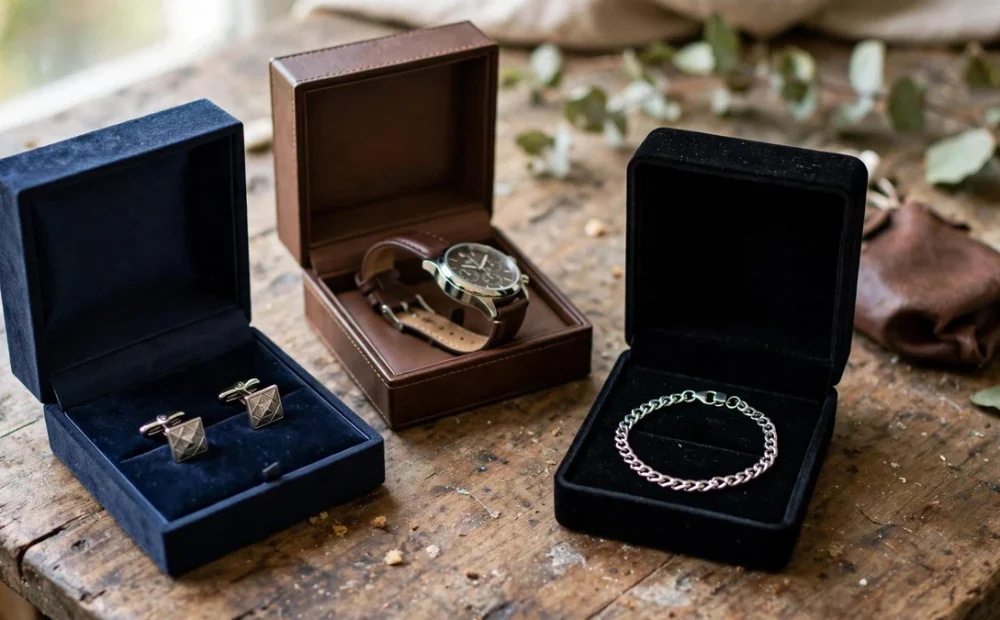
You do not need an expensive jewellery box to store diamond jewellery well. You need a box, a case, or a set of pouches with separate compartments, a lining that is soft and clean, and a lid that closes properly. A lined box with individual slots or small compartments is ideal, because it keeps pieces apart without you having to think about it.

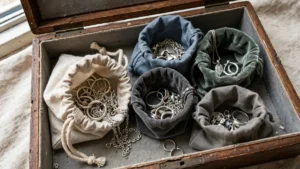
Soft pouches are a useful second layer. A small velvet or microfibre pouch for each piece works well inside a larger box, and it is the best option for travel, where a full box is impractical. Avoid plastic bags, which trap moisture, and avoid hard cases with no lining, which can scratch metal. A clean, soft cloth for wiping a piece before it goes away is the other essential, along with a small brush for the settings, which our guide to cleaning diamond jewellery explains in more detail.
When you are choosing a storage spot, look for somewhere that stays at a fairly steady temperature, stays dry, and stays out of direct sunlight. A bedroom drawer or a dressing table away from the window is usually right. A bathroom is usually wrong, because steam and humidity work on metal and on the glue and thread in some settings.
The 9 steps to store diamond jewellery properly
Clean each piece before you put it away
What to do: Wipe each piece with a soft, dry cloth when you take it off, and give it a proper clean if it has been worn all day, after exercise, or after perfume and lotion. What to avoid: Putting a piece away dirty, with lotion, sweat, or hairspray still on it, because residue dulls the stone and traps moisture against the metal. Best for: Every piece, every time, but especially rings and necklaces worn close to the skin. Time needed: 30 seconds for a wipe, 10 minutes for a wash and dry. Standout tip: A quick wipe after wearing does most of the work; a full clean once a month does the rest.
Give every piece its own compartment
What to do: Put each ring, necklace, bracelet, and pair of earrings in its own slot, compartment, or pouch, so nothing touches anything else. What to avoid: Dropping several pieces into one compartment, where chains tangle and diamonds scratch each other and softer stones. Best for: Anyone with more than a few pieces, and essential if you own pearls, opals, or emeralds alongside diamonds. Time needed: A minute to sort, once, then seconds a day. Standout tip: If your box runs out of compartments, small pouches inside a larger section work just as well.
Fasten chains and close clasps before storing
What to do: Close the clasp on every necklace and bracelet before it goes into the box, and lay chains out flat rather than coiled in a ball. What to avoid: Storing a chain open and loose, which lets it loop through itself and through neighbouring pieces, forming a knot that is hard to undo without pulling. Best for: All necklaces and bracelets, especially fine chains and tennis bracelets. Time needed: 10 seconds per piece. Standout tip: Threading a chain through a drinking straw keeps a fine chain perfectly straight in a travel roll.
Store rings prong-side up, never stacked
What to do: Place rings in a ring roll or a slot with the stone facing up, one ring per slot, so the prongs are not pressed against anything. What to avoid: Stacking rings on top of each other, or tossing them loose into a compartment, where the stones knock against the bands and the prongs catch and bend. Best for: Solitaire rings, eternity bands, and any ring with a raised setting. Time needed: Seconds. Standout tip: If two rings must share a slot, put a small piece of soft cloth between them.
Keep diamonds away from softer stones
What to do: Store diamonds in a different section of the box from pearls, opals, emeralds, turquoise, and other soft stones, and never let them touch. What to avoid: Mixing diamonds and soft stones in one pouch or compartment, because the diamond will scratch the softer stone the first time the box is moved. Best for: Mixed collections, and anyone who owns both diamond and pearl or gemstone jewellery. Time needed: A minute to separate, once. Standout tip: If you are unsure how hard a stone is, store it separately; it costs nothing and removes the risk entirely.
Choose a cool, dry, dark spot
What to do: Keep your jewellery box in a bedroom drawer, a dressing table away from the window, or a cool cupboard, somewhere the temperature stays fairly steady. What to avoid: Bathrooms, windowsills, radiators, and anywhere damp or sunlit, because humidity tarnishes metal and heat dries out the thread, glue, and settings in some pieces. Best for: Every piece, but especially gold settings, pearls, and pieces with glued stones. Time needed: None, once the box has a home. Standout tip: If your bedroom is humid, a small silica gel packet in the box helps, and it costs almost nothing.
Use anti-tarnish strips or silica gel in the box
What to do: Place an anti-tarnish strip or a small silica gel packet in each section of the box, and replace them every few months or when they stop working. What to avoid: Leaving the same strip in place for years, or using loose silica beads that can spill into settings, and never put a damp cloth or a wet pouch in the box. Best for: Silver settings, white gold, and anyone storing jewellery in a humid home. Time needed: A minute to place, a minute to replace. Standout tip: Write the date on the strip when you put it in, so you know when it is due for replacement.
Travel with a small roll, never loose in a bag
What to do: Pack diamond jewellery in a small jewellery roll or a set of pouches when you travel, with each piece in its own pocket, and keep the roll in your hand luggage. What to avoid: Dropping pieces loose into a handbag, a suitcase pocket, or a hotel drawer, where they will tangle, scratch, and be easy to lose. Best for: Holidays, weddings, and any trip where you are taking more than one piece. Time needed: Two minutes to pack. Standout tip: Photograph your pieces before you travel, so you have a record if anything is lost or damaged.
Check clasps, prongs and settings every few months
What to do: Every few months, look at each piece in good light, check that the stone does not move when you press it gently, and check that clasps close firmly and prongs are not bent or worn thin. What to avoid: Wearing a piece with a loose stone or a weak clasp, or assuming a setting that was fine last year is still fine, because prongs wear gradually and invisibly. Best for: Rings worn daily, tennis bracelets, and any piece with a stone held by prongs. Time needed: 10 minutes for a whole collection. Standout tip: If a stone moves at all, or a clasp feels weak, take the piece to a jeweller before wearing it again.
Which storage method is right for your pieces
The right storage method depends on what you own and how much of it there is. A small collection of two or three pieces is well served by a single lined box with a ring roll and a few compartments. A larger collection needs more structure, either a bigger box with separate sections for rings, necklaces, and earrings, or a set of individual pouches inside a drawer.
Daily-worn pieces deserve the easiest access. A ring you wear every day should live in the slot you reach first, not buried under pieces you wear twice a year, because the easier it is to put away properly, the more likely you are to do it. Occasion pieces can live further back, in pouches or deeper compartments, as long as they are still separate and still dry. Our guide to storing jewellery properly covers the general principles for a whole collection, and the same logic applies here, with extra care for diamonds because of what they can scratch.
If you own very valuable pieces, consider a home safe or a safe deposit box for the ones you rarely wear, and insure the ones you do. A safe is not a substitute for good storage inside it, though. Pieces in a safe still need compartments and pouches, because a safe is just a very secure drawer, and the same scratching and tangling happens there.
The caveats that matter
Good storage is simple, but it has limits. It cannot undo damage that has already happened, and it cannot protect a piece that is already loose or worn. If a prong is thin, a clasp is weak, or a stone moves in its setting, no box will fix it, and wearing the piece risks losing the stone.
| Detail | What is known |
|---|---|
| Biggest storage risk | Diamonds scratching softer stones and each other when pieces touch |
| Best container | A lined box with separate compartments, or individual soft pouches |
| Best location | Cool, dry, and dark, such as a bedroom drawer, away from windows and radiators |
| Worst location | Bathrooms and windowsills, where humidity and heat work on metal and settings |
| Before storing | Wipe each piece with a soft, dry cloth; clean it properly if it was worn all day |
| Chains and clasps | Close clasps and lay chains flat before storing, to stop tangling |
| Extra protection | Anti-tarnish strips or silica gel in the box, replaced every few months |
| What storage cannot fix | Loose prongs, weak clasps, or worn settings; those need a jeweller |
There are also a few things storage cannot help with at all. A diamond can still chip if it is dropped on a hard floor, whatever box it came from, and a piece can still be lost if it is left on a hotel bedside table rather than put away. Storage is a habit, not a guarantee, and it works best alongside cleaning regularly, checking settings, and insuring pieces that would be hard to replace.
Checklist: storing diamond jewellery honestly
Use these checks when you organise your box, and again every few months.
- Check every piece has its own compartment or pouch, with nothing touching anything else.
- Check each piece is clean and dry before it goes away, with no lotion, sweat, or dust on it.
- Check every chain is fastened and laid flat, and every clasp is closed before storing.
- Check the box lives somewhere cool, dry, and dark, not in a bathroom or on a windowsill.
- Check anti-tarnish strips or silica gel are in place and not past their replacement date.
- Check clasps, prongs, and settings every few months, and take any loose piece to a jeweller before wearing it again.
Frequently asked questions
Can I store diamond jewellery with other jewellery?
Yes, but not in the same compartment. Diamonds will scratch softer stones such as pearls, opals, and emeralds, and they can scratch each other, so keep diamonds in their own section of the box, or in individual pouches.
Is it safe to store diamond jewellery in the bathroom?
It is not ideal. Bathrooms are humid, and humidity speeds up tarnish on metal and can weaken thread and adhesive in some settings. A bedroom drawer or a dressing table away from the window is a better home for your jewellery box.
Do I need a special box for diamond jewellery?
No. A lined box with separate compartments, or a set of soft pouches, is enough. What matters is separation, cleanliness, and a dry spot, not the price of the box.
How often should I check my diamond jewellery settings?
Every few months is enough for most pieces. Look at each one in good light, press the stone gently to see if it moves, and check that clasps close firmly. If anything moves or feels weak, take the piece to a jeweller before wearing it again.
What is the best way to travel with diamond jewellery?
Use a small jewellery roll or individual pouches, one piece per pocket, and keep it in your hand luggage. Never put pieces loose in a handbag or a suitcase pocket, where they tangle, scratch, and are easy to lose. A gold necklace for everyday wear travels the same way, in its own pocket, fastened and flat.
Should I store diamond jewellery in plastic bags?
No. Plastic bags trap moisture against the metal, which can speed up tarnish and dull the stone over time. Use soft velvet or microfibre pouches instead, which let the piece breathe while keeping it separate and protected.
The bottom line
Storing diamond jewellery well is not complicated, and it does not need expensive equipment. Clean each piece before it goes away, give it its own compartment, fasten its clasps, keep it cool, dry, and dark, and check its setting every few months. Those five habits protect the stone, the metal, and the softer pieces stored beside it.
Start with the box you already own. Sort it once, separate the diamonds from the softer stones, put a strip or a silica packet in each section, and give the box a permanent home away from the bathroom and the window.