Freshwater and saltwater pearls look alike in a jewellery box, and that is exactly why choosing between them feels harder than it should. Both are real pearls, both can be beautiful, and both are sold as necklaces, studs and bracelets at prices that seem to overlap. Yet they are grown in different waters, by different molluscs, with different habits, and those differences show up in lustre, shape, size, durability and price.
The confusion is understandable. A glossy white freshwater strand can look just as fine as a saltwater one on a first glance, and a saltwater pearl is not automatically better than every freshwater pearl. What matters is matching the pearl to the piece of jewellery, the way you will wear it, and the budget you are comfortable with. A daily pair of studs has different needs from a once-a-year necklace.
Below are nine comparisons that matter in 2027, from how each pearl grows to how it ages, what it costs, and which one suits your skin, your wardrobe and your plans. Each comparison is described plainly, with what it shows, what to watch for, and who each type suits best, so you can choose with the facts in front of you.
Key takeaways
- Freshwater pearls grow in mussels in lakes and rivers, while saltwater pearls grow in oysters in the sea, and that difference shapes their size, shape and lustre.
- Saltwater pearls are usually rounder, with a sharper, mirror-like lustre, while freshwater pearls are often slightly less round but come in more shapes, colours and sizes.
- Freshwater pearls are generally more affordable, so they suit everyday pieces and first pearl purchases, while saltwater pearls suit classic, occasion-led jewellery.
- Both types are soft and need gentle care, kept away from perfume, hairspray and rough handling, and cleaned only with a soft, damp cloth.
- No pearl is scratch-proof or waterproof, and a very cheap pearl sold as saltwater is usually freshwater, so buy from sellers who name the type, the origin and the grade clearly.
What freshwater and saltwater pearls actually are
A pearl forms when a mollusc coats an irritant with layers of nacre, the same shimmering material that lines the inside of its shell. In freshwater farming, a small piece of mantle tissue is placed inside a mussel, and the mussel coats it with nacre, layer after layer, for two to six years. One mussel can grow many pearls at once, sometimes twenty or more, which is one reason freshwater pearls cost less.
Saltwater pearls grow in oysters, and the process is different. A small bead nucleus is placed inside the oyster with a piece of mantle tissue, and the oyster coats the bead with nacre for one to three years. Most saltwater oysters grow only one pearl at a time, and a large share of them do not survive the process, which is why saltwater pearls are rarer and more expensive.
The best-known saltwater types are Akoya, South Sea and Tahitian pearls. Akoya pearls are small, white and very round, with a bright, sharp lustre. South Sea pearls are larger, in white, silver and gold, and Tahitian pearls are dark, in grey, green and peacock shades. Freshwater pearls have no single famous name in the same way, but they come in white, pink, peach, lavender and grey, and in sizes from tiny seed pearls to large baroque shapes.
How we compared them and what to look for
Start with lustre, because it is the first thing your eye notices. Hold a pearl under a soft light and look at your reflection in it. A saltwater pearl usually gives a sharp, mirror-like reflection, while a freshwater pearl gives a softer, satin glow. Neither is wrong. The sharp shine suits classic, formal pieces, and the softer glow suits relaxed, everyday jewellery.
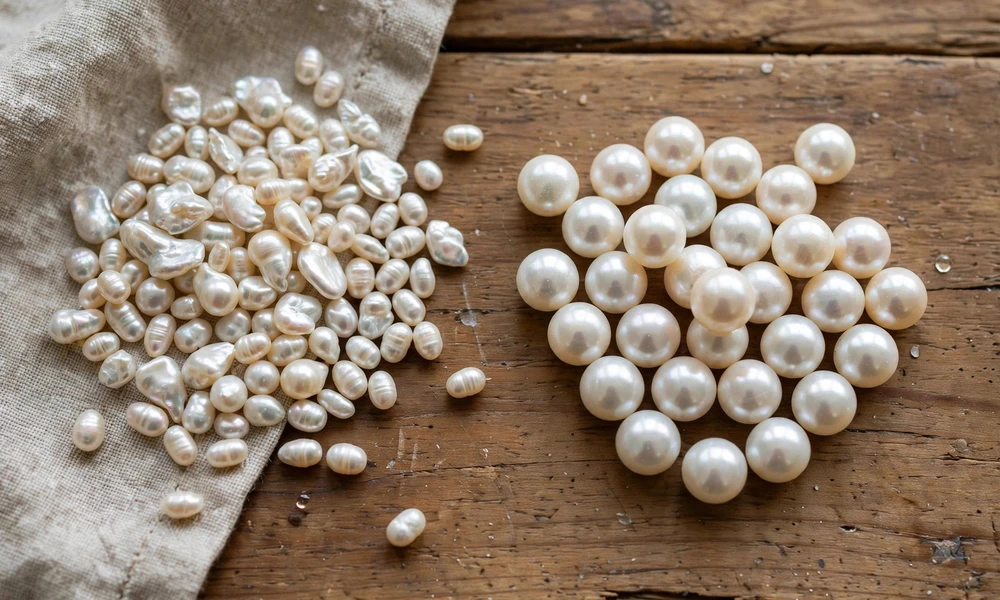
Look next at shape and surface. Truly round pearls are rare in both types, but saltwater pearls are rounder more often, because the bead nucleus gives them a round start. Freshwater pearls are more often slightly off-round, oval or baroque, which is part of their charm, and their surfaces often show small natural marks. A strand that is perfectly round, perfectly matched and very cheap should make you pause, because it may be imitation or mislabelled.
Finally, look at the setting and the clasp, not just the pearls. A good strand is knotted between pearls, so the pearls do not rub against each other and the strand does not scatter if the thread breaks. A solid clasp, a clean drill hole and a neat finish matter as much as the pearls themselves. Our guide to how to clean pearl jewellery explains the gentle routine both types need, because care habits matter more to a pearl’s life than where it was grown.
The 9 comparisons that matter in 2027
Where they grow
What it shows: Freshwater pearls grow in mussels in lakes and rivers, mainly in China, while saltwater pearls grow in oysters in the sea, in Japan, Australia, French Polynesia and the Philippines. What to consider: Origin affects supply and price, and it is worth asking a seller to name it. Best for: Freshwater suits buyers who want choice and value; saltwater suits buyers who want a named, classic type. Material: Mussel nacre for freshwater; oyster nacre over a bead nucleus for saltwater. Price range: Freshwater from around $30; saltwater from around $150. Standout feature: Freshwater farming yields many pearls per mussel; saltwater farming yields one per oyster.
The lustre
What it shows: Saltwater pearls usually have a sharper, brighter, mirror-like lustre, while freshwater pearls have a softer, deeper, satin lustre. What to consider: Lustre is the most visible sign of a thick, healthy nacre coating, so compare pearls in the same light. Best for: Saltwater suits formal, classic pieces; freshwater suits soft, everyday pieces. Material: Nacre thickness and quality in both types. Price range: High-lustre saltwater from around $300; high-lustre freshwater from around $80. Standout feature: Akoya pearls are known for the sharpest shine of all.
Shape and roundness
What it shows: Saltwater pearls are rounder more often, because the bead nucleus gives them a round core, while freshwater pearls are more often off-round, oval, button-shaped or baroque. What to consider: Perfect roundness costs more in both types, and slight variation is normal and natural. Best for: Saltwater suits classic strands and studs; freshwater suits modern, organic designs. Material: Bead nucleus for saltwater; tissue nucleus for freshwater. Price range: Round saltwater from around $200; round freshwater from around $60. Standout feature: Baroque freshwater pearls have unique, sculptural shapes no two alike.
Size
What it shows: Freshwater pearls usually range from 2 mm to 12 mm, while saltwater pearls range from about 2 mm for Akoya to 20 mm for South Sea. What to consider: Larger pearls cost far more in both types, and size should match the piece, not just the budget. Best for: Freshwater suits delicate, everyday pieces; large South Sea suits statement necklaces. Material: Nacre layers built over years in both types. Price range: Large freshwater from around $100; large South Sea from around $1,000. Standout feature: South Sea pearls are the largest cultured pearls you can buy.
Colour and variety
What it shows: Freshwater pearls come in the widest range of natural colours, white, pink, peach, lavender and grey, while saltwater pearls are known for white Akoya, golden South Sea and dark Tahitian shades. What to consider: Natural colour is part of the pearl, but some pearls are dyed, so ask whether the colour is natural. Best for: Freshwater suits colour-led, playful pieces; saltwater suits classic white and dramatic dark pieces. Material: Natural nacre pigment in both types. Price range: Coloured freshwater from around $40; natural-colour Tahitian from around $200. Standout feature: Tahitian pearls are the only naturally dark pearls.
Durability and everyday wear
What it shows: Both types are soft, ranking about 2.5 to 4.5 on the Mohs hardness scale, and both can scratch, chip and dull with rough handling. What to consider: Freshwater pearls often have thicker nacre, which can make them slightly more forgiving, while thin-nacre saltwater pearls need more care. Best for: Freshwater suits daily wear; saltwater suits occasion wear and careful daily use. Material: Nacre over tissue for freshwater; thin nacre over a bead for some saltwater. Price range: Everyday freshwater studs from around $30; occasion saltwater studs from around $150. Standout feature: Thick-nacre freshwater pearls can last decades with gentle care.
Price and value
What it shows: Freshwater pearls are generally far more affordable, because each mussel grows many pearls, while saltwater pearls cost more, because each oyster grows one and many oysters do not survive. What to consider: Price should match the grade, not just the type, so compare lustre, shape and surface, not labels alone. Best for: Freshwater suits first purchases and gifts; saltwater suits milestone and investment pieces. Material: Mussel-grown nacre for freshwater; oyster-grown nacre for saltwater. Price range: Freshwater strands from around $40; saltwater strands from around $300. Standout feature: A fine freshwater strand can cost a tenth of a comparable saltwater strand.
How each one ages
What it shows: Both types can yellow, dull or dry out if stored badly, but thick-nacre freshwater pearls often hold their lustre well, while thin-nacre saltwater pearls can wear down to the bead over many years. What to consider: Nacre thickness matters more than type for long life, so ask about it before buying an expensive strand. Best for: Freshwater suits pieces you plan to wear often for years; saltwater suits pieces you will care for carefully. Material: Solid nacre for freshwater; nacre layer over a bead for saltwater. Price range: Long-life freshwater from around $80; long-life saltwater from around $500. Standout feature: A freshwater pearl is nacre all the way through, so it cannot wear down to a bead.
Which occasions they suit
What it shows: Saltwater pearls suit weddings, formal events and classic outfits, while freshwater pearls suit everyday wear, work, travel and relaxed occasions. What to consider: The occasion should guide the size, the lustre and the setting, not the other way round. Best for: Saltwater suits bridal and formal jewellery; freshwater suits daily and casual jewellery. Material: Oyster nacre for saltwater; mussel nacre for freshwater. Price range: Bridal saltwater from around $250; daily freshwater from around $30. Standout feature: A saltwater strand is the traditional choice for a wedding, while a freshwater strand is the practical choice for every day.
Which pearl is right for you
If this is your first pearl purchase, start with freshwater. It is affordable, it comes in many colours and shapes, and it forgives everyday wear. A freshwater strand or a pair of studs will teach you what size, colour and lustre you like, without a large outlay, and you can wear it daily without worrying about every knock.
If you want a classic, formal piece, choose saltwater. An Akoya strand or a pair of Akoya studs is the traditional choice for weddings and milestone gifts, and a South Sea strand is a true statement piece. Our guide to the best pearl earrings can help you compare styles, because earrings show the difference between the two types clearly, and a stud is a good place to invest in saltwater quality.
Skin tone matters too. White pearls suit most skin, pink and peach freshwater pearls flatter warm skin, and dark Tahitian pearls look striking on deeper skin tones. Try pearls against your face in daylight and trust what you see. The right pearl is the one that makes your skin look brighter, not the one with the highest price.
The caveats that matter
Both types of pearl are delicate, and the same care rules apply to both. Keep pearls away from perfume, hairspray, sunscreen and household cleaners, because chemicals can dull nacre and weaken silk thread. Wipe them with a soft, damp cloth after wearing, and store them flat in a soft pouch, away from harder jewellery and from very dry air.
| Detail | What is known |
|---|---|
| Where they grow | Freshwater in mussels in lakes and rivers; saltwater in oysters in the sea |
| Lustre | Saltwater is sharper and more mirror-like; freshwater is softer and more satin |
| Shape | Saltwater is rounder more often; freshwater is more often off-round or baroque |
| Size range | Freshwater 2 to 12 mm; saltwater 2 to 20 mm, with South Sea the largest |
| Colour range | Freshwater is widest, white, pink, peach, lavender, grey; saltwater is white, gold and dark |
| Durability | Both are soft and need gentle care; freshwater often has thicker nacre |
| Price | Freshwater is generally far more affordable; saltwater costs more per pearl |
| What to watch for | Very cheap saltwater is usually freshwater or imitation; buy from sellers who name the type and origin |
Be careful with bargains. A strand sold as saltwater for the price of freshwater is almost certainly mislabelled, and a strand sold as natural pearls at a low price is almost certainly cultured or imitation. Ask for the type, the origin, the nacre thickness and the grade in writing, and buy from a seller who answers plainly. If the answers are vague, walk away.
Checklist: choosing between freshwater and saltwater pearls
Use these checks before you buy, and again when the piece arrives.
- Check the type in writing: freshwater or saltwater, and the variety, Akoya, South Sea, Tahitian or freshwater.
- Check the lustre in soft daylight: look for a clear reflection, not a dull or chalky surface.
- Check the shape and surface: expect slight variation, and look for a clean drill hole and an even match along the strand.
- Check the strand: pearls should be knotted between each one, with a solid clasp and a neat finish.
- Check the price against the grade: compare lustre, shape and surface, not just the label on the box.
- Check the care: keep pearls away from perfume and chemicals, wipe after wearing, and store them in a soft pouch on their own.
Frequently asked questions
Are freshwater pearls real pearls?
Yes. Freshwater pearls are real, cultured pearls, grown in mussels in lakes and rivers. They are not imitation pearls, and a fine freshwater pearl can be beautiful and long-lasting, even though it costs less than a saltwater pearl.
Which pearl is better, freshwater or saltwater?
Neither is better in every way. Saltwater pearls are usually rounder, with a sharper lustre and a higher price, while freshwater pearls offer more shapes, colours and sizes at a lower price. The better pearl is the one that suits your piece, your budget and your taste.
Can I wear freshwater pearls every day?
Yes, freshwater pearls are a good choice for daily wear, especially studs and short strands. Put them on last, after perfume and hairspray, take them off before swimming or sport, and wipe them with a soft cloth after wearing.
How can I tell a freshwater pearl from a saltwater pearl?
It is hard to tell by looking alone, and even experts use the shape, the lustre and the drill hole as clues. Freshwater pearls are often slightly less round, with a softer lustre, while saltwater pearls are rounder, with a sharper shine. Buy from a seller who names the type in writing.
Do saltwater pearls last longer than freshwater pearls?
Not always. Long life depends on nacre thickness and care more than on type. Thick-nacre freshwater pearls can last decades, while a thin-nacre saltwater pearl can wear down to its bead. Ask about nacre thickness before buying an expensive strand.
Which pearl should I choose for a necklace?
For a daily necklace, freshwater is the practical choice, because it is affordable and comes in many sizes and colours. For a formal or bridal necklace, saltwater is the classic choice, because of its roundness and sharp lustre. Our guide to the best pearl necklaces for women compares necklace styles in more detail, so you can match the length and size to your neckline.
The bottom line
Freshwater and saltwater pearls are both real pearls, and the choice between them is about fit, not about one being better than the other. Freshwater pearls win on price, colour and variety, and they are the sensible choice for everyday jewellery and a first purchase. Saltwater pearls win on roundness and sharp lustre, and they are the classic choice for formal, bridal and milestone pieces.
Choose by what you will wear. Try both types against your skin in daylight, check the lustre, the shape and the clasp, buy from a seller who names the type and origin plainly, and care for your pearls gently. That is how you end up with pearls you actually wear, whichever water they came from.