Titanium is the metal that turns up in jet engines, medical implants and deep-sea equipment, and in the last few years it has quietly become one of the most practical choices in jewellery. It is light, strong, naturally free of nickel, and it does not tarnish. For anyone whose skin reacts to gold or silver, or whose wedding band needs to survive a working life, it is often the most sensible metal of all.
Yet titanium is widely misunderstood. It is not a cheap imitation of silver, it is not the same as stainless steel, and it does not behave like gold when a jeweller works with it. Its strength is real, but so are its limits: it cannot be resized, it is hard to repair, and its resale value is modest. Knowing those facts before you buy is the difference between a piece you wear for decades and one that disappoints you in a year.
This guide explains what titanium jewellery actually is, how it is made, where it shines and where it falls short. It covers the grades, the colours, the care, and the questions most people ask before choosing it over gold, silver or platinum.
Key takeaways
- Titanium is a pure element used in jewellery as commercially pure metal or as a grade five alloy, and the grade sets its strength and finish.
- It is about 45 percent lighter than steel and far lighter than gold or platinum, while being stronger than steel by weight.
- It is naturally nickel-free and hypoallergenic, which is why it is used in medical implants and suits sensitive skin.
- Its colour is a cool grey, and anodising can add blue, purple, teal or gold tones without plating that can flake off.
- Titanium cannot be resized like gold, is hard for many jewellers to repair, and has only modest resale value, so buy it to wear, not as an investment.
What titanium jewellery actually is
Titanium is a chemical element, a light grey metal found in the earth’s crust and refined into a material prized for its strength-to-weight ratio. In jewellery it appears in two main forms. Commercially pure titanium, in grades one to four, is almost pure metal with tiny amounts of oxygen and iron, and it is softer and easier to finish. Grade five titanium, also called Ti-6Al-4V, adds six percent aluminium and four percent vanadium, and it is harder, stronger and more scratch-resistant.
That distinction matters more than most buyers realise. A ring in grade five titanium will hold its shape and resist scratches far better than one in commercially pure titanium, which is why most good wedding bands use grade five. Earrings, pendants and chains, where strength matters less, are often made from commercially pure titanium, which takes a finer finish and is gentler on the skin.
Titanium’s other defining quality is the thin oxide layer that forms on its surface whenever it meets air. That layer is only a few nanometres thick, yet it protects the metal from corrosion, which is why titanium does not tarnish, does not react to sweat or salt water, and keeps its grey tone for years. It is also the reason titanium can be anodised: thickening that oxide layer with electricity changes the colour it reflects, producing blues, purples and golds without any coating to wear away.
How titanium jewellery is made and what to look for
Making titanium jewellery is harder than making gold jewellery. The metal melts at over 1,600 degrees, it must be worked in an oxygen-free environment to avoid contamination, and it is too hard for the fine prongs and delicate soldering that goldsmiths use every day. That is why titanium pieces tend to have clean, modern shapes, bezel settings rather than prongs, and a limited range of finishes.
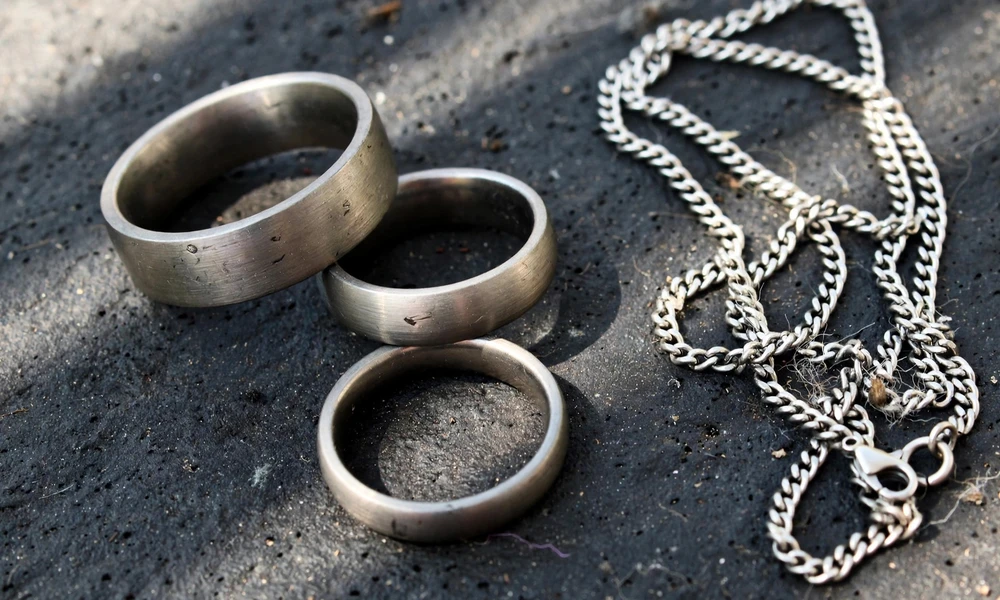
When you are choosing a piece, look first at whether the seller names the grade. A listing that says “grade five titanium” or “commercially pure titanium” is a good sign. One that only says “titanium” may be selling a lower grade, or a titanium-coated base metal, which is a different and much cheaper thing. Ask directly if the grade is not stated, and be wary of prices that seem far too low for solid titanium.
Look next at the finish and the setting. Titanium is usually sold brushed, polished or matte, and each one ages differently. A brushed finish hides small scratches, while a polished finish looks brighter but shows wear sooner. Stones are normally set in a bezel or a tension setting, because the metal is too hard for fine prongs. Our comparison of gold versus silver jewellery shows how differently metals behave in the hand, and titanium is the most different of all: lighter, harder, and far less forgiving of poor workmanship.
9 facts about titanium jewellery worth knowing
Titanium is a pure element, not a blend
What it shows: Unlike white gold or sterling silver, which are alloys mixed for colour or hardness, titanium jewellery is made from the element itself, either commercially pure or as a grade five alloy with small amounts of aluminium and vanadium. What to consider: The grade still matters, and a seller who does not name it may be selling a lower grade or a coated base metal. Best for: Buyers who want a simple, honest material. Material: Commercially pure titanium or grade five Ti-6Al-4V. Price range: £40 to £800 depending on the piece. Standout feature: A single-element metal with no hidden fillers.
It is stronger than steel by weight and far lighter than gold
What it shows: Titanium has the highest strength-to-weight ratio of any common jewellery metal. It is about 45 percent lighter than steel and far lighter than gold or platinum, yet stronger than steel by weight. What to consider: Lightness can feel unfamiliar at first, and some people miss the reassuring weight of gold. Best for: Rings, cuffs and chains worn all day. Material: Grade five titanium. Price range: £80 to £350 for most rings and chains. Standout feature: A chunky-looking piece that feels almost weightless.
It is naturally hypoallergenic and nickel-free
What it shows: Titanium contains no nickel, and it is the metal used in medical implants, bone screws and pacemaker cases for exactly that reason. Skin reactions to it are extremely rare. What to consider: The alloy in grade five titanium contains aluminium and vanadium, but reactions to these are also very rare. Best for: Sensitive or reactive skin, new piercings that have healed, everyday wear. Material: Commercially pure titanium, grade one or two. Price range: £40 to £250 for studs and rings. Standout feature: The most skin-friendly metal a jeweller can sell.
It resists tarnish and corrosion, even in salt water
What it shows: The oxide layer on titanium’s surface protects it from sweat, salt water, chlorine and everyday chemicals, so it does not tarnish or stain the way silver does. What to consider: Harsh chemicals and abrasive cleaners can still dull the finish, and the metal can be scratched by harder materials such as diamonds. Best for: Swimmers, active lifestyles, humid climates. Material: Any grade of titanium. Price range: £60 to £300 for most pieces. Standout feature: A metal that keeps its colour with almost no care.
Its colour is a cool grey, and it can be anodised into other tones
What it shows: Natural titanium is a cool, mid-grey, darker than silver and lighter than gunmetal. Anodising thickens the oxide layer and produces blue, purple, teal, bronze or gold tones without any plating. What to consider: Anodised colour fades slowly with hard wear, and it cannot be restored at home. Best for: Minimal style, colour without plating, statement pieces. Material: Commercially pure or grade five titanium, anodised. Price range: £60 to £250. Standout feature: Colour that cannot flake off, because it is part of the metal’s surface.
It cannot be resized like gold
What it shows: Titanium is too hard to cut, stretch and solder the way gold is, so a ring that no longer fits cannot be resized by an ordinary jeweller. It must be replaced or exchanged. What to consider: This is the single most important fact to know before buying a titanium ring, and it catches more buyers out than any other. Best for: Buyers who know their size and buy from a seller with a free exchange. Material: Grade five titanium. Price range: £80 to £300. Standout feature: A ring that holds its size for life, for better and for worse.
It is hard to engrave and hard for jewellers to work
What it shows: Titanium’s hardness means engraving must be done by laser rather than by hand, and the result is shallow. Repairs, re-polishing and stone resetting all need a specialist. What to consider: Many high street jewellers will not work on titanium at all, so check the repair route before you buy. Best for: Simple designs, laser engraving, pieces that rarely need repair. Material: Grade five titanium. Price range: £70 to £300. Standout feature: A metal that resists change, which is both its strength and its limit.
It is affordable compared with gold and platinum
What it shows: Titanium is abundant and relatively cheap to refine, so a solid titanium ring typically costs £80 to £300, against several hundred or several thousand pounds for the same design in gold or platinum. What to consider: The low price reflects the material, not the quality, and a very cheap piece may be coated rather than solid. Best for: Wedding bands, everyday pieces, first fine jewellery. Material: Grade five titanium. Price range: £40 to £800 across most pieces. Standout feature: Solid metal luxury at a fraction of the price of gold.
It suits active lifestyles, sensitive skin and wedding bands best
What it shows: Titanium’s lightness, strength, corrosion resistance and hypoallergenic nature make it the natural choice for wedding bands, sports, manual work and anyone whose skin reacts to other metals. What to consider: It is less suited to high jewellery, intricate settings and pieces that may need resizing or frequent repair. Best for: Everyday wear, engagements, active jobs, sensitive skin. Material: Grade five titanium for rings, commercially pure for earrings. Price range: £40 to £800. Standout feature: A metal chosen for how it lives, not how it looks in a box.
How titanium compares with gold, silver and platinum
Against gold, titanium is lighter, harder and far cheaper, but it cannot be resized, it cannot be easily repaired, and it has almost no resale value. Gold is softer and heavier, it scratches more easily and it tarnishes slowly, but any jeweller in the world can resize it, repair it and re-polish it, and it holds its value. For a wedding band that will be worn every day, titanium is the practical choice. For an heirloom, gold still wins.
Against silver, titanium is stronger, lighter and completely resistant to tarnish, while silver is softer, heavier, needs regular polishing and can cause reactions in sensitive skin. Silver is cheaper still and easier to work, which is why it dominates fashion jewellery, but for a piece you want to wear daily without thinking about it, titanium is the better metal.
Against platinum, the comparison is closest in spirit. Both are hypoallergenic, both are durable, and both have a cool grey tone. Platinum is denser, heavier and far more precious, with strong resale value and a patina that many people love. Titanium is lighter, tougher and a fraction of the price. Our guide to what white gold jewellery is covers the other popular grey metal, and the lesson is the same: each metal suits a different kind of wearer, and the right choice depends on your skin, your hands and your budget, not on which metal is most expensive.
The caveats that matter
Titanium’s limits are real and worth knowing before you buy. It cannot be resized, it is hard to repair, and its resale value is modest. A titanium ring that no longer fits is a ring to replace, not to adjust. A broken titanium chain may need to go back to the maker rather than to a local jeweller. And if you ever sell it, you will get back only a small fraction of what you paid, because titanium is valued as a material for wearing, not as an investment.
| Detail | What is known |
|---|---|
| What it is | A pure element, used as commercially pure titanium or grade five alloy |
| Weight | About 45 percent lighter than steel and far lighter than gold or platinum |
| Strength | Stronger than steel by weight; grade five is the most scratch-resistant |
| Skin safety | Naturally nickel-free and hypoallergenic, used in medical implants |
| Colour | Cool grey naturally; anodising adds blue, purple, teal or gold tones |
| Tarnish | Resistant to tarnish, sweat and salt water thanks to a protective oxide layer |
| Resizing | Not possible in the usual way; buy the right size or use a free exchange |
| Resale value | Modest; titanium is bought to wear, not as an investment metal |
None of those limits makes titanium a bad choice. They make it a specific choice, one that suits people who want a light, tough, skin-friendly piece they will wear every day, and who are not looking for an heirloom or an investment. Know that before you buy, and you will not be disappointed.
Checklist: choosing titanium jewellery honestly
Use these checks before you buy, and again when the piece arrives.
- Check the grade: grade five for rings, commercially pure for earrings and pendants, and a named grade on the listing.
- Check the size: measure at the end of the day and confirm the seller offers a free size exchange.
- Check the setting: stones should sit in a bezel or tension setting, not fine prongs.
- Check the finish: brushed hides scratches, polished looks brighter but shows wear sooner.
- Check the repair route: ask who repairs titanium and whether the seller covers it.
- Check the price: a solid titanium piece is affordable, but a price far below the usual range may mean a coated base metal.
Frequently asked questions
What is titanium jewellery made of?
Titanium jewellery is made from the element titanium, either as commercially pure metal in grades one to four, or as grade five alloy, which adds small amounts of aluminium and vanadium for extra strength. Grade five is the usual choice for rings, while commercially pure titanium suits earrings and pendants.
Is titanium jewellery safe for sensitive skin?
Yes, in almost all cases. Titanium is naturally nickel-free and is used in medical implants for that reason. People who react to gold, silver or stainless steel very often wear titanium without any irritation at all. The best titanium nose studs show the same principle where skin is most sensitive.
Can titanium jewellery be resized?
No, not in the usual way. Titanium is too hard to cut and solder like gold, so a ring that no longer fits needs to be replaced rather than adjusted. Buy the right size first, and choose a seller who offers a free exchange.
Does titanium jewellery tarnish?
No. A thin oxide layer protects the surface from sweat, salt water and everyday chemicals, so titanium does not tarnish or stain. Warm water and mild soap are all it needs to stay clean.
Is titanium better than gold for a wedding band?
For daily wear, often yes: it is lighter, harder, cheaper and kinder to sensitive skin. For an heirloom, resale value and easy resizing, gold remains better. The right choice depends on whether you value practicality or tradition more.
How do I clean titanium jewellery?
Soak it in warm water with a drop of mild soap, clean gently with a soft brush, rinse and dry it fully. Avoid abrasive cleaners and ultrasonic cleaners unless the seller confirms the piece is suitable, because they can loosen stones in a bezel setting.
The bottom line
Titanium jewellery is not a cheaper version of something else. It is a different metal with its own strengths: light, strong, hypoallergenic, resistant to tarnish, and affordable. It suits people who wear their jewellery every day, who work with their hands, or whose skin reacts to other metals, and it does that job better than gold, silver or platinum.
Its limits are equally clear. It cannot be resized, it is hard to repair, and it will not hold its value like gold. Buy it knowing those facts, choose the right grade, get the size right, and you will have a piece that does exactly what it promises: stays light, stays clean, and stays comfortable for years.