Sterling silver jewellery is everywhere in 2027, from slim chain necklaces and signet rings to pearl drop earrings and tennis bracelets, yet the name itself causes more confusion than almost any other jewellery term. People ask whether it is real silver, whether it will turn their skin green, and whether it is worth the price when silver-plated pieces look the same in a photograph. The short answer is that sterling silver is real silver, mixed with a small amount of another metal so it can be worn every day, and it has been the standard for fine silver jewellery for centuries.
The confusion is understandable. Silver is a soft metal, and pure silver is too soft to hold its shape as a ring or a clasp. That is why jewellers add an alloy, most often copper, to make the familiar 92.5 percent standard. The result is strong enough for daily wear, bright enough to suit diamonds and pale stones, and affordable enough that a well-made sterling silver piece costs far less than the same design in gold or platinum.
This guide explains what sterling silver jewellery is, how to tell the real thing from plated or filled imitations, what it does well and where it needs care, and how to buy it without overpaying. Each fact below is described plainly, with what it means for you, so you can shop with confidence rather than guesswork.
Key takeaways
- Sterling silver is 92.5 percent pure silver and 7.5 percent alloy, usually copper, which gives it the strength to be worn every day.
- Look for a 925 stamp, a hallmark, or clear labelling that says sterling silver before you buy.
- Tarnish is normal and reversible, not a sign that the piece is fake or low quality.
- Store sterling silver dry and separate, and clean it gently with a soft cloth and mild soap.
- Sterling silver is not the same as silver-plated or silver-filled jewellery, and it will not keep its finish if it is stored damp or cleaned with harsh chemicals.
What sterling silver jewellery actually is
Sterling silver is an alloy made of 92.5 percent silver and 7.5 percent other metals, almost always copper. The number matters, because it is the legal and trade standard in most countries. When a piece is described as sterling silver, it should contain that exact proportion, and reputable sellers stamp it with 925, the number that stands for 92.5 percent. Pure silver, sometimes called fine silver, is 99.9 percent silver, but it is too soft for most jewellery, so it is used mainly for decorative pieces and keepsakes rather than rings and chains.
The copper in the mix does the practical work. It hardens the silver so a ring keeps its shape, a clasp springs back, and a chain does not stretch out of shape in a week. It also affects how the metal ages, because copper reacts with air and moisture to form tarnish, the dark film that appears on silver left unworn.
Silver sits in an interesting middle ground among jewellery metals. It is brighter and cooler than yellow gold, softer and lighter than platinum, and far more affordable than either. If you are weighing metals against each other, our gold versus silver jewellery comparison lays out how the two metals differ in price, durability, and everyday wear, and it is a useful read before you choose between them.
How to tell real sterling silver from the rest
The first check is the stamp. Turn the piece over and look for 925, Sterling, Ster, or a hallmark from an assay office. A genuine piece is usually stamped somewhere discreet: inside a ring band, on a clasp, or on the back of a pendant. The stamp should be crisp and legible. A missing stamp does not automatically mean a piece is fake, since very small or handmade pieces are sometimes unstamped, but it does mean you should ask for more proof, such as a receipt that states sterling silver or a certificate from the seller.
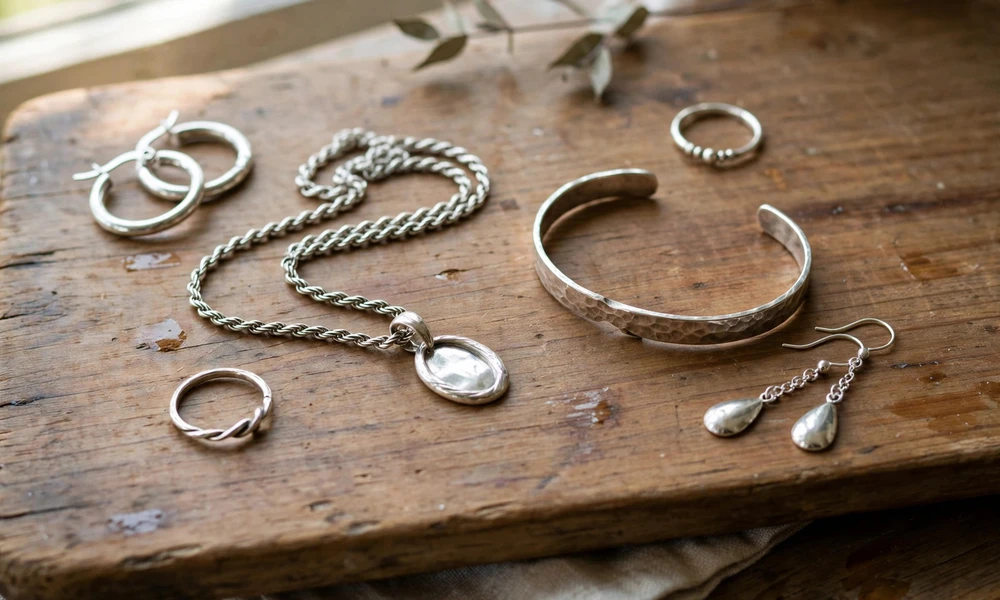
The second check is weight and feel. Sterling silver has a satisfying weight for its size. A piece that feels suspiciously light for its bulk may be hollow, plated, or made from a cheaper base metal. The surface should feel smooth and cool to the touch, and the colour should be a bright, slightly warm white. Silver-plated pieces often look identical when new, so the stamp, the seller’s description, and the price together are a better guide than appearance alone.
The third check is the magnet test, which is useful but not conclusive. Silver is not magnetic, so a piece that sticks strongly to a magnet is not solid sterling silver. Test the main body of the piece, not the clasp, since clasps can contain steel springs. If a piece fails the magnet test and has no stamp, walk away.
The 9 facts about sterling silver jewellery
The 92.5 percent standard is what defines it
What it shows: The number 925 is not a brand or a style. It is the legal definition of sterling silver: 92.5 parts silver to 7.5 parts alloy in every hundred. What to consider: Anything sold as sterling silver should meet this standard, and a reputable seller will state it plainly. Best For: Anyone buying silver jewellery who wants a clear, checkable standard. Material: 92.5% silver, 7.5% copper or other alloy. Price Range: Varies by weight and design, from modest to premium. Standout Feature: A single number that tells you exactly what you are buying.
The alloy is what makes it wearable
What it shows: Pure silver is too soft to hold a setting or keep a chain from stretching, so the copper alloy is not a filler, it is what makes the jewellery practical. What to consider: The alloy also makes the metal tarnish faster than pure silver would, so care is part of the deal. Best For: Everyday rings, chains, and bracelets that need to keep their shape. Material: Silver with copper, sometimes with small amounts of zinc or germanium. Price Range: Similar to other sterling silver pieces of the same weight. Standout Feature: Strength you can feel, without losing silver’s bright look.
The 925 hallmark is your first check
What it shows: A 925 stamp, a Sterling mark, or an assay office hallmark is the seller’s declaration that the piece meets the standard. What to consider: Stamps can be faked, so buy from sellers who also provide a receipt that states sterling silver. Best For: Anyone shopping online or in a market, where the piece cannot be tested on the spot. Material: Stamped sterling silver, 92.5% silver. Price Range: No price difference for the stamp itself. Standout Feature: A small mark that carries a lot of reassurance.
Tarnish is normal, not a defect
What it shows: Tarnish is a thin dark layer that forms when the copper in sterling silver reacts with sulphur in the air, and it appears on even the best silver. What to consider: It is reversible with gentle cleaning, and wearing a piece often actually slows it down, because friction keeps the surface bright. Best For: Pieces you wear regularly, which stay brighter than pieces left in a drawer. Material: Sterling silver, 92.5% silver. Price Range: No extra cost, just a few minutes of care. Standout Feature: A problem that solves itself with a soft cloth.
It is softer than gold and platinum
What it shows: Sterling silver scratches more easily than gold and far more easily than platinum, so it shows everyday wear sooner. What to consider: Choose chunkier designs for rings you wear daily, and save fine, delicate silver for occasions or lighter wear. Best For: Necklaces, earrings, and pendants, which take less knocks than rings. Material: Sterling silver, 92.5% silver. Price Range: Lower than gold or platinum for the same design. Standout Feature: A soft, bright metal that rewards gentle handling.
It suits cool skin tones and everyday wear
What it shows: Silver’s cool, bright tone flatters cool and neutral skin tones, and it pairs naturally with diamonds, pearls, and pale stones. What to consider: Warm skin tones can wear silver too, especially mixed with gold, but the contrast is softer than with yellow gold. Best For: Cool and neutral skin tones, and anyone who prefers a bright, understated metal. Material: Sterling silver, 92.5% silver. Price Range: Affordable across styles, from simple to statement. Standout Feature: A cool brightness that suits almost every wardrobe.
It is not the same as silver-plated jewellery
What it shows: Silver-plated jewellery is a thin layer of silver over a base metal, usually brass or copper, and it wears through to reveal the base underneath. What to consider: Plated pieces cost less and look the same when new, but they cannot be polished the same way, and once the layer wears, the piece is finished. Best For: Buyers who want solid metal that can be cleaned, repaired, and worn for years. Material: Solid sterling silver versus a silver coating on base metal. Price Range: Sterling silver costs more than plated, and lasts far longer. Standout Feature: Solid metal all the way through, not just on the surface.
It can be cleaned at home, gently
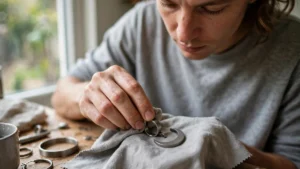
What it shows: Most tarnish and everyday dirt come off with warm water, mild soap, and a soft cloth, without special equipment. What to consider: Avoid toothpaste, baking soda pastes, and harsh dips, which scratch the surface or strip the finish, and be extra gentle with oxidised details and gemstones. Best For: Anyone who wants low-maintenance jewellery care at home. Material: Sterling silver, 92.5% silver. Price Range: A soft cloth and mild soap cost almost nothing. Standout Feature: Care that takes minutes, not a trip to the jeweller.
It holds its value better than fashion jewellery
What it shows: Sterling silver has intrinsic metal value, so a well-made piece can be resold or melted down, unlike plated fashion jewellery, which has almost no resale value. What to consider: Resale rarely returns the full retail price, because you pay for design and craftsmanship as well as metal, so buy pieces you love wearing, not as an investment. Best For: Buyers who want jewellery that keeps some value over time. Material: Sterling silver, 92.5% silver. Price Range: Higher than fashion jewellery, lower than gold. Standout Feature: Real metal value in every piece.
Which sterling silver is right for you
Start with how you will wear it. If you want a daily ring, choose a solid, simple band or a low-set stone, and accept that it will pick up fine scratches that a jeweller can polish out once a year. If you want a necklace or earrings, you can be more delicate, because those pieces take far less impact. Bracelets sit in between: a slim bangle is fine for occasional wear, while a sturdy chain bracelet survives daily use better.
Next, think about finish. High-polish silver is bright and mirror-like, and it shows scratches most clearly. A brushed or satin finish hides small marks far better and suits a more relaxed style. Oxidised silver, where the recesses are darkened on purpose, gives a piece depth and an antique feel, but it needs gentler cleaning so the darkening is not polished away.
Finally, consider stones. Sterling silver pairs beautifully with diamonds, pearls, turquoise, and pale stones such as moonstone and aquamarine, because its cool tone does not compete with them. Avoid very soft stones in rings you wear daily, and ask the seller how a stone is set before you buy.
The caveats that matter
Sterling silver is a practical, honest metal, but it has limits. It tarnishes, it scratches, and it can react with skin chemistry. Some people find that silver darkens faster on their skin, because of the sulphur compounds in sweat and skincare, while others wear the same piece for years with barely a mark. Neither experience means the silver is fake.
Water is the other quiet risk. Silver can be worn in the shower, but chlorine, salt water, and hot tubs speed up tarnish and can loosen settings, so take pieces off before swimming. Perfume, hairspray, and lotions should go on before jewellery, not after, because the chemicals dull the finish over time. For the full routine, our guide to cleaning silver jewellery covers the gentle method step by step, including what to avoid.
| Detail | What is known |
|---|---|
| Composition | 92.5 percent silver, 7.5 percent alloy, usually copper |
| Mark to look for | 925, Sterling, Ster, or an assay office hallmark |
| Tarnish | Normal and reversible; caused by sulphur in the air reacting with the alloy |
| Hardness | Softer than gold and platinum; scratches more easily with daily wear |
| Best for | Necklaces, earrings, pendants, and sturdy everyday rings |
| What to avoid | Chlorine, salt water, harsh dips, toothpaste, and abrasive polishes |
| Storage | Cool, dry, and separate, ideally in an airtight pouch or lined box |
| What it is not | Not the same as silver-plated or silver-filled jewellery, which have only a thin silver layer |
If you have a nickel sensitivity, ask about the alloy before you buy. Most sterling silver uses copper, but some alloys contain nickel, and a seller should be able to tell you what is in the mix. If you are unsure, choose a piece from a seller who states the alloy plainly, or look for nickel-free sterling silver, which is increasingly available.
Checklist: buying sterling silver honestly
Use these checks before you buy, and again when a new piece arrives.
- Check the stamp: look for 925, Sterling, or a hallmark inside the band or on the clasp.
- Check the description: the listing or receipt should say sterling silver, not just silver or silver-tone.
- Check the weight: it should feel substantial for its size, not suspiciously light.
- Check the price: if it seems far below other sterling silver of the same weight, ask whether it is plated.
- Check the finish: high polish shows scratches, brushed finishes hide them, and oxidised details need gentle cleaning.
- Check the seller: buy from a seller who states the alloy and offers a clear returns policy.
Frequently asked questions
Is sterling silver real silver?
Yes. Sterling silver is 92.5 percent pure silver, mixed with 7.5 percent alloy so it is strong enough to wear. It is the standard for fine silver jewellery, and it is far more silver than any plated or filled piece.
Why does my sterling silver turn black?
It is tarnishing, a normal reaction between the copper in the alloy and sulphur in the air. It is not a sign of fake silver. A soft cloth and mild soap usually restore the shine, and wearing the piece regularly slows tarnish down.
Can I wear sterling silver every day?
Yes, for most pieces. Necklaces, earrings, and sturdy rings cope well with daily wear. Very fine or delicate designs will scratch sooner, so save those for lighter days and keep a sturdier piece for everyday use.
How do I store sterling silver so it stays bright?
Keep it cool, dry, and separate from other jewellery, ideally in an airtight pouch or a lined box with anti-tarnish strips. Our guide to storing jewellery properly explains the full routine, including how to stop chains tangling and stones scratching each other.
Is sterling silver hypoallergenic?
Often, but not always. Most sterling silver uses copper as the alloy, which suits most skin, but some alloys contain nickel, which can irritate sensitive skin. Ask the seller about the alloy, or choose nickel-free sterling silver if you react to nickel.
Does sterling silver turn skin green?
Sometimes, but rarely for long. A green mark usually comes from the copper in the alloy reacting with acids on the skin, and it washes off easily. It is more common in hot, humid weather and with new pieces, and it usually fades as the piece develops a stable surface.
The bottom line
Sterling silver jewellery is real silver, made wearable by a small amount of alloy, and it remains one of the best value choices in fine jewellery. It is bright, versatile, and affordable, it pairs well with almost every stone, and it can be cleaned and repaired for years. Its trade-offs are honest ones: it tarnishes, it scratches, and it needs a little care, but none of that is difficult, and none of it is a reason to avoid it.
Buy by the stamp, not by the photograph. Check for 925, buy from a seller who states the alloy plainly, store pieces dry and separate, and clean them gently. Do that, and a sterling silver piece you buy in 2027 can still look good in ten years, which is more than can be said for most fashion jewellery at any price.