Pearls are the softest jewellery most people own, and the easiest to damage by cleaning them the wrong way. A pearl is not a stone. It is a thin layer of nacre over a bead or a grain of sand, and that layer is only a few microns thick on a cultured pearl. Soap, water, and a soft cloth are enough to keep it bright. Ultrasonic cleaners, steam, harsh detergents, and even a vigorous rub can strip the nacre, dull the lustre, or loosen the pearl from its setting.
The good news is that cleaning pearls is simple, and it takes less than ten minutes. The routine below works for pearl necklaces, earrings, bracelets, and pendants, and it uses nothing you do not already have at home: lukewarm water, a drop of mild soap, and a soft, lint-free cloth. The key is gentleness at every step, from the first wipe to the way you store the piece afterwards.
This guide covers the nine steps in order, from checking the piece before it touches water to storing it so it stays bright. It also covers what to avoid, which pearls need a jeweller instead of a home clean, and how often to clean a piece you wear every day.
Key takeaways
- Pearls are soft, with a thin layer of nacre, so clean them gently with lukewarm water, mild soap, and a soft cloth only.
- Never use ultrasonic cleaners, steam, harsh detergents, vinegar, or abrasive cloths on pearl jewellery.
- Put pearls on last and take them off first, so they never touch perfume, hairspray, or makeup.
- Check the stringing and the setting before cleaning, and see a jeweller if a pearl is loose, the silk is frayed, or the clasp is weak.
- Home cleaning keeps pearls bright, but it cannot repair a dull, scratched, or peeling pearl, and it cannot fix a damaged setting.
What cleaning pearl jewellery actually means
Cleaning pearl jewellery means removing the thin film of skin oil, sweat, and makeup that builds up on the nacre, without scratching or stripping it. Pearls have a hardness of about 2.5 to 4.5 on the Mohs scale, which makes them softer than most metals and far softer than diamonds or sapphires. That is why a soft cloth is a tool and a rough cloth is a risk, and why the same cleaning routine that suits a gold chain will damage a pearl.
Most of the work is done by the cloth, not the soap. A gentle wipe after wearing removes most of the film before it hardens, and a short soak in lukewarm, mildly soapy water once in a while lifts what the cloth leaves behind. The aim is a pearl that looks bright and feels smooth, not a pearl that has been scrubbed. If a pearl feels rough or looks chalky, stop, and let a jeweller look at it, because the nacre may already be worn.
It also helps to know what kind of pearls you have. Freshwater pearls, Akoya pearls, South Sea pearls, and Tahitian pearls are all cleaned the same way, but a very old or valuable strand, a pearl with a damaged setting, or a piece you are unsure about should go to a jeweller rather than into a bowl of water. Our guide to how to clean gold jewellery covers the harder metals in your box, and the contrast is useful: gold can take a brush and a soak, while pearls cannot.
What you need and what to look for
You need very little: a small bowl of lukewarm water, a drop of mild, fragrance-free soap, and two soft, lint-free cloths, one for washing and one for drying. A soft makeup brush can help with a setting or a clasp, but never use it on the pearl itself with any pressure. Keep everything else away from the table: no vinegar, no baking soda, no toothpaste, no jewellery dip, and no ultrasonic cleaner.
Before the piece touches water, look at it closely. Check that each pearl is secure in its setting, that the silk on a strand is not frayed or stretched, and that the clasp closes firmly. Hold a strand up and look for gaps between the pearls, which mean the silk has stretched, and look for a pearl that turns freely on its thread, which means the knot has loosened. If anything looks wrong, clean only with a dry cloth and take the piece to a jeweller.
Finally, check the pearl itself. A healthy pearl is smooth, bright, and cool to the touch, with a lustre that seems to come from inside the surface. A pearl that looks dull, chalky, or peeling has worn nacre, and no amount of home cleaning will bring it back. That is a jeweller’s job, or a sign that the piece has reached the end of its life.
The 9 steps to clean pearl jewellery properly
Lay the piece flat and look at it first
What to do: Lay the piece on a soft, clean towel and look at every pearl, the setting, the clasp, and the stringing, in good light. What to avoid: Do not pull on a strand, twist a clasp, or pick at a loose pearl. Best for: Every piece, every time. Time needed: 2 minutes. Standout tip: A quick check before cleaning catches a loose pearl before it is lost down a drain.
Mix a small bowl of lukewarm water and mild soap
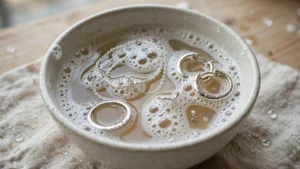
What to do: Fill a small bowl with lukewarm water, not hot, and add a single drop of mild, fragrance-free soap, then stir gently. What to avoid: Do not use hot water, which can weaken silk and glue, and do not use dish soap with degreasers or bleach. Best for: Pearl necklaces, earrings, bracelets, and pendants. Time needed: 1 minute. Standout tip: If the water feels warm on your wrist, it is warm enough; pearls never need hot water.
Wipe each pearl with a soft, damp cloth
What to do: Dampen a soft, lint-free cloth in the soapy water, wring it out, and wipe each pearl gently, one at a time, with a light touch. What to avoid: Do not rub hard, do not use a rough towel or a paper towel, and do not scrub the pearl. Best for: Removing the daily film of oil and makeup. Time needed: 3 minutes. Standout tip: Wipe in one direction, not back and forth, so you lift the film rather than grinding it in.
Dip the piece briefly, never soak it
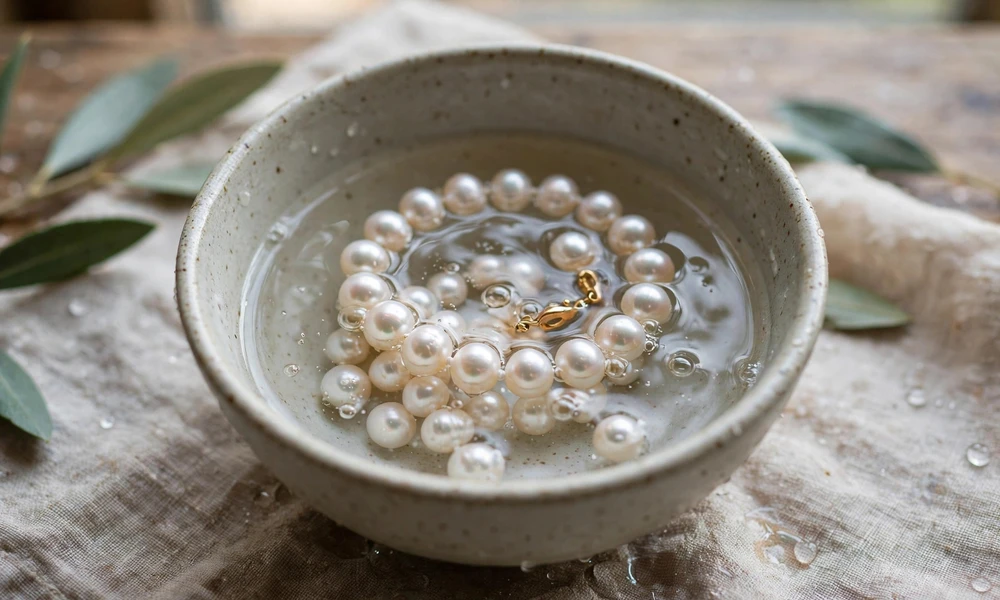
What to do: If the piece still looks dull, dip it in the soapy water for no more than a minute, then lift it out. What to avoid: Do not leave pearls soaking, and never soak a strand, because water weakens the silk and can loosen the knots. Best for: Pieces with a stubborn film that a wipe did not lift. Time needed: 1 minute. Standout tip: A brief dip is enough; pearls are cleaned by the cloth, not by sitting in water.
Clean the setting and clasp with a soft brush
What to do: Use a very soft brush, such as a clean makeup brush, dampened in the soapy water, to clean around the setting and the clasp, where dirt collects. What to avoid: Do not brush the pearl itself with any pressure, and do not use a stiff brush or a toothbrush. Best for: Rings, pendants, and earrings with metal settings. Time needed: 2 minutes. Standout tip: Clean the metal around the pearl, not the pearl, and keep the brush moving lightly.
Rinse with clean lukewarm water
What to do: Rinse the piece under slow-running lukewarm water, or in a second bowl of clean water, to remove every trace of soap. What to avoid: Do not rinse over an open drain, and do not use a strong jet of water, which can loosen a pearl. Best for: Every piece that was dipped or wiped with soapy water. Time needed: 1 minute. Standout tip: Put the plug in the sink, or rinse over a bowl, so a loose pearl is caught, not lost.
Pat dry with a soft cloth, never rub
What to do: Lay the piece on a dry, soft cloth and pat each pearl gently until it is dry, then leave it to air for a few minutes. What to avoid: Do not rub the pearl dry, do not use a hairdryer, and do not put a damp strand away. Best for: Every piece, after every clean. Time needed: 2 minutes. Standout tip: Let a strand dry flat for an hour before storing it, so the silk dries fully.
Check the pearls, the setting, and the clasp again
What to do: Look at each pearl once more, check the setting is firm, and test the clasp, while the piece is clean and easy to see. What to avoid: Do not ignore a pearl that turns freely, a gap in a strand, or a clasp that does not click shut. Best for: Catching wear early, before a pearl is lost. Time needed: 2 minutes. Standout tip: Cleaning day is the best day to spot a problem, because the piece is in your hands and in good light.
Store the pearls flat, soft, and separate
What to do: Store pearls flat in a soft pouch or a lined compartment, away from harder jewellery, and away from heat and sunlight. What to avoid: Do not store pearls in a sealed plastic bag, which dries out the nacre, and do not hang a strand, which stretches the silk. Best for: Keeping pearls bright between cleans. Time needed: 1 minute. Standout tip: Pearls need a little moisture in the air, so a soft pouch in a drawer is better than a sealed box.
Which cleaning method is right for your pearls
For pearls you wear every day, a quick wipe with a soft, dry cloth after each wear is enough, with a proper clean every month or two. For pearls you wear rarely, a wipe before you put them away and a gentle clean once or twice a year is plenty. The more often you wear pearls, the more often they need a wipe, because skin oil and makeup build up fastest on pieces that touch the skin. Our guide to storing jewellery properly covers the storage half of this routine, and it matters as much as the cleaning half.
A strand needs more care than a single pearl, because the silk stretches and the knots loosen over time. A strand worn often should be restrung every year or two, and a strand that shows gaps between pearls or a pearl that turns freely should go to a jeweller now, not at the next clean. A single pearl in a setting is simpler: check the setting, clean it gently, and store it separately.
Very old pearls, antique pieces, and pearls with visible damage should not be cleaned at home at all. Take them to a jeweller who works with pearls, and ask for an assessment before any cleaning. A professional can tell whether the nacre is worn, whether the setting is safe, and whether the piece is worth restoring, and that advice is worth more than any home routine.
The caveats that matter
The most important caveat is that pearls and chemicals do not mix. Perfume, hairspray, makeup, sunscreen, and even hand cream can damage nacre, and the damage is often invisible until the lustre is gone. That is why the rule is simple: pearls go on last and come off first. Put them on after your makeup and perfume, and take them off before you wash your hands, apply cream, or spray your hair.
| Detail | What is known |
|---|---|
| Safe to use | Lukewarm water, a drop of mild soap, and a soft, lint-free cloth |
| Never use | Ultrasonic cleaners, steam, vinegar, baking soda, toothpaste, or jewellery dip |
| How long to dip | No more than a minute, and never soak a strand |
| How often to clean | Wipe after every wear; a proper clean every month or two for daily pieces |
| When to see a jeweller | Loose pearl, frayed silk, weak clasp, dull or peeling nacre |
| What damages pearls most | Perfume, hairspray, makeup, and harsh chemicals on the nacre |
| How to store pearls | Flat, in a soft pouch, away from harder jewellery and heat |
| What home cleaning cannot fix | Worn or peeling nacre, a damaged setting, or a stretched strand |
Water is the other quiet risk. Pearls are porous, and a long soak can let water into the drill hole, where it weakens the glue and the silk. That is why a brief dip is safe and a soak is not, and why a strand should never be left in water. If a piece was soaked by accident, dry it flat, let it air for a day, and have a jeweller check the stringing before you wear it again.
Checklist: cleaning pearl jewellery honestly
Use these checks before you clean, and again before you put the piece away.
- Check the piece first: every pearl secure, the silk firm, and the clasp closing properly.
- Check the water: lukewarm, never hot, with only a drop of mild, fragrance-free soap.
- Check the cloth: soft and lint-free, never rough, and never a paper towel.
- Check the time: dip for no more than a minute, and never soak a strand.
- Check the dry: pat gently, never rub, and let a strand dry flat before storing.
- Check the storage: flat, soft, and separate from harder jewellery, away from heat.
Frequently asked questions
Can I clean pearls with dish soap?
A single drop of mild, fragrance-free soap is safe, but most dish soaps contain degreasers and fragrances that can dull nacre, so use as little as possible, or use a soap made for delicate items. Rinse well afterwards, because soap left on a pearl dries into a dull film.
Can I use an ultrasonic cleaner on pearls?
No. Ultrasonic cleaners vibrate the piece, and that vibration can crack nacre, loosen a pearl from its setting, and damage the silk on a strand. Pearls should only ever be cleaned by hand, with a soft cloth and lukewarm water.
How often should I clean pearl jewellery?
Wipe pearls with a soft, dry cloth after every wear, and give them a proper clean every month or two if you wear them often. Pearls worn rarely need a gentle clean once or twice a year, and a wipe before they go back in the box.
Can I wear pearls in the shower or while swimming?
It is best not to. Soap, shampoo, chlorine, and salt water can all damage nacre, and a pearl can come loose in water and be lost. Take pearls off before you shower or swim, and wipe them before you put them away.
Why do my pearls look dull?
Usually because of a film of oil, makeup, or soap, which a gentle clean will remove. If a clean does not bring back the lustre, the nacre may be worn or damaged, and a jeweller should look at the piece. A pearl pendant necklace is a good example of a piece that stays bright with simple care, because it is worn less often than a ring and cleaned easily.
How should I store pearl jewellery?
Flat, in a soft pouch or a lined compartment, away from harder jewellery that can scratch the nacre. Do not store pearls in a sealed plastic bag, which dries them out, and do not hang a strand, which stretches the silk.
The bottom line
Cleaning pearl jewellery is a gentle, ten-minute routine, and it is the single best thing you can do to keep pearls bright. Lukewarm water, a drop of mild soap, a soft cloth, and a careful dry are all it takes, and the habit of wiping pearls after every wear does more than any deep clean.
Respect the limits of home cleaning. It keeps healthy pearls bright, but it cannot repair worn nacre, a loose setting, or a stretched strand. Check the piece before and after every clean, keep pearls away from perfume and chemicals, and let a jeweller handle anything that looks wrong. That is the honest way to look after pearls, and it is what keeps them wearable for years.