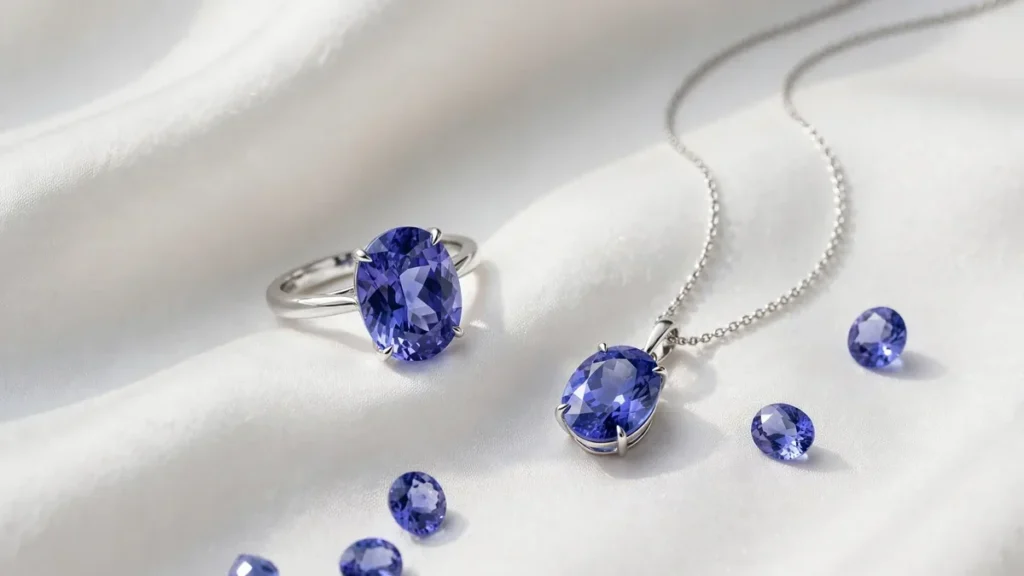
The best luxury tanzanite brands share one advantage that no other gemstone house can copy: access to the finest stones from the only place on earth where tanzanite is found. Tanzanite comes from a single small area in the Merelani Hills near Mount Kilimanjaro in Tanzania, and the difference between a vivid, glowing blue-violet stone and a pale, greyish one is the difference between a jewel you will love for decades and one you will quietly regret. The brand matters because it decides which stones are bought, how they are cut, how honestly they are described, and how well the finished piece is made.
That is why this guide is organised by the house, not just by the stone. A great maison will show you the colour in daylight, provide a laboratory certificate, explain the heat treatment that almost every tanzanite has had, and set the stone in a way that protects it. A weaker seller will rely on the name on the box and hope you do not ask questions. Price is a poor guide on its own. Some of the most beautiful tanzanite pieces are modest in size but exceptional in colour, and some of the most expensive are large stones that look dull the moment they leave the shop lights.
Below are nine brands worth considering, from the historic Paris and New York maisons that shaped tanzanite’s reputation to the specialists who work with the stone every day. Each is described by what it does best with tanzanite, what to watch for, and who it suits.
Key takeaways
- Tanzanite is found in only one place in the world, the Merelani Hills in Tanzania, so a brand’s access to fine rough stone and its cutting standards matter more than for any other gemstone.
- Colour is the first thing to judge: look for a vivid blue-violet with strong saturation and no grey or brown, seen in natural daylight, not only under shop lighting.
- Tiffany & Co. gave tanzanite its name and introduced it to the world in 1968, and it remains the house most closely associated with the stone.
- Almost all tanzanite is heat-treated to bring out its blue-violet colour, which is standard and accepted, but it should always be disclosed on the certificate.
- No brand can guarantee that tanzanite will rise in value, and a stone bought mainly as an investment should be bought with expert advice, not on the strength of a sales pitch.

What makes tanzanite special
Tanzanite is a blue-violet variety of the mineral zoisite, and it was only discovered in 1967. It is pleochroic, which means it shows different colours from different angles, usually blue, violet and sometimes a hint of burgundy. A well-cut stone shows a rich blue-violet face up, with flashes of purple as it moves, while a poorly cut stone looks grey or washed out.
The single source is what makes tanzanite different from every other luxury gemstone. Emeralds come from Colombia, Zambia and Brazil, rubies from Myanmar, Thailand and Mozambique, and sapphires from half a dozen countries. Tanzanite comes from one mining area, a strip of land roughly seven kilometres long in the Merelani Hills. That is why it is often described as a thousand times rarer than a diamond, and why the finest material is scarce. Our tanzanite jewellery guide explains how that rarity plays out in finished pieces, from everyday pendants to statement rings, and why colour matters more than size.
Tanzanite is also a softer stone than the ones it is usually compared with. It measures 6.5 to 7 on the Mohs hardness scale, against 9 for sapphire and 10 for diamond, so it needs a protective setting and gentle handling, especially in rings. That softness is not a flaw, but it is a fact a good brand will tell you plainly before you buy, and it is one of the reasons the setting and the aftercare matter as much as the stone itself.
What to look for in a luxury tanzanite brand
Look first at the stone itself, before the name. Ask to see it in daylight, ask for its certificate, and ask what treatments it has had. A reputable house will answer plainly, show you the paperwork, and explain what the treatment means for care and for price. If a seller is vague about origin or treatment, or cannot produce a certificate, walk away.
Look next at how the brand works with tanzanite specifically, not just with gemstones in general. Some houses have a long, documented history with the stone, with named collections, high jewellery pieces and gemmologists who specialise in it. Others simply buy finished tanzanite jewellery from a supplier and add their name. The first kind can tell you where its stones come from, how they are cut, and why a particular stone was chosen. The second kind cannot.
Finally, look at the making and the service behind the sale. A luxury setting should feel smooth inside and out, with no rough edges, no visible glue, and claws that hold the stone firmly without crushing it. The metal should be hallmarked, the stones should be set level, and the piece should sit comfortably when worn. The best houses also offer cleaning, checking and resizing, and keep records of what they sold you. That aftercare matters, because tanzanite should be checked regularly and a claw can wear.
Tiffany & Co.
What we like: Tiffany & Co. is the house that made tanzanite famous. Its gemmologist Henry Platt named the stone after Tanzania and introduced it in 1968, and the house has sold tanzanite ever since, from everyday rings and pendants to important high jewellery pieces in the Blue Book collection.
What to consider: Entry-level tanzanite pieces sit alongside the brand’s fashion jewellery, so an important stone needs to be chosen carefully, and prices carry a premium for the name. Known for: Tanzanite, diamonds, morganite, sapphires. Heritage: Founded New York, 1837. Best for: First-time tanzanite buyers and classic American luxury.
No other brand is as closely tied to tanzanite as Tiffany.
Cartier
What we like: More than 175 years of history, exceptional coloured stones, and high jewellery pieces in which tanzanite is treated with the same seriousness as emerald or sapphire, set in designs that hold their value for decades.
What to consider: Premium pricing across the range, and the most important tanzanite pieces are high jewellery, made in small numbers and often available only by appointment. Known for: Emeralds, rubies, sapphires, tanzanite. Heritage: Founded Paris, 1847. Best for: Heirloom pieces and important coloured stones.
Cartier suits the buyer who wants tanzanite as a serious jewel, not a fashion piece.
Van Cleef & Arpels
What we like: The most inventive stone-setting in luxury jewellery, including the Mystery Set, in which stones are set with no visible metal, and nature-inspired high jewellery that uses tanzanite as a colour, not just as a centre stone.
What to consider: Many of the most desirable pieces are made in small numbers, and the playful, romantic style does not suit everyone. Known for: Sapphires, emeralds, rubies, tanzanite. Heritage: Founded Paris, 1906. Best for: Artistic, nature-inspired high jewellery.
It is the house to look at first for a tanzanite piece that is a work of art as much as a jewel.
Bulgari
What we like: Bold, colourful use of gemstones, with cabochon cuts, strong colour combinations and a distinctly Roman sense of drama. Bulgari’s tanzanite pieces are unmistakable, and its high jewellery collections regularly pair tanzanite with diamonds and other coloured stones.
What to consider: The bold style is a statement, so it suits confident wearers more than those who prefer quiet, minimal jewellery. Known for: Emeralds, rubies, sapphires, tanzanite, coloured diamonds. Heritage: Founded Rome, 1884. Best for: Bold colour and cabochon stones.
Bulgari is the choice for a tanzanite piece that will be noticed.
Harry Winston
What we like: A reputation built entirely on exceptional stones, including some of the most famous diamonds in history, and a house style that lets the stone speak, with minimal metal and classic settings that suit tanzanite beautifully.
What to consider: Very high prices, and a deliberately classic style that offers less fashion-led design than some rivals. Known for: Diamonds, sapphires, emeralds, rubies, tanzanite. Heritage: Founded New York, 1932. Best for: The finest stones and classic settings.
Harry Winston suits the buyer who cares about the stone above all else.
Graff
What we like: A modern house built around the world’s rarest stones, with a direct role in cutting and polishing many of its own diamonds and coloured stones, and a record of acquiring exceptional tanzanites for its high jewellery.
What to consider: Prices start very high, and boutiques are fewer than for the older Paris houses. Known for: Diamonds, emeralds, rubies, sapphires, tanzanite. Heritage: Founded London, 1960. Best for: Rare, large and exceptional stones.
Graff is the house for the collector who wants a tanzanite that is genuinely rare.
Chopard
What we like: A family-owned house with strong gemmological expertise, a commitment to responsibly sourced gold and stones, and red-carpet high jewellery in which tanzanite appears regularly alongside emeralds, rubies and sapphires.
What to consider: The brand is as well known for watches as for jewellery, so its tanzanite offering is less widely understood than its rivals. Known for: Emeralds, rubies, sapphires, tanzanite, diamonds. Heritage: Founded Switzerland, 1860. Best for: Responsible sourcing and red-carpet high jewellery.
Chopard suits the buyer who wants a fine tanzanite and cares about how it was sourced.
TanzaniteOne
What we like: TanzaniteOne is the largest miner of tanzanite in the Merelani Hills, and the closest thing there is to a source brand. Buying from the company that mines the stone, or from jewellers who source through it, means a shorter chain from the ground to the finished piece, and a clearer story about where the stone came from.
What to consider: It is a mining and rough-stone company first, not a retail jewellery house, so its finished jewellery is limited and its pieces are sold through partners rather than in its own boutiques. Known for: Tanzanite rough and cut stones, ethically sourced tanzanite. Heritage: Mining in the Merelani Hills, Tanzania. Best for: Provenance and ethically sourced stones.
Provenance is the hardest thing to verify in tanzanite, and a stone traced to the Merelani Hills, with paperwork to match, is worth more than one with no story.
Tanzanite International
What we like: A specialist retailer that sells tanzanite and almost nothing else, with a wide range of loose stones and finished pieces at prices well below the big maisons, and certificates provided as a matter of course.
What to consider: It is an online specialist, not a luxury maison, so there is no boutique experience, no heritage name, and the setting work is simpler than at a high jewellery house. Known for: Tanzanite rings, pendants, earrings and loose stones. Heritage: Specialist tanzanite retailer. Best for: Value, loose stones and first pieces.
It is the practical choice: the most stone for your money, if you are comfortable buying online with a certificate.
The 9 brands at a glance
| Brand | Tanzanite strength | Best for | Price level |
|---|---|---|---|
| Tiffany & Co. | Named the stone in 1968, longest tanzanite history | First-time buyers, classic pieces | Premium |
| Cartier | High jewellery tanzanite, exceptional stones | Heirloom and important pieces | Very high |
| Van Cleef & Arpels | Artistic high jewellery, Mystery Set tanzanite | One-of-a-kind artistic pieces | Very high |
| Bulgari | Bold colour, cabochon tanzanite | Statement and cabochon pieces | Very high |
| Harry Winston | Finest single stones, classic settings | Important single-stone pieces | Very high |
| Graff | Rare, large and exceptional tanzanites | Collectors, rare stones | Very high |
| Chopard | Responsible sourcing, red-carpet high jewellery | Ethical sourcing, wearable high jewellery | Very high |
| TanzaniteOne | Largest miner, clearest provenance | Ethically sourced stones | Mid-range to premium |
| Tanzanite International | Specialist range, loose stones and finished pieces | Value and first pieces | Mid-range |
The caveats that matter
Tanzanite is a beautiful stone, but it is not a hard stone, and it needs more care than a diamond or a sapphire. It should not be cleaned in an ultrasonic cleaner, because the vibrations can damage it, and it should not be exposed to sudden temperature changes. Clean it gently with warm water, mild soap and a soft brush, and dry it with a soft cloth. Store it separately from harder stones, so it is not scratched by a diamond ring in the same jewellery box.
Heat treatment is the other fact to understand before you buy. Almost all tanzanite is heat-treated, usually at the mine, to bring out the blue-violet colour from the brownish colour of the rough stone. This is standard, accepted and permanent, and it should be disclosed on the certificate. It is not a reason to avoid a stone, but it is a reason to be wary of a seller who will not discuss it. Tanzanite’s closest blue cousin is the sapphire, which is harder and more durable, and our guide to sapphire jewellery is a useful comparison if you are choosing between a blue-violet tanzanite and a blue sapphire for everyday wear.
Buying tanzanite also needs care. Ask for a certificate from a recognised laboratory, and buy from a seller you trust. Be wary of stones that are very cheap for their size, because they are often pale or poorly cut, and if a seller will not discuss treatment or provide a certificate, buy elsewhere. Remember that tanzanite is not an investment in the financial sense: buy it because you love the colour, not because you expect it to make money.
Checklist: choosing a luxury tanzanite brand honestly
Use these checks before you buy, and keep the paperwork with the piece.
- Check the colour in daylight: it should be a vivid blue-violet, not grey, brown or washed out.
- Check the certificate: a laboratory report that states the stone, the weight, the colour and any treatment.
- Check the treatment: ask in writing whether the stone has been heat-treated, and how that affects care and value.
- Check the brand’s tanzanite record: a real history with the stone, named collections or a specialist focus, not just a few pieces in a case.
- Check the setting: a bezel or halo protects the stone best, especially for rings worn every day, and the metal should be hallmarked.
- Check the aftercare: cleaning, checking and resizing offered by the house, and how often the piece should be inspected. Before you commit, read a diamond buying guide so you know how the four Cs and certification work together, because the same principles apply to judging any important gemstone.
Frequently asked questions
Which luxury tanzanite brand is the best overall?
There is no single best brand: the answer depends on what you want. Tiffany & Co. leads on history with the stone, Cartier and Van Cleef & Arpels lead on high jewellery, Graff and Harry Winston lead on the stones themselves, and Tanzanite International leads on value.
Why is Tiffany & Co. so closely linked to tanzanite?
Tiffany’s gemmologist Henry Platt named the stone after Tanzania and launched it in 1968, a year after its discovery. The house has sold tanzanite ever since, and its name is still the one most people associate with the stone.
Is heat-treated tanzanite worth less?
Heat treatment is standard for tanzanite and does not make a stone worthless: almost all tanzanite is heated to bring out its blue-violet colour. What matters is that the treatment is disclosed and the colour is vivid and even. An untreated tanzanite of fine colour is rarer and costs more, but it is the exception.
Can I wear tanzanite jewellery every day?
Yes, in a pendant or earrings, which are knocked less often. In a ring, it needs a protective bezel or halo setting and should be worn with care, removed for heavy work, gardening and sport, and never cleaned in an ultrasonic cleaner.
How do I know if a tanzanite is real?
Buy from a reputable house, ask for an independent laboratory certificate, and check that it matches the stone. A certificate stating weight, colour, clarity and treatments is the standard for an important purchase, and a seller who cannot provide one should not be trusted.
Is tanzanite a good investment?
No, not in the financial sense. Fine stones have held their value well, but the market is narrow, selling takes time, and most buyers pay a retail premium that takes years to recover. Buy tanzanite because you love the colour, and treat any future value as a bonus.
The bottom line
The best luxury tanzanite brand is the one that shows you a vivid stone in daylight, gives you a certificate, tells you the truth about treatment, and sets the stone well. Tiffany & Co. is the natural starting point, because it named the stone and has sold it longest. The other maisons each offer a different kind of tanzanite at the highest level, while TanzaniteOne and Tanzanite International offer provenance and value the maisons cannot.
Start with the colour, not the name. Learn what a fine blue-violet looks like in daylight, ask for the certificate, ask about treatment, and compare a few houses before you commit. A tanzanite bought that way is a pleasure to wear and a purchase you will not regret.