The best pet reptiles for beginners low maintenance are the leopard gecko, the crested gecko and the bearded dragon. These three are calm, hardy and happy in a simple, well-set-up enclosure, which is exactly what a first-time keeper needs.
A low-maintenance reptile is not a no-maintenance reptile: every species here still needs heat, light, fresh water and the right food. What sets them apart is how forgiving they are while you learn, and how little daily fuss they ask for once the enclosure is right.
This guide ranks ten species that suit a first home, from geckos that fit on your hand to snakes that explore quietly. Each pick notes adult size, lifespan, temperament and the daily routine.
Key takeaways
- Leopard geckos, crested geckos and bearded dragons are the easiest first reptiles for most homes.
- Choose by adult size and lifespan, not by how cute the young animal looks.
- Heat, light and a secure lid matter more than decoration, and most problems start with a cold enclosure.
- Snakes suit patient keepers who are comfortable feeding frozen-thawed prey once a week or so.
- Tortoises live for decades, so they suit keepers ready for a very long commitment.
How to Choose the Best Pet Reptiles for Beginners
Start with the adult animal, not the young one. A hatchling corn snake is small, yet the adult stretches well past a metre, and a baby tortoise grows into a decades-long companion. Check full-grown size, lifespan and enclosure space first.
Then look at the daily routine. Some reptiles eat every day, others eat once a week, and tortoises graze through much of the day. Pick a feeding pattern you can keep up, and remember that live insects need housing and feeding too.
Temperament comes next. A calm gecko that sits quietly on your hand will get handled often, while a shy snake may suit a keeper who prefers watching. A bearded dragon is the most openly sociable lizard here, and our guide to bearded dragon lifespan explains the long view that comes with that charm.
Finally, check the practical side before you buy anything. You need a secure enclosure with a lid that cannot be pushed open, a heat source with a thermostat, and a local vet who sees reptiles. If you live with children, read our guide to the best dogs for kids first.
The 10 Best Pet Reptiles for Beginners
1. Leopard Gecko
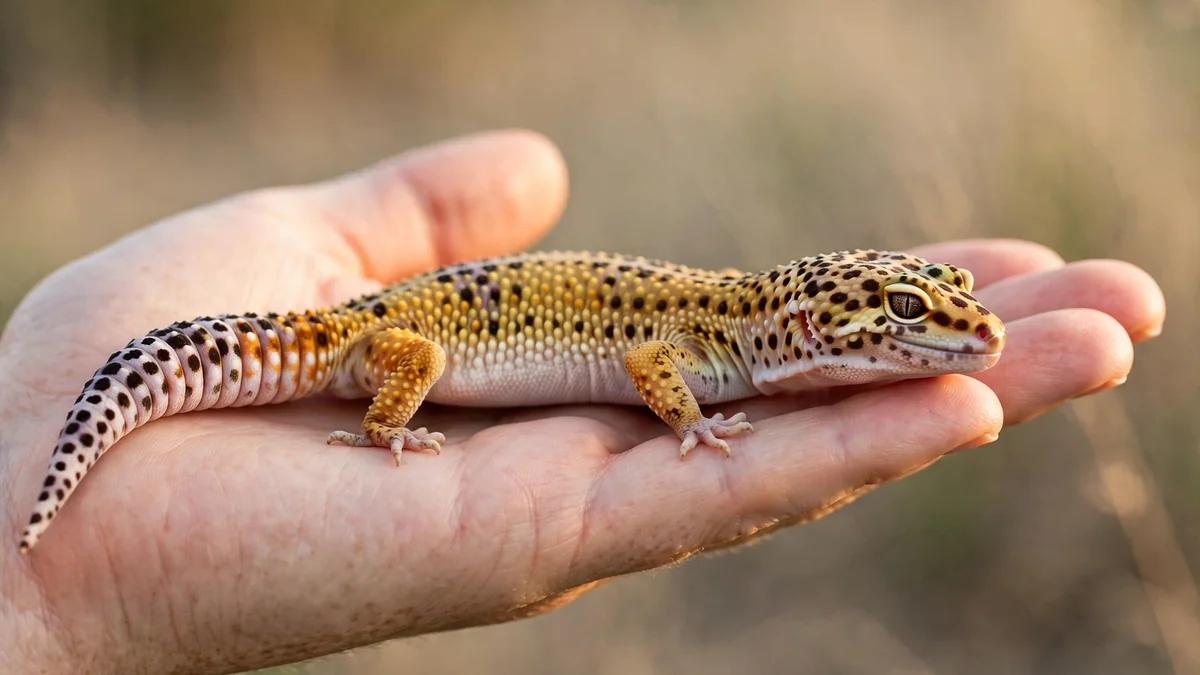
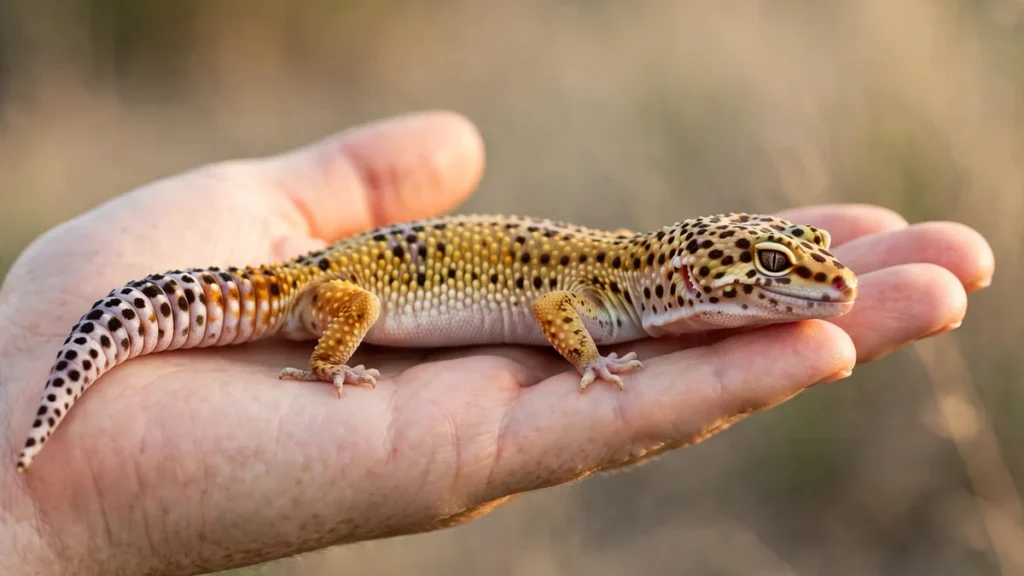
The leopard gecko is the classic first reptile. Adults reach 20 to 25 centimetres, live for 15 to 20 years, and stay calm when handled gently. They are nocturnal, so they are most active in the evening.
Care is simple: a warm hide, a cool hide, a moist hide for shedding, and a water dish. They eat insects and need no special basking lamp.
Best for: first-time keepers who want a small, calm lizard with a simple routine.
2. Crested Gecko
The crested gecko is a gentle tree-dweller from New Caledonia that suits a room-temperature home. Adults reach 20 to 25 centimetres including the tail and live for 15 to 20 years.
They eat a prepared fruit-based diet with the occasional insect, and many homes need no extra heating. Our crested gecko care guide covers the enclosure, humidity and feeding in more detail.
Best for: keepers who want a low-heat gecko for a planted, vertical enclosure.
3. Bearded Dragon
The bearded dragon is the most sociable lizard here. Adults reach 45 to 60 centimetres and live for 10 to 15 years. They are awake during the day and tolerate gentle handling well.
They need a basking lamp and UVB light, plus insects and leafy greens. The enclosure is larger than a gecko’s, yet the routine is straightforward once the lights are on a timer.
Best for: keepers who want a daytime companion with real personality.
4. Corn Snake
The corn snake is the friendliest first snake most keepers will meet. Adults reach 120 to 150 centimetres, live for 15 to 20 years, and are usually calm, curious and slow to bite.
They eat frozen-thawed mice, need a warm hide and a cool hide, and ask for little more than a secure lid. Handling a few times a week keeps them tame.
Best for: first-time snake keepers who want a hardy, handleable snake.
5. Ball Python
The ball python is a shy, heavy-bodied snake that curls into a ball when startled. Adults reach 120 to 150 centimetres and can live for 20 to 30 years. They are calm and slow, and rarely bite when handled with care.
They need steady warmth and moderate humidity, plus a hide on each side. They eat rodents every week or two, and may skip meals at times.
Best for: patient keepers who want a long-lived, gentle snake.
6. Russian Tortoise
The Russian tortoise is a small, sturdy grazer with a lifespan that outlasts most pets. Adults reach 15 to 25 centimetres and can live for 40 years or more. They are active in the daytime and enjoy digging and grazing.
They eat leafy greens, weeds and grasses, and need UVB light and a warm basking spot. A secure outdoor run in warm weather is a bonus.
Best for: keepers ready for a decades-long companion with a plant-based diet.
7. Blue-Tongued Skink
The blue-tongued skink is a calm, ground-dwelling lizard with a flash of blue when it opens its mouth. Adults reach 45 to 60 centimetres and live for 15 to 20 years. They are slow and sturdy, and happy to be handled.
They eat greens, vegetables and the occasional insect or egg. The enclosure is a simple floor setup with a basking spot, a hide and a water dish.
Best for: keepers who want a chunky, docile lizard that eats almost anything.
8. African Fat-Tailed Gecko
The African fat-tailed gecko is the leopard gecko’s quieter cousin, with a plump tail that stores fat. Adults reach 20 to 25 centimetres and live for 15 to 20 years. They are nocturnal, gentle and slow-moving.
They need a warm, humid hide and insects dusted with supplement powder. The setup is much like a leopard gecko’s, with a little more attention to humidity.
Best for: keepers who like the leopard gecko but want something a little rarer.
9. Kenyan Sand Boa
The Kenyan sand boa is a small burrowing snake that lives mostly under the substrate. Females reach about 60 centimetres, males stay smaller, and the species lives for 15 to 20 years or more. They are docile and hardy.
They eat frozen-thawed mice and need deep sand or aspen to dig in, plus a warm spot beneath one end. You will not see them often, yet they are a delight at feeding time.
Best for: keepers who want a small, undemanding snake and do not mind a hidden pet.
10. Western Hognose Snake
The western hognose snake is a small, upturned-nose burrower. Adults reach 35 to 60 centimetres and live for 15 to 20 years. They are usually calm, and when startled they may hiss or play dead rather than bite.
They eat frozen-thawed mice and need a dry enclosure with deep substrate for digging. They are rear-fanged, so handling should stay calm and brief, and bites are rare.
Best for: keepers who want a small snake with bags of character.
The 10 Picks at a Glance
| Reptile | Adult size | Lifespan | Daily care |
|---|---|---|---|
| Leopard gecko | 20–25 cm | 15–20 years | Insects every day or two |
| Crested gecko | 20–25 cm | 15–20 years | Fruit diet, misting, insects weekly |
| Bearded dragon | 45–60 cm | 10–15 years | Greens and insects daily |
| Corn snake | 120–150 cm | 15–20 years | Check water, feed weekly |
| Ball python | 120–150 cm | 20–30 years | Check humidity, feed every week or two |
| Russian tortoise | 15–25 cm | 40 years or more | Fresh greens and grazing daily |
| Blue-tongued skink | 45–60 cm | 15–20 years | Varied food every day or two |
| African fat-tailed gecko | 20–25 cm | 15–20 years | Insects every day or two |
| Kenyan sand boa | 40–60 cm | 15–20 years | Check water, feed weekly |
| Western hognose snake | 35–60 cm | 15–20 years | Check water, feed weekly |
What a Good Beginner Reptile Feels Like

A good beginner reptile feels calm in the hand, not frantic or frozen with fear. It moves slowly, settles after a moment, and shows no urge to bolt or bite.
Watch the animal before you handle it, and look for clear eyes, a full tail and steady breathing. A healthy reptile explores its enclosure, basks in the warm spot and eats with interest.
Temperament also shows in the daily routine. The best first reptiles tolerate short, gentle handling sessions and return calmly to their enclosure afterwards.
Setting Up Your First Enclosure Without the Fuss
Start with the enclosure, not the animal. Buy the full-grown size of tank or vivarium first, add a secure lid, and set the heating on a thermostat before the reptile arrives.
Keep the layout simple: a warm hide, a cool hide, a water dish and a basking spot. Add a thermometer at each end.
Give the new arrival a quiet week to settle in, with food and water but little handling. Reptiles need time to learn that their new home is safe.
Beginner Reptile Checklist
- Enclosure sized for the adult animal, with a secure, escape-proof lid.
- Heat source on a thermostat, plus UVB light where the species needs it.
- Thermometers at the warm end and the cool end.
- Warm hide, cool hide and a fresh water dish.
- Right food ready before the reptile arrives.
- Supplement powder for insect-eating species.
- Local reptile vet found in advance.
- Daily routine planned, including who feeds while you are away.
Frequently Asked Questions
What is the easiest pet reptile for a complete beginner?
The leopard gecko is the easiest first reptile for most people. It is small, calm and hardy, happy in a simple enclosure, and it eats insects on a straightforward routine. The crested gecko is a close second.
Do beginner reptiles need a lot of time every day?
Most need only a few minutes a day once the enclosure is set up. Fresh water, a quick temperature check and feeding take little time, and snakes may need feeding only once a week.
Are pet reptiles safe around children?
Reptiles can suit families, yet children should always handle them with an adult present. Hands must be washed after handling, and very young children are better off watching than holding.
How long do beginner pet reptiles live?
Most live for 15 to 20 years, and some live far longer. Ball pythons can reach 20 to 30 years, and Russian tortoises can pass 40 years. A reptile is a long commitment, so choose with the adult lifespan in mind.
Can I keep a beginner reptile in a small flat?
Yes, if you choose a small species such as a leopard gecko, crested gecko or Kenyan sand boa. These fit comfortably in a modest enclosure on a sturdy table or stand.
The Bottom Line
The best first reptile is the one whose size, lifespan and daily routine fit your life. For most people that means a leopard gecko, a crested gecko or a bearded dragon, with corn snakes close behind for those who prefer snakes. Choose slowly, set the enclosure up first, and enjoy a pet that asks for little and gives back a great deal of quiet charm.
Before you buy, find a local vet who sees reptiles, and read our guide to finding a reptile vet so you know what to look for.
A quick safety note: always wash your hands after handling a reptile or touching anything in its enclosure. Check local rules on keeping reptiles before you buy, since some species need a licence or are restricted in certain areas. Finally, research each species’ heating, lighting and feeding needs in full before bringing one home.