Titanium is the quiet overachiever of the jewellery box. It is lighter than steel, stronger than gold, naturally hypoallergenic, and it does not tarnish, which is why it has moved from watches and wedding bands into everyday bracelets. The problem is not finding a titanium bracelet. It is finding one that is honestly made, comfortable enough to wear all day, and built to last, since titanium is often mixed with other metals and its quality varies more than its marketing suggests.
That is why this guide is organised by style and wear, not just by price. A slim brushed cuff can be the right daily piece for someone who wants metal they forget they are wearing, while a heavier link bracelet suits someone who wants presence on the wrist. A bracelet that is mostly steel with a titanium coating is not the same as a solid titanium bracelet, and the difference shows up in weight, skin comfort, and how it ages.
Below are nine titanium bracelets worth considering in 2027, from a classic link bracelet to a simple beaded design. Each one is described by what it is good at, what to watch for, and who it suits best, so you can choose with your wrist in mind, not just a bestseller list.
Key takeaways
- Titanium is light, strong, naturally hypoallergenic, and it does not tarnish, which makes it a good everyday bracelet metal.
- Look for solid titanium or a stated titanium grade, not a coating over steel, and check the clasp, which is where cheap bracelets usually fail.
- Brushed and matte finishes hide scratches better than polished finishes, which show marks quickly on titanium.
- Measure your wrist properly and allow a little ease, because titanium bracelets are rarely easy to resize.
- Titanium is durable, not indestructible, and a bracelet that is too tight, too heavy, or poorly finished will still be uncomfortable, so fit matters more than the metal name.
What titanium bracelets actually are
Titanium is a grey-white metal that is about 45 percent lighter than steel while being just as strong, and it is naturally resistant to corrosion. In jewellery it is usually used as commercially pure titanium or as a grade 5 alloy, which adds a small amount of aluminium and vanadium for extra strength. That lightness is the first thing most people notice. A titanium bracelet that looks substantial on the wrist can feel almost weightless, which is why it suits people who find steel bracelets heavy or gold bracelets too soft for daily wear.
What sets titanium apart most is how it behaves on skin. It is hypoallergenic, so most people who react to nickel in cheaper metals can wear it comfortably, and it does not tarnish or need polishing to keep its colour. It does scratch, though, and those scratches show most clearly on a polished finish. Brushed, matte and sandblasted finishes hide everyday marks far better, which is why they are the sensible choice for a bracelet you plan to wear every day rather than keep for occasions.
Titanium is also hard to work with, which is both its strength and its weakness. It is difficult to solder and difficult to resize, so a bracelet that does not fit well is often a bracelet you cannot easily fix. That makes measuring your wrist before you buy more important than it is with gold or silver, where a jeweller can usually adjust the size. A good titanium bracelet is made to fit from the start, with a clasp that is secure and easy to use one-handed.
How we chose these bracelets and what to look for
Look first at the metal itself. A bracelet described as solid titanium or grade 5 titanium is a different thing from one described as titanium-plated or titanium-coated, which is usually steel underneath. Ask for the grade in writing if it is not stated, and be wary of listings that use the word titanium without saying how much of the bracelet is actually titanium. A reputable seller will state it plainly.
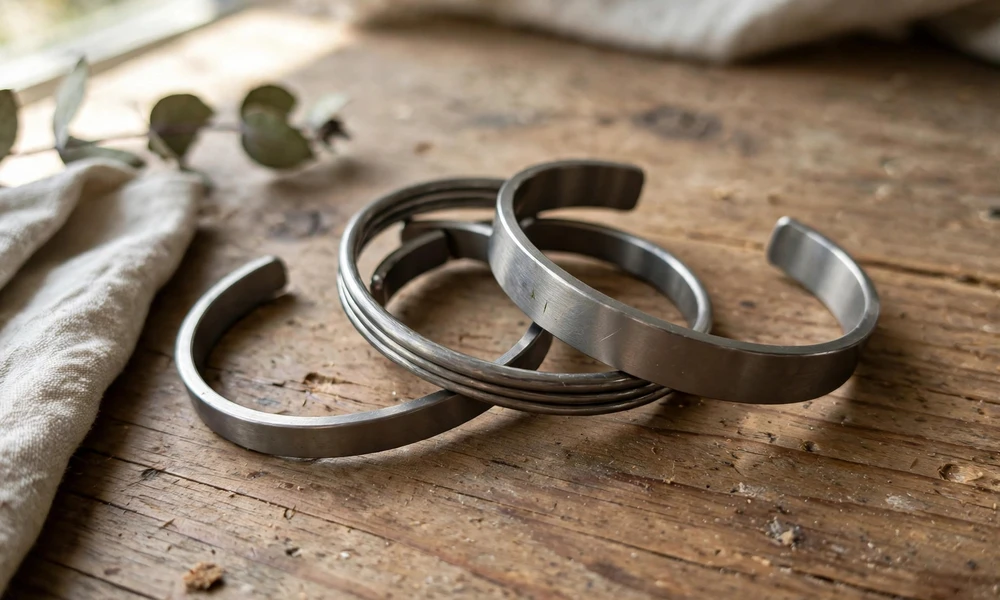
Look next at the clasp and the links. The clasp is where most bracelets fail, so test it if you can: it should close with a firm click, stay closed when you tug it gently, and open again without a struggle. Links should move smoothly without pinching, and a bracelet that catches on clothing or hair will spend more time in a drawer than on your wrist. Our guide to titanium jewellery explains the metal in more detail, including the grades and finishes worth knowing before you buy.
Finally, look at the finish and the fit. A brushed or matte finish is the practical choice for daily wear, while a polished finish is better kept for a bracelet you wear occasionally. Measure your wrist with a soft tape, add about a centimetre of ease for a bracelet, and check the seller’s size guide, because titanium sizes vary between makers and are rarely adjustable after the fact.
The 9 best titanium bracelets of 2027
The Classic Brushed Titanium Link Bracelet
What we like: A clean, brushed link design that is light on the wrist, comfortable all day, and smart enough for work and weekends alike. What to consider: The brushed finish can look plain next to a polished watch, and the links are not easily shortened at home. Best for: Everyday wear. Material: Solid titanium, brushed finish. Price range: $70–$140. Standout feature: A secure box clasp with a safety catch.
This is the bracelet other titanium bracelets are measured against. It is not flashy, and it is not the cheapest, but for someone who wants one bracelet to wear every day without thinking about it, it remains a strong first choice.
The Slim Titanium Cuff Bracelet
What we like: A slim, open cuff that slips on easily, weighs almost nothing, and layers well with a watch or another bracelet. What to consider: An open cuff can be bent out of shape if you are rough with it, and it suits slimmer wrists best. Best for: Minimal styling and layering. Material: Solid titanium, matte finish. Price range: $50–$110. Standout feature: A soft, rounded edge that does not dig in.
The Titanium Tennis Bracelet
What we like: A line of small, clear stones set in titanium, giving the sparkle of a tennis bracelet without the weight or the price of a gold setting. What to consider: The stones are usually cubic zirconia rather than diamonds, so check what is set before you buy. Best for: Evenings and special occasions. Material: Titanium with cubic zirconia stones. Price range: $90–$200. Standout feature: A secure double clasp that holds the line in place.
This is a good choice if you like the look of a tennis bracelet but want something lighter and easier to wear. It reads as dressy without feeling delicate, which is a rare combination.
The Titanium Rope Chain Bracelet
What we like: A twisted rope chain that catches the light, feels substantial, and is strong enough for daily wear without looking heavy. What to consider: The rope texture can catch on fine knitwear, and it is harder to clean than a smooth link. Best for: A bolder everyday look. Material: Solid titanium, polished rope chain. Price range: $60–$130. Standout feature: A twisted rope pattern that looks far more expensive than it is.
The Titanium Leather-Strap Bracelet
What we like: A leather strap with a solid titanium clasp and accents, giving a softer, more casual feel than an all-metal bracelet. What to consider: The leather needs care and will age with wear, so it is not the best choice for the gym or the shower. Best for: Casual and weekend wear. Material: Leather strap with titanium clasp. Price range: $40–$100. Standout feature: A magnetic titanium clasp that is easy to fasten one-handed.
The Titanium Magnetic Clasp Bangle
What we like: A smooth, solid bangle with a magnetic clasp that opens and closes easily, even with one hand. What to consider: A magnetic clasp can feel less secure than a box clasp, so check the magnet strength before you buy. Best for: People who struggle with small clasps. Material: Solid titanium, polished finish. Price range: $55–$120. Standout feature: A strong magnetic clasp with a safety groove.
The Titanium Beaded Bracelet
What we like: Smooth titanium beads on a strong elastic cord, lightweight, comfortable, and easy to wear with anything from a T-shirt to a suit. What to consider: Elastic cords wear out over time and will need replacing, usually after a year or two of daily wear. Best for: Relaxed, everyday styling. Material: Titanium beads on elastic cord. Price range: $35–$80. Standout feature: Beads in two finishes, brushed and polished, for a subtle contrast.
The Titanium ID Bracelet
What we like: A flat titanium plate on a link chain, with room for an engraving, giving a personal piece that is also one of the toughest bracelets you can buy. What to consider: Engraving is permanent, so be sure of the wording, and the plate can feel cool and heavy at first. Best for: A gift or a personal keepsake. Material: Solid titanium plate and chain. Price range: $65–$150. Standout feature: A smooth, engravable plate that takes a clean, lasting mark.
The Titanium Figaro Chain Bracelet
What we like: A classic Figaro pattern of long and short links, giving a bracelet that looks tailored and works as well with a shirt as with a T-shirt. What to consider: The pattern is more formal than a simple link, so it suits a smarter look best. Best for: Smart everyday wear. Material: Solid titanium, brushed Figaro chain. Price range: $60–$130. Standout feature: A Figaro pattern that stays flat and does not twist on the wrist.
If you want one bracelet that works for both work and weekends, this is a strong option. It has more character than a plain link bracelet, without being so distinctive that it only suits one outfit.
Which titanium bracelet is right for you
Start with how you will wear it. If it is an everyday bracelet, choose a brushed or matte finish, a secure box or magnetic clasp, and a style that sits flat on the wrist without catching on sleeves. A link bracelet or a slim cuff is the safest choice here, because both are comfortable for long hours and do not demand attention. If it is for evenings or occasions, a tennis bracelet or a polished bangle gives you more shine, and you can accept a finish that needs a little more care.
Think about your wrist and your skin. Titanium suits sensitive skin well, but a bracelet that is too tight will still irritate, whatever the metal. Measure your wrist with a soft tape, add about a centimetre of ease, and check the maker’s size guide, because titanium is hard to resize. If you wear a watch on the same wrist, choose a bracelet that sits comfortably beside it rather than fighting it for space. A guide to how to clean titanium jewellery is worth reading before you buy, because knowing the care routine helps you choose a finish you will actually maintain.
Finally, think about the clasp. It is the part you will use every day, and it is the part that fails first on a cheap bracelet. A box clasp with a safety catch is the most secure, a magnetic clasp is the easiest to use one-handed, and an open cuff avoids the question entirely. Whichever you choose, test it a few times before you commit, because a clasp that is fiddly on day one will not get easier.
The caveats that matter
Titanium is a strong, honest metal, but it is not a magic one. It scratches, it is hard to resize, and a bracelet that is mostly steel with a thin titanium coating is not the same as a solid titanium bracelet. The most common disappointment is not the metal itself but the fit: a bracelet that is too tight, too loose, or too heavy for the wrist it is on. That is why measuring properly and buying from a seller with a clear returns policy matters more with titanium than with most other metals.
| Detail | What is known |
|---|---|
| Best metal to look for | Solid titanium or grade 5 titanium, stated in writing, not a coating over steel |
| Best finish for daily wear | Brushed or matte, which hides scratches far better than a polished finish |
| How it should fit | Wrist measurement plus about a centimetre of ease, because resizing is difficult |
| Who it suits best | Sensitive skin, active lifestyles, and anyone who wants a light, strong bracelet |
| What to check first | The clasp, which is where cheap bracelets fail, and the hallmark or grade marking |
| Cleaning | Warm soapy water and a soft cloth; avoid harsh chemicals and ultrasonic cleaners |
| What it does not do | It does not resist scratches, it is not easy to resize, and it is not an investment metal |
| When to avoid it | If you need a bracelet that can be resized later, or you want the warmth of gold |
If you have a metal allergy, titanium is usually a safe choice, but check the alloy: a small number of people react to the vanadium in grade 5 titanium, and commercially pure titanium is the safer option for them. If you are unsure, ask the seller for the exact grade before you buy.
Checklist: choosing a titanium bracelet honestly
Use these checks before you buy, and again when the bracelet arrives.
- Check the metal: solid titanium or a stated grade, not a coating or plating over steel.
- Check the finish: brushed or matte for daily wear, polished only for occasional wear.
- Check the clasp: it should close firmly, stay closed when tugged, and open without a struggle.
- Measure your wrist: use a soft tape, add about a centimetre of ease, and check the maker’s size guide.
- Check the weight: it should feel light and balanced, not heavy or lopsided on the wrist.
- Check the returns policy: titanium is hard to resize, so make sure you can exchange it if the fit is wrong.
Frequently asked questions
Is titanium good for bracelets?
Yes, for most people. It is light, strong, hypoallergenic, and it does not tarnish, which makes it well suited to a bracelet worn every day. The main drawback is that it is hard to resize, so getting the size right matters.
Does titanium tarnish or change colour?
No, titanium does not tarnish the way silver does, and it keeps its grey-white colour without plating. It can scratch, and a polished finish will show those scratches, but the metal itself does not change colour with wear.
Can titanium bracelets be resized?
Usually not easily. Titanium is very hard to solder, so most jewellers will not resize a titanium bracelet the way they would a gold or silver one. That is why measuring your wrist carefully before buying is so important.
Is titanium hypoallergenic?
Generally yes. Titanium is one of the least reactive metals used in jewellery, and most people with metal sensitivities can wear it comfortably. Commercially pure titanium is the safest choice if you have a known sensitivity.
How do I clean a titanium bracelet?
Warm soapy water and a soft cloth are enough for most cleaning. Rinse well, dry fully, and avoid harsh chemicals. Our guide to how to store titanium jewellery covers the full care routine, including how to keep the clasp working well.
Is titanium better than steel for bracelets?
For comfort, yes: titanium is about 45 percent lighter than steel, it does not tarnish, and it is more comfortable for sensitive skin. Steel is cheaper and easier to resize, so it can be the better choice if budget or adjustability matters more to you.
The bottom line
The best titanium bracelet in 2027 is not the most expensive or the most unusual. It is the one that is honestly made from solid titanium, that fits your wrist properly, and that has a clasp you can trust every day. For most people, a brushed link bracelet or a slim cuff is the right starting point, because both are comfortable, durable, and easy to live with.
Choose one style, measure your wrist properly, check the grade and the clasp before you buy, and wear it for a few weeks before deciding whether it is right. That is the honest way to get the benefit titanium is known for, without the disappointment of a bracelet that does not fit or does not last.