Titanium jewellery is easy to love and easy to neglect. It does not tarnish the way silver does, it does not rust, and it survives knocks that would dent softer metals, so it is tempting to toss a titanium ring into a drawer, drop a chain into a pocket, and forget about it. The metal will forgive that treatment for a long time, which is exactly why small problems creep up unnoticed.
The truth is that titanium is tough, but it is not carefree. Its surface can scratch, its coatings can wear, its clasps can loosen, and a chain stored in a tangle will take longer to untangle than it ever took to wear. Good storage is not about buying an expensive box. It is about giving each piece a little space, keeping it clean and dry, and building a routine you will actually follow.
This guide covers nine practical steps for storing titanium jewellery at home, from cleaning before you put it away to choosing the right box, pouch or tray, and it works whether you own one titanium ring or a full collection. If you are still building that collection, our best titanium jewellery guide is a good place to start.
Key takeaways
- Titanium does not tarnish, but it can scratch, and its coatings can wear, so store each piece separately rather than in a pile.
- Always clean and dry titanium before storing it, because skin oils, sweat and lotion left on the surface attract dust and dull the finish.
- Keep titanium in a cool, dry place away from bathrooms and radiators, where humidity and heat do the most damage.
- Fasten chains and close clasps before storing, and lay necklaces flat, because tangles and bent links are the most common storage damage.
- Storage does not replace care, and no box will protect a piece that is already scratched, coated in lotion, or stored wet.
What titanium actually needs from storage
Titanium is one of the strongest metals used in jewellery, and it is naturally resistant to corrosion, which is why it is popular for rings, chains and earrings that are worn every day. It does not tarnish in air, it does not react with sweat the way some metals do, and it keeps its grey, slightly warm colour for years. That toughness can be misleading, because it makes people think storage does not matter.
It does matter, for three reasons. First, titanium can scratch, and it scratches most easily against other metals, gemstones and hard surfaces, so a ring rattling around in a drawer with keys will pick up marks. Second, many titanium pieces have a coating, often a dark or coloured finish, and that coating is much less tough than the metal underneath, so it can wear or chip if it is rubbed against other jewellery. Third, the moving parts, clasps, hinges and earring posts, wear out faster when they are knocked around, and a loose clasp is how a chain is lost.
Good storage solves all three problems at once. It keeps pieces apart, it keeps them clean and dry, and it keeps the moving parts still. It does not need to be expensive or complicated, and the best storage system is the one you will use every single night, not the one that looks best in a photograph.
How to set up a storage spot that works
Start with a place that is cool, dry and easy to reach. A bedroom drawer, a dressing table, or a shelf in a wardrobe all work well, because they are away from the humidity of a bathroom and the heat of a radiator. The bathroom is the worst place to store jewellery, even titanium, because steam, perfume and hairspray all settle on surfaces and dull finishes over time.
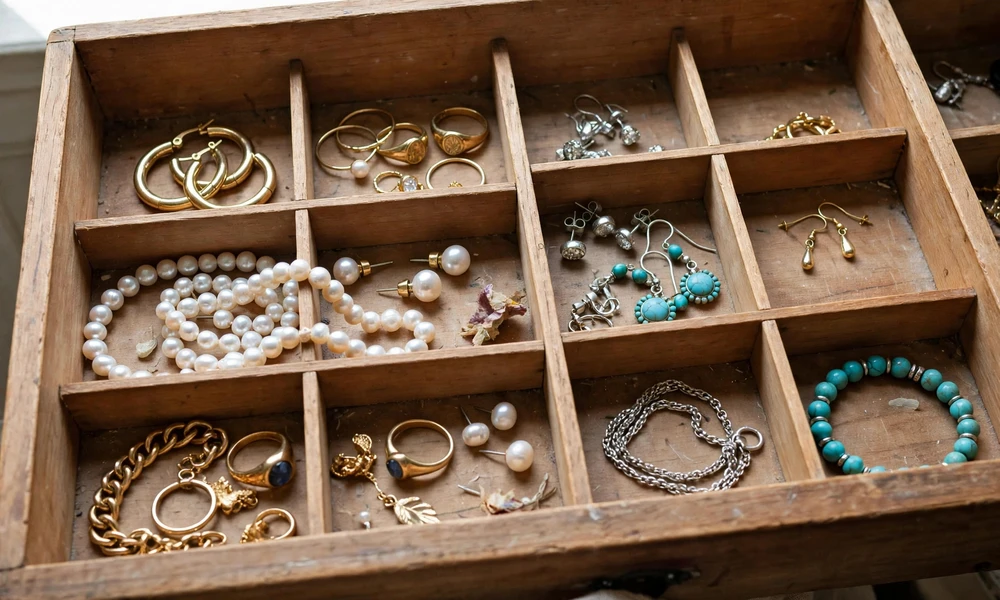
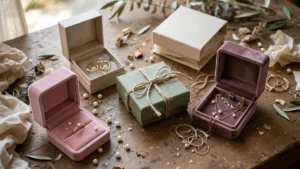
Choose a box, tray or set of pouches with soft lining and separate compartments. A lined jewellery box with slots for rings, hooks or slots for necklaces, and a tray for earrings is ideal, but a set of small fabric pouches in a drawer works just as well. The key is separation: no two pieces should touch, and no piece should be loose enough to slide around. A single soft cloth at the bottom of a drawer is better than nothing, but it is not enough on its own.
Finally, keep your cleaning cloth and a small brush near your storage spot, not in another room. If cleaning is easy, you will do it. If it means a trip to the kitchen, you will skip it, and that is how a thin film of lotion and sweat builds up on a ring over weeks.
The 9 steps to storing titanium jewellery properly
Clean titanium before you put it away
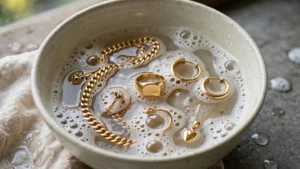
What to do: Wipe each piece with a soft, dry cloth after wearing, and wash it in warm soapy water once a week or whenever it looks dull. What to avoid: Putting a piece away still damp, or still coated in lotion, sunscreen or perfume. Best for: Every piece, every day. Time needed: One minute. Standout tip: A quick wipe after wearing prevents most of the dullness that people blame on the metal.
Skin oils, sweat and lotion are the main reason titanium looks dull, not the metal itself. Our guide to cleaning titanium jewellery covers the full routine, but the daily habit is simple: wipe, and wash when it needs it.
Dry every piece completely
What to do: Pat each piece dry with a soft cloth and let it air-dry for a few minutes before storing. What to avoid: Storing a piece while it is still wet, or drying it with a rough towel. Best for: Rings, chains and earrings after washing or swimming. Time needed: Two minutes. Standout tip: Water trapped in a clasp or a setting is the most common cause of stiffness and dull spots.
Titanium itself will not rust, but water left in a clasp, a hinge or behind a stone can leave marks, attract dust, and make moving parts stiff. A few minutes of air-drying is enough, and it is the easiest step to skip, so make it part of the routine.
Give each piece its own pouch or slot
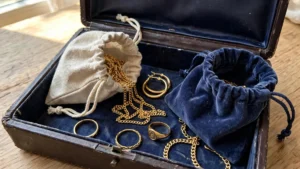
What to do: Store each piece in its own fabric pouch, or in its own slot in a lined box. What to avoid: Tossing several pieces into one compartment, or into a pocket or handbag loose. Best for: Rings, earrings and chains, which scratch each other most easily. Time needed: A few seconds per piece. Standout tip: Small zip pouches are cheap, and they are the single best investment for titanium storage.
Lay necklaces flat, never hang them
What to do: Lay each necklace flat in a tray or a long slot, with the clasp fastened and the chain straight. What to avoid: Hanging chains on hooks, where they can tangle, stretch, or catch on each other. Best for: Chains, pendants and necklaces of any length. Time needed: A few seconds per piece. Standout tip: A flat tray with a soft lining is better than a hanging stand for titanium chains.
Hanging looks tidy, but it is the fastest way to tangle a chain and the easiest way to stretch a fine link over time. Laying a necklace flat keeps the chain straight, the pendant still, and the clasp closed, and it makes the whole collection easier to see at a glance.
Keep titanium away from harder stones and metals
What to do: Store titanium separately from diamond rings, gemstone pieces and steel jewellery, in its own section of the box. What to avoid: Mixing titanium with diamonds, which are harder and will scratch it, or with rough steel pieces. Best for: Coated titanium, brushed titanium, and any piece with a coloured finish. Time needed: No extra time, once the box is organised. Standout tip: If you only remember one rule, make it this one: diamonds scratch titanium, so they never share a compartment.
Store in a cool, dry place away from humidity
What to do: Keep your jewellery box in a bedroom or a wardrobe, away from bathrooms, windows and radiators. What to avoid: Storing jewellery in a bathroom, where steam settles on every surface, or near a heat source. Best for: Every piece, but especially coated titanium and pieces with stones. Time needed: No extra time, once the spot is chosen. Standout tip: A small silica gel packet in the box helps in a humid home, and it costs almost nothing.
Humidity does not rust titanium, but it does encourage a film of moisture and dust on the surface, and it can affect the settings, the clasps and any stones. A cool, dry drawer is the simplest protection, and it costs nothing to choose the right room.
Keep clasps closed and chains fastened
What to do: Fasten every chain and close every clasp before you store a piece, so nothing can snag or tangle. What to avoid: Storing a chain open, where the loose end can hook through another piece and knot. Best for: Necklaces, bracelets and chains of any length. Time needed: A few seconds per piece. Standout tip: Threading a chain through a drinking straw before storing it is an old trick that genuinely stops tangles.
Check settings, clasps and coatings every few months
What to do: Every two or three months, look at each piece in good light, check that stones are secure, clasps close firmly, and coatings are intact. What to avoid: Ignoring a loose clasp or a wobbling stone until the piece is lost or the stone falls out. Best for: Pieces worn every day, and any piece with a coating or a stone. Time needed: Ten minutes for a whole collection. Standout tip: Gently shake a ring near your ear: if you hear a stone rattle, take it to a jeweller before you wear it again.
Storage is also a good time to notice problems, because you handle each piece as you put it away. A clasp that feels loose, a stone that moves, or a coating that is wearing thin are all easier and cheaper to fix early than after a loss.
Keep a simple storage routine you will actually follow
What to do: Build a short nightly routine: wipe, dry, fasten, put away in the same spot, every night. What to avoid: A complicated system with too many boxes, trays and rules that you abandon after a week. Best for: Anyone with more than a few pieces, and anyone who has lost jewellery before. Time needed: Two minutes a night. Standout tip: One box, one spot, one routine beats three beautiful boxes you never use.
Which storage suits your collection
A small collection, up to ten pieces, is best served by a single lined box with compartments and a few fabric pouches. Choose a box that fits in a drawer or on a dressing table, with a slot for rings, a tray for earrings, and a flat section for necklaces. The box should close properly, because dust settles on open jewellery, and a lid keeps light and air out as well.
A larger collection needs more structure. Use a box with a removable tray, so rings and earrings sit on top and chains lie flat underneath, and keep a separate pouch for each valuable piece. If you travel, keep a small, padded travel case with individual slots, and never put titanium loose in a suitcase pocket, where it will scratch against zips and buckles. Our general guide to storing jewellery properly covers boxes, trays and travel cases in more detail, and most of its advice applies to titanium as well.
Whatever you choose, keep the box in the same place every night. Jewellery is most often lost when it is put down somewhere unusual, on a bathroom shelf, a kitchen counter, or a bedside table, and then forgotten. One spot, used every night, is the simplest form of loss prevention.
The caveats that matter
Titanium is forgiving, but it is not invincible, and storage cannot fix damage that has already happened. A scratched coating will not heal in a box, a loose stone will not tighten itself, and a chain that is already tangled will not untangle on its own. Storage is prevention, not repair, so if a piece is already damaged, take it to a jeweller before you store it away and forget about it.
| Detail | What is known |
|---|---|
| Best place | A cool, dry bedroom drawer or wardrobe, never a bathroom |
| Best container | A lined box with separate compartments, or individual fabric pouches |
| Necklaces | Lay flat with the clasp fastened, never hang them |
| Biggest scratch risk | Diamonds and other hard stones stored in the same compartment |
| Coated titanium | Needs its own pouch, because coatings chip more easily than the metal |
| Before storing | Wipe clean and dry completely, every time |
| How often to check | Every two to three months, look at clasps, settings and coatings |
| What storage does not do | It does not repair scratches, tighten loose stones, or restore a worn coating |
If you swim, exercise or work with your hands, take titanium jewellery off first and put it in its pouch straight away, rather than leaving it on a poolside table or a gym locker shelf. Most titanium is lost or damaged in those few minutes away from its proper place, not during wear.
Checklist: storing titanium jewellery honestly
Use these checks when you set up your storage, and again every few months.
- Clean and dry every piece before it goes away, every single time.
- Give each piece its own pouch or slot, so metal never rubs against metal.
- Lay necklaces flat with clasps fastened, and never hang chains on hooks.
- Keep titanium away from diamonds and hard stones, in its own section of the box.
- Store the box in a cool, dry place, away from bathrooms, windows and radiators.
- Check clasps, settings and coatings every two to three months, and fix problems early.
Frequently asked questions
Can I store titanium jewellery in the bathroom?
It is best not to. Titanium will not rust, but steam, perfume and hairspray settle on every surface in a bathroom and dull the finish over time. A bedroom drawer or a wardrobe is a much better home for your jewellery box.
Does titanium tarnish in storage?
No, titanium does not tarnish the way silver does, because it does not react with air in the same way. It can still pick up a film of dust, oil and moisture, and its surface can scratch, so clean storage still matters even though tarnish does not.
Should I keep titanium in a sealed bag?
A soft fabric pouch is better than a sealed plastic bag, because fabric lets a little air circulate and will not trap moisture. If you do use a plastic bag, make sure the piece is completely dry first, and do not store it in a damp place.
Can titanium be stored with gold and silver jewellery?
Yes, as long as each piece is in its own pouch or slot and they do not touch. Titanium is harder than gold and silver, so it can scratch them, and diamonds can scratch titanium, so separation is the rule, not the metal combination.
How do I store a titanium chain without tangling it?
Fasten the clasp, lay the chain flat in a tray or a long slot, and keep it away from other chains. Threading the chain through a drinking straw before storing it is a simple trick that stops the ends from knotting together.
Do I need a special box for titanium jewellery?
No. Any lined jewellery box with separate compartments works well, as does a set of small fabric pouches in a drawer. What matters is separation, dryness and a consistent spot, not the price of the box.
The bottom line
Storing titanium jewellery well is simple: clean it, dry it, give it its own space, and keep it in a cool, dry place you use every night. Titanium is a tough metal, but its coatings, its clasps and its shine all benefit from a little care, and the few minutes it takes each night are far cheaper than a repair or a replacement.
Choose one box, one spot and one routine, and stick to it. Your titanium will look better, last longer, and be exactly where you expect it to be every morning.