A pearl ring is one of the easiest ways to wear pearls every day. Unlike a pearl necklace, which needs the right neckline, or pearl earrings, which need the right hairstyle, a ring sits on your hand and goes with almost anything you already own. It is quiet, it catches the light when you move, and it does not ask for a special occasion. That is why pearl rings have become a daily staple rather than something kept for weddings and formal dinners.
The problem is that not every pearl ring is built for daily wear. Pearls are softer than diamonds and most gemstones, and a ring takes more knocks than any other piece of jewellery. A tall setting snags on pockets and sleeves. A thin band bends. A pearl that is glued rather than properly set can loosen over time. Choosing well means looking at the setting, the band, and the pearl itself, not just the first pretty ring you see.
Below are nine pearl rings for everyday wear in 2027, from a simple freshwater solitaire to a slim stacking set. Each one is described by what it does well, what to watch for, and who it suits best, so you can pick a ring that survives real life, not just a jewellery box.
Key takeaways
- Pearl rings work for everyday wear when the setting is low, the band is sturdy, and the pearl is properly secured.
- Freshwater pearls offer the best value for daily rings, while akoya pearls give a sharper lustre at a higher price.
- A bezel or half-bezel setting protects a pearl far better than a tall prong setting on a ring you wear daily.
- Remove pearl rings before washing hands, cleaning, gardening, or exercise, and wipe them with a soft cloth after wearing.
- No pearl is scratch-proof or waterproof, and a ring that is worn every day will need its setting checked once or twice a year.
What makes a pearl ring work for everyday wear
An everyday pearl ring has to pass three tests. First, the pearl itself should be round, smooth, and free of visible blemishes at arm’s length. Small surface marks are normal in real pearls, but deep pits or cracks are not, and they weaken the pearl over time. A pearl with a thick nacre layer, which gives it that deep, glowing lustre, will also hold up better than a thinly coated one.
Second, the setting matters more on a ring than on any other pearl piece. Your hands touch everything, so a pearl that sits high on tall prongs will catch, chip, and loosen. A low bezel setting, where a rim of metal wraps around the base of the pearl, or a half-bezel that holds it from two sides, keeps the pearl close to the band and far safer. A pearl that is drilled and set on a peg with adhesive should also have a small metal cup or collar around its base for support.
Third, the band should be comfortable and strong enough for daily wear. A band that is too thin will bend, and a band that is too wide will feel bulky between your fingers. Gold filled, sterling silver, and solid gold bands all work, as long as the band is at least 1.5 millimetres wide at its narrowest point. If you work with your hands, a slightly heavier band is worth the extra weight.
How we chose these pearl rings and what to look for
Look first at the pearl. Freshwater pearls are the most practical choice for an everyday ring, because they are affordable, available in many sizes, and usually have thick nacre. Akoya pearls are rounder and shinier, with a sharper, mirror-like lustre, but they cost more and are usually smaller. South Sea and Tahitian pearls are larger and more dramatic, and they suit a statement ring better than a quiet daily one.
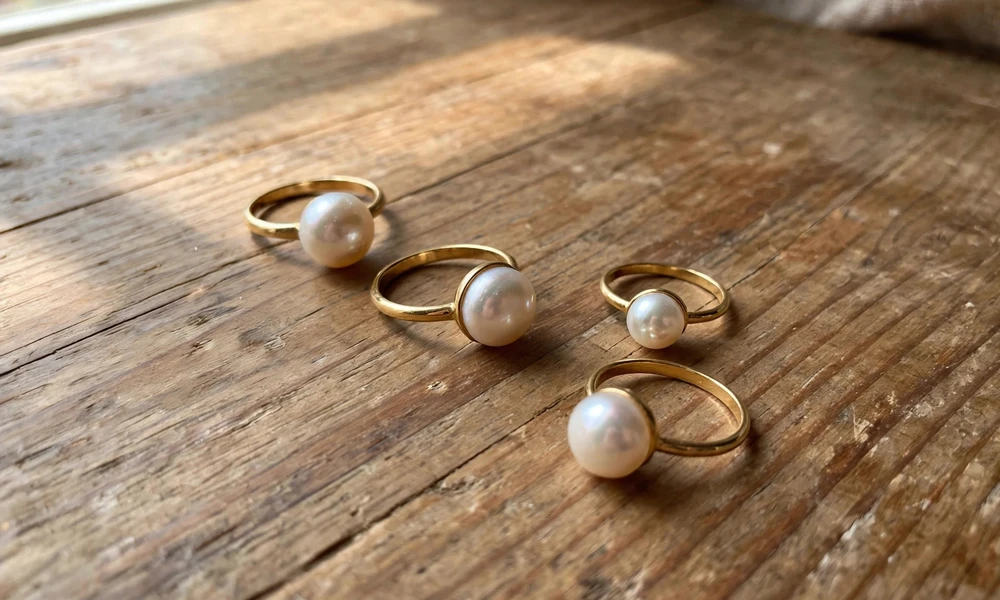
Look next at the setting and the metal. A bezel or half-bezel setting is the safest daily choice, and gold filled or solid gold bands resist tarnish better than silver, though silver is fine if you are happy to polish it. Check that the pearl does not wobble when you press it gently, and that there is no gap between the pearl and its setting where dirt can collect. Our guide to the best pearl earrings for everyday wear follows the same logic, because the same low, secure setting that works on a ring works on an earring too.
Finally, think about size and comfort. A pearl between 6 and 8 millimetres is the sweet spot for everyday wear: big enough to see, small enough not to snag. Larger pearls look lovely but catch on everything, and they suit a ring you wear occasionally rather than daily. Try the ring on with your other rings, and make sure it does not rub or pinch when your fingers bend.
The 9 best pearl rings for everyday wear in 2027
The Classic Freshwater Pearl Solitaire Ring
What we like: A single round freshwater pearl on a slim gold filled band, simple, flattering, and easy to wear with anything. What to consider: The pearl is set on a peg, so check the setting twice a year. Best for: A first pearl ring, or a quiet daily piece. Material: Freshwater pearl, gold filled band. Price range: £40 to £90. Standout feature: The clean solitaire design that never looks dated.
This is the ring to buy if you want one pearl ring and nothing else. It works with jeans, with work clothes, and with a dress, and it does not compete with your other jewellery.
The Small Akoya Pearl Ring
What we like: A small akoya pearl with a sharp, mirror-like lustre in a low bezel setting that protects it well. What to consider: Akoya pearls cost more than freshwater, and the smaller size suits a delicate hand. Best for: Someone who wants the brightest, roundest pearl. Material: Akoya pearl, sterling silver or gold band. Price range: £80 to £180. Standout feature: The high lustre that makes the pearl glow in any light.
If you love the look of a perfectly round, gleaming pearl, akoya is the one to choose. Keep it low-set and it will handle daily wear gracefully.
The Pearl and Gold Bead Ring
What we like: A pearl flanked by small gold beads on the band, which adds warmth and hides the join between pearl and metal. What to consider: The beads add texture, so it feels slightly busier than a plain solitaire. Best for: Someone who likes a little detail without a statement piece. Material: Freshwater pearl, gold beads, gold filled band. Price range: £55 to £120. Standout feature: The beaded shoulders that make the ring feel finished from every angle.
This is a good middle ground between a plain solitaire and a decorated ring. The beads catch the light and give the ring a handcrafted feel.
The Baroque Pearl Statement Ring
What we like: A baroque pearl with a free, organic shape in a wide band, bold but still wearable every day. What to consider: Each baroque pearl is a different shape, so buy the exact ring you see, not a stock photo. Best for: Someone who wants one eye-catching ring. Material: Baroque freshwater pearl, gold vermeil band. Price range: £70 to £150. Standout feature: The one-of-a-kind shape that no other ring shares.
Baroque pearls are for people who like character over perfection. No two are alike, which is exactly the point, and the wide band keeps the larger pearl secure.
The Pearl Halo Ring
What we like: A pearl surrounded by a ring of tiny cubic zirconia stones, which makes the pearl look larger and brighter. What to consider: The halo adds height, so it snags more than a bezel setting, and the small stones need checking. Best for: Dressier days, or a ring you wear most days but not for hands-on work. Material: Freshwater pearl, cubic zirconia, sterling silver or gold band. Price range: £90 to £200. Standout feature: The halo sparkle that frames the pearl beautifully.
A halo ring is the dressiest everyday option here. It is lovely, but save it for days when your hands are not doing heavy work.
The Single Pearl Band Ring
What we like: A small pearl set directly into a smooth, polished band with no raised setting at all. What to consider: The pearl is small, so this is a subtle ring rather than a feature piece. Best for: Minimalists, and for stacking with other rings. Material: Freshwater pearl, solid gold or gold filled band. Price range: £50 to £110. Standout feature: The flush setting that never catches on anything.
This is the most practical pearl ring in the list. With nothing raised above the band, there is almost nothing to snag, chip, or loosen.
The Pearl and Diamond Accent Ring
What we like: A pearl with a single small diamond on each side, a classic combination that suits both day and evening. What to consider: The diamonds add cost, and the setting needs a yearly check. Best for: A special everyday ring, or a gift with lasting value. Material: Freshwater or akoya pearl, small diamonds, gold band. Price range: £150 to £350. Standout feature: The diamond accents that lift the pearl without overwhelming it.
Pearl and diamond is a combination that has worked for decades. It is the ring to choose when you want something a little more precious for daily wear.
The Pearl Stacking Ring Set
What we like: A set of three slim bands, one with a small pearl, that can be worn together or separately. What to consider: Slim bands bend more easily, so take them off for heavy work. Best for: Someone who likes to mix and match. Material: Freshwater pearls, gold filled bands. Price range: £60 to £130 for the set. Standout feature: The flexibility to wear one ring or all three.
A stacking set gives you three rings for the price of one outfit change. Wear the pearl band alone on quiet days, and add the plain bands when you want more presence.
The Pearl Signet Ring
What we like: A pearl set into a flat signet-style top, modern, confident, and very secure. What to consider: The signet shape is bolder than a solitaire, so it suits a confident style. Best for: Someone who wants a pearl ring with presence. Material: Freshwater pearl, gold vermeil or solid gold top. Price range: £80 to £170. Standout feature: The low, flat setting that protects the pearl completely.
The signet is the most secure setting in this list, because the pearl sits flush in a solid top. It is a modern take on a pearl ring, and it wears beautifully every day.
Which pearl ring is right for you
If you want one ring for everything, start with the classic freshwater solitaire or the single pearl band ring. Both are low, secure, and easy to live with, and neither will look out of place at work or at the weekend. If you want something brighter, the small akoya ring is worth the extra cost, because its lustre is noticeably sharper.
If you like a bit more presence, the baroque statement ring or the pearl signet ring will give it to you without sacrificing security. Both hold the pearl low and firmly, which matters more than size for daily wear. The halo and diamond accent rings are better as dressier everyday pieces, worn most days but not for hands-on work. Understanding the difference between pearl types helps here, and our comparison of freshwater and saltwater pearls explains which pearl suits which kind of ring and budget.
Your hands matter too. If you type all day, a low, smooth ring will feel better than a tall one. If you garden, clean, or lift weights, take any pearl ring off first, because no setting is proof against a hard knock. And if you wear other rings on the same hand, make sure the pearl ring does not rub against a harder stone, which can scratch the pearl over time.
The caveats that matter
Pearls are soft. On the Mohs hardness scale they sit around 2.5 to 4.5, far below diamonds and sapphires, which means they scratch easily and chip if knocked hard. That does not make them fragile in normal wear, but it does mean a pearl ring needs more care than a metal band or a diamond ring. Water, perfume, hairspray, and cleaning products all damage pearls, so put your ring on last and take it off first.
| Detail | What is known |
|---|---|
| Best pearl for daily rings | Freshwater, for value and thick nacre; akoya for sharper lustre |
| Safest setting | Bezel, half-bezel, or flush setting, low and close to the band |
| Ideal pearl size | 6 to 8 millimetres for everyday wear |
| Band width | At least 1.5 millimetres at the narrowest point |
| What to avoid | Water, perfume, hairspray, cleaning products, and hard knocks |
| Cleaning | Wipe with a soft, dry cloth after wearing; never use ultrasonic cleaners |
| How often to check the setting | Once or twice a year, or sooner if the pearl wobbles |
| What pearls do not do | They are not scratch-proof, waterproof, or suitable for heavy manual work |
If your pearl ever feels loose, stop wearing the ring and take it to a jeweller. A loose pearl can fall out without warning, and a pearl lost on a pavement is rarely found. A quick check twice a year costs little and saves the ring.
Checklist: choosing a pearl ring honestly
Use these checks before you buy, and again after a month of wearing the ring.
- Check the setting: low, secure, no wobble, and no gap between pearl and metal.
- Check the pearl: round, smooth, good lustre, and no deep pits or cracks.
- Check the band: at least 1.5 millimetres wide, comfortable, and strong enough for daily wear.
- Check the size: 6 to 8 millimetres suits most hands for everyday wear.
- Check your routine: if you work with your hands, choose a flush or bezel setting and remove the ring for heavy tasks.
- Check the care: wipe after wearing, store separately, and have the setting checked once or twice a year.
Frequently asked questions
Can I wear a pearl ring every day?
Yes, if the setting is low and secure and you take it off for water, cleaning, and heavy work. A bezel or flush setting is the best choice for daily wear, and a quick wipe after wearing keeps the pearl bright.
Are freshwater pearls good enough for a ring?
Yes. Freshwater pearls have thick nacre, good lustre, and a much lower price than akoya or South Sea pearls, which makes them the most practical choice for an everyday ring.
How do I clean a pearl ring?
Wipe it with a soft, dry cloth after wearing, and occasionally with a cloth very lightly dampened with clean water. Never use ultrasonic cleaners, steam, or jewellery dips, which can damage the pearl and loosen its setting.
Will a pearl ring scratch easily?
Pearls are soft, so they can scratch if they rub against harder stones or rough surfaces. Store your ring separately, and do not wear it next to a diamond ring on the same finger if the stones can touch.
What size pearl should I choose for a ring?
Between 6 and 8 millimetres suits most hands for everyday wear. Larger pearls look dramatic but catch on things and suit occasional wear better than daily wear.
Where can I learn more before buying pearl jewellery?
Start with the basics of buying well, because the same rules about pearl type, lustre, and setting apply to every piece. Our guide on how to buy pearl jewellery covers what to ask, what to check, and what to avoid before you spend.
The bottom line
The best pearl ring for everyday wear in 2027 is not the biggest or the most expensive. It is the one with a low, secure setting, a comfortable band, and a pearl with good lustre that you will actually wear. A classic freshwater solitaire is the safest first choice, and a small akoya ring is the brightest. Both will serve you well if you treat them gently.
Choose one ring, wear it daily, wipe it after wearing, and have the setting checked twice a year. That is all it takes to keep a pearl ring looking beautiful for years, rather than a few months.