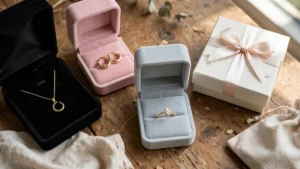
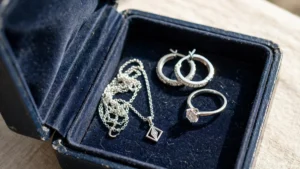
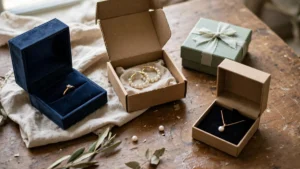
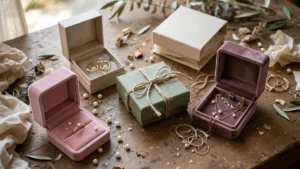
Platinum is one of the easiest metals to own, and one of the easiest to store badly. It does not tarnish, it does not need replating, and it does not react with most things in a jewellery box. That is exactly why so many platinum pieces end up loose in a drawer, tangled with other chains, or tossed into a travel pouch with no protection at all. The metal survives that treatment. The clasps, the settings, and the chains often do not.
Good storage is not complicated, and it does not need expensive equipment. It needs a clean piece, a dry place, and a separate home for each item, so that nothing rubs, tangles, or presses against anything else. Most of the damage platinum jewellery suffers in storage is slow and quiet: a chain kinked by hanging, a setting loosened by knocking against a harder stone, a clasp bent by a pouch that was too small.
Below are nine steps that cover the whole job, from cleaning a piece before you put it away to checking your storage once a year. Follow them in order the first time, and they become a habit that takes five minutes and saves a repair bill.
Key takeaways
- Always clean and fully dry platinum jewellery before storing it, because dirt and moisture left on a piece do slow damage over time.
- Give every piece its own pouch, slot, or compartment, so nothing rubs, tangles, or knocks against anything else.
- Lay necklaces flat and never hang them, because hanging stretches chains and kinks fine links.
- Keep platinum away from harder stones and other metals in storage, and store it in a cool, dry, dark place.
- Storage is not a one-time job: check clasps and settings every few months, and refresh your storage once a year.
What storing platinum jewellery actually means
Storing platinum jewellery means keeping each piece clean, dry, separate, and still. That is the whole job, and every step below is a version of one of those four words. Clean, because skin oils, lotion, and dust left on a piece attract more dirt and dull the finish. Dry, because moisture trapped in a pouch or a closed box can damage settings and encourage tarnish on any silver or plated pieces stored nearby.
Separate, because platinum is a hard metal, and it will scratch softer pieces stored beside it, while harder stones such as diamonds will scratch platinum if they knock against it. A single compartment shared by a necklace, a ring, and a pair of earrings is not storage. It is a tangle waiting to happen. Still, because chains stretch when they hang and kink when they are folded, and a piece that is jostled every time a drawer opens is a piece that is slowly being damaged.
None of this needs a special cabinet or an expensive organiser. A lined jewellery box with separate compartments, a set of soft pouches, and a dry drawer will do the job for most collections. What matters is not the container, but the habit: every piece cleaned, dried, and put back in its own place, every time.
What you need before you start
You need very little. A bowl of warm water, a drop of mild soap, a soft brush, and a soft, lint-free cloth will cover cleaning. For storage itself, you need soft pouches or a lined box with separate compartments, and a cool, dry drawer or shelf. Anti-tarnish strips or silica gel packets are a cheap extra that helps in damp homes.

Check what you already have before you buy anything new. Many people own a jewellery box with compartments they have never used, or a set of pouches from past purchases sitting in a drawer. A box that is too small is worse than no box at all, because it forces pieces together, so if your collection has outgrown its box, buy a larger one rather than squeezing pieces in. Our guide to the best platinum jewellery is worth a look if you are building a collection, because the pieces you buy next should fit the storage you already have.
Finally, set aside half an hour for the first proper sort. Take every piece out, clean it, check it, and put it back in its own place. After that first session, the routine takes five minutes each time, because you are only ever putting away one or two pieces at once.
The 9 steps to storing platinum jewellery properly
Clean each piece before you put it away
What to do: Wash the piece in warm water with a drop of mild soap, brush gently around links and settings, rinse, and dry with a soft cloth. What to avoid: Putting a piece away dirty, or using harsh chemicals, toothpaste, or abrasive cloths. Best for: Every piece, every time. Time needed: Two to three minutes. Standout tip: Clean pieces stay bright longer and are easier to inspect for wear.
A piece stored clean is a piece that is not quietly collecting dirt in a dark drawer. Make cleaning part of putting jewellery away, not a separate chore.
Let pieces dry completely
What to do: Lay the piece on a soft cloth in open air for a few minutes after washing, and check that links, settings, and clasps are fully dry. What to avoid: Closing a wet piece into a pouch or a box, where trapped moisture can damage settings and nearby pieces. Best for: Every piece, especially necklaces and bracelets. Time needed: Five minutes. Standout tip: If in doubt, wait longer; a few extra minutes cost nothing.
Moisture is the quiet enemy of stored jewellery. It is also the easiest to prevent, because drying is simply a matter of waiting.
Give each piece its own pouch or slot
What to do: Put each necklace, ring, bracelet, and pair of earrings in its own soft pouch or its own lined compartment. What to avoid: Sharing a pouch between two pieces, or dropping several pieces into one compartment. Best for: Every piece, without exception. Time needed: Seconds per piece. Standout tip: Label pouches if you have many similar pieces, so you are not opening them all to find one.
Separation is the single most effective storage habit. One pouch per piece prevents most of the scratches, tangles, and knocks that send jewellery to a repairer.
Lay necklaces flat, never hang them
What to do: Coil a necklace loosely in a compartment or a pouch, clasp closed, with the pendant flat. What to avoid: Hanging necklaces from hooks, where gravity stretches the chain and tangles it with its neighbours. Best for: All necklaces, especially fine and tennis chains. Time needed: Seconds. Standout tip: Fasten the clasp before you put a necklace away, so the chain cannot thread through itself.
A hanging chain is a stretching chain. Flat storage keeps the links even and the pendant where it belongs.
Keep platinum away from other metals and harder stones
What to do: Store platinum in its own section of the box, away from gold, silver, and loose gemstones. What to avoid: Letting diamonds or other hard stones knock against platinum, or letting platinum scratch softer metals. Best for: Mixed collections with several metals. Time needed: Seconds. Standout tip: Diamonds are harder than platinum, so they scratch it, not the other way round.
Hardness is a two-way problem. Platinum scratches softer metals, and harder stones scratch platinum, so separation protects both sides.
Store in a cool, dry, dark place
What to do: Keep your jewellery box in a bedroom drawer or a cool shelf, away from windows, radiators, and bathrooms. What to avoid: Bathrooms, where steam and humidity are constant, and sunny windowsills, where heat and light age settings and adhesives. Best for: Every piece, especially set jewellery. Time needed: Seconds. Standout tip: If a room feels damp to you, it is damp for your jewellery too.
A bathroom is the worst place in a home to store jewellery. It is damp, warm, and full of chemicals, and it is where most pieces are lost down a drain.
Use anti-tarnish strips or silica gel
What to do: Put one anti-tarnish strip or a silica gel packet in each compartment or in the box, and replace them every few months. What to avoid: Leaving old, saturated packets in the box, where they do nothing, or using mothballs and scented sachets near jewellery. Best for: Damp homes and long-term storage. Time needed: A minute. Standout tip: Silica gel packets from new shoes and bags work just as well as bought ones.
These are cheap, and they do real work in a damp climate. Replace them on a schedule, not when you remember, because a spent packet looks the same as a fresh one.
Check clasps and settings every few months
What to do: Hold each piece up to the light, tug gently on the clasp, and check that every stone sits firmly with no wobble. What to avoid: Ignoring a loose prong or a weak clasp until the piece is lost, or testing a setting by pulling hard. Best for: Rings, tennis necklaces, and anything worn daily. Time needed: Ten minutes for a whole collection. Standout tip: A jeweller will check settings for free in most cases, and it takes minutes.
Most lost stones are lost slowly. A prong loosens a little at a time, and a clasp weakens a little at a time, so a regular check catches the problem while it is still cheap.
Re-check and refresh your storage once a year
What to do: Once a year, empty the box, clean every piece, replace worn pouches and spent silica gel, and check that the box itself is still sound. What to avoid: Letting a box with a broken hinge or torn lining keep damaging pieces, or keeping pouches that have gone stiff and rough. Best for: Every collection, large or small. Time needed: Half an hour. Standout tip: Do it in January, when routines are easiest to keep.
Storage wears out just like jewellery does. A yearly refresh is the habit that keeps all the other habits working.
Which storage suits your collection
For a small collection, a lined box with six to ten compartments is enough, with a pouch or two for travel. For a larger collection, look for a box with a tray for rings and earrings and a deeper drawer for necklaces laid flat. Travel storage should be a roll or a case with separate pockets, never a single zip pouch where everything tangles together.
Think about how you actually wear your jewellery. Pieces you wear weekly should be easy to reach, in the top tray, while pieces you wear twice a year can live in a deeper drawer. If a piece is hard to reach, you will stop wearing it, and a piece that is never worn is a piece that is never checked, which is how settings loosen unnoticed. Our guide to cleaning platinum jewellery pairs well with this one, because a piece that is cleaned regularly is also a piece that is inspected regularly.
Finally, think about security. A jewellery box in a bedroom drawer is fine for most people, but if your collection is valuable, a small safe or a bank deposit box for the pieces you rarely wear is worth considering. Insurance is a separate question, and it is worth checking that your policy covers the pieces at their current value, not the price you paid years ago.
The caveats that matter
Platinum is forgiving in storage, but the pieces around it may not be. Silver tarnishes, plated jewellery wears, and pearls are damaged by chemicals and by dry air alike, so a mixed collection needs more care than a platinum-only one. The habits in this guide protect the whole collection, not just the platinum, and that is the point: good storage is a system, and a system only works if every piece in it follows the same rules.
| Detail | What is known |
|---|---|
| First step | Clean and fully dry every piece before it goes into storage |
| Separation | One pouch or compartment per piece, so nothing rubs or tangles |
| Necklaces | Lay flat with the clasp closed, never hang them from hooks |
| Other metals | Keep platinum separate from gold, silver, and loose gemstones |
| Where to store | A cool, dry, dark drawer or shelf, never a bathroom or a sunny windowsill |
| Extra protection | Anti-tarnish strips or silica gel, replaced every few months |
| Checks | Inspect clasps and settings every few months, and refresh storage once a year |
| What it does not do | Good storage does not repair a loose setting, a weak clasp, or a damaged chain |
If you travel with platinum jewellery, pack it the same way you store it at home: each piece in its own pouch, necklaces flat with clasps closed, and the whole case in your hand luggage, never in a checked bag. A travel roll with separate pockets is worth the small cost, because a tangled necklace in a hotel room is a common way to lose a clasp or a stone.
Checklist: storing platinum jewellery honestly
Use these checks every time you put jewellery away, and again once a year.
- Clean the piece first: warm water, mild soap, soft brush, then rinse and dry fully.
- Check it is dry: links, settings, and clasps should be completely dry before storage.
- Give it its own home: one pouch or compartment per piece, with no sharing.
- Lay necklaces flat: clasp closed, pendant flat, never hung from a hook.
- Keep it separate: platinum away from other metals and from loose hard stones.
- Check regularly: inspect clasps and settings every few months, and refresh storage once a year.
Frequently asked questions
Can I store platinum with gold and silver jewellery?
It is better not to. Platinum is harder than gold and silver, so it can scratch them, and diamonds and other hard stones can scratch platinum. Give each metal its own section of the box, or its own pouch, and the whole collection lasts longer.
Is it safe to store platinum jewellery in a bathroom?
No. Bathrooms are damp, warm, and full of chemicals from sprays and lotions, and that combination is bad for settings, adhesives, and any non-platinum pieces stored nearby. Keep your jewellery box in a bedroom drawer instead.
Should I hang my platinum necklaces?
No. Hanging stretches chains over time and lets necklaces tangle with each other. Lay necklaces flat in a lined compartment or a pouch, with the clasp closed so the chain cannot thread through itself.
Do I need anti-tarnish strips for platinum?
Platinum itself does not tarnish, so the strips are for the other pieces in your box, especially silver, and for keeping the whole box dry. In a damp home they are worth using, and silica gel packets do the same job for moisture.
How often should I check my platinum jewellery?
Check clasps and settings every few months, and give the whole collection a proper clean and storage refresh once a year. A jeweller will check settings for free in most cases, and a check takes minutes. Our guide to storing jewellery properly covers the same habits for a mixed collection, if you store other metals alongside your platinum.
What is the best travel case for platinum jewellery?
A travel roll or a small case with separate pockets, one piece per pocket, with necklaces laid flat and clasps closed. Never use a single zip pouch for several pieces, and always keep jewellery in your hand luggage, never in a checked bag.
The bottom line
Storing platinum jewellery well is a small habit, not a project. Clean each piece, dry it fully, give it its own pouch or compartment, lay necklaces flat, and keep the box cool, dry, and dark. That is the whole system, and it takes about five minutes each time you put jewellery away.
Do that, check your clasps and settings every few months, and refresh your storage once a year, and your platinum will look after itself. The metal is built to last. Your job is simply to give it a home that does not undo that, one piece at a time, in its own place, every time.