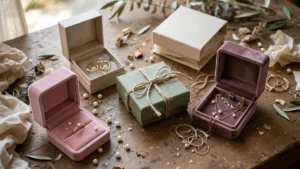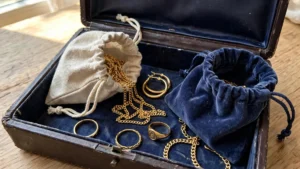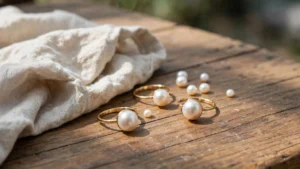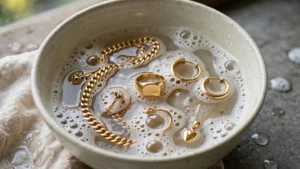
Gold vermeil looks like solid gold, wears like solid gold on a good day, and costs far less, which is exactly why it is so easy to ruin with the wrong cleaning routine. A vermeil piece is sterling silver covered in a thick layer of gold, at least 2.5 microns deep, and that layer is the whole point of the piece. Scrub it hard, soak it in the wrong solution, or polish it with an abrasive cloth and the gold wears away, leaving dull silver underneath that no amount of polishing will fix.
The good news is that gold vermeil is simple to look after when you know the rules. Warm soapy water, a soft cloth, a gentle brush for the settings, and a dry place to store it will keep most pieces bright for years. The mistakes that damage vermeil are almost always the same ones: harsh chemicals, ultrasonic cleaners, silver dip, toothpaste, and rough polishing cloths. None of them is needed, and all of them cost more than they save.
Below are nine steps that cover a full clean, from the quick wipe after wearing to knowing when to hand a piece to a jeweller. Each step says what to do, what to avoid, who it suits, how long it takes, and the one tip that makes the difference, so you can clean with confidence instead of guessing.
Key takeaways
- Gold vermeil is sterling silver with a gold layer at least 2.5 microns thick; the gold layer is what you are protecting when you clean.
- Warm water with a drop of mild dish soap and a soft cloth is enough for most cleaning; harsh chemicals and abrasives are the main cause of damage.
- Never soak vermeil for long, and never use silver dip, ultrasonic cleaners, toothpaste, or abrasive polishing cloths.
- Dry every piece fully before storing, and keep vermeil separate from other jewellery so it does not scratch.
- Vermeil wears with daily use no matter how carefully you clean it; a piece that has lost its gold layer needs replating, not more polishing.
What gold vermeil actually is and why it needs gentle care
Gold vermeil, pronounced ver-may, is a legal standard, not a marketing word. For a piece to be called vermeil, its base must be sterling silver, and its gold layer must be at least 2.5 microns thick, which is far thicker than the thin coating on a gold-plated piece. That thick layer is why vermeil feels substantial and why it can be worn every day, but it is still a layer, and layers wear. Our guide to what gold vermeil jewellery is explains the standard in full, including how to read the hallmark that tells you what you are buying.
The gold wears first where a piece rubs against skin, clothing, or other jewellery. Rings thin on the inside of the band, chains wear where the links move against each other, and earring posts wear where they pass through the ear. Water, sweat, perfume, and hand cream all speed the process, because they sit on the surface and react with the metal over hours. None of this means vermeil is fragile. It means the gold layer is a resource to protect, and cleaning is where most of the damage happens, because cleaning is the one time you deliberately rub the surface.
Cleaning vermeil is therefore a gentle job by design. You are removing the oils, sweat, and makeup that dull the shine, not scrubbing the metal itself. Warm water loosens the dirt, mild soap lifts it, and a soft cloth carries it away. Anything stronger than that is working against the piece, not for it. Once you accept that, the rest of the routine is simple, and it takes only a few minutes.
What you need before you start
You need very little: a small bowl, lukewarm water, a drop of mild dish soap, a soft lint-free cloth, and a soft toothbrush reserved for jewellery. The toothbrush is for settings and chain links, where dirt collects and a cloth cannot reach. Keep a second dry cloth for drying, and a soft pouch or lined box for the piece afterwards. That is the whole kit, and it costs almost nothing.

Just as important is what not to gather. Leave the silver dip in the cupboard, because it strips gold as well as tarnish. Leave the ultrasonic cleaner alone, because the vibration can loosen stones and stress the bond between the gold layer and the silver beneath. Leave the toothpaste, the baking soda, and the rough polishing cloths alone too. They are all abrasive, and on a gold layer measured in microns, abrasive is another word for destructive. A dedicated jewellery cloth is the one item worth buying, because it is soft enough for the gold and lasts for years if you keep it clean and dry.
The 9 steps to clean gold vermeil jewellery
1. Wipe the piece after every wear
What to do: Wipe the piece with a soft, dry cloth as soon as you take it off, paying attention to the inside of rings and the back of earrings. What to avoid: Do not wipe with a tissue, a paper towel, or a rough cloth, all of which can scratch the gold. Best for: Every vermeil piece, every day. Time needed: Under a minute. Standout tip: Keep a cloth in your jewellery box so the wipe becomes part of taking the piece off, not a separate job.
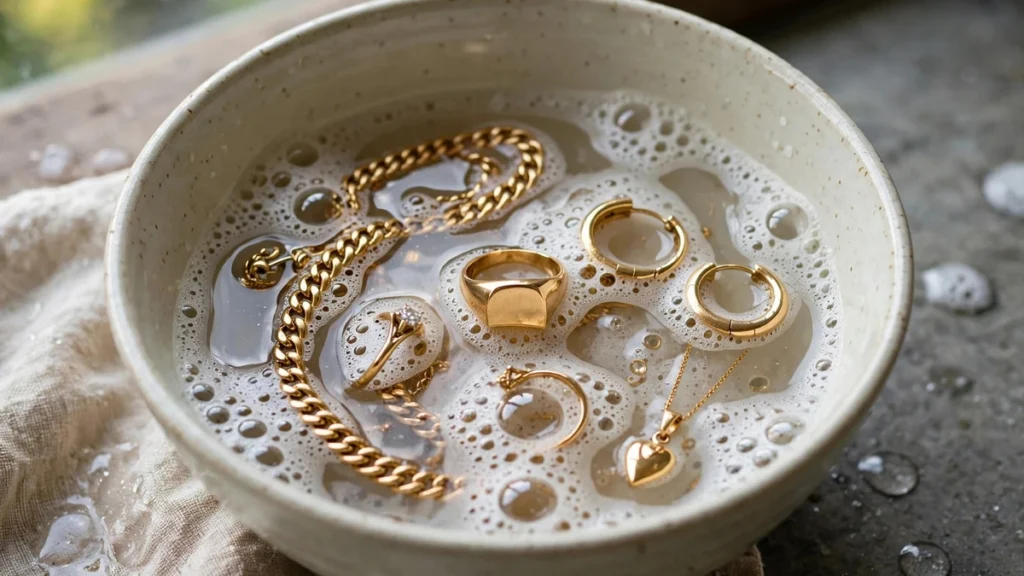
2. Wash in warm soapy water
What to do: Fill a small bowl with lukewarm water, add one drop of mild dish soap, and let the piece sit for two to three minutes. What to avoid: Do not use hot water, which can loosen glue in settings, and do not use soap with bleach, ammonia, or added moisturisers. Best for: Necklaces, bracelets, rings, and earrings that have lost their shine. Time needed: Five minutes. Standout tip: Wash one piece at a time so pieces cannot scratch each other in the bowl.
3. Clean gently with a soft brush
What to do: Use a soft toothbrush to clean around settings, chain links, and engraved details, using light, short strokes. What to avoid: Do not press hard, do not use a stiff brush, and do not brush the flat, visible surfaces, which a cloth handles better. Best for: Rings with stones, chains, and pieces with detailed work. Time needed: Two to three minutes. Standout tip: Brush while the piece is still wet with soapy water, so the dirt lifts instead of being pushed around.
4. Rinse under clean water
What to do: Rinse the piece under lukewarm running water, or in a second bowl of clean water, until no soap remains. What to avoid: Do not rinse over an open sink without a plug or a strainer, and do not use very hot water. Best for: Every piece after washing. Time needed: One minute. Standout tip: Hold the piece over a bowl while you rinse, so a slipped earring or ring lands in the bowl, not the drain.
5. Dry fully before storing
What to do: Pat the piece dry with a soft cloth, then leave it on a clean cloth for a few minutes to air-dry completely, including inside settings and chain links. What to avoid: Do not put a damp piece away, and do not use a hairdryer or any direct heat. Best for: Every piece, every time. Time needed: Five minutes. Standout tip: Check the back of the piece and the inside of the band, which are the places water hides.
6. Soak a little longer for stubborn marks
What to do: If a mark remains after washing, soak the piece for another five minutes in fresh warm soapy water, then brush gently and rinse again. What to avoid: Do not reach for a stronger cleaner, a paste, or a scouring pad, and do not soak for more than ten minutes in total. Best for: Pieces with built-up grime, tarnish at the edges, or dirt in detailed work. Time needed: Ten minutes. Standout tip: If the mark does not lift after a second soak, it is probably wear in the gold layer, not dirt, and no amount of cleaning will fix it.
7. Clean around stones and settings with care
What to do: Brush around each stone with a soft, damp brush, working from the edge of the setting towards the stone, and check that the stone does not move. What to avoid: Do not poke at the setting with a pin or a hard tool, and do not soak pieces with glued stones, pearls, or opals. Best for: Rings, pendants, and earrings with stones. Time needed: Three to five minutes. Standout tip: If a stone moves at all when you touch it, stop cleaning and take the piece to a jeweller.
8. Polish gently with a soft cloth
What to do: Once the piece is dry, buff it lightly with a clean, soft jewellery cloth, using long, even strokes along the surface. What to avoid: Do not use a silver polishing cloth, which is treated with chemicals meant for solid silver, and do not rub hard or polish the same spot repeatedly. Best for: A final shine after washing, or a quick brighten between washes. Time needed: Two minutes. Standout tip: Use a plain, untreated cloth; if the cloth is marketed for silver, do not use it on vermeil.
9. Know when to hand it to a jeweller
What to do: Take the piece to a jeweller if the gold has worn through, a stone is loose, a clasp is bent, or a mark will not lift after two gentle washes. What to avoid: Do not try to replate, repair, or reset a stone at home, and do not keep cleaning a piece that is already worn thin. Best for: Worn, damaged, or valuable pieces. Time needed: A jeweller’s visit. Standout tip: Ask the jeweller to check the gold thickness and quote for replating before any work starts, so you can decide whether the piece is worth it.
Which gold vermeil pieces need extra care
Rings need the most care, because they are washed, rubbed, and knocked against hard surfaces all day. Take a vermeil ring off before washing your hands, cleaning, gardening, or the gym, and it will last far longer than one that stays on through everything. Earrings are gentler on the gold, but their posts and backs collect skin and product, so wipe them after wearing and check the backs regularly. Chains and bracelets sit in the middle: they wear where the links move, so keep them away from rough fabrics and other jewellery.
Pieces with pearls, opals, or glued stones need a different routine again. Never soak them, never use soap on the stone itself, and clean them with a barely damp cloth only. If you also own solid gold pieces, our guide to cleaning gold jewellery covers the same gentle approach, with the differences that matter when the whole piece is gold rather than a layer over silver.
The caveats that matter
Gold vermeil is durable for what it is, but it is not solid gold, and the cleaning routine has to respect that difference. The most common mistake is treating vermeil like solid gold and reaching for a stronger cleaner when a gentle one seems slow. The second most common is treating it like silver and using a silver dip or a silver cloth. Both mistakes wear the gold layer, and once it is gone, only replating brings it back.
| Detail | What is known |
|---|---|
| What vermeil is | Sterling silver with a gold layer at least 2.5 microns thick |
| Best cleaning method | Warm water, mild soap, and a soft cloth |
| What to never use | Silver dip, ultrasonic cleaners, toothpaste, abrasive cloths |
| How often to clean | A quick wipe after wear; a full wash every few weeks |
| Water and vermeil | Brief washing is fine; long soaks, pools, and hot tubs are not |
| Perfume and creams | Apply before putting jewellery on; keep vermeil away from sprays |
| When the gold wears thin | Fading, silver showing through, or a dull patch that will not brighten |
| What cleaning cannot fix | A worn gold layer needs replating by a jeweller, not more polishing |
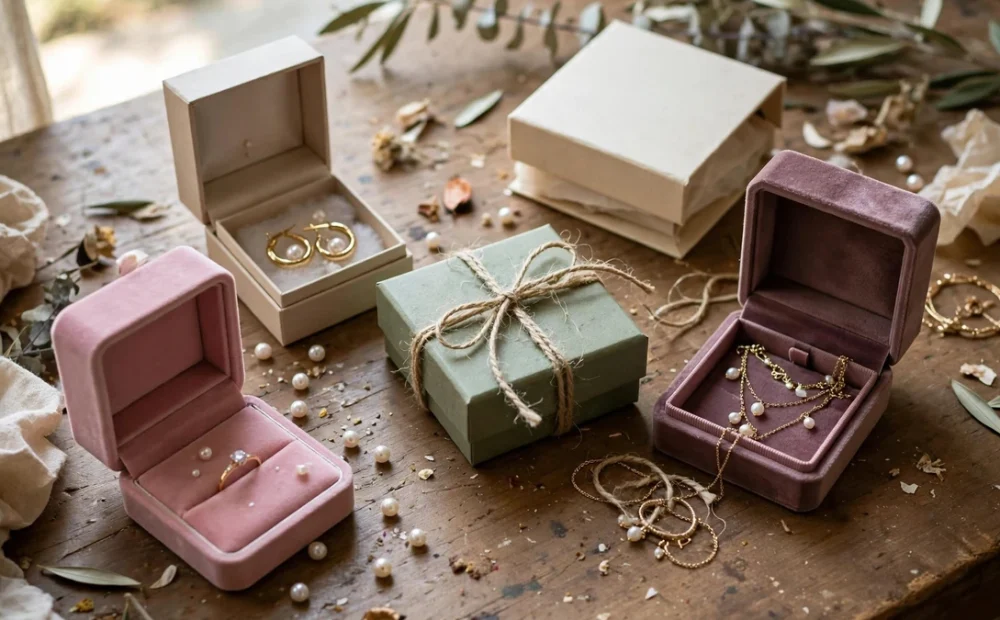
Storage matters as much as cleaning. A clean piece put away damp, or tossed in with other jewellery, will scratch and tarnish faster than a piece that is dried and stored properly. Our guide to storing jewellery properly shows how to keep vermeil separate and dry between wears, which is the part of the routine most people skip.
Checklist: cleaning gold vermeil honestly
Use these checks before you clean, and again after the piece is dry.
- Check the piece first: look for loose stones, bent clasps, and thin or worn patches before you start.
- Check the water: lukewarm, not hot, with one drop of mild soap and nothing else.
- Check the tools: a soft cloth, a soft toothbrush, and a second dry cloth, with no abrasives anywhere near the piece.
- Check the rinse: rinse until the slippery soap feeling is gone, over a plugged sink or a bowl.
- Check the drying: pat dry, then air-dry fully, including inside settings and chain links, before storing.
- Check the result: if a dull patch will not brighten after two gentle washes, stop and ask a jeweller about replating.
Frequently asked questions
Can I clean gold vermeil with soap and water?
Yes. Lukewarm water with a drop of mild dish soap is the safest routine for most vermeil. Wash for a few minutes, rinse well, and dry fully. Avoid soaps with bleach, ammonia, or added moisturisers, and do not soak the piece for a long time.
Can I use a silver dip on gold vermeil?
No. Silver dip is made to strip tarnish from silver, and it will strip the gold layer from vermeil as well. It is one of the fastest ways to ruin a vermeil piece, and the damage cannot be undone at home.
Can I use an ultrasonic cleaner on gold vermeil?
It is best not to. The vibration can loosen stones and stress the bond between the gold layer and the silver beneath. A soft brush and soapy water reach the same places more safely, even if it takes a minute longer.
How often should I clean gold vermeil jewellery?
Wipe it after every wear, and give it a full wash every few weeks, or whenever it looks dull. Pieces worn daily need washing more often than pieces worn occasionally, and rings need it most of all.
Can I wear gold vermeil in the shower or while swimming?
It is best to take it off. Brief contact with water is fine, but shower products, chlorine, and salt water all wear the gold layer faster. A quick rinse after accidental contact is sensible, followed by drying.
What should I do if the gold layer has worn away?
Stop cleaning it and take it to a jeweller. A worn layer cannot be polished back, but it can usually be replated. Ask for a quote first, because replating is worth it for a well-made piece and may not be for a very cheap one.
The bottom line
Cleaning gold vermeil is a gentle job, and that is the whole point. Warm soapy water, a soft cloth, a soft brush for the settings, and a few minutes of drying will keep most pieces bright for years. The damage comes from the shortcuts: harsh chemicals, abrasive cloths, ultrasonic cleaners, and polishing that goes on too long. Vermeil rewards a light touch, and the pieces that last longest are almost always the ones whose owners clean them gently and often, rather than harshly and rarely.
Build the wipe-after-wearing habit, wash properly every few weeks, store each piece dry and separate, and hand anything worn or damaged to a jeweller instead of working on it yourself. That routine is simple, it costs almost nothing, and it is the difference between vermeil that looks new for years and vermeil that looks tired within months.