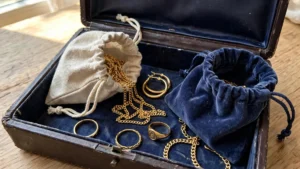
Layering silver jewellery looks effortless when it works, and it looks like a tangle when it does not. The difference is rarely the jewellery itself. It is the order you put it on, the lengths you choose, and knowing when to stop. A well-layered stack of silver necklaces, bracelets and rings can lift a plain outfit in seconds, and it can be done with pieces you already own.
The problem is that layering has no single rule that fits everyone. A stack that looks balanced on a tall frame can crowd a petite one. A mix of textures that looks intentional in daylight can look messy under office lights. And silver, which is softer than gold and quicker to tarnish, tangles more easily than most people expect, especially when fine chains are stored together in a box.
Below are nine steps that make layering silver jewellery simple, from choosing a lead piece to checking the whole stack in daylight before you leave. Each step is described by what to do, what to avoid, and how long it takes, so you can build a layered look that holds up all day, not just in the mirror at home.
Key takeaways
- Start with one lead piece and build around it, rather than putting on everything at once.
- Different lengths matter more than different styles: keep chains at least 5 cm apart so they do not tangle.
- Two or three layers usually look better than four or five, especially for daytime.
- Silver tangles easily, so store layered pieces separately and put necklaces on from longest to shortest.
- No layered look is finished until you have checked it in daylight and moved around in it for a minute.
What layering silver jewellery actually means
Layering is wearing two or more pieces of the same type together, usually necklaces, so that each one is visible and each one adds something. A layered look is not just several necklaces at once. It is a stack with a clear order: a short chain near the collarbone, a mid-length chain with a pendant, and a longer chain that gives the eye somewhere to travel. The same idea applies to bracelets and rings, but necklaces are where layering is most visible, and where most mistakes happen.
Silver suits layering particularly well, because it is a cool, quiet metal. Several silver pieces together read as one calm, cohesive stack, rather than several competing pieces. Gold can dominate a stack, and mixed metals can look busy, but silver layers tend to look clean, even when the chains are different styles. That is why silver is a good metal to learn layering with, and our guide to how to layer gold jewellery covers the same ideas for gold, where the rules about contrast and warmth are a little different.
What layering does not mean is wearing everything you own. A stack works because each piece has room to be seen. When chains sit at the same length, they tangle. When pendants are the same size, they compete. When every finger has a ring, the hand looks crowded rather than styled. The skill is not in owning more jewellery. It is in choosing fewer pieces and giving each one space.
How to build a silver stack and what to look for
Look first at length. For necklaces, the gap between chains matters more than the chains themselves. A 40 cm chain, a 45 cm chain, and a 50 cm chain will sit as three distinct lines. Three chains at 45 cm will sit as one tangled line. Measure the chains you already own before you buy new ones, and if you are buying for layering, choose lengths at least 5 cm apart. A necklace extender, a short extra link at the clasp, is a cheap way to adjust a chain you already have.
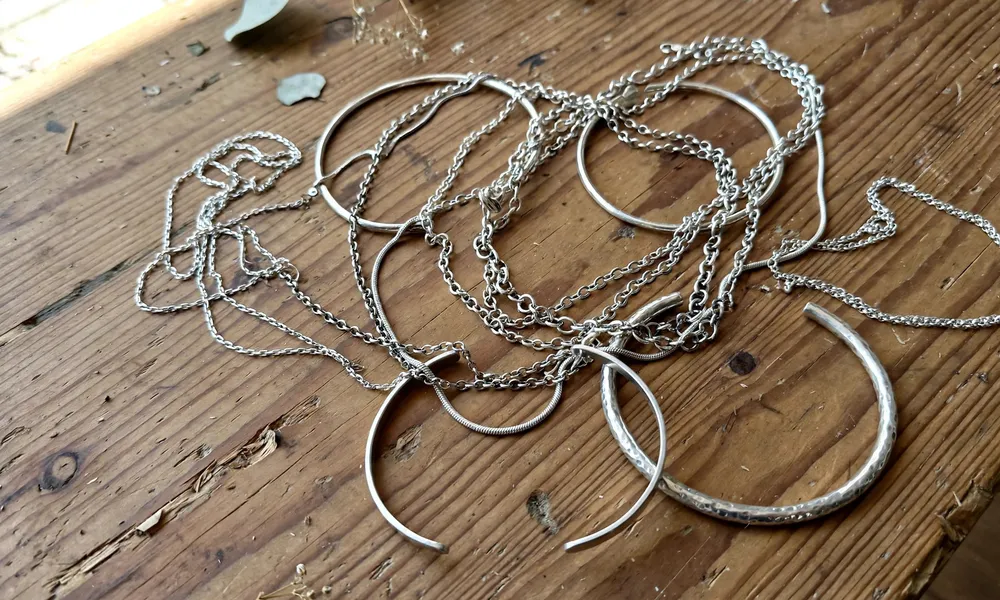
Look next at weight and texture. A stack works best when the pieces are not all the same. Mix a fine chain with a slightly heavier one, or a smooth chain with a textured one, so the eye can tell them apart. Keep the total weight comfortable. Three fine chains are lighter than one heavy chain, but three heavy chains will pull at your neck and tangle more easily. If a stack feels heavy after ten minutes, it will feel worse by lunchtime.
Finally, look at the clasp and the finish. A secure lobster clasp matters more in a stack, because a chain that comes undone can snag the others. Check that each clasp fastens firmly, and that the chains are genuine sterling silver, stamped 925, so they keep their colour together. A plated chain in a stack will wear at a different rate from a sterling one, and the mismatch will show within weeks.
The 9 steps to layering silver jewellery
Start with one lead piece and let it lead
What to do: Choose the piece you most want to be seen, usually a pendant necklace or a favourite chain, and put it on first. What to avoid: Starting with three pieces at once and then trying to decide which one matters. Best for: Anyone new to layering, and for mornings when you want a quick, reliable look. Time needed: One minute. Standout tip: If you cannot name the lead piece, you have too many pieces on.
Mix chain lengths, not chain styles at first
What to do: Use chains at 40, 45 and 50 cm, or 45, 50 and 55 cm, so each one sits on its own line. What to avoid: Wearing two chains at the same length, which will tangle within an hour. Best for: Building a first layered necklace stack that stays tidy all day. Time needed: Two minutes to measure and choose. Standout tip: A necklace extender turns a chain you own into a new length.
Add a pendant to the longest chain
What to do: Put the pendant on the longest chain, so it hangs below the others and has space to move. What to avoid: Putting a pendant on the shortest chain, where it will sit against the others and pull them together. Best for: Necklace stacks with a charm, bar pendant, or locket. Time needed: One minute. Standout tip: Keep the pendant small, so it does not drag the chain forward.
Layer bracelets from the wrist up
What to do: Start with a slim bangle or chain at the wrist, then add one or two more above it, each slightly looser. What to avoid: Stacking bracelets so tightly that they cannot move, which makes them noisy and uncomfortable. Best for: Casual outfits, and for anyone who types or works with their hands. Time needed: One minute. Standout tip: Wear the stack on your non-dominant wrist, so it interferes less with your work.
Keep rings to one hand, then add a second
What to do: Start with one or two rings on one hand, and only add the second hand once the first feels balanced. What to avoid: A ring on every finger, which makes the hands look crowded rather than styled. Best for: Evenings and occasions, when a fuller look suits the outfit. Time needed: One minute. Standout tip: Leave at least one finger bare on each hand, so the stack has breathing room.
Mix silver with one other metal, carefully
What to do: Let silver lead, and add one gold or rose gold piece as an accent, in a different length or on a different hand. What to avoid: Mixing three metals at once, which usually looks accidental rather than deliberate. Best for: Anyone who owns both silver and gold and wants to wear them together. Time needed: Two minutes to choose the accent piece. Standout tip: Keep the accent piece small, so silver stays the clear lead.
Let the neckline decide the necklace stack
What to do: Match the shortest chain to the neckline, so it sits above the fabric, and let the longer chains fall below it. What to avoid: Wearing a layered stack with a high crew neck, where the chains bunch against the fabric and disappear. Best for: V-necks, scoop necks, open collars, and off-the-shoulder tops. Time needed: One minute to check in the mirror. Standout tip: If the top hides the shortest chain, take that chain off, or change the top.
Balance a bold piece with quiet ones
What to do: If one piece is bold, a wide cuff, a large pendant, or a statement chain, keep the other pieces fine and simple. What to avoid: Pairing two bold pieces together, which makes the stack compete with itself. Best for: Occasions, evenings, and outfits that are otherwise plain. Time needed: One minute to swap a piece out. Standout tip: The bold piece should be the lead, and everything else should support it.
Check the whole stack in daylight before you leave
What to do: Stand by a window, move your arms and turn your head, and check that the chains stay separate and the clasps stay hidden. What to avoid: Trusting a bedroom mirror alone, which hides tangles that daylight will show. Best for: Every layered look, every time, before you walk out of the door. Time needed: One minute. Standout tip: If a chain has twisted, take it off and put it on again, longest first.
Which silver pieces layer well together
Fine chains layer best together, because they are light, they sit flat, and they do not pull at each other. A cable chain, a box chain, and a fine curb chain in different lengths will form a stack that stays tidy for hours. Textured chains, such as a rope chain or a Figaro, add character, but they catch on fine chains more easily, so use one textured piece at most, and keep it as the longest layer, where it has the most room to move. Our guide to how to style silver jewellery explains how to choose pieces that work as a set, rather than as a random collection.
Pendants need space. One pendant per stack is usually enough, and it belongs on the longest chain. Two pendants can work if they are very different in size and sit at very different lengths, but they will swing into each other as you move, so check them in daylight before you commit. Lockets and bar pendants are the easiest to layer, because they are flat and do not spin. Round pendants and charms spin more, and they can end up facing backwards by midday.
Bracelets and rings follow the same rule: one lead piece, then quiet support. A slim bangle plus a fine chain bracelet is a good pair. Two bangles plus a chain is a fuller stack for evenings. For rings, a signet on one hand and a thin band on the other is balanced. Three rings on one hand and none on the other usually looks lopsided, even when each ring is good on its own.
The caveats that matter
Silver tangles more easily than most people expect, because it is soft and fine chains are light. The most common cause of tangling is storage, not wear. Chains stored together in a box will knot within days, and a knotted fine chain is easy to damage when you pull it apart. Store each necklace separately, flat, in its own pouch or slot, and put necklaces on from longest to shortest, so each chain has a clear path and does not cross the others.
| Detail | What is known |
|---|---|
| Best number of necklace layers | Two or three for daytime, three or four for evenings |
| Minimum gap between chains | At least 5 cm, so each chain sits on its own line |
| Where the pendant goes | On the longest chain, small enough not to drag it forward |
| Best chains for layering | Fine cable, box and curb chains, in different lengths |
| How to stop tangling | Store each necklace separately, and put them on longest first |
| Mixing metals | Silver leads, one other metal as a small accent, never three metals at once |
| When to take the stack off | Before exercise, swimming, heavy work, and sleeping |
| What it does not do | It does not suit high necklines, and it does not work if every piece is bold |
Skin sensitivity is the other quiet problem. Some people react to the alloys in sterling silver, particularly nickel, and a stack means more metal against the skin for longer. If a layered stack causes redness or itching, try wearing fewer pieces, or one piece at a time, to find which one is the problem. A reaction to one piece does not mean you cannot wear silver at all, but it does mean that piece is not for you.
Checklist: layering silver jewellery honestly
Use these checks before you leave the house, and again after an hour of wear.
- Choose a lead piece first, and build the stack around it, not the other way round.
- Check the lengths: keep at least 5 cm between chains, so each one sits on its own line.
- Put necklaces on longest first, so the chains do not cross as you fasten them.
- Check the clasps: every clasp should be fastened firmly and sitting at the back of your neck.
- Move around: turn your head, raise your arms, and check that the chains stay separate.
- Check in daylight: stand by a window and look for tangles, twisted chains, and clasps that have slipped forward.
Frequently asked questions
How many silver necklaces should I layer at once?
Two or three is the sweet spot for most days. Three layers give you a clear stack without crowding, and they are light enough to wear all day. Four layers can work for an evening, but only if the chains are fine and the lengths are well spaced. More than four usually tangles and looks crowded.
Why do my layered silver necklaces keep tangling?
Usually because the chains are too close in length, or because they were stored together. Keep at least 5 cm between lengths, put them on longest first, and store each necklace in its own pouch. A necklace detangler, or a straw threaded through the chains for storage, can help, but separate storage is the real fix.
Can I layer silver and gold jewellery together?
Yes, if one metal leads. A silver stack with one small gold pendant, or a silver bracelet stack with one gold bangle, looks deliberate. Equal amounts of both metals usually look accidental. Gold versus silver jewellery explains how the two metals behave differently, which helps you decide which one should lead your stack.
What length chains do I need for layering?
For most people, 40, 45 and 50 cm is a good starting set, or 45, 50 and 55 cm if you are taller or prefer longer necklaces. The key is the gap between them, not the exact numbers. Measure the chains you own, and use a necklace extender to adjust any chain that sits too close to another.
Can I layer silver bracelets and rings as well as necklaces?
Yes, but keep each area to its own lead piece. A necklace stack plus a bracelet stack plus a ring stack can work, but only if each area is quiet enough on its own. If the necklaces are bold, keep the bracelets and rings simple, and the other way round.
Should I take layered silver jewellery off at night?
Yes. Sleeping in a layered stack is the fastest way to tangle fine chains, and a twisted chain is easy to damage when you untangle it in the morning. Take each piece off separately, lay it flat, and store it in its own pouch or slot.
The bottom line
Layering silver jewellery in 2027 is not about owning more pieces. It is about choosing a lead piece, spacing your chains at least 5 cm apart, keeping the pendant on the longest chain, and checking the whole stack in daylight before you leave. Two or three fine layers, in genuine sterling silver, will look better and last longer than a pile of pieces worn all at once.
Start with the chains you already own, measure them, and add one length you are missing, rather than buying a whole new set. Wear the stack, move in it, and check it after an hour. If it stays separate and comfortable, you have a layered look that works. If it tangles, change one length, not the whole stack.