Gold filled jewellery is made to last. A thick layer of gold is bonded to a jeweller’s brass core, which means it resists tarnish far better than gold plated jewellery and can be worn every day for years. But that durability depends on how you store it. Left in a heap at the bottom of a drawer, even the best gold filled chain will tangle, scratch, and dull faster than it should.
The problem is not that gold filled jewellery is delicate. It is that most people store it the way they store everything else: tossed in a box, tangled with other pieces, left in a damp bathroom, or hung on a hook where it rubs against its neighbours. A little care in storage protects the gold layer, keeps clasps working, and means your pieces look as good in two years as they do today.
Below are nine steps for storing gold filled jewellery properly in 2027, from cleaning each piece before you put it away to a simple yearly check. Each step explains what to do, what to avoid, and how long it takes, so you can build a routine that fits your life.
Key takeaways
- Gold filled jewellery lasts longest when each piece is stored separately, in a cool, dry, dark place.
- Clean and dry every piece before storing it, because skin oils, perfume, and moisture cause tarnish over time.
- Necklaces should be laid flat or stored in individual pouches, never hung where they tangle and stretch.
- Keep gold filled jewellery away from other metals, especially silver, which can scratch the gold layer.
- No storage method makes gold filled jewellery indestructible, and pieces worn daily still need a check every few months.
What storing gold filled jewellery actually means
Gold filled jewellery has a gold layer that is far thicker than gold plating, usually at least 5 percent of the total weight of the piece. That thick layer is bonded to the core under heat and pressure, so it does not flake or peel the way plating can. But it is still a surface layer, and it can be scratched, worn thin by friction, and dulled by chemicals and moisture over time.
Good storage is really about three things: keeping pieces apart so they cannot scratch each other, keeping them dry so moisture cannot dull the gold, and keeping them away from chemicals such as perfume, hairspray, and cleaning products. If you get those three things right, your gold filled jewellery will keep its colour and shine for years. If you want the full picture of what gold filled jewellery is and why it behaves this way, our explainer on what gold filled jewellery is covers the gold layer, the brass core, and how it compares with plated and solid gold.
Storage also protects the parts you forget about: clasps, jump rings, and settings. A clasp that is bent in a tangled heap may never close properly again. A chain that is pulled from a knot can stretch or snap. Storing pieces separately is not fussy. It is the cheapest insurance your jewellery will ever get.
It is also worth knowing what happens if the gold layer does wear thin in one spot, usually on the inside of a ring band or on a clasp that is opened and closed many times a day. The brass core underneath is a warm yellow colour, so a worn patch is less obvious than it would be on a silver core, but it is still a sign the piece needs attention. A jeweller can sometimes polish the area, but a worn-through patch cannot be re-filled at home, which is why preventing friction in storage matters so much.
What you need before you start
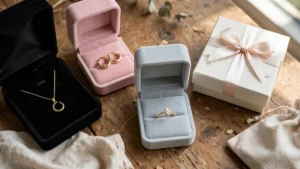
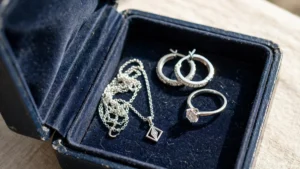
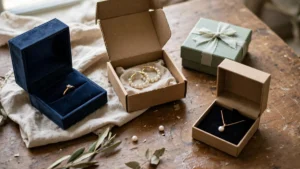
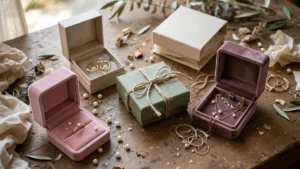
You do not need expensive equipment. A few soft pouches, a lined jewellery box with compartments, and a soft, dry cloth are enough for most collections. Small zip-lock bags work well for travel, and a strip of anti-tarnish paper or a silica gel packet in each compartment helps in damp homes.

Start by cleaning every piece you plan to store. Gold filled jewellery should always be cleaned before it goes away, because skin oils, sweat, and perfume left on the surface will dull the gold while it sits. Our guide to how to clean gold filled jewellery walks through the gentle soap-and-water method that works for almost every piece, and it only takes a few minutes.
Finally, choose a storage spot and stick to it. A bedroom drawer or a dressing table is better than a bathroom, because bathrooms are warm and humid, and humidity is the enemy of stored jewellery. Pick one place, keep your pouches and box there, and make putting pieces away part of taking them off.
9 steps to store gold filled jewellery properly
Clean each piece before you put it away
What to do: Wipe each piece with a soft, dry cloth after wearing, and wash it in warm soapy water if it has been worn all day. What to avoid: Storing a piece that is still damp, sweaty, or coated in perfume or lotion. Best for: Every piece, every time. Time needed: One minute per piece. Standout tip: A quick wipe after wearing does more good than a deep clean once a month.
Skin oils and perfume are the quiet cause of most dullness in stored jewellery. A minute of wiping now saves a tarnished piece later.
Let pieces dry completely
What to do: Lay cleaned pieces on a soft towel for a few minutes until they are fully dry, including inside clasps and settings. What to avoid: Putting a damp piece into a pouch or closed box, where trapped moisture dulls the gold. Best for: Pieces washed in soapy water. Time needed: Five minutes of air drying. Standout tip: Dry clasps with the corner of a cloth, because water hides in the hinge.
Moisture trapped in a closed pouch is worse than moisture in open air. Always let pieces dry before they go away.
Give each piece its own pouch or slot
What to do: Put each piece in its own soft pouch, or in its own compartment in a lined jewellery box. What to avoid: Piling several pieces into one pouch or one compartment, where they scratch and tangle. Best for: Every piece, especially chains and rings. Time needed: A minute to sort your storage once. Standout tip: Small cloth pouches cost little and are the single best storage habit you can build.
Gold is softer than many people realise, and one hard piece rubbing against another will leave marks. Separation is the simplest protection there is.
Lay necklaces flat, never hang them
What to do: Lay necklaces flat in a pouch or a long compartment, with the clasp fastened so the chain cannot knot. What to avoid: Hanging necklaces on hooks, where they swing, tangle, and stretch under their own weight. Best for: Chains, pendants, and layered necklaces. Time needed: Thirty seconds per necklace. Standout tip: Fasten the clasp before storing, and thread the chain through a straw for travel.
A hanging chain stretches slowly over time, and a tangled chain is often damaged when it is pulled apart. Flat storage avoids both problems.
Keep gold filled away from other metals
What to do: Store gold filled pieces separately from silver, stainless steel, and costume jewellery. What to avoid: Mixing metals in one box, where harder metals scratch the gold layer. Best for: Mixed collections with several metals. Time needed: A minute to separate your box by metal. Standout tip: Keep one section of your box for gold filled and gold, and another for silver.
Silver is harder than gold, and a silver chain rubbing against a gold filled ring will leave fine scratches. Separate sections solve it completely.
Store in a cool, dry, dark place
What to do: Keep your jewellery box in a bedroom drawer or on a dressing table, away from windows and radiators. What to avoid: Bathrooms, where heat and humidity speed up tarnish, and sunny windowsills. Best for: Every collection, especially in humid homes. Time needed: No extra time once you choose the spot. Standout tip: If your home is damp, add a silica gel packet to your jewellery box and replace it every few months.
Light, heat, and humidity all work against stored jewellery. A cool drawer is the easiest win in this whole list.
Use anti-tarnish strips or silica gel
What to do: Place an anti-tarnish strip or a small silica gel packet in each compartment or pouch. What to avoid: Using loose chalk, rice, or scented sachets, which can leave dust or transfer fragrance to your jewellery. Best for: Pieces stored for weeks or months, and damp homes. Time needed: A minute to place the strips. Standout tip: Replace anti-tarnish strips every six months, or they stop working quietly.
Anti-tarnish strips absorb the sulphur compounds in the air that dull gold, and silica gel absorbs moisture. Both are cheap, and both work best when replaced on schedule.
Check clasps and settings every few months
What to do: Every few months, pick up each piece and check that clasps close firmly, stones are secure, and jump rings are not stretched. What to avoid: Ignoring a loose clasp until the piece falls off, or forcing a bent clasp back into shape. Best for: Pieces worn daily, especially necklaces and bracelets. Time needed: Ten minutes for a whole collection. Standout tip: Do this check when you change your storage strips, so it becomes a habit.
A clasp that is starting to loosen will usually give you a warning, a slight wobble or a catch that does not click. Catch it early and a jeweller can fix it in minutes.
Re-check and refresh your storage once a year
What to do: Once a year, empty your jewellery box, clean each piece, replace worn pouches and strips, and check every setting. What to avoid: Letting old pouches fray, strips expire, and pieces sit unchecked for years. Best for: Every collection, once a year. Time needed: About an hour, once a year. Standout tip: Do it at the same time every year, such as when the clocks change, so you never forget.
An annual refresh is the difference between a collection that lasts and a box of pieces that slowly wear out unnoticed. It is one hour a year, and it protects everything you own.
Which storage suits your collection
A small collection is easy. A lined box with compartments and a handful of soft pouches will cover most needs, and a single anti-tarnish strip in the box is enough. Keep the box in a bedroom drawer, clean pieces before they go in, and you are done.
A larger collection needs more structure. Use separate pouches for chains, a ring roll for rings, and a compartmented box for earrings and bracelets. If you travel often, keep a small travel roll with individual slots, and never throw pieces loose into a bag. The general rules of good storage apply to every metal and stone, and the same habits — clean, dry, separate, and cool — protect a mixed collection just as well.
Rings and earrings deserve a word of their own. Rings are best kept in a ring roll or in individual slots, because a loose ring rolling around a drawer will scratch its neighbours and be scratched in return. Earrings should be kept as pairs, ideally in a small compartment with a lid, so a single earring cannot wander off and leave its partner behind. If you own studs, push the backs on before storing, so the post cannot bend or catch on a pouch.
If you own only a few gold filled pieces, you can keep it even simpler. One pouch per piece, stored in a drawer, away from the bathroom, is genuinely enough. The habit matters more than the equipment.
The caveats that matter
Good storage slows wear, but it does not stop it. Gold filled jewellery worn every day will gradually show wear on high-contact areas, such as the inside of a ring band or the links of a chain, and that is normal. Storage protects the gold layer from scratches and tarnish, but it cannot undo the friction of daily wear. That is why a piece you wear every day deserves a check every few months, even if it is stored perfectly.
| Detail | What is known |
|---|---|
| Best storage spot | A cool, dry, dark drawer or dressing table, never a bathroom |
| Separate or together | Always separate, one pouch or compartment per piece |
| Necklaces | Lay flat with the clasp fastened, never hang them |
| Other metals | Store gold filled away from silver and steel, which scratch it |
| Moisture control | Anti-tarnish strips and silica gel, replaced every six months |
| Before storing | Clean and fully dry every piece, including inside clasps |
| How often to check | Clasps and settings every few months, full refresh once a year |
| What storage cannot do | It cannot prevent normal wear on pieces worn every day |
Travel deserves a special note. A travel roll with individual slots is the safest way to carry gold filled jewellery, because pieces thrown loose into a bag will tangle and scratch within hours. Fasten every clasp, lay chains flat in their slots, and keep the roll in your hand luggage rather than a checked bag, where it can be knocked around.
If a piece does tarnish despite good storage, do not panic. A gentle clean with warm soapy water and a soft cloth usually restores the shine, and a jeweller can advise if the gold layer has worn thin in one spot.
Checklist: storing gold filled jewellery honestly
Use these checks when you put pieces away, and again at your annual refresh.
- Check each piece is clean and fully dry before it goes into storage.
- Check each piece has its own pouch or compartment, with nothing piled on top.
- Check necklaces are laid flat with clasps fastened, not hung or knotted.
- Check gold filled pieces are stored away from silver, steel, and costume jewellery.
- Check the storage spot is cool, dry, and dark, not a bathroom or sunny windowsill.
- Check anti-tarnish strips and silica gel are in date, and clasps and settings are secure.
Frequently asked questions
Can I store gold filled jewellery in the bathroom?
It is best not to. Bathrooms are warm and humid, and humidity speeds up tarnish and dulls the gold layer. A bedroom drawer or dressing table is a much better home for your jewellery box.
Should I hang my gold filled necklaces?
No. Hanging lets chains swing, tangle, and stretch under their own weight. Lay necklaces flat in a pouch or a long compartment, with the clasp fastened.
Can I store gold filled and silver jewellery together?
It is better not to. Silver is harder than gold and can scratch the gold layer, so keep them in separate compartments or pouches.
Do I need anti-tarnish strips?
They help, especially in damp homes or for pieces stored for weeks at a time. They are cheap and easy to use, but they need replacing every six months or they stop working.
How often should I check my stored jewellery?
Check clasps and settings every few months, and do a full clean and refresh once a year. A quick check takes ten minutes and catches loose clasps before a piece is lost.
What is the simplest good storage routine?
Clean and dry each piece, put it in its own pouch, and keep the pouches in a cool, dry drawer. That is the whole routine, and it covers most of what your jewellery needs. The same habits work for a mixed collection, as our guide to storing jewellery properly explains in more detail.
The bottom line
Storing gold filled jewellery well is simple: clean it, dry it, keep each piece separate, and keep it cool, dry, and dark. Those four habits protect the gold layer, keep clasps working, and mean your pieces look good for years rather than months.
Start tonight. Wipe the pieces you wore today, put each one in its own pouch, and move your jewellery box out of the bathroom if it lives there. That is the whole routine, and it is enough.