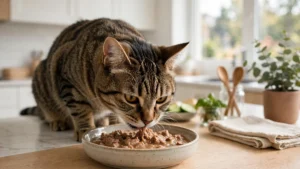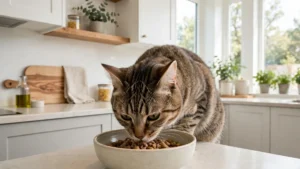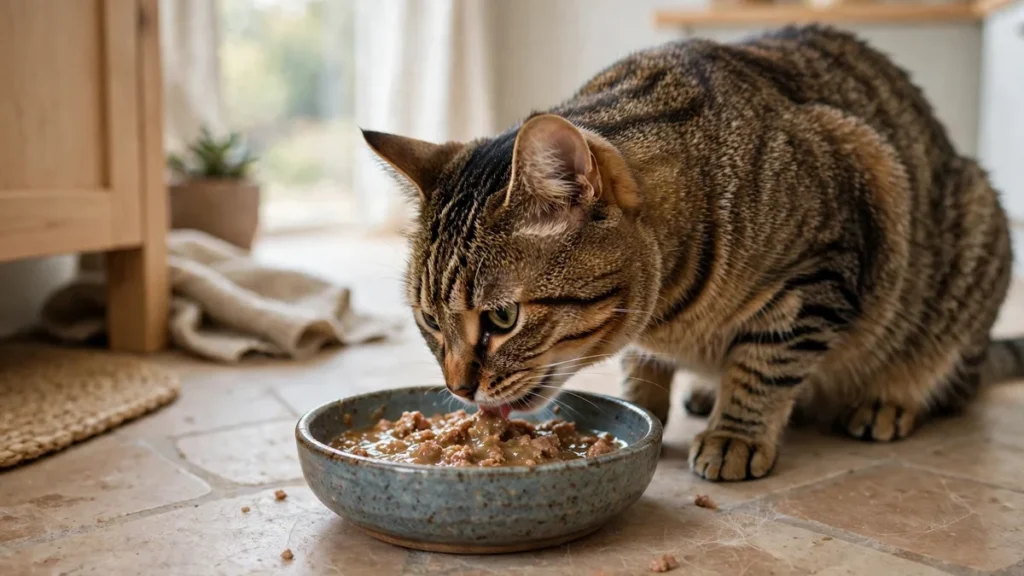
The best rated wet cat food is a complete wet food that your cat finishes eagerly, keeps them hydrated, and suits their age and health. The strongest options use named animal protein first and come in a texture your cat enjoys. Below, ten picks cover pouches, tins, gravy, jelly and pâté, for fussy eaters, seniors and multi-cat homes alike.
Wet food earns its place in the bowl for one simple reason: moisture. Cats are famously poor drinkers, and a wet diet adds a meaningful amount of water to every meal. That extra hydration supports the kidneys and the urinary tract.
Choosing well matters more than choosing expensively. A glossy tin means nothing if the food inside is incomplete, and the dearest pouch is wasted if your cat walks away from it.
Key takeaways
- Choose a complete wet food, not a complementary one, so your cat gets every nutrient they need.
- Named animal protein should lead the ingredients, with a clear meat content.
- Wet food adds valuable moisture, which supports hydration and urinary health.
- Texture matters as much as recipe: gravy, jelly and pâté suit different cats.
- Change foods gradually over a week to avoid upset stomachs.
How to Choose the Best Rated Wet Cat Food
Start with the label, and look for the word complete. A complete wet food contains the full balance of nutrients a cat needs, while a complementary food is designed to be fed alongside something else.
Next, check the protein. Cats are obligate carnivores, so animal protein is a requirement, not a preference. Look for a named source, such as chicken, salmon or lamb, listed first.
Texture is where many owners go wrong: they buy what looks good to them, not what their cat prefers. Some cats love chunks in gravy; others adore smooth pâté. If your cat is fussy, try single pouches in several textures first.
Age and life stage shape the choice too. Kittens need food formulated for growth, while senior cats often benefit from softer textures. If you have a kitten at home, our guide to the best cat food for kittens explains growth-stage feeding in more detail.
The 10 Best Rated Wet Cat Foods
1. Chicken in Gravy Pouches
Chicken in gravy is the dependable all-rounder of the wet food world. The shredded meat and savoury sauce appeal to a wide range of cats, and the single-serve pouch keeps every meal fresh.
The gravy carries moisture into the meal and helps cats that drink little. Look for a complete recipe with chicken named first.
Best for: everyday feeding and cats moving from dry food to wet.
2. Salmon in Jelly Tins
Salmon in jelly brings a firm texture and a strong fish aroma that many cats find hard to resist. The jelly holds the pieces together neatly, which suits cats that like to bite.
Fish works best as part of a rotation rather than the only protein on the menu. Choose a complete recipe, and store an opened tin covered in the fridge.
Best for: fish-loving cats and households feeding more than one cat.
3. Smooth Chicken Pâté
Smooth pâté is the quiet achiever of this list. Its uniform texture suits older cats, cats with sore mouths and kittens learning to eat solid food.
The trick with pâté is freshness: once opened, it dries out faster than food in gravy or jelly. Spoon out one serving at a time and cover the rest promptly.
Best for: senior cats, kittens and cats with sensitive mouths.
4. Beef and Lamb Chunks in Gravy
Red meat recipes bring a richer flavour that suits cats who turn their noses up at poultry. Beef and lamb chunks in gravy offer a hearty meal with plenty of sauce for lapping.
As always, the label tells the story: named meats first and a complete declaration. Red meat recipes tend to be energy-dense, so follow the feeding guide.
Best for: cats that prefer red meat and owners building a weekly rotation.
5. Tuna Mousse Cups
Tuna mousse is light, smooth and intensely aromatic, which makes it useful for tempting a cat that has gone off its food. The single-serve cup is perfectly portioned, and the soft texture suits cats that struggle with chunks.
Because tuna is so appealing, it is tempting to feed it every day, but variety is the wiser course. Use mousse cups as part of a rotation with chicken and beef.
Best for: tempting fussy eaters and as an occasional treat meal.
6. Turkey and Duck Pâté Tins
Turkey and duck bring a different flavour profile to the bowl, and for some cats that novelty is exactly what gets them eating. This pâté pairs a smooth texture with a richer, gamey taste.
Introduce the new flavour gradually, mixed with the old food over several days. If your cat clears the bowl, you have a useful addition to the rotation.
Best for: cats bored of chicken and owners seeking flavour variety.
7. White Fish Fillets in Broth
White fish in broth is the lightest option on this list, and it suits cats that prefer a delicate meal. The broth adds hydration that many cats will lap up happily.
Check that the recipe is complete rather than complementary, since some fish fillet products are designed as toppers. If it is complementary, serve it alongside a complete food.
Best for: sensitive stomachs and cats that love lapping broth.
8. Kitten Chicken Mousse
Kittens need food built for growth, and a dedicated kitten mousse delivers it in a texture tiny mouths can manage. The smooth consistency is easy to lap.
Feed little and often, following the guide for your kitten’s age and weight. Our guide to the best cat food for kittens covers portion sizes and weaning in full.
Best for: kittens from weaning through their first year.
9. Senior Chicken and Rice in Jelly
Senior cats deserve food that respects ageing joints, kidneys and teeth, and this gentle recipe does exactly that. Soft chunks in jelly are easy to eat, and the moisture supports hydration at an age when drinking often declines.
Older cats also benefit from routine: the same food, at the same times, in the same place. If your senior cat’s appetite changes suddenly, speak to your vet.
Best for: cats aged eleven and over, and those with ageing teeth.
10. Mixed Multipack: Chicken, Salmon and Beef
A mixed multipack is the most practical way to feed wet food well, because it builds variety into every box. Chicken, salmon and beef in rotation keep meals interesting and reveal which proteins your cat prefers.
Multipacks also make budgeting easy, since the cost per pouch is usually lower than buying singles. Store the box somewhere cool and dry.
Best for: multi-cat homes and owners who want variety without the guesswork.
The 10 Picks at a Glance
| Pick | Format | Texture | Ideal cat |
|---|---|---|---|
| Chicken in Gravy Pouches | Pouch | Chunks in gravy | Everyday cats |
| Salmon in Jelly Tins | Tin | Chunks in jelly | Fish lovers |
| Smooth Chicken Pâté | Tin | Smooth pâté | Seniors and kittens |
| Beef and Lamb Chunks in Gravy | Pouch | Chunks in gravy | Red meat fans |
| Tuna Mousse Cups | Cup | Soft mousse | Fussy eaters |
| Turkey and Duck Pâté Tins | Tin | Smooth pâté | Cats bored of chicken |
| White Fish Fillets in Broth | Pouch | Fillets in broth | Sensitive stomachs |
| Kitten Chicken Mousse | Pouch | Soft mousse | Kittens under one |
| Senior Chicken and Rice in Jelly | Pouch | Chunks in jelly | Cats over eleven |
| Mixed Multipack | Mixed box | Varied textures | Multi-cat homes |
What Good Wet Cat Food Looks Like

Good wet cat food is easy to recognise once you know what to look for. The first ingredient is a named animal protein, the label declares the food complete, and the meat content is stated plainly rather than hidden behind vague terms. The food itself should look like food: recognisable pieces or a smooth, even pâté, with a fresh smell.
The pack matters too. A good pouch or tin seals well and portions easily, and the feeding guide is clear about daily amounts by weight. Once opened, cover the food and refrigerate it, and use it within a couple of days.
How to Switch Your Cat to a New Wet Food
Cats are creatures of habit, and a sudden change of food can mean a refused meal or an upset stomach. Mix a small amount of the new food into the old one, then increase the new share a little each day. Over about a week, the old food phases out entirely.
Warm the food slightly before serving, since cold food from the fridge has less aroma and many cats refuse it. A spoonful of warm water stirred through is usually enough. Never microwave cat food, as hot spots can burn a cat’s mouth.
If your cat refuses the new food outright, do not panic and do not starve them into eating it. Cats that go without food for more than a day can develop serious liver problems, so always offer something they will eat.
Wet Cat Food Shopping Checklist
Run through this list before you buy.
- Complete, not complementary: check the declaration on the label.
- Named animal protein listed first, with a clear meat content.
- A texture your cat enjoys: gravy, jelly, pâté, mousse or broth.
- Right life stage: kitten, adult or senior, as the label states.
- Feeding guide matched to your cat’s weight.
- Format that suits your routine: pouches or tins.
- Best-before date in range, with packs stored cool and dry.
- A small trial quantity first for any new flavour or texture.
Frequently Asked Questions
Is wet food better than dry food for cats?
Wet food has one clear advantage: moisture. It helps cats stay hydrated, which supports the kidneys and urinary tract, and many cats find it more palatable. Dry food has its own strengths, and many owners feed a mix of both.
How much wet food should I feed my cat each day?
The right amount depends on your cat’s weight, age and activity, so follow the feeding guide on the pack. Weigh the food rather than estimating, and adjust over a few weeks based on your cat’s weight.
Can kittens eat adult wet cat food?
Kittens need food formulated for growth, with the energy and nutrient balance their developing bodies require. Adult food does not provide the same profile, so feed a kitten recipe until your cat is around twelve months old.
How long does opened wet cat food last?
Once opened, wet cat food should be covered and kept in the fridge, and used within one to two days. Food left out at room temperature should be discarded after a couple of hours.
What if my cat only licks the gravy and leaves the meat?
Gravy licking is one of the most common cat owner complaints, and it usually means your cat prefers a different texture. Try a pâté or mousse, which cannot be separated, or a jelly recipe with firmer pieces.
The Bottom Line
The best rated wet cat food is a complete recipe with named animal protein, a texture your cat genuinely enjoys, and a format that fits your routine. Start with chicken in gravy if you want a safe first choice, then branch out through fish, red meat and pâté. For a wider view, our guide to the best cat food brands compares the leading names side by side.
Feed measured portions, change foods gradually, and let your cat’s appetite be the final judge. A clean bowl, a glossy coat and a healthy weight tell you more than any label ever will. An automatic cat feeder can also keep portions consistent when you are out.
Safety note: consult your vet about your cat’s diet, especially for cats with kidney issues, allergies or other health conditions. Change foods gradually over about a week, and never let a cat go without food for more than a day, as this can cause serious liver problems.