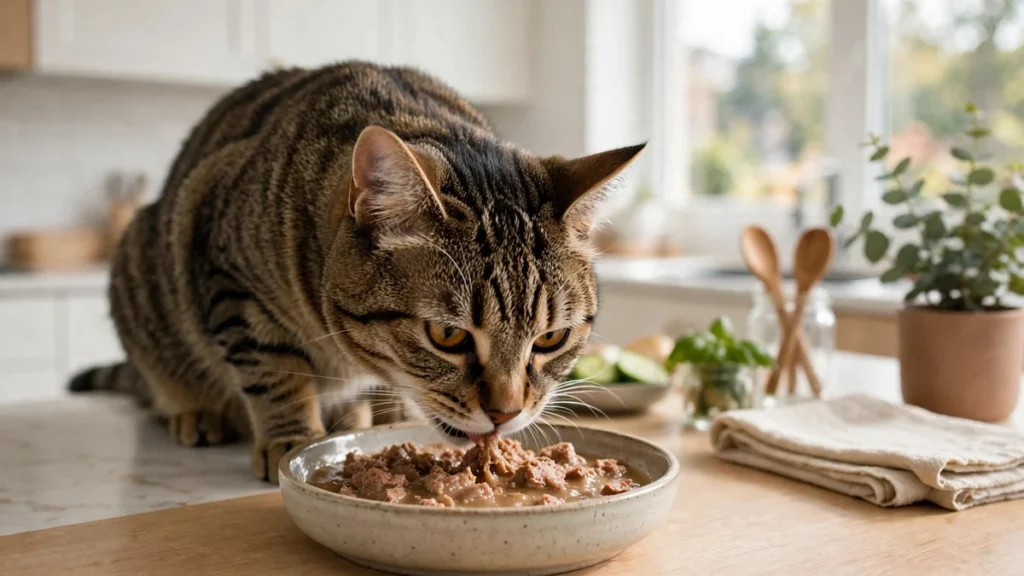
The best wet cat food is a complete recipe your cat eats eagerly, keeps a healthy weight on, and suits your daily routine. It should smell fresh when the pouch opens and leave your cat calm and satisfied after the meal.
This guide looks at wet cat food as everyday feeding, not as a contest. It explains formats, textures and life-stage recipes, then sets out ten picks for most cats.
Key takeaways
- Choose a complete wet food, so one recipe covers daily nutrition.
- Texture matters as much as flavour: some cats love pâté, others want shreds.
- Match the recipe to age, with separate foods for kittens, adults and older cats.
- Serve wet food at room temperature.
- Change foods gradually, and let appetite, weight and energy guide you.
How Wet Cat Food Works
Wet cat food is cooked meat or fish in a moist base, sealed in a pouch, tin or tray. Moisture makes up around three quarters of the weight, which helps cats that drink little. The soft texture also suits kittens, older cats and cats with sore mouths.
A complete wet food provides everything a healthy cat needs each day, according to the maker. A complementary wet food does not, and it is meant to be served alongside a complete food. The distinction is printed on the pack, near the feeding guide, and it is worth checking.
What Good Wet Cat Food Looks Like

Good wet cat food looks like the ingredients it claims to contain. A chicken recipe should show recognisable meat, a fish recipe should smell of fish, and the jelly or gravy should be clear and moist rather than dry or cloudy. The food should hold together on a spoon, not fall apart.
Read the label with the same care. Ingredients appear in order of weight, so a named meat or fish near the top is a good sign. Look for the word complete, the life stage, and a feeding guide by weight.
Smell and colour matter too, but only as a first check. Fresh wet food smells mild and meaty, while food left out too long smells sharp or sour. If a pouch is swollen, do not serve it.
The 10 Best Wet Cat Food Picks in 2027
These ten picks cover the main formats and needs in wet cat food. Each one suits a different cat, so start with the cat in front of you and work from there.
1. Classic Chicken Pâté
Best for: cats that like a smooth, even texture at every meal.
A chicken pâté is the quiet workhorse of wet cat food. It spreads easily and suits cats that lick rather than chew. Whiskas and Felix both offer one in pouches and tins.
2. Fish in Jelly
Best for: cats that love fish and a firm, wobbly texture.
Fish in jelly is a familiar wet food on the shelf. The jelly holds the fish in place and keeps it moist. Tuna, salmon and white fish are the usual choices.
3. Shredded Meat in Gravy
Best for: cats that prefer visible shreds and a rich sauce.
Shredded meat in gravy looks closer to cooked meat than a pâté does. The shreds give the meal texture, and the gravy adds moisture and smell. Applaws and similar makers build whole ranges around this style.
4. Kitten Wet Food
Best for: kittens under twelve months that need energy for growth.
Kitten wet food is made for fast growth, with more energy and protein than adult food. The pieces are small and soft. Our guide to the best cat food for kittens in 2027 covers the wider choice in more detail.
5. Senior Wet Food
Best for: older cats that need gentle food and steady weight.
Senior wet food is softer and easier to chew, made for cats whose activity has slowed. The recipes often carry a little less energy than adult food, with support for joints and digestion.
6. Sensitive Stomach Wet Food
Best for: cats with delicate digestion or frequent upset stomachs.
Sensitive stomach wet food uses a short list of ingredients and a single main protein, so there is less for a delicate gut to handle. The recipes are often free from common triggers, and the texture is smooth and easy to digest.
7. Grain-Free Wet Food
Best for: owners who want a recipe without grains.
Grain-free wet food leaves out wheat, rice and other grains, and builds the recipe around meat or fish instead. Cats do not need grains in their diet, and many owners choose this style for simplicity.
8. Single-Protein Wet Food
Best for: cats that react to some proteins but not others.
Single-protein wet food contains one animal protein, such as chicken or salmon, and nothing else from the meat list. That simplicity makes it easier to work out which protein suits your cat. The recipes are usually plain, with few extras.
9. Smooth Mousse for Fussy Cats
Best for: fussy cats that lick food rather than bite it.
A smooth mousse is lighter than a pâté and almost spoonable, which suits cats that refuse lumps or chunks. The texture is even, the smell is strong, and the small portions make it easy to test a new flavour without waste.
10. Mixed Multipack Pouches
Best for: households that want variety without buying full boxes of one flavour.
A mixed multipack holds several flavours in one box, so a cat that tires of chicken can switch to fish the next day. The pouches keep portions simple, and the variety helps owners learn which flavours their cat truly likes.
How Do the 10 Picks Compare?
| Pick | Format | Key feature | Best for |
|---|---|---|---|
| Classic chicken pâté | Pouch or tin | Smooth, even texture | Everyday feeding |
| Fish in jelly | Tin or pouch | Firm jelly, strong smell | Fish lovers |
| Shredded meat in gravy | Pouch | Visible shreds, rich sauce | Cats that chew |
| Kitten wet food | Pouch | Energy for growth | Kittens |
| Senior wet food | Pouch or tray | Soft, gentle recipe | Older cats |
| Sensitive stomach food | Pouch or tin | Short ingredient list | Delicate digestion |
| Grain-free wet food | Pouch or tin | No grains | Simple recipes |
| Single-protein food | Pouch or tin | One animal protein | Food trials |
| Smooth mousse | Tray or pouch | Light, spoonable texture | Fussy cats |
| Mixed multipack pouches | Pouch box | Several flavours | Variety |
How to Choose the Right Wet Food
Start with your cat’s age. Kittens need energy for growth, adults need steady daily food, and older cats need softer recipes that are easy to chew. A food made for one stage is not the right daily food for another, so check the life stage on the pack first.
Next, think about texture. Some cats love pâté, some want shreds, and some will only eat jelly, so offer a small amount of a new texture first and watch whether your cat finishes it or walks away.
Reading the Label
Read the label before you buy. A named meat or fish should appear near the top of the ingredient list, and the pack should say whether the food is complete or complementary. The feeding guide gives a daily amount by weight.
Wet Food and Dry Food Together
Many cats do well on a mix of wet and dry food. Wet food brings moisture and smell, while dry food is convenient and suits cats that graze through the day. A mixed routine gives you a fallback if one format runs out.
Keep the total daily amount steady when you mix formats. Split the feeding guide between the two foods, rather than feeding a full portion of each. If you want a wider view of brands, our guide to the best cat food brands in 2027 compares the main makers side by side.
Feeding Wet Food Day to Day
Serve wet food at room temperature. Food straight from the fridge smells faint and can put a cat off, so take the pouch out a little before mealtime. A warm bowl is more inviting than a cold one.
Store opened tins and pouches in the fridge, covered, and use them within a day or two. Discard food left in the bowl after a few hours, and wash the bowl before the next meal. Fresh food matters more than a full bowl.
Feed at regular times, and keep the portions steady. Most adult cats do well on two meals a day, while kittens need smaller meals more often. Fresh water should always sit nearby, and the water bowl should be cleaned and refilled daily.
Your Wet Cat Food Checklist
- Match the food to your cat’s age, size and activity.
- Check the pack says the food is complete for daily feeding.
- Choose a texture your cat actually finishes, not just one you like.
- Read the ingredient list and look for a named meat or fish.
- Weigh portions at first, and follow the feeding guide on the pack.
- Store opened food in the fridge.
- Change foods gradually and watch how your cat responds.
Frequently Asked Questions
What is the best wet cat food in 2027?
The best wet cat food is a complete recipe that matches your cat’s age and texture preference, and that your cat eats happily day after day. A classic chicken pâté suits most cats, while fish in jelly suits cats that love a firmer texture. Start with one of the ten picks above, and let your cat’s appetite narrow the choice.
Is wet food better than dry food for cats?
Wet food brings moisture and a strong smell, which suits cats that drink little water, while dry food is convenient and suits cats that graze. Neither is better for every cat, and many cats do well on a mix of the two. The right choice is the one your cat eats well and keeps a healthy weight on.
How much wet food should I feed my cat each day?
Follow the feeding guide on the pack, which gives a daily amount by your cat’s weight. Weigh the food at first rather than guessing, and split it across two meals for most adult cats. If your cat gains or loses weight, adjust the amount and ask your vet for advice.
Can I leave wet food out all day?
No, wet food should not sit out all day. Serve it fresh, and discard anything left in the bowl after a few hours, since it dries out and can attract bacteria. Store opened tins and pouches in the fridge, covered, and use them within a day or two.
How do I switch my cat to a new wet food?
Change gradually over several days. Mix a small amount of the new food with the old, and increase the new share a little each day. If your cat refuses the new food, slow down and try a different texture or flavour.
The Bottom Line
The best wet cat food in 2027 is not one recipe, but the right recipe for your cat. A smooth pâté, fish in jelly, shredded meat in gravy, or a life-stage recipe each suit a different cat, and the ten picks above cover most households. See also our guides to the best rated wet cat food in 2027 and the best vet cat food in 2027.
Start with your cat’s age and texture preference, read the label, and give a new food a fair trial of a week or two. Keep notes on appetite, weight and energy, and let the empty bowl do the talking.
Feeding note: check with your vet before changing your cat’s diet, especially for kittens, older cats, or cats with a health condition. Transition to a new food gradually over several days, and always keep fresh water available beside the food bowl.