The best vet cat food is a diet your vet has recommended for your cat’s specific health needs, rather than simply a premium recipe from the shelf. Vet-recommended diets are formulated for conditions such as kidney disease, urinary problems, digestive upsets and food sensitivities, and most are sold through veterinary practices.
So which vet cat food is best for your cat? The short answer is the one your vet prescribes after examining your cat, since the right diet depends on the diagnosis, your cat’s age and how they respond to the food. This guide explains how these diets work and compares ten vet-recommended picks, so you can talk through the options with your vet.
It helps to know how vet diets differ from ordinary food. Our guide to the best cat food brands in 2027 covers the big names on the shelf, and our look at the best rated wet cat food in 2027 compares wet food on taste and nutrition. Vet diets are a narrower group, each recipe built around a health condition.
Key takeaways
- Vet cat food is chosen for a health condition, so the best pick is the one your vet recommends for your cat.
- Kidney, urinary, digestive and allergy diets each work in a different way, and they are not interchangeable.
- Wet and dry formats both have a place, and your cat’s appetite and water intake should shape the choice.
- Switch foods gradually over a week, and watch appetite, weight and litter tray habits as you go.
- Keep your vet in the loop: a diet that helps one cat can be wrong for another, so recheck regularly.
What Good Vet Cat Food Looks Like

A good vet diet starts with a clear purpose. Each recipe is designed around one health problem, such as kidneys that need less phosphorus or a gut that needs highly digestible food, and it is tested in feeding trials.
Look for a statement on the pack that the food is complete and balanced, meaning it provides all the nutrients a cat needs as the main diet. It is not a supplement or a treat, and it should not be mixed with other foods unless your vet says so.
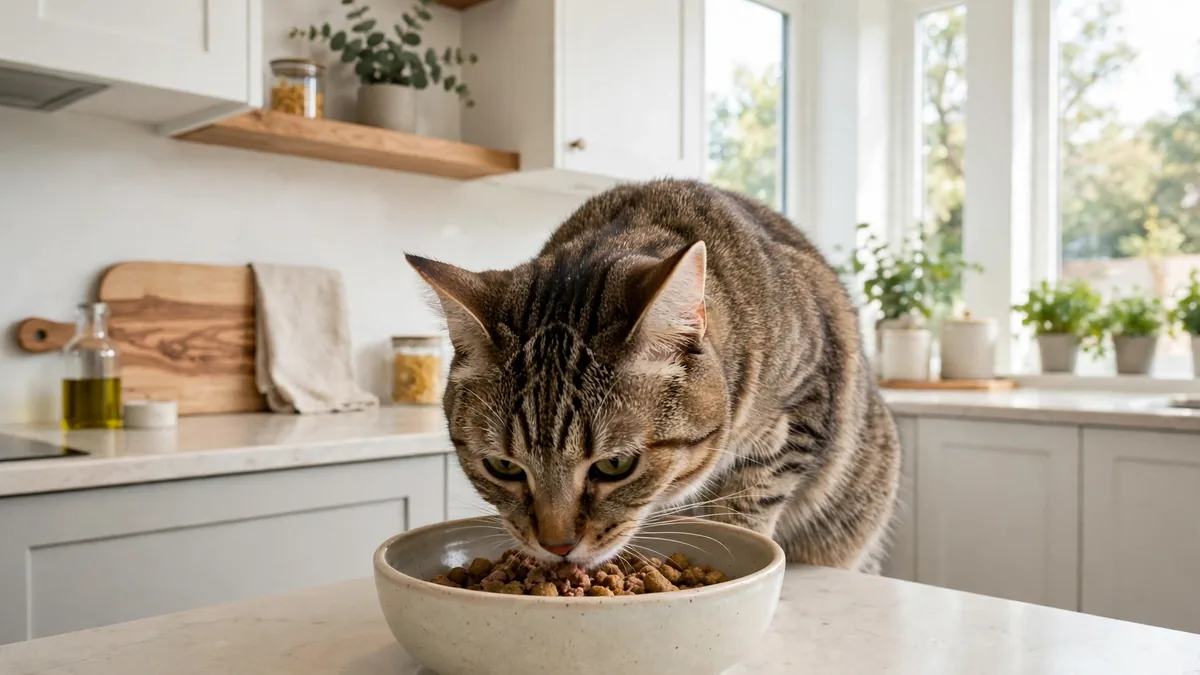
The best vet food is also one your cat will eat. A diet only works if the bowl is emptied, so taste matters as much as the formula, and most vet diets come in wet and dry versions.
How Vets Choose a Diet
A vet starts with the diagnosis. Blood and urine tests show how the kidneys are coping, an elimination diet reveals a food allergy, and a careful history shows whether vomiting or loose stools follow a pattern.
Age and weight shape the choice too. A kitten with a sensitive gut needs growth nutrients as well as gentle food, while an older cat with kidney disease may need a recipe that is easy to chew. Our guide to the best cat food for kittens in 2027 covers the early months, but a poorly kitten should always be seen by a vet first.
Finally, the vet watches the response. A new diet is usually tried for several weeks, with a recheck to see whether symptoms have eased and weight has held steady.
The 10 Best Vet Cat Foods in 2027
These ten picks are the veterinary diets most often recommended in practice, grouped by the condition each one is made for. Every one should be fed under veterinary guidance, and your vet can tell you which group fits your cat.
Royal Canin Gastrointestinal
Best for: cats with sensitive digestion, vomiting or loose stools.
This is one of the most widely used vet diets for upset stomachs, made to be highly digestible so the gut has less work to do. It comes in wet and dry forms, and most cats need a few weeks on it before the vet can judge whether it is working.
Hill’s Prescription Diet i/d
Best for: cats recovering from a digestive upset or living with ongoing gut trouble.
Hill’s i/d is formulated for digestive health, with ingredients chosen to be gentle on the stomach and easy to absorb. Vets often use it after vomiting or diarrhoea, when the gut needs bland, steady nourishment, and portions should stay small and regular while your cat recovers.
Purina Pro Plan Veterinary Diets EN
Best for: cats that need a gentle, easily digested diet for gut problems.
Purina’s EN diet is made for cats with gastrointestinal conditions, with a formula that is easy to digest and kind to the stomach. It comes in wet and dry versions, and it should be introduced gradually over several days, mixing a little more of the new food into the old at each meal.
Royal Canin Urinary S/O
Best for: cats prone to urinary stones or crystals.
Urinary S/O is designed to help dissolve certain types of urinary stones and to reduce the chance of new ones forming, by controlling the mineral balance of the urine. Encourage your cat to drink, since good hydration supports urinary health.
Hill’s Prescription Diet c/d Multicare
Best for: cats with recurring urinary problems, including stress-related cystitis.
Hill’s c/d Multicare is formulated to support urinary health and to lower the risk of the most common urinary stones. It also contains ingredients aimed at easing stress, which can trigger urinary flare-ups in some cats, so keep the litter tray clean and the home calm.
Purina Pro Plan Veterinary Diets UR
Best for: cats that need urinary support with a focus on hydration.
Purina’s UR diet is made to support urinary health in cats, with a formula that helps keep the urine at a healthy balance. The wet version is especially useful for cats that do not drink enough, since it adds water with every meal. Call the vet straight away if your cat strains or passes blood.
Hill’s Prescription Diet k/d
Best for: cats with kidney disease that need kidney support.
Hill’s k/d is one of the longest-established diets for cats with kidney disease, formulated with controlled phosphorus and moderate protein to ease the workload on the kidneys. It comes in several flavours and textures to tempt cats whose appetite has faded, and warming the food slightly can help.
Royal Canin Renal
Best for: cats with chronic kidney disease that need a renal diet.
Royal Canin Renal is designed for cats with kidney disease, with a recipe that supports kidney function while remaining appetising. It comes in wet and dry versions and in more than one flavour, which matters when a cat becomes fussy about food, and regular blood tests show whether it is working.
Royal Canin Hypoallergenic
Best for: cats with suspected food allergies or intolerances.
This diet uses hydrolysed protein, broken down into tiny pieces that the immune system is less likely to react to. Vets use it in an elimination diet trial, feeding it alone for several weeks to see whether itchy skin or gut signs settle, and the trial only works if nothing else passes your cat’s lips.
Purina Pro Plan Veterinary Diets HA
Best for: cats with food allergies that need a hypoallergenic diet.
Purina’s HA diet is also based on hydrolysed protein, made for cats with food allergies or intolerances. It is a single-protein, easily digested recipe, and a simple diary of appetite, skin and stools helps your vet judge the trial.
Comparing the 10 Vet Cat Foods
| Pick | Best for | Format | Key point |
|---|---|---|---|
| Royal Canin Gastrointestinal | Sensitive digestion | Wet and dry | Highly digestible recipe |
| Hill’s Prescription Diet i/d | Digestive recovery | Wet and dry | Gentle on the stomach |
| Purina Pro Plan Veterinary Diets EN | Gut problems | Wet and dry | Easy to digest |
| Royal Canin Urinary S/O | Urinary stones | Wet and dry | Controls urine minerals |
| Hill’s Prescription Diet c/d Multicare | Recurring urinary issues | Wet and dry | Supports urinary health |
| Purina Pro Plan Veterinary Diets UR | Urinary support | Wet and dry | Wet food adds hydration |
| Hill’s Prescription Diet k/d | Kidney disease | Wet and dry | Controlled phosphorus |
| Royal Canin Renal | Chronic kidney disease | Wet and dry | Several flavours offered |
| Royal Canin Hypoallergenic | Food allergies | Wet and dry | Hydrolysed protein |
| Purina Pro Plan Veterinary Diets HA | Food allergies | Wet and dry | Single hydrolysed protein |
A Checklist Before You Buy Vet Cat Food
Use this checklist before you order or open a new bag, so the diet your vet chose is the one your cat actually eats.
- Confirm the exact diet name and format with your vet, including wet or dry.
- Check that the pack says the food is complete and balanced for cats.
- Read the feeding guide and weigh the daily portion on kitchen scales.
- Buy a small bag or a few tins first, in case your cat refuses the recipe.
- Have fresh water beside the bowl, and refresh it at least once a day.
- Plan a gradual switch over five to seven days, unless your vet says otherwise.
- Note appetite, weight and litter tray habits for the first two weeks.
- Book the recheck your vet suggested, and take the food packaging with you.
How to Switch to a Vet Diet
Switch slowly. Start by mixing a quarter of the new food into the old, then raise the share every couple of days until the old food is gone. A week is a good guide, and some cats need longer, especially if they are wary of new smells and textures.
If your cat refuses the new food, do not let them go hungry for more than a day. Cats that stop eating can develop liver problems quickly, so offer the old food again and call your vet.
Frequently Asked Questions
Is vet cat food the same as premium cat food?
Premium cat food is made for healthy cats, while vet cat food is formulated for a specific health condition and chosen on a vet’s advice. Our guide to the best cat food brands in 2027 covers premium brands, and our best rated wet cat food in 2027 guide compares wet food for everyday feeding. A vet diet is a medical tool, not an upgrade.
Do I need a prescription to buy vet cat food?
It depends on where you buy it. Veterinary practices usually ask for a consultation before they sell a therapeutic diet, while some online sellers ask for your vet’s details instead. Either way, the diet should be chosen by a vet who knows your cat.
Can I feed vet cat food to a healthy cat?
It is not a good idea. Vet diets are balanced for a specific condition, so a healthy cat may miss out on nutrients it needs. If you have more than one cat, feed the healthy cat its own food and keep the bowls separate.
How long will my cat stay on a vet diet?
Some diets are short term, such as a digestive diet after a stomach upset, while others are fed for life, such as a renal diet for chronic kidney disease. Your vet will set the timescale and review it at rechecks.
What if my cat will not eat the vet diet?
Try the other format first, since many cats accept the wet version of a diet they refused as kibble, or the other way round. Warming wet food slightly can also help. If your cat still refuses, call your vet rather than letting them go hungry.
A Final Word on Safety
Vet diets are powerful tools, but they are not a substitute for a diagnosis. If your cat is losing weight, drinking more than usual, vomiting, straining in the litter tray or eating less, book a vet appointment before changing their food. Always consult your vet before starting, stopping or switching a therapeutic diet.