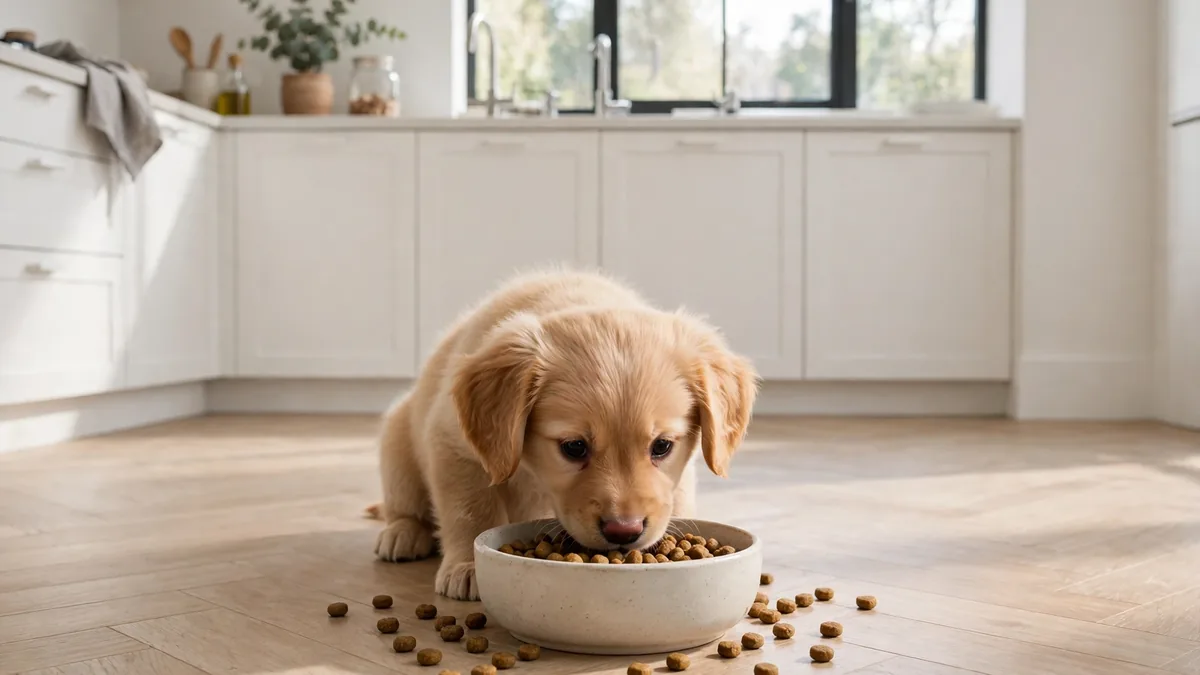

The best puppy dog food is a complete puppy recipe that supports steady growth, with enough protein and balanced minerals for a young dog still building bone and muscle. Puppies are not small adults, so an adult recipe is not the right starting point for them.
So which puppy food should you choose? The short answer is a puppy-specific recipe matched to your puppy’s size and age, fed in measured meals across the day. This guide compares ten puppy food types, from classic kibble to fresh and freeze-dried options, so you can find the one that fits your puppy and your routine.
Every pick below is a puppy recipe or feeding style, not a single brand. The right choice depends on your puppy’s breed size, appetite and digestion.
Key takeaways
- Choose a puppy recipe, not an adult one, because puppies need food made for growth.
- Match the recipe to your puppy’s breed size, since small and large puppies grow at different rates.
- Feed measured meals several times a day.
- Change foods gradually over a week to avoid an upset stomach.
- Ask your vet about diet for large breeds.
How to Choose the Best Puppy Dog Food
Start with life stage. A food labelled for puppies is made for growth, with a different balance of protein, fat and minerals from an adult recipe. Look for the words puppy or growth on the pack, and check that the food is described as complete.
Next, think about breed size. Small-breed puppies often do better with small kibble they can chew easily, while large-breed puppies need a recipe that supports slower, steadier growth. A large puppy that grows too fast can put extra strain on developing joints.
Then consider format. Dry kibble is easy to store and measure, wet food is soft and tempting for fussy eaters, and fresh or freeze-dried foods need more care with storage.
Our guide to the best dry dog food in 2027 explains how dry recipes compare across life stages. The format that works is the one you can serve consistently every day.
Finally, watch your puppy, not just the bag. A healthy puppy is bright, keen to eat and growing steadily, with firm stools. If stools stay loose, or your puppy seems off its food, talk to your vet before switching recipes again.
The 10 Best Puppy Dog Foods
1. Chicken and Rice Puppy Kibble
Chicken and rice is the classic puppy kibble. It is easy to find, easy to digest for most puppies, and the small pieces suit young mouths.
Look for a puppy version with a clear feeding guide by age and expected adult weight. Feed it in three or four small meals a day.
Best for: first-time puppy owners who want a simple, widely available daily kibble.
2. Salmon Puppy Recipe
A salmon puppy recipe offers a different protein from the usual chicken. The fish base also brings natural oils that support a healthy coat.
Choose a puppy-specific salmon recipe rather than an adult fish food, so the mineral balance still suits growth. Store the bag sealed and away from heat.
Best for: puppies that prefer fish, or owners who want a change from chicken.
3. Large-Breed Puppy Formula
Large-breed puppies need careful feeding. They grow for longer than small breeds, and a diet that pushes growth too fast can cause problems later.
Follow the feeding guide for your puppy’s expected adult weight, and weigh your puppy regularly. Keep treats small and count them as part of the daily food.
Best for: puppies expected to grow into large or giant adult dogs.
4. Small-Breed Puppy Kibble
Small-breed puppies have small mouths and fast metabolisms, so their kibble needs to match. The tiny pieces are easy to pick up and chew.
Because small puppies eat little at each meal, the food needs to be energy dense enough to cover their needs in small portions. Feed little and often.
Best for: toy and small-breed puppies that need tiny kibble and frequent small meals.
5. Grain-Free Puppy Recipe
A grain-free puppy recipe swaps grains for other carbohydrate sources, such as potato or sweet potato. Some owners choose it because their puppy seems to do better without grains.
Check the label carefully and make sure the recipe is made for puppies, not adults. Grain-free does not mean low in calories, so measure the portion carefully.
Best for: puppies whose owners prefer a grain-free recipe, with vet advice where needed.
6. Puppy Wet Food
Wet puppy food is soft, moist and often very tempting, which makes it useful for puppies that are slow to eat or still learning to chew kibble.
Wet food needs care once opened, so keep it covered in the fridge and use it within the time the pack suggests. Measure the portion against the feeding guide.
Best for: fussy eaters, young puppies learning to chew, and owners who want a soft option.
7. Fresh Puppy Food
Fresh puppy food is made from cooked ingredients and kept chilled, so it feels closer to a home-cooked meal than a bag of kibble. Puppies often eat it with real enthusiasm.
Fresh food needs fridge space and a regular delivery or shopping routine. Make sure the recipe is a complete puppy food, not a topper. Our guide to the best fresh dog food in 2027 shows how fresh recipes compare across dogs of different ages.
Best for: owners happy to manage chilled storage who want a fresh, soft puppy diet.
8. Freeze-Dried Puppy Food
Freeze-dried puppy food is light to store and keeps well in the cupboard, then softens when water is added. That makes it handy for travel.
Follow the maker’s instructions on how much water to add and how long to leave it, since serving it dry can put a puppy off. Our guide to the best freeze-dried dog food in 2027 compares the formats in more detail.
Best for: travel, small kitchens, and owners who want a shelf-stable fresh-style food.
9. Sensitive-Stomach Puppy Recipe
Some puppies have delicate digestion, and a sensitive-stomach recipe is made with that in mind. These recipes tend to use a single main protein and easily digested ingredients.
Change over slowly, mixing the new food with the old over about a week. If loose stools or vomiting continue, speak to your vet rather than trying another food straight away.
Best for: puppies with delicate digestion that need a gentle, simple recipe.
10. Budget-Friendly Puppy Kibble
A budget-friendly puppy kibble proves that good puppy food does not need to be the most expensive bag on the shelf. The key is a complete puppy recipe and a portion you can measure every day.
Compare bags by the feeding guide rather than the bag size, since a food that needs a smaller daily portion can work out better value than it first looks.
Best for: owners who want a solid puppy kibble without paying for extras they do not need.
The 10 Picks at a Glance
| Pick | Best for | Format | Feeding note |
|---|---|---|---|
| Chicken and rice kibble | First-time owners | Dry kibble | Three or four meals |
| Salmon puppy recipe | Puppies that prefer fish | Dry kibble | Seal the bag |
| Large-breed formula | Large and giant breeds | Dry kibble | Feed by adult weight |
| Small-breed kibble | Toy and small breeds | Dry kibble | Little and often |
| Grain-free recipe | Owners who prefer grain-free | Dry kibble | Measure portions |
| Puppy wet food | Fussy eaters | Wet food | Refrigerate once opened |
| Fresh puppy food | Owners who want fresh food | Chilled fresh | Needs fridge space |
| Freeze-dried food | Travel and small kitchens | Freeze-dried | Add water as directed |
| Sensitive-stomach recipe | Delicate digestion | Dry kibble | Change over slowly |
| Budget-friendly kibble | Owners watching costs | Dry kibble | Compare by feeding guide |
What Good Puppy Food Looks Like

Good puppy food starts with a clear label. It should say puppy or growth, describe itself as complete, and give a feeding guide by age and expected adult weight.
Protein matters for growth, because a puppy is building muscle every day, and calcium matters too, because bones are still forming. A good puppy recipe balances both, rather than loading up on one and skimping on the other. The food should be made for puppies and not for adults.
Kibble size and texture matter as well. Pieces should be small enough for your puppy to chew, and the food should smell fresh when the bag is opened. Buy a size you will use within a few weeks, and keep it sealed.
Feeding Your Puppy Day to Day
Feed your puppy at regular times each day, with three or four meals while they are young. A fixed routine helps with house training, since a puppy usually needs to go out soon after eating.
Weigh the food rather than guessing. A small kitchen scale gives you the same portion every time, and it makes it much easier to tell whether a change in appetite is real or just a busy day. The feeding guide on the pack is a starting point, so adjust the amount as your puppy grows and your vet advises.
Keep treats to a small share of the day’s food. A treat is useful for training, but too many treats push out the balanced food your puppy needs. Always have fresh water available.
Puppy Feeding Checklist
Use this short list when you bring a new puppy home.
- Food labelled for puppies and marked complete
- Feeding guide by age and expected adult weight
- Kitchen scales for weighing each meal
- Three or four meals a day while young
- Fresh water available at all times
- Vet’s advice on timing and amounts
Frequently Asked Questions
How much should I feed my puppy each day?
Follow the feeding guide on the pack for your puppy’s age and expected adult weight, then weigh the food with kitchen scales. The guide is a starting point, so adjust the amount as your puppy grows and your vet advises.
When should I switch my puppy to adult food?
Most puppies switch to adult food between twelve and eighteen months, depending on breed size. Small breeds often switch earlier, while large and giant breeds switch later. Ask your vet about the right timing for your puppy.
Can puppies eat adult dog food?
Puppies can eat adult food in a pinch, but it is not ideal. Adult food is not made for growth, so it may lack the right balance of protein, fat and minerals for a growing puppy. A puppy recipe is the safer choice.
How do I change my puppy to a new food?
Change foods gradually over about a week. Start by mixing a small amount of the new food with the old, then increase the share of new food each day until the old food is gone. A slow change helps avoid an upset stomach.
How many meals a day does a puppy need?
Young puppies usually need three or four meals a day, spread across the day. As your puppy grows, you can move to two meals a day, usually by about six months. Ask your vet about the best timing for your puppy.
The Bottom Line
The best puppy dog food in 2027 is a complete puppy recipe matched to your puppy’s breed size and your daily routine. A simple chicken and rice kibble suits many owners, while fresh, wet and freeze-dried foods suit different homes and budgets.
Choose one recipe from this list, feed measured meals at regular times, and watch how your puppy grows. A bright, keen puppy with a healthy coat and steady weight is the best sign that the food is working.
Safety note: consult your vet about your puppy’s diet, especially for large breeds and puppies with health conditions, and change foods gradually over about a week to avoid an upset stomach.