The best dogs for kids in 2027 are patient, sturdy and happy to join in with family life. A good family dog tolerates noise, sudden hugs and a busy home without losing its temper.
So which breed suits a home with children? The answer depends on your children’s ages, your space and how much time you have for walks and grooming. This guide compares ten breeds known for patience with children, so you can choose with confidence, and our guide to the best dog breeds for families in 2027 looks at the wider family picture, while this guide focuses on life with children.
Key takeaways
- Patience with noise and handling matters more than size alone.
- Sturdy, playful breeds cope best with the rough and tumble of family life.
- Never leave small children unsupervised with any dog.
- Teach children to be gentle.
How to Choose the Best Dog for Kids
Start with temperament, not looks. A dog that lives with children needs to stay calm when a toddler squeals or a small hand grabs a handful of fur. Breed clubs describe the breeds in this guide as patient and tolerant, which is the quality to look for first.
Think about size and energy next. A large, bouncy dog can knock a small child over without meaning to, while a very small dog can be hurt by rough handling. Match the dog’s energy to your routine, since a high-energy breed needs long walks and plenty of play.
Finally, be honest about the time you have for grooming and training. Some breeds need daily brushing, while others need only a weekly once-over. Every dog needs training, and children should take part.
The 10 Best Dogs for Kids in 2027
Labrador Retriever
Best for: active families with children of any age.
The Labrador is the classic family dog, and breed clubs describe it as friendly, outgoing and famously tolerant. Labradors love fetch and garden games, then settle at the family’s feet in the evening. They cope well with enthusiastic handling.
A Labrador is a large, energetic dog that needs long walks every day. The short coat is easy to care for, though it sheds a fair amount. Train a Labrador young, and it will grow into a steady companion for children.
Golden Retriever
Best for: gentle, affectionate families who want a devoted companion.
Golden Retrievers are known for their gentle nature, and breed clubs describe them as patient and eager to please. They bond closely with children, follow them from room to room and join every game with a wagging tail.
The long coat needs brushing several times a week to keep it free of tangles. Goldens are large and active, so they need daily walks and play, and in return they give years of loyal company.
Beagle
Best for: lively families with a garden and time for walks.
Beagles are cheerful and famously fond of children, and breed clubs describe them as merry and tolerant. They are small enough for a child to walk on a lead, yet sturdy enough for rough play, and their sense of smell turns every walk into an adventure.
The short coat is easy to care for. Beagles need plenty of exercise and a secure garden, since a Beagle that catches a scent will follow it.
Cavalier King Charles Spaniel
Best for: younger children and calmer homes with time for cuddles.
The Cavalier is a small, gentle spaniel that breed clubs describe as affectionate and happy to be handled. Cavaliers love laps, curl up beside a child reading a book and follow the family around the house. They are rarely snappy, which makes them a kind choice for younger children.
The silky coat needs regular brushing, and the long ears need checking too. Cavaliers are not high-energy dogs, so a couple of gentle walks a day suits them.
Poodle
Best for: families who want a clever, trainable dog with a low-shedding coat.
Poodles are bright and famously good with children, and breed clubs describe them as lively and loyal. They come in three sizes, so a family can choose a Standard for older children or a Miniature for a smaller home. Poodles love learning tricks, which makes training a game for the whole family.
The curly coat sheds very little, but it needs regular clipping and brushing. Poodles need mental stimulation as well as walks, so puzzle games and training keep them happy.
Boxer
Best for: active families with older children who love to play.
Boxers are playful, bouncy and devoted to their families, and breed clubs describe them as patient with children and full of fun. They keep a puppy-like energy well into adulthood, so they are always ready for a garden game.
The short coat is easy to care for, and Boxers need plenty of exercise. They are strong dogs, so early training matters, and they can be too boisterous for toddlers, though with older children a Boxer is a joyful playmate.
Bichon Frise
Best for: families who want a small, cheerful dog that sheds little.
The Bichon Frise is a small, white, powder-puff dog that breed clubs describe as playful, gentle and fond of children. Bichons love attention, and they happily join games, cuddles and family outings.
The curly coat needs regular brushing and clipping, and it sheds very little. Bichons are lively but not demanding, so a couple of walks and some play each day keeps them content.
Staffordshire Bull Terrier
Best for: families who want a loyal, affectionate dog and can train it well.
The Staffordshire Bull Terrier is often called the nanny dog, and breed clubs describe the breed as affectionate, reliable and especially fond of children. Staffies are sturdy and full of energy, and they love to play, cuddle and be part of the family.
The short coat is easy to care for, and Staffies need plenty of exercise and firm, kind training. They are strong dogs, so children should handle them calmly and adults should supervise play.
Bernese Mountain Dog
Best for: families with space, older children and time for grooming.
The Bernese Mountain Dog is a large, gentle giant that breed clubs describe as calm, good-natured and patient with children. Berners are steady and affectionate, love to lean against their people and join in quietly with family life.
The thick coat needs regular brushing, and Berners shed heavily. They are very large dogs, so they need space at home and a good-sized garden.
Cocker Spaniel
Best for: active families who want a merry, medium-sized companion.
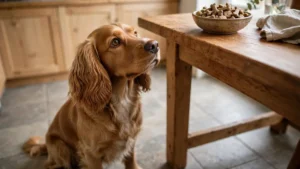
Cocker Spaniels are cheerful, affectionate dogs that breed clubs describe as merry and gentle with children. They love to play, explore and join family walks, with a tail that rarely stops wagging.
The silky coat needs regular brushing, and the long ears need checking and cleaning. Cockers are medium-sized and energetic, so they need daily walks and plenty of play.
What Life With a Family Dog Feels Like

Life with a family dog feels like the house has a heartbeat, with the dog there for breakfast chaos, the walk home from school and quiet evenings on the sofa.
Children learn patience, kindness and responsibility from a dog, reading a wagging tail, waiting when the dog needs space and celebrating when a new trick clicks.
A good family dog makes a house feel warmer and safer, greeting everyone at the door, settling beside the children while they do homework and keeping watch through the night. It is a friendship that shapes a childhood.
Dogs for Kids Compared
| Breed | Best for | Size | Key feature |
|---|---|---|---|
| Labrador Retriever | Active families | Large | Friendly and tolerant |
| Golden Retriever | Gentle families | Large | Patient and devoted |
| Beagle | Lively families | Medium | Cheerful and sturdy |
| Cavalier King Charles Spaniel | Younger children | Small | Gentle and affectionate |
| Poodle | Clever, trainable dogs | Small to large | Low-shedding coat |
| Boxer | Older children | Large | Playful and loyal |
| Bichon Frise | Small cheerful dogs | Small | Low-shedding, merry |
| Staffordshire Bull Terrier | Loyal companions | Medium | Affectionate and strong |
| Bernese Mountain Dog | Families with space | Very large | Calm and gentle |
| Cocker Spaniel | Active families | Medium | Merry and affectionate |
What to Check Before You Buy
Meet the breed before you commit, and talk to the breeder or rescue about the dog’s temperament with children. A good breeder will ask about your family and routine, and will match you with a puppy that suits your home. Ask to meet the puppy’s parents if you can, since temperament often runs in the family.
Check the practical side too: food, vet care, grooming and the space you have at home. A large breed needs a bigger bed, a bigger car and more food, while a long-coated breed needs regular grooming. Our guide to the best dog breeds in 2027 compares breeds more widely.
Finally, plan how the dog will fit into family life: where it will sleep, who will walk it and how the children will help with its care. A dog is a commitment of many years.
Your Family Dog Checklist
- Choose a breed known for patience with children.
- Meet the puppy or dog before you commit.
- Teach children to be gentle and to respect the dog’s space.
- Never leave small children unsupervised with any dog.
- Give the dog a quiet place to rest away from the noise.
- Plan who walks, feeds and grooms the dog each day.
Frequently Asked Questions
What is the best dog breed for a toddler?
For a toddler, a sturdy, patient breed such as a Labrador, Golden Retriever or Cavalier is often the safest choice, since these breeds tolerate noise and clumsy handling without losing their temper. Even so, never leave a toddler unsupervised with any dog, and teach your child to be gentle from the start.
Are big dogs safe around children?
Big dogs can be very safe around children when they are well trained and well supervised. Large breeds such as the Labrador and Bernese Mountain Dog are known for their gentle nature, but they can knock a small child over by accident, so teach the dog to stay calm indoors.
How do I teach my child to be gentle with a dog?
Show your child how to stroke a dog slowly and softly, and how to offer a treat with a flat palm. Explain that the dog needs space when eating or sleeping, and that pulling ears or tails hurts. Praise gentle behaviour, and remind them calmly when they forget.
Do family dogs need a lot of exercise?
Most family dogs need at least one good walk a day, and active breeds such as Labradors, Boxers and Cockers need more. Garden play helps, but it does not replace a proper walk, and children can help by joining in, throwing a ball or playing fetch.
Should we get a puppy or an adult dog?
A puppy lets you shape its training from the start, but it needs a lot of time, patience and house training. An adult dog from a rescue may already be trained and calmer, which can suit a busy family. Our guide to the best cat breeds in 2027 is worth a look if your family is still weighing up a dog against a cat, so either way, meet the dog first.
The Bottom Line
The best dog for kids is a patient, sturdy and playful breed that fits your family’s size, space and routine. Start with temperament, choose a breed known for tolerance with children, and involve the whole family in training and care.
Once you have chosen a breed, prepare the home before the dog arrives: set up a quiet bed, stock up on food and toys, and agree on the rules together. With patience and supervision, a family dog will give your children memories that last a lifetime.