The best dog breeds for families in 2027 are the ones that stay calm when the house gets noisy, patient when small hands reach out. Choosing well matters because a family dog shares school runs, muddy walks and quiet evenings, and the right breed fits that rhythm rather than fighting it.
This guide compares ten gentle, patient breeds on temperament, size, energy and care, so you can find the one that suits your home, your children and your daily routine. If you are weighing the wider choice first, our guide to the best dog breeds for 2027 sets out the broader picture, while this list focuses on life with children.
Key takeaways
- Labradors and Golden Retrievers lead the list for families because both are known for patience, a gentle manner and a love of company.
- Smaller breeds such as the Cavalier and the Bichon Frise suit flats and smaller homes, while larger breeds need room to stretch and rest.
- Energy matters as much as size: a Boxer or a Beagle needs far more daily play than a Bernese Mountain Dog or a Newfoundland.
- Every breed here needs training, supervision with young children and regular grooming.
How to Choose a Dog Breed for Your Family
Start with temperament, not looks. A family dog meets toddlers, teenagers and visitors, often in the same afternoon, so steadiness matters more than clever tricks or a striking coat. Look for breeds often called gentle, tolerant and eager to please.
Next, be honest about space, time and energy. A large dog needs room to move without knocking over small children, while a lively breed needs daily walks and play. If your days are already full, a calmer breed will settle more easily, and our guide to the best canned dog food for 2027 can help with feeding once you have chosen.
Finally, think about grooming and shedding. Long coats need regular brushing, short coats shed too, and some breeds need professional grooming to stay comfortable. Pick a level of care your household can keep up happily for years.
The 10 Best Dog Breeds for Families in 2027
Labrador Retriever
Best for: families with children of any age who want a steady, friendly companion.
The Labrador is often called the classic family dog, and the reputation is well earned. Labradors are known for a gentle mouth, a patient nature and a genuine love of people.
They need plenty of exercise, and a bored Labrador can become destructive around the house. Training should start early, with calm, consistent rules and lots of praise, and children should learn to respect the dog’s rest and meals.
Golden Retriever
Best for: families who want a gentle, affectionate dog that enjoys being part of everything.
Golden Retrievers are known for their warm, even temper and their patience with children. They are often called one of the most forgiving breeds, happy to join in games and just as happy to lie quietly nearby.
Their long coat needs regular brushing to stay free of tangles, and they shed through the year. They also need daily exercise and company, and they can become unhappy if left alone for long stretches.
Cavalier King Charles Spaniel
Best for: smaller homes and families who want a small, affectionate lap dog.
The Cavalier is a small spaniel known for its gentle, loving nature and its wish to be close to people. Cavaliers are often called happy and adaptable.
They need regular grooming to keep their silky coat in good order, and their ears need checking as part of the routine. Cavaliers can be prone to certain health problems, so ask a vet about the breed.
Beagle
Best for: active families with older children who enjoy walks, games and outdoor time.
Beagles are cheerful, curious and full of energy, and they are known for getting on well with children and other dogs. They love to follow scents and explore.
Their nose can lead them astray, so a secure garden and a reliable recall matter a great deal. They need plenty of exercise and mental stimulation, and they can be vocal when excited or bored.
Poodle
Best for: families who want a clever, low-shedding dog in a size that suits their home.
Poodles come in standard, miniature and toy sizes, and all three are known for intelligence and a willingness to learn. They are often called quick learners, and they usually bond closely with their family.
Their coat sheds very little, which appeals to households that prefer less hair around the home, but it needs regular clipping and brushing. Poodles also need mental stimulation alongside exercise, or they can become bored and restless.
Staffordshire Bull Terrier
Best for: families with older children who want a loyal, affectionate and sturdy companion.
The Staffordshire Bull Terrier is often called a people-loving breed, and fans praise its loyalty and affection for its family. Staffies are known for enjoying human company above all else.
They need firm, kind training from the start, plenty of exercise and careful socialisation with other dogs. Children should be taught to play gently and to give the dog space when it rests.
Boxer
Best for: active families who want a playful, protective and fun-loving dog.
Boxers are known for their playful, bouncy nature and their loyalty to their family. They are often called clowns of the dog world, always ready for a game and quick to join in family fun.
Their energy is considerable, and they need long walks and active play every day. Boxers can be boisterous, so training and supervision matter, especially around small children who might be knocked over in excitement.
Bernese Mountain Dog
Best for: families with space who want a large, calm and gentle giant.
The Bernese Mountain Dog is a large, handsome breed known for a calm and affectionate nature. Bernese are often called gentle giants, patient with children and happy to be part of family life.
Their thick coat needs regular brushing, and they shed through the year. Their size means they need room to rest and move comfortably.
Bichon Frise
Best for: families who want a small, cheerful and low-shedding dog.
The Bichon Frise is a small, white, cheerful dog known for its happy nature and love of company. Bichons are often called merry little dogs, and their coat sheds very little.
That coat needs regular brushing and clipping to stay clean and comfortable, and their eyes and ears need routine care. Bichons enjoy company and can become unhappy if left alone for long periods, so they suit households where someone is usually at home.
Newfoundland
Best for: families with space who want a huge, patient and famously gentle dog.
The Newfoundland is a very large breed known for patience, gentleness and a calm, steady nature. Newfoundlands are often called nanny dogs in stories about the breed, and they are famous for their tolerance of children.
Their size brings real practical needs. Their thick coat needs regular brushing, and they can drool, which families should accept before choosing.
What Living With a Family Dog Feels Like
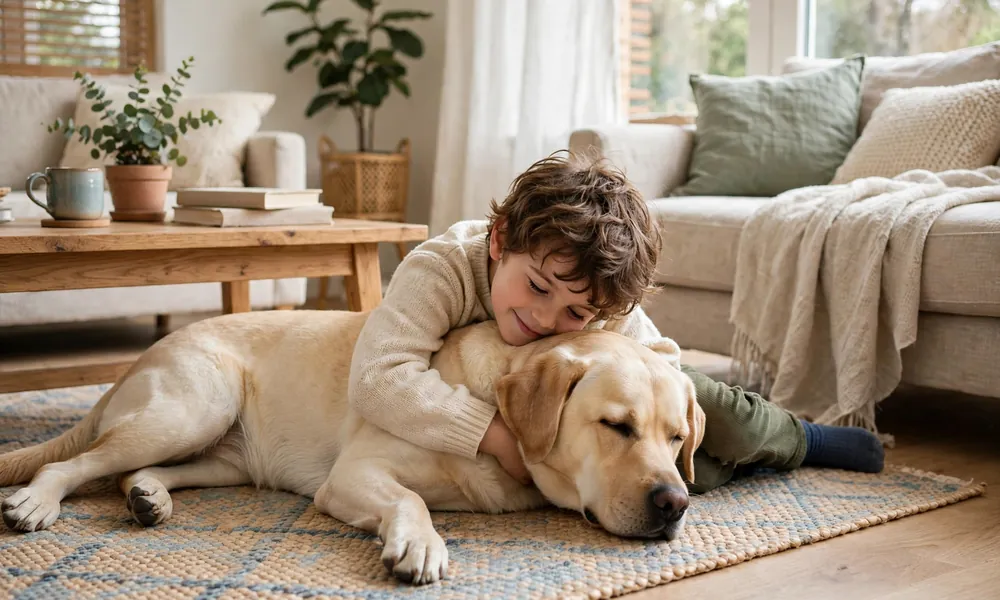
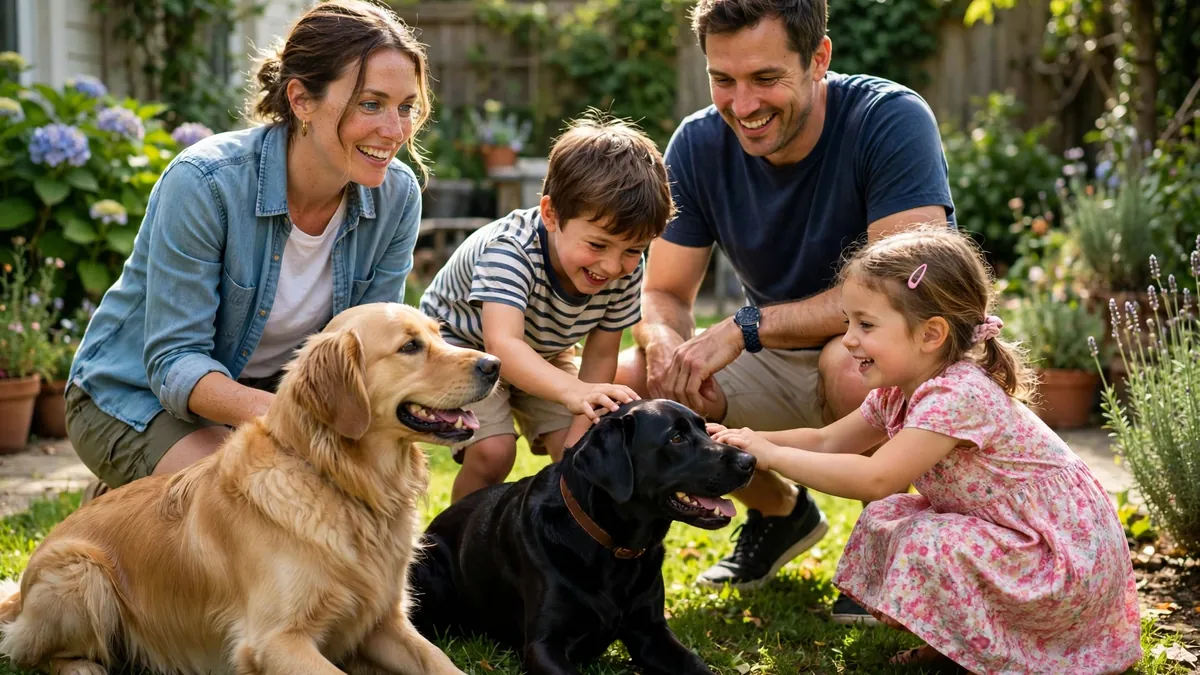
A family dog changes the rhythm of a home in small, daily ways. Mornings start with a walk before school, afternoons bring games in the garden, and evenings end with a dog settled at your feet. The best family breeds slip into this pattern without fuss, happy to be near people and patient when plans change.
There are messier moments too, and they are part of the bargain. Muddy paws follow wet walks, fur gathers on the sofa, and a large dog can take up most of the hallway.
Over time, the dog becomes part of the family story. Choosing a breed that fits your space, your energy and your patience makes those years easier and happier.
The 10 Best Dog Breeds for Families Compared
Use this table to compare the ten breeds at a glance, then read the full notes above before deciding. Size and energy shape daily life, while grooming shows the weekly care each breed needs.
| Breed | Size | Energy | Grooming and care |
|---|---|---|---|
| Labrador Retriever | Large | High | Regular brushing |
| Golden Retriever | Large | Moderate | Regular brushing |
| Cavalier King Charles Spaniel | Small | Moderate | Regular grooming |
| Beagle | Medium | High | Light brushing |
| Poodle | Small to large | Moderate | Regular clipping |
| Staffordshire Bull Terrier | Medium | High | Light brushing |
| Boxer | Large | High | Light brushing |
| Bernese Mountain Dog | Very large | Moderate | Regular brushing |
| Bichon Frise | Small | Moderate | Regular clipping |
| Newfoundland | Very large | Low to moderate | Regular brushing |
What to Check Before You Buy
Meet the breed in person before you commit, ideally with your children present, and watch how the dog reacts to noise and sudden movement. A calm, curious response tells you more than any description.
Check the breeder or rescue centre carefully, asking about health tests, the puppy’s parents and the early life the dog has had. Avoid anyone who rushes the decision, and ask your vet to talk through the breed’s known health considerations before you bring a dog home.
Plan the practical side in advance, including food, bedding and a vet. Our guide to the best food for dogs can help with feeding, and a little preparation makes the first weeks far smoother.
Your Dog Breed Checklist
- Choose a breed whose size, energy and grooming fit your home and daily routine.
- Meet the dog with your children before deciding.
- Ask about health tests and known health considerations, and talk to your vet.
- Plan training, exercise, food and a quiet resting place before the dog arrives.
- Teach children to be gentle with the dog.
- Arrange regular vet checks, grooming and exercise, and keep the routine steady.
Frequently Asked Questions
Which dog breed is best for families with young children?
Labradors and Golden Retrievers are often called the safest choices for young children because both are known for patience and a gentle nature.
Are large dogs safe around children?
Large breeds such as the Bernese Mountain Dog and the Newfoundland are known for gentleness, but their size means they can knock a small child over by accident. Training, supervision and a calm resting place matter with every large breed.
Which family dog breed needs the least grooming?
Beagles, Boxers and Staffordshire Bull Terriers need the least grooming, with short coats that need only light brushing. Poodles and Bichons need the most, with regular clipping and brushing to keep their coats comfortable.
Do family dogs need a lot of exercise?
Most breeds in this guide need daily walks and play, and lively breeds such as the Boxer, Beagle and Labrador need more than most. Calmer breeds such as the Newfoundland still need regular outdoor time, and a tired dog is usually a calmer companion.
Should we choose a puppy or an adult rescue dog?
Both can work well, and the right choice depends on your time and experience. Puppies need more training and supervision, while an adult rescue dog may already be house-trained and settled.
The Bottom Line
The best dog breed for your family is the one that fits your home, your routine and your children, not simply the most popular name on a list. Labradors and Golden Retrievers suit most families, while smaller breeds suit smaller homes and calm giants suit households with space to spare.
Take your time, meet the breed, talk to your vet and prepare your home before the dog arrives. A thoughtful choice now leads to years of walks, games and quiet evenings together, and that is the real reward of bringing a family dog home.