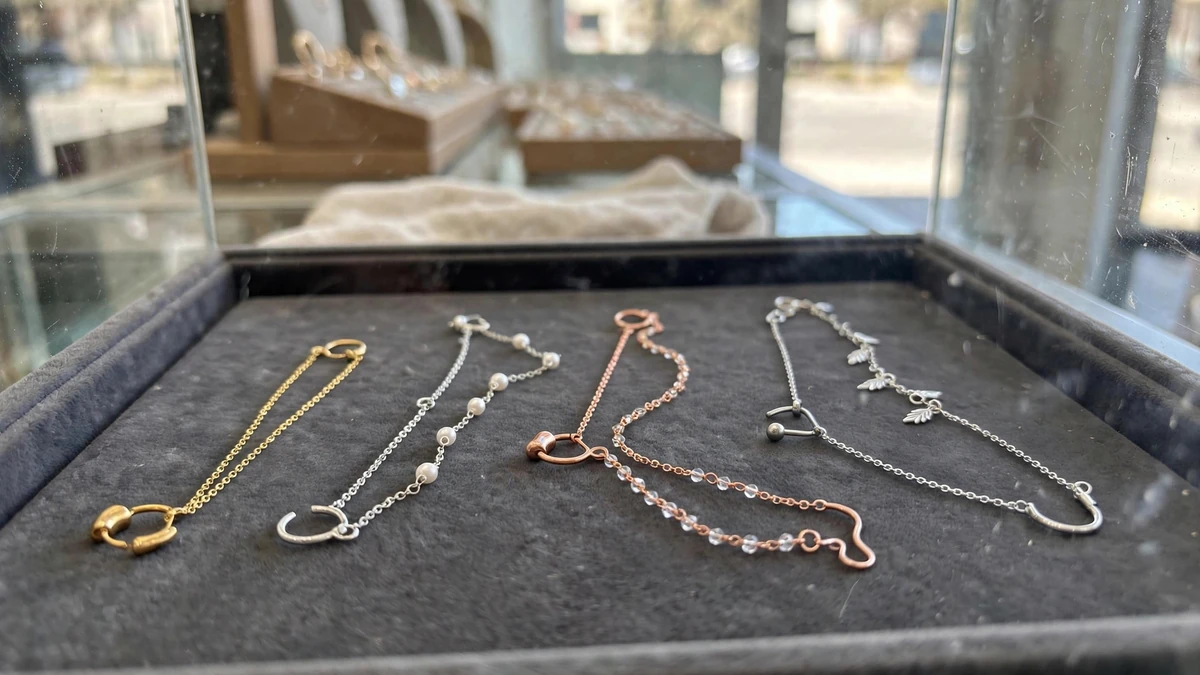

A Guide to Buying a Nose Chain 2027
A nose chain is a small piece of jewellery with a big effect. A fine chain runs from a nose stud or small ring across the cheek to an earring, and it turns an everyday piercing into something deliberate and dressed up. It is also one of the easiest pieces of jewellery to get wrong, because a chain that is too heavy, too short, or made from the wrong metal will spend more time in a drawer than on your face.
Buying well is not complicated, but it does take a little more thought than buying a necklace. A nose chain has to fit two points on your face, it has to stay put while you move, and it has to sit against skin that is pierced, which means comfort and metal quality matter more than they do with most jewellery. Get those right and the chain almost disappears on your face, which is exactly how it should feel.
This guide walks through the nine steps to buying a nose chain in 2027, from checking that your piercing is ready to choosing the metal, the length, the clasps and the price. Follow them in order and you will end up with a chain you actually wear, rather than one you regret.
Key takeaways
- Only buy a nose chain once your nostril piercing is fully healed, usually at least six months after piercing.
- Choose the metal first: gold, silver and implant-grade titanium are the safest, while cheap plating can irritate skin.
- Length matters more than style, because a chain that is too short pulls and a chain that is too long snags.
- Test the clasps at both ends before you buy, and check the return policy in case the fit is wrong.
- No nose chain is safe on a fresh or unhealed piercing, and no chain will stay comfortable if it is too heavy for your face.
What buying a nose chain actually involves
Buying a nose chain involves four decisions, and they matter in this order: whether your piercing is ready, which metal suits your skin, what length fits your face, and how the chain fastens. Style comes last, because a beautiful chain in the wrong metal or the wrong length is still a chain you will not wear.
Most nose chains are sold online, which means you cannot try them on first. That makes the measurements and the return policy more important than the photographs. A good seller lists the chain length, the metal, the weight and the clasp type. A seller that lists none of those is asking you to guess, and guessing is how people end up with a chain that pulls or falls off.
Price is a poor guide on its own. A well-made plated chain for £15 can be a better buy than a poorly made solid chain for £60, if the plated chain is light, well finished and sold by a maker with a clear return policy. What you are paying for is the finish, the clasps and the metal quality, not the name on the box.
How we chose these steps and what to look for
These nine steps are ordered the way a good buying decision actually happens. You start with your piercing, because that decides whether you should buy a chain at all. You move to metal and length, because those decide comfort. You finish with clasps, care and price, because those decide whether the chain lasts.

Look for sellers who are specific. A listing that says “gold-plated stainless steel, 11 cm, lobster clasp” tells you far more than one that says “gold nose chain”. Look for reviews that mention comfort and wear over time, not just how the chain looks in a photograph, because a chain that looks good for five minutes and hurts after an hour is not a good buy.
Look also at the earring end. Some chains attach to a stud, some to a hoop, and some to an ear cuff that needs no ear piercing at all. Our guide to nose studs for women covers the studs a chain attaches to, which is worth reading first, because the chain and the stud need to work together.
The 9 steps to buying a nose chain in 2027
Step 1: Check your piercing is fully healed
What we like: A healed piercing takes a chain comfortably and without irritation. What to consider: Healing takes at least six months, and often longer. Best for: Anyone buying their first nose chain. Cost: Nothing, just patience. Time needed: A few minutes to check for soreness, swelling or discharge.
Before you spend anything, check the piercing. It should feel like normal skin, with no soreness, no swelling and no discharge. If it is still tender, or if you can remember when it was pierced because it still feels new, wait. A piercer can confirm healing in a quick visit if you are unsure.
Step 2: Choose the right metal for your skin
What we like: Gold, silver and implant-grade titanium are the safest metals for pierced skin. What to consider: Solid metal costs more than plated metal. Best for: Sensitive skin and daily wear. Cost: Around £15 to £45 depending on the metal. Time needed: Ten minutes to compare options.
If your skin has ever reacted to jewellery, choose titanium or solid gold. If your skin is not sensitive, a well-made plated chain is fine for occasional wear, but check what is under the plating, because nickel is the metal that most often causes a reaction.
Step 3: Measure the length you need
What we like: The right length sits lightly across the cheek with a gentle curve, not a pull. What to consider: Faces differ, so a standard length does not suit everyone. Best for: Anyone buying online without trying the chain on. Cost: Nothing if you measure at home. Time needed: Five minutes with a piece of string.
Hold a piece of string from your nose stud to your earring and measure it. Most people suit 10 to 12 centimetres, but your face may differ. An adjustable chain is the safest first buy, because it lets you find the length that fits you.
Step 4: Pick a chain style that suits the occasion
What we like: Single chains suit everyday wear, while double chains and charms suit parties. What to consider: A bolder chain is harder to wear all day. Best for: Matching the chain to how often you will wear it. Cost: Around £12 to £45. Time needed: Ten minutes to browse and compare.
Think about where the chain will actually be worn. A plain single chain is the most useful, because it suits school, work and weekends. A crystal, pearl or double chain is lovely for a party, but it is not the chain you will reach for every morning.
Step 5: Check the clasps at both ends
What we like: A small hook or lobster clasp holds firmly and is easy to open and close. What to consider: Magnetic clasps are weaker and easier to lose. Best for: Anyone who will wear the chain while moving around. Cost: Included in the price of the chain. Time needed: A few minutes to test the clasps when the chain arrives.
The clasps are the most common point of failure. When the chain arrives, open and close each clasp several times. It should snap shut firmly and stay shut when you tug it gently. If it feels loose, send the chain back.
Step 6: Check the earring end
What we like: A chain that attaches to an earring you already own is the most practical. What to consider: Some chains need a specific earring or an ear cuff. Best for: Anyone who does not have an ear piercing. Cost: Around £5 to £15 extra for an ear cuff if you need one. Time needed: Five minutes to check compatibility.
Read the listing carefully. If the chain attaches to a hoop, make sure you own a hoop it fits. If you have no ear piercing, look for a chain that ends in an ear cuff, which clips onto the ear without a piercing. Our guide to anklets for women is a useful reminder that the best jewellery works with what you already own, and the same applies here.
Step 7: Decide how much to spend
What we like: A budget of £15 to £35 buys a well-made chain in a safe metal. What to consider: Very cheap chains often have weak clasps and thin plating. Best for: A first chain, where you are still learning what suits you. Cost: Around £15 to £35 for a good first chain. Time needed: Ten minutes to compare prices across two or three sellers.
Do not buy the cheapest chain you can find, and do not assume the most expensive is the best. Compare two or three sellers at a similar price, read the reviews about comfort and clasps, and choose the one with the clearest listing and the best return policy.
Step 8: Check the return policy before you pay
What we like: A clear return policy means you can send back a chain that does not fit. What to consider: Some sellers do not accept returns on jewellery for hygiene reasons. Best for: Anyone buying online for the first time. Cost: Nothing to check, but it can save the full price of the chain. Time needed: Two minutes to read the policy.
This step matters more than it sounds. A chain that pulls, irritates your skin, or will not stay fastened is not a chain to keep, and a seller that will not take it back is a seller to avoid. Check the policy before you pay, not after the chain arrives.
Step 9: Try it on at home first
What we like: A short trial at home tells you more than any review can. What to consider: A chain that feels fine for five minutes may still irritate after an hour. Best for: Every first chain. Cost: Nothing. Time needed: An hour of wear at home.
When the chain arrives, wear it at home for an hour before wearing it out. Move your head, brush your hair, and check that it does not pull, snag or ache. If it does, adjust the length or send it back. A chain that passes an hour at home is a chain you can trust for a full evening.
Which nose chain is right for you
If this is your first nose chain, buy a light single chain in gold, silver or titanium, around 10 to 12 centimetres long, with a hook or lobster clasp at each end. It is the easiest to wear, the easiest to fit, and the most useful, because it suits almost every outfit and every occasion.
If you already own a single chain and want something more, a crystal or pearl chain is the next step for parties, and a double chain is the next step for festivals and photographs. Buy the second chain the same way you bought the first: check the metal, the length and the clasps, and try it at home before you wear it out.
If your skin is sensitive, spend a little more on the metal rather than on the style. A plain titanium chain that feels like nothing is worth more than a beautiful plated chain that leaves your skin sore. Our guide to luxury watches makes the same point about quality over flash, and it applies just as well to a piece of jewellery as small as a nose chain.
The caveats that matter
A nose chain is a simple piece of jewellery, but it has real limits. It needs a healed piercing, it can catch on hair and clothing, and it will not suit every face or every occasion. It is also a piece of jewellery that is hard to buy well online, because fit matters and you cannot try it on first.
| Detail | What is known |
|---|---|
| First check | The nostril piercing must be fully healed, usually at least six months old |
| Best metals | Gold, silver and implant-grade titanium are the safest for pierced skin |
| Standard length | Around 10 to 12 centimetres, measured from nose stud to earring |
| Best clasps | A small hook or lobster clasp holds firmly; magnetic clasps are weaker |
| Sensible budget | Around £15 to £35 buys a well-made first chain in a safe metal |
| Before paying | Check the return policy, because some sellers do not accept jewellery returns |
| First wear | Try it at home for an hour before wearing it out |
| What it does not do | It does not suit a fresh piercing, and it will not stay put if the clasps are weak |
If you are buying for a teen, or you are under 18 yourself, talk to a parent or guardian first, and check the rules where you live. A piercer can also confirm that a piercing is healed enough for a chain, which is a quick visit and worth doing before a first purchase.
Checklist: buying a nose chain honestly
Use these checks before you pay, and again when the chain arrives.
- Check your piercing is fully healed, with no soreness, swelling or discharge, before you buy any chain.
- Check the metal: gold, silver or titanium for sensitive skin, and avoid nickel and cheap plating.
- Check the length: measure from your nose stud to your earring, and prefer an adjustable chain for a first buy.
- Check the clasps at both ends: they should close firmly and stay closed when you move your head.
- Check the return policy before you pay, because some sellers do not accept returns on jewellery.
- Check the fit at home: wear the chain for an hour indoors before wearing it out for a full day.
Frequently asked questions
How much should a nose chain cost?
Around £15 to £35 buys a well-made first chain in a safe metal. Cheaper chains often have weak clasps and thin plating, while more expensive chains are usually paying for solid metal, a brand name, or a stone.
Where is the best place to buy a nose chain?
A reputable jewellery seller with clear listings, honest reviews and a return policy is the safest choice. Avoid sellers that do not list the metal, the length or the clasp type, because you cannot judge the chain without those details.
Do I need an ear piercing to wear a nose chain?
Not necessarily. Some chains attach to an earring, but others end in an ear cuff that clips onto the ear without a piercing. Check the listing before you buy, so you know which kind of fixing the chain needs.
Can I wear a nose chain every day?
You can, if it is light, comfortable and made from a skin-friendly metal. Many people save their chain for parties and special occasions, because a chain across the cheek can catch on hair, scarves and headphones during a busy day.
What if the chain pulls at my piercing?
Take it off. A chain that pulls is either too short or too heavy, or the piercing is not fully healed. Try a longer, lighter chain, and if it still pulls, wait a few more months before trying again.
How do I clean a nose chain?
Wipe it with a soft, dry cloth after wearing, and store it in a small pouch away from other jewellery so it does not tangle. Do not soak a pearl or crystal chain in water, and clean the piercing itself with saline as your piercer advised.
The bottom line
Buying a nose chain well comes down to four things in order: a healed piercing, a safe metal, the right length, and clasps that hold. Get those right and the style almost chooses itself, because a chain that is comfortable is a chain you will actually wear.
Measure first, buy from a seller who lists the details and accepts returns, and try the chain at home for an hour before you wear it out. That is the honest way to spend £15 to £35 on a small piece of jewellery and end up with something you reach for again and again.