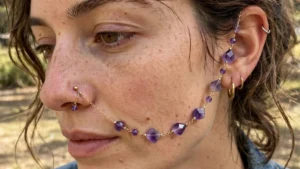
A turquoise nose hoop is a small piece of jewellery with a big personality. The blue-green stone is bright, natural, and unmistakable, and the hoop shape gives it a relaxed, bohemian feel that a stud cannot match. It suits people who want colour in their nose jewellery and are happy for it to be noticed, whether with a linen shirt, a denim jacket, or a summer dress.
The problem is not finding a turquoise nose hoop. It is finding one that uses real turquoise. Turquoise is widely imitated, in dyed howlite, resin, and glass, and a poor imitation looks flat and too bright, then fades or chips within weeks.
Below are nine turquoise nose hoops worth considering in 2027, from a classic silver hoop to a tiny everyday piece and a bohemian design with matrix veining.
Key takeaways
- Turquoise nose hoops suit most skin tones, and the blue-green stone works as a bright accent against both warm and cool colours.
- Choose solid gold, implant-grade titanium, or sterling silver for a healed piercing, and avoid mystery metals that can irritate skin.
- Check the closure first: a smooth seamless or hinged hoop is more comfortable and more secure than a thin wire that catches.
- Real turquoise has natural variation in colour and often fine matrix veining; a perfectly even, very bright blue is often an imitation.
- Turquoise is softer than garnet or diamond, so it needs gentler cleaning and should be kept away from harsh chemicals and hard knocks.
What turquoise nose hoops actually are
A turquoise nose hoop is a circular piece of nose jewellery with a turquoise stone set into it. The stone is usually small, between two and four millimetres, and sits on the front of the hoop where it is visible. The hoop itself passes through the nostril piercing and closes at the side, so the stone rests neatly against the curve of the nose.
Turquoise is a natural gemstone, and its colour ranges from a pale sky blue to a deeper green-blue, often with fine dark lines called matrix running through it. That variation is part of its charm. It is a softer stone than garnet, ranking between 5 and 6 on the Mohs scale, which makes it practical for daily wear but means it needs a little more care than a harder stone.
The hoop shape matters as much as the stone. A hoop moves slightly with the face, which makes it feel lighter than a stud for many people, and it frames the nostril in a way that suits a wide range of nose shapes. The diameter is usually between six and ten millimetres. The right size depends on where your piercing sits and how much of a statement you want to make.
How we chose these turquoise nose hoops and what to look for
Look first at the metal. For a healed piercing, solid gold, implant-grade titanium, and sterling silver are the reliable choices. Gold is warmer, and it suits people who wear mostly gold jewellery. Titanium is light, strong, and a good choice if your skin reacts to other metals. Whatever you choose, the metal should be named clearly, not described only as “hypoallergenic” with no detail.

Look next at the stone and the setting. Real turquoise has variation in its colour, with slightly lighter and darker areas, and often fine matrix veining. A stone that is perfectly even and very bright is often dyed howlite or resin. The setting should hold the stone firmly, with no wobble when you touch it gently, and the prongs or bezel should be smooth, with no sharp edges that could catch on clothing or irritate the piercing. Our guide to gold jewellery for everyday wear explains how to judge metal quality in small pieces, which matters here, because a nose hoop is worn close to the skin all day.
Finally, look at the closure and the gauge. A seamless hoop closes with the two ends meeting neatly, while a hinged hoop opens and closes on a small hinge, which many people find easier to put in and take out. The gauge, the thickness of the wire, is usually 20 or 18 gauge for a nostril piercing, and it should match the gauge your piercing was made with. A hoop that is too thin can move around and irritate the piercing, while one that is too thick will not fit at all.
The 9 best turquoise nose hoops of 2027
The Classic Silver Turquoise Hoop
What we like: A plain sterling silver hoop with a single sky-blue turquoise stone, bright and clean, with a smooth hinged closure. What to consider: Silver tarnishes, so it needs an occasional polish, and the stone is small, so it is subtle rather than dramatic. Best for: Everyday wear and anyone buying a first turquoise hoop. Material: Sterling silver, natural turquoise. Price range: $45 to $95. Standout feature: The silver frame makes the blue-green stone look brighter and cleaner.
The Gold Turquoise Hoop
What we like: A warm yellow gold hoop with a deep blue-green turquoise stone, rich and relaxed, with a smooth seamless closure. What to consider: Solid gold costs more than silver, and the warm metal makes the stone look greener than it does in silver. Best for: Warm skin tones and anyone who wears mostly gold jewellery. Material: 14k yellow gold, natural turquoise. Price range: $85 to $160. Standout feature: The gold and turquoise pairing has a warm, southwestern feel that suits summer clothes.
The Tiny Turquoise Hoop
What we like: A slim six-millimetre hoop with a tiny two-millimetre turquoise stone, neat and understated, with a seamless closure that sits close to the nostril. What to consider: The stone is small, so the colour is a hint rather than a statement, and the hoop can be fiddly to open. Best for: Work, minimal looks, and anyone who wants a whisper of colour. Material: 14k gold or titanium, natural turquoise. Price range: $60 to $120. Standout feature: It reads as a subtle blue-green sparkle rather than an obvious piece of jewellery.
The Bohemian Turquoise Hoop
What we like: A slightly larger hoop with a turquoise stone that has visible matrix veining, giving it a natural, earthy look that suits a bohemian style. What to consider: The veining means no two stones look alike, so the exact pattern will vary, and the larger size is bolder than a classic hoop. Best for: Bohemian and festival looks, and anyone who loves natural stone variation. Material: Sterling silver, natural turquoise with matrix. Price range: $55 to $110. Standout feature: The matrix veining makes each hoop unique, like a small piece of landscape.
The Turquoise Bezel Hoop
What we like: A turquoise stone set in a smooth bezel, a metal rim that holds the stone securely and protects its edges, with a clean, modern look. What to consider: The bezel covers the sides of the stone, so slightly less light reaches it, and the look is more modern than romantic. Best for: Active lifestyles and anyone who wants a secure, low-maintenance setting. Material: 14k gold or titanium, bezel-set natural turquoise. Price range: $80 to $150. Standout feature: The bezel is the most protective setting, so the softer turquoise is less likely to chip.
The Turquoise and Gold Accent Hoop
What we like: A turquoise centre stone flanked by two tiny gold beads, adding warmth and detail without taking attention from the blue-green stone. What to consider: The most detailed style in this list, and the small beads need a gentle clean to keep their shine. Best for: Special occasions and anyone who wants a little extra detail. Material: 14k gold, natural turquoise, small gold beads. Price range: $120 to $210. Standout feature: The gold beads echo the warm tones in the turquoise and make the whole piece feel hand-finished.
The Oval Turquoise Hoop
What we like: An oval turquoise stone, longer than it is wide, set lengthways in a slim silver hoop, giving the piece a gentle, elongated shape. What to consider: The oval stone is less common, so fewer options exist, and the shape suits a longer nose better than a shorter one. Best for: Anyone who wants a turquoise hoop that looks a little different. Material: Sterling silver, oval natural turquoise. Price range: $70 to $140. Standout feature: The oval shape draws the eye along the nose and looks elegant rather than round and sweet.
The Green-Blue Turquoise Hoop
What we like: A turquoise stone with a greener tone, leaning towards teal, in a slim gold hoop, with a colour that looks different in every light. What to consider: The green tone suits warm and olive skin best, and it can look different in photos than in person, so check the colour carefully. Best for: Olive skin tones and anyone who loves a greener turquoise. Material: 14k gold, green-blue natural turquoise. Price range: $80 to $150. Standout feature: The green-blue colour is rarer than sky blue, so it stands out more.
The Turquoise Hoop with Matrix Veining
What we like: A turquoise stone with strong dark matrix veining, giving it a bold, graphic look that is unmistakably natural. What to consider: The veining is strong, so the look is bolder than a plain turquoise stone, and each stone is unique, so the exact pattern will vary. Best for: Statement looks and anyone who wants their jewellery to be one of a kind. Material: Sterling silver, natural turquoise with matrix veining. Price range: $60 to $130. Standout feature: The dark veining against the blue stone makes the hoop look like a tiny piece of art.
Which turquoise nose hoop is right for you
Start with your metal. If your skin is sensitive, or your piercing is still settling, implant-grade titanium is the safest choice, and it is available in both gold and silver colours. The metal matters more than the stone, because it is the part that touches your skin all day.
Then think about size. A six-millimetre hoop sits close to the nostril and looks neat, which suits a smaller nose and a minimal style. An eight-millimetre hoop is the most common size, and it suits most people. A ten-millimetre hoop makes a clearer statement and suits a larger nose or a bolder style. If you are unsure, an eight-millimetre hoop is a safe starting point, and you can go smaller or larger next time. Our guide to the best nose rings for women covers diameters and gauges in more detail, which is useful if you are buying your first hoop and do not know your size.
Finally, think about how much colour you want. A tiny two-millimetre turquoise gives a hint of blue-green, which is enough for work and everyday wear. A three- or four-millimetre stone is more visible and suits holidays, festivals, and special occasions. A sky-blue stone is brighter, a green-blue stone is softer, and a stone with matrix veining is the most distinctive of all. There is no wrong answer, only the amount of colour that feels right on your face.
The caveats that matter
Turquoise is a softer stone than garnet or diamond, and a nose hoop is a small piece that is handled often. The most common problems are not with the stone itself but with imitations and with rough handling. A hoop with a rough closure can irritate a piercing, a plated hoop can wear through to a cheaper metal underneath, and a dyed howlite stone can fade in sunlight or in contact with perfume and hair products. These are all avoidable if you check the piece before you buy it, and if you buy from a seller who names the metal and the stone clearly.
| Detail | What is known |
|---|---|
| Best metal for most people | Solid gold, implant-grade titanium, or sterling silver for a healed piercing |
| Common hoop diameter | Six to ten millimetres; eight millimetres suits most people |
| Common gauge | 20 or 18 gauge, matching the gauge your piercing was made with |
| Stone size | Two to four millimetres; smaller is subtler, larger is bolder |
| Most secure setting | A bezel setting, which protects the softer turquoise edges and has no prongs to catch |
| What to avoid | Dyed howlite, resin, and glass imitations, and plated hoops that wear through |
| How to clean it | Warm water and mild soap, with a soft cloth; avoid harsh chemicals, perfume, and ultrasonic cleaners |
| What turquoise does not do | It does not heal a piercing, and a new piercing should not be changed until it is fully healed |
If your piercing is new, do not change your jewellery until it is fully healed, which usually takes several months. Changing a hoop too early can irritate the piercing and slow healing. If your piercing becomes red, sore, or swollen after a change, remove the new hoop, put your original jewellery back in, and speak to your piercer.
Checklist: buying a turquoise nose hoop honestly
Use these checks before you buy, and again when the hoop arrives.
- Check the metal: it should be named clearly, solid gold, implant-grade titanium, or sterling silver, not just “hypoallergenic”.
- Check the stone: real turquoise has natural variation in colour and often fine matrix veining, not a perfectly even, very bright blue.
- Check the closure: it should close smoothly, with no gap and no sharp edge to catch.
- Check the size: confirm the diameter and the gauge match your piercing before you order.
- Check the setting: the stone should be held firmly, with no wobble when you touch it gently.
- Check the return policy: buy from a seller who accepts returns, so you can send it back if the colour or size is wrong.
Frequently asked questions
Can I wear a turquoise nose hoop every day?
Yes, if your piercing is fully healed and the hoop is made from a good metal. Turquoise is soft enough to need gentle care, but a well-made hoop will not irritate a healed piercing.
How do I know if my turquoise is real?
Real turquoise has natural variation in colour, with slightly lighter and darker areas, and often fine matrix veining. A stone that is perfectly even and very bright is often dyed howlite or resin. The most reliable check is to buy from a seller who states the stone clearly and offers a return, rather than trying to test it yourself.
What size turquoise nose hoop should I buy?
Eight millimetres suits most people, and 20 or 18 gauge matches most nostril piercings. A six-millimetre hoop sits closer and looks neater, while a ten-millimetre hoop makes a bolder statement. If you do not know your size, ask your piercer before ordering.
Is gold or silver better for a turquoise nose hoop?
Both work well, and the choice is mostly about your skin tone and your other jewellery. Silver is the classic pairing and makes turquoise look brighter, while gold makes it look warmer and greener. Titanium is the best choice if your skin reacts to other metals.
Can I wear a turquoise nose hoop with other nose jewellery?
Yes. A turquoise hoop pairs well with a small gold stud in a second piercing, or with a plain silver hoop on the other nostril. Keep the other pieces simple, so the turquoise stays the focus. Our guide to the best turquoise nose rings has more ideas for pairing turquoise pieces together.
How do I clean a turquoise nose hoop?
Use warm water and a drop of mild soap, with a soft cloth. Rinse well and dry it before putting it back in. Avoid harsh chemicals, perfume, hair spray, and ultrasonic cleaners, which can damage turquoise and dull its colour.
The bottom line
The best turquoise nose hoop in 2027 is not the most expensive or the most dramatic. It is the one made from a good metal, with a genuine stone, a smooth closure, and a size that suits your piercing. For most people, a classic silver hoop with a sky-blue turquoise stone is the right starting point. For warmer skin tones, a gold hoop is the easier match, and for sensitive skin, titanium is the safest choice.
Choose one hoop, check the metal and the stone before you buy, and wear it for a few weeks before deciding whether you want a different size or a bolder stone. That is the honest way to find a turquoise nose hoop you will actually wear, rather than one that sits in a drawer.