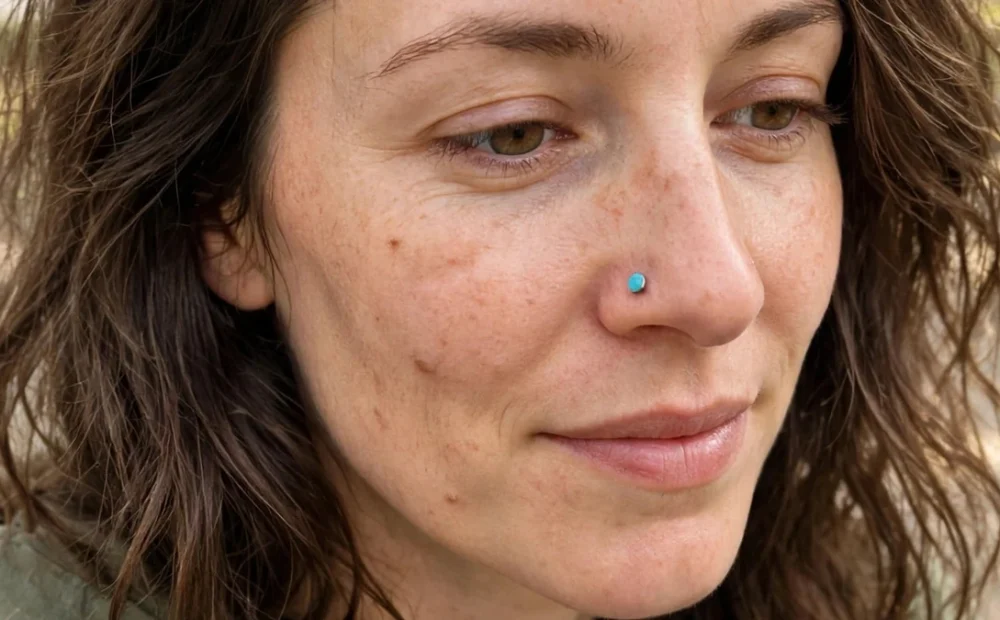
Turquoise Nose Rings 2027: 9 Picks Worth Wearing
Turquoise is the stone that makes a nose ring feel like summer. It is bright, blue-green and unmistakably cheerful, a colour that lifts the face and pairs beautifully with sun-warmed skin, denim and white linen. Where garnet is quiet and grown-up, turquoise is relaxed and easy, and it has been worn in nose jewellery for centuries, from South Asian bridal pieces to modern boho studs. It is one of the friendliest stones you can put on your nose.
The catch is that turquoise is soft and porous. It scratches more easily than most gemstones, it can stain if it soaks up oils or perfume, and a lot of what is sold as turquoise is actually dyed howlite or plastic. A real turquoise nose ring, bought carefully and treated gently, will look beautiful for years. A fake one will look tired within months. This guide shows you how to tell the difference and which pieces are worth your money.
Below are nine turquoise nose rings worth considering in 2027, from a classic silver stud to a gold hoop and a bohemian tassel piece. Each one is described by what it is good at, what to watch for, and who it suits best, so you can choose with your face in mind, not just a pretty picture.
Key takeaways
- Turquoise is a bright blue-green stone that suits warm skin and casual, summery styling best.
- Real turquoise has natural veining and colour variation, while dyed howlite and plastic look flat and uniform.
- Silver is the classic metal for turquoise, and it suits the stone’s relaxed, bohemian character.
- Turquoise is soft and porous, so keep it away from perfume, oils and harsh cleaning.
- No turquoise nose ring suits a fresh piercing, and a stone that looks plastic-smooth is usually not real turquoise.
What turquoise nose rings actually are
A turquoise nose ring is a nose piercing fitted with turquoise, a blue-green mineral that has been prized as a gemstone for thousands of years. Real turquoise ranges from sky blue to green-blue, often with a dark veined pattern called matrix running through it. That veining is natural, and it is one of the easiest ways to spot a real stone, because fakes rarely reproduce it convincingly.
What makes turquoise special on the nose is its colour. It is one of the few stones that reads as genuinely cheerful, and it flatters warm and olive skin tones particularly well, because the blue-green picks up the warmth in the skin. It also pairs beautifully with gold, which warms it up, and with silver, which keeps it cool and classic. It suits casual outfits, festival styling and holiday dressing better than formal evening wear, which is part of its charm.
Turquoise nose rings come in the usual styles. A stud with a small round or oval turquoise is the most common and the easiest to wear. A hoop with a turquoise bead suits people who want movement. A screw or L-shaped pin with a turquoise end is a discreet option for a healed nostril piercing. The stone is usually small, between 2 and 4 millimetres, because turquoise is soft and a large piece can chip or scratch easily.
How we chose these turquoise nose rings and what to look for
Look first at the stone. Real turquoise has colour variation and natural veining, and no two stones look exactly alike. If a stone is perfectly uniform in colour, with no veining and a waxy, plastic shine, it is probably dyed howlite or resin. Ask the seller whether the turquoise is natural, stabilised or dyed. Stabilised turquoise, treated with resin to harden it, is common and perfectly wearable, but it should be sold as stabilised, not as natural. Our guide to gold jewellery for everyday wear explains why honest descriptions matter as much for stones as they do for metal.

Look next at the metal and the setting. Sterling silver is the classic partner for turquoise, and it suits the stone’s relaxed character. Gold warms turquoise up and makes it feel more polished. Check the setting by touch. The prongs or bezel should be even and smooth, with no sharp edges, and the stone should not wobble when you press it gently. Because turquoise is soft, a bezel setting, which wraps the stone in metal, protects it better than an open prong setting.
Finally, look at the size and the colour. A 2 to 3 millimetre stone is the sweet spot for most faces, bright enough to show the colour but small enough to wear anywhere. Sky blue turquoise suits fair skin, while greener turquoise suits warm and olive skin. Buy from a seller who states the stone type, the metal and the size clearly, and who offers a return policy in case the colour is wrong in person.
The 9 best turquoise nose rings of 2027
The Classic Silver Turquoise Stud
What we like: A small round turquoise in a polished silver four-prong setting, bright, classic and easy to wear every day. What to consider: Silver tarnishes and needs occasional cleaning, and the stone is small, so it suits people who prefer subtle jewellery. Best for: Everyday wear and fair to medium skin tones. Material: Sterling silver with natural turquoise. Price range: About £25 to £70. Standout feature: The classic silver-and-turquoise pairing that never dates.
This is the turquoise nose ring to buy first if you want one piece that does everything. The silver keeps the stone cool and crisp, the four prongs hold it securely, and the size is small enough to wear to work and to dinner alike.
The Gold Turquoise Hoop
What we like: A slim gold hoop with a single turquoise bead that moves as you do, catching light with every turn of the head. What to consider: Hoops catch more easily on fabric than studs, so it needs a little more care. Best for: Holidays, festivals and people who like movement in their jewellery. Material: Gold-filled hoop with a turquoise bead. Price range: About £40 to £120. Standout feature: The bead slides and catches light as you move.
The Tiny Turquoise Pin
What we like: A very small turquoise, about 2 millimetres, on a slim pin, barely there until the light catches it. What to consider: The stone is small, so the colour is subtle, and it can be easy to lose if it comes loose. Best for: Minimalists and first-time coloured-stone wearers. Material: Implant-grade titanium with a turquoise end. Price range: About £20 to £55. Standout feature: A whisper of blue-green that only shows in the light.
The Bohemian Turquoise Nose Ring
What we like: A turquoise stone in a hand-worked silver setting with a slightly rustic, artisan feel, full of character. What to consider: The detailed setting can trap dirt and needs gentle cleaning, and the style is not for minimalists. Best for: People who love bohemian and artisan jewellery. Material: Sterling silver with natural turquoise. Price range: About £45 to £130. Standout feature: A hand-worked setting with an artisan feel.
The Turquoise Bezel Nose Ring
What we like: A turquoise set in a smooth bezel, a rim of metal that wraps the stone completely, so it is secure, protected and snag-free. What to consider: A bezel can make a small stone look smaller, and it shows less sparkle than a prong setting. Best for: Active lifestyles and people who want maximum protection for a soft stone. Material: Silver or gold with a bezel-set turquoise. Price range: About £40 to £140. Standout feature: A smooth, snag-free setting that protects soft turquoise.
If you worry about chipping a soft stone, a bezel is your friend. The metal rim protects the turquoise from knocks and from catching on fabric, and it gives the piece a clean, modern look.
The Turquoise and Gold Accent Nose Ring
What we like: A turquoise centre stone with a small gold bead or gold detailing, which warms the blue-green and adds polish. What to consider: The gold detail adds cost, and the piece needs gentle cleaning to keep both materials bright. Best for: People who want turquoise with a more polished, finished feel. Material: Gold and silver with natural turquoise. Price range: About £60 to £170. Standout feature: Gold detailing that warms the turquoise.
Gold and turquoise are a classic pairing in South Asian and Southwestern jewellery, and for good reason. The warm metal makes the cool stone feel richer, and the result is more polished than turquoise alone.
The Oval Turquoise Nose Ring
What we like: An oval turquoise, slightly longer than it is wide, which elongates the look of the nose and suits most face shapes. What to consider: Oval stones can look uneven if the cut is poor, so check the symmetry before you buy. Best for: People who want a slightly different shape from the usual round stud. Material: Silver with an oval natural turquoise. Price range: About £35 to £110. Standout feature: An oval cut that flatters the line of the nose.
The Green-Blue Turquoise Stud
What we like: A greener turquoise, closer to teal than sky blue, which suits warm and olive skin tones beautifully. What to consider: Green turquoise can look dull in poor light, so check the colour in daylight before you buy. Best for: Warm and olive skin tones. Material: Sterling silver with green-blue turquoise. Price range: About £30 to £90. Standout feature: A green-blue shade that flatters warm skin.
Not all turquoise is sky blue, and the greener shades are often the most flattering. If your skin is warm or olive, a green-blue turquoise will look more natural on you than a bright blue one.
The Turquoise Nose Ring with Matrix Veining
What we like: A turquoise with bold, dark matrix veining running through it, each stone completely unique. What to consider: Heavy veining is not to everyone’s taste, and the pattern varies, so buy from a seller who shows the actual stone. Best for: People who want a one-of-a-kind piece. Material: Sterling silver with matrix turquoise. Price range: About £50 to £150. Standout feature: Natural veining that makes every stone unique.
Matrix veining is the fingerprint of real turquoise. A stone with bold veining is unmistakably natural, and no two pieces will ever look alike, which is exactly what makes it special.
Which turquoise nose ring is right for you
Start with your skin tone. Warm and olive skin looks best with greener turquoise in gold or silver, because the green picks up the warmth in the skin. Fair skin often looks better with sky blue turquoise in silver, where the contrast makes the colour stand out. If you are not sure, hold a blue and a green piece against your face in daylight and see which one makes your skin look healthier. Our roundup of the best nose rings for women covers the same question for other stones, and the rule holds for turquoise too.
Think next about your lifestyle. Turquoise is soft, so if you are active or rough with your jewellery, a bezel-set stud is the sensible choice, because it protects the stone. If you mostly wear jewellery for holidays and weekends, a hoop or a bohemian piece will give you more character. If your skin is sensitive, choose implant-grade titanium or solid gold, and avoid plated metal, which can flake and irritate a piercing.
Finally, think about authenticity. Buy from a seller who tells you whether the turquoise is natural, stabilised or dyed, and who shows a photo of the actual stone. A seller who will not say is a seller to avoid. Real turquoise costs more than dyed howlite, but it also looks better and lasts longer, and it is worth the difference.
The caveats that matter
Turquoise is one of the softest stones used in nose jewellery, at 5 to 6 on the Mohs scale, and it is porous, which means it can absorb oils, perfume and chemicals. Keep it away from perfume, hairspray and sunscreen, and take it out before swimming, because chlorine and salt water can damage it. Clean it only with a soft, dry cloth or a cloth barely dampened with water, never with ultrasonic cleaners or harsh chemicals.
| Detail | What is known |
|---|---|
| Best stone quality | Natural or stabilised turquoise with veining and colour variation |
| Hardness | 5 to 6 on the Mohs scale, soft and porous, needs gentle handling |
| Best metals | Sterling silver, solid gold, gold-filled, implant-grade titanium |
| Most versatile size | 2 to 3 millimetres for the stone, 20 gauge for the post |
| Who should avoid it | Anyone with a fresh, unhealed piercing, or who swims often |
| Cleaning | Soft dry cloth only, never ultrasonic cleaners or harsh chemicals |
| When to replace it | If the stone chips, cracks, stains badly, or the setting loosens |
| What it does not do | It does not suit formal evening wear, and fakes look flat and plastic |
If your piercing is not fully healed, do not wear a turquoise nose ring yet. A new piercing needs a simple, smooth piece in implant-grade titanium or solid gold, and a gemstone setting can irritate healing tissue and trap bacteria. Wait until the piercing is fully healed, usually six months or more for a nostril, before switching to a turquoise piece. If you notice redness, swelling or discharge after changing jewellery, switch back to a simple piece and speak to your piercer.
Checklist: buying a turquoise nose ring honestly
Use these checks before you buy, and again when the piece arrives.
- Check the stone is real: look for natural veining and colour variation, not flat uniform colour.
- Check the seller is honest: natural, stabilised or dyed should be stated clearly.
- Check the stone is secure: press it gently, it should not wobble in its setting.
- Check the metal: sterling silver, solid gold, gold-filled or implant-grade titanium, not plated base metal.
- Check the gauge and size: 20 gauge and a 2 to 3 millimetre stone suit most nostril piercings.
- Check the returns: buy from a seller who accepts returns, in case the colour or fit is wrong.
Frequently asked questions
How can I tell real turquoise from fake?
Real turquoise has natural veining and colour variation, and no two stones look alike. Dyed howlite and plastic look flat and uniform, with a waxy shine. If the price seems too low for real turquoise, or the seller will not say whether it is natural, stabilised or dyed, be cautious.
Can I wear a turquoise nose ring every day?
Yes, once your piercing is fully healed, but treat it gently. Turquoise is soft and porous, so keep it away from perfume, oils and harsh cleaning, and take it out before swimming. A bezel setting protects it best for daily wear.
How do I clean a turquoise nose ring?
Wipe it with a soft, dry cloth. If it needs more, use a cloth barely dampened with plain water, then dry it fully. Never use ultrasonic cleaners, steam cleaners or chemical jewellery dips, which can crack or discolour turquoise.
Is turquoise better in gold or silver?
Silver is the classic pairing and suits the stone’s relaxed character, while gold warms it up and makes it feel more polished. Both are good choices, so pick the metal you already wear most. A statement necklace in the same metal can help you see which tone suits you best.
Will turquoise fade or change colour?
It can. Turquoise is porous, so it can absorb oils and chemicals and darken or turn greenish over time. Keeping it away from perfume, sunscreen and harsh cleaning slows this down, but some colour change over years is normal for natural turquoise.
What size turquoise should I choose for a nose ring?
For most faces, 2 to 3 millimetres is the sweet spot. It shows the colour clearly without looking heavy. Larger stones, 4 millimetres and above, make more of a statement and suit holidays or larger features.
The bottom line
The best turquoise nose ring in 2027 is a real stone, honestly described, in a secure setting that suits your skin, at a size you will actually wear. For most people that means a small round turquoise in sterling silver, at 2 to 3 millimetres, with a bezel or a secure prong setting. It is a cheerful, relaxed piece of jewellery that lifts the face and suits summer better than any other stone.
Check the stone first and the setting second. Look for veining and colour variation, ask whether it is natural or stabilised, and buy from a seller who will take it back if the colour is wrong. A good turquoise nose ring, treated gently, will look beautiful for years.