

Best Garnet Nose Studs 2027
A garnet nose stud is a small, deep-red statement. Garnet has been worn as a January birthstone and a classic jewellery stone for centuries, and in a nose stud its colour does most of the work: a rich wine-red stone, set in gold or silver, reads as warm, deliberate, and easy to wear every day. It is not a loud stone, but it is never invisible either.
The problem with buying one is that garnet varies more than most people expect. A pale, pinkish stone can look washed out against the skin, while a very dark stone can read almost black in low light. The setting matters just as much: a prong setting shows off the stone but catches on fabric, a bezel setting is smoother and more practical, and the metal you choose changes the whole look.
Below are nine garnet nose studs worth considering in 2027, from a classic gold stud to a tiny everyday pin and a diamond-accented piece for evenings. Each one is described by what it is good at, what to watch for, and who it suits best, so you can choose a stud that fits your piercing, your skin, and your budget.
Key takeaways
- Garnet nose studs suit most skin tones because the deep red is warm without being bright, and the stone reads as jewellery rather than decoration.
- Look for a medium-deep red stone with visible colour in daylight; very pale or very dark garnets lose their character once worn.
- Bezel settings are the most comfortable for daily wear, while prong settings show the stone best and suit occasional wear.
- Choose implant-grade titanium or solid gold for a new or sensitive piercing, and save plated metals for healed piercings only.
- No garnet nose stud is guaranteed to suit every piercing, and a stud that is too long, too short, or made from a reactive metal can irritate even a healed piercing.
What garnet nose studs actually are
A garnet nose stud is a small piece of jewellery with a garnet stone set into a short post that sits in a nostril piercing. Most are made in the L-shape, screw, or flat-back style, and the stone is usually round, oval, or cushion-cut, between 2 and 4 millimetres across. The garnet itself is a natural or lab-created red stone, most often almandine or pyrope garnet, known for its deep wine-red colour.
Garnet is a practical stone for a nose stud because it is reasonably hard, at 6.5 to 7.5 on the Mohs scale, which means it holds up to daily wear without scratching as easily as softer stones such as turquoise or opal. It does not need special care beyond normal cleaning, and it keeps its colour in sunlight, unlike some stones that fade. That combination of colour, hardness, and low maintenance is why garnet has stayed popular in nose jewellery for so long.
The colour is where most of the choice lies. A classic almandine garnet is a deep, slightly brownish red. A rhodolite garnet is a brighter, raspberry-red with a hint of purple, and it tends to look livelier in daylight. A spessartine garnet is orange-red and much rarer in nose studs. For most people, the sweet spot is a medium-deep red that still shows its colour indoors, without looking black in a dim room.
How we chose these garnet nose studs and what to look for
Look first at the stone. Hold the stud up to daylight, or check a clear photograph in natural light, and look for a red that is visible rather than murky. A good garnet nose stud should show its colour from a normal distance, not only under a bright lamp. Avoid stones that look flat brown or nearly black, and be cautious of stones described as garnet that look pink or orange, as they may be a different stone or a glass imitation.
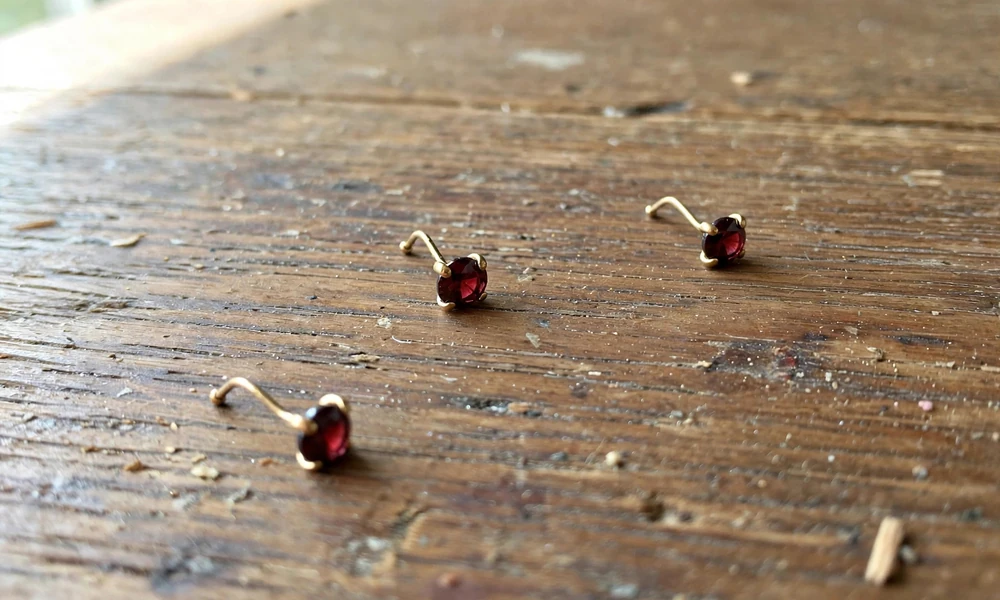
Look next at the setting and the metal. A bezel setting wraps the stone in a thin rim of metal, which protects the edges and feels smooth against the skin. A prong setting holds the stone with small claws, which shows more of the stone but can snag. For the metal, solid 14k or 18k gold and implant-grade titanium are the safest choices, especially for a new or sensitive piercing. Our guide to gold jewellery for everyday wear explains why solid gold is worth the extra cost for pieces you wear daily, and the same logic applies to a nose stud that never leaves your face.
Finally, check the post length and gauge. Most nostril piercings take a 20-gauge or 18-gauge post, and a post of 6 to 7 millimetres suits most noses. A post that is too long will wobble and catch; one that is too short will press into the skin. If you are unsure of your size, measure your current stud or ask your piercer before ordering.
The 9 best garnet nose studs of 2027
The Classic Gold Garnet Stud
What we like: A 3-millimetre round almandine garnet in a four-prong 14k yellow gold setting, with a warm, deep-red stone that reads clearly in daylight. What to consider: The prong setting can catch on towels and scarves, so it suits people who are used to wearing a stud daily. Best for: Everyday wear and first-time garnet buyers. Material: 14k yellow gold, natural almandine garnet. Price range: 60 to 120 pounds. Standout feature: The classic combination of warm gold and deep red that works with almost any wardrobe.
This is the stud to buy if you want one garnet nose stud and nothing else. It is simple, well proportioned, and the stone is large enough to be noticed without dominating the face.
The Deep Red Garnet Stud
What we like: A darker, richer garnet with a near-wine colour, set low in a six-prong white gold head that keeps the stone secure. What to consider: The deep colour can look almost black in dim indoor light, so it suits people who spend time outdoors. Best for: Evening wear and deeper skin tones. Material: 14k white gold, natural pyrope garnet. Price range: 70 to 140 pounds. Standout feature: A dramatic, wine-dark stone that looks expensive without being flashy.
The Silver Garnet Stud
What we like: A 2.5-millimetre round garnet in a smooth sterling silver bezel, cool-toned and understated, with a flat back for comfort. What to consider: Sterling silver can tarnish and is not ideal for a new piercing; save it for a fully healed one. Best for: Cool skin tones and minimal everyday looks. Material: Sterling silver, natural garnet. Price range: 25 to 55 pounds. Standout feature: The bezel setting sits completely flat, so it never snags.
Silver and garnet is a quieter pairing than gold and garnet, and it suits people who wear mostly silver jewellery. The bezel makes it one of the most comfortable studs on this list.
The Vintage-Style Garnet Stud
What we like: An oval garnet in a milgrain-edged setting with a slightly antique finish, inspired by Victorian garnet jewellery. What to consider: The vintage detailing is harder to clean, so it needs a gentle brush and warm soapy water now and then. Best for: Vintage lovers and special occasions. Material: 14k rose gold, natural garnet. Price range: 80 to 160 pounds. Standout feature: Milgrain edging and an oval stone that looks like a family heirloom.
The Tiny Garnet Stud
What we like: A 2-millimetre garnet in a simple gold ball-end setting, small enough to be subtle and light enough to forget you are wearing it. What to consider: The stone is small, so its colour is less visible from a distance; it reads as a red glint rather than a statement. Best for: Work, school, and anyone who wants a barely-there stud. Material: 14k gold, natural garnet. Price range: 40 to 80 pounds. Standout feature: The smallest, lightest stud on this list, ideal for a first piercing.
A tiny stud is the right choice when you want the colour of garnet without the attention. It is also a good option for a second nostril piercing, where a larger stone would crowd the nose.
The Garnet and Diamond Accent Stud
What we like: A central garnet flanked by two tiny diamonds, which lift the red and add a little sparkle without overpowering the stone. What to consider: The diamonds add cost, and the setting is slightly larger, so it suits a healed piercing rather than a new one. Best for: Evenings, celebrations, and gifts. Material: 14k white gold, natural garnet and diamonds. Price range: 120 to 250 pounds. Standout feature: Diamond accents that make the garnet look brighter by contrast.
The Rose Gold Garnet Stud
What we like: A round rhodolite garnet, brighter and more raspberry-red than a classic almandine, set in warm rose gold. What to consider: Rhodolite is slightly softer than almandine, so it benefits from a bezel or a low prong setting. Best for: Warm skin tones and anyone who likes pink-red colours. Material: 14k rose gold, natural rhodolite garnet. Price range: 70 to 150 pounds. Standout feature: A raspberry-red stone that looks lively in daylight.
Rose gold and rhodolite is the warmest combination here, and it suits people who find yellow gold too yellow and white gold too cool. The brighter stone also photographs well.
The Garnet Bezel Stud
What we like: A 3-millimetre garnet fully enclosed in a smooth gold bezel, with a flat back and no claws at all, making it the most snag-free stud on this list. What to consider: The bezel covers the edges of the stone, so slightly less of the garnet is visible than in a prong setting. Best for: Active lifestyles, sleeping in a stud, and sensitive skin. Material: 14k yellow gold, natural garnet. Price range: 65 to 130 pounds. Standout feature: A completely smooth profile that never catches on fabric.
The Oval Garnet Stud
What we like: An oval garnet, 4 by 3 millimetres, set lengthways in a simple four-prong gold head, giving a longer, more elegant line on the nose. What to consider: The oval shape suits longer noses best and can look large on a very small nose. Best for: A slightly bolder everyday look. Material: 14k yellow gold, natural garnet. Price range: 75 to 150 pounds. Standout feature: The elongated oval shape, which flatters the line of the nose.
Which garnet nose stud is right for you
Start with your piercing. If it is new or still healing, choose implant-grade titanium or solid gold, a smooth bezel or low prong setting, and a post length your piercer has confirmed. A new piercing is not the time for sterling silver, plated metals, or a large decorative stud. Once the piercing is fully healed, usually after three to six months, you have much more freedom.
Then think about your skin tone and your other jewellery. Warm skin tones and yellow or rose gold tend to suit a classic almandine or rhodolite garnet, while cool skin tones often look better with white gold or silver and a deeper pyrope garnet. If you wear mostly gold, a gold garnet stud will sit naturally in your collection; if you wear mostly silver, the silver bezel stud is the better match. Our roundup of the best nose studs for women covers the wider choice of metals and settings, and it is a useful next read if you are still deciding between gold and silver.
Finally, think about size. A 2-millimetre stone is subtle and suits a small nose or a second piercing. A 3-millimetre stone is the everyday standard, visible without being bold. A 4-millimetre stone or an oval is a statement, and it suits people who like their jewellery to be noticed. There is no wrong size, only a size that matches how much attention you want the stud to draw.
The caveats that matter
Garnet is a durable stone, but it is not indestructible. It can chip if knocked hard against a hard surface, and a prong setting can loosen over time, so check the stone is secure every few weeks by gently pressing it with a clean fingertip. If it moves in its setting, take it to a jeweller rather than wearing it loose.
| Detail | What is known |
|---|---|
| Best stone colour | Medium-deep red that shows its colour in daylight, not only under bright light |
| Hardness | 6.5 to 7.5 on the Mohs scale, hard enough for daily wear |
| Safest metals | Solid 14k or 18k gold and implant-grade titanium, especially for new piercings |
| Metals to avoid early on | Plated metals and sterling silver until the piercing is fully healed |
| Usual gauge | 20-gauge or 18-gauge, with a post of 6 to 7 millimetres for most noses |
| Best setting for comfort | Bezel, which sits flat and never snags on fabric |
| Cleaning | Warm water and mild soap, with a soft brush for detailed settings |
| What it does not do | It does not suit every piercing, and no stone is guaranteed against chipping |
Be cautious of very cheap garnet studs. A stone sold as garnet for a few pounds is often glass, which looks convincing in a photograph but scratches easily and can irritate a piercing. Buy from a seller who names the garnet type, the metal, and the gauge, and who offers a clear return policy if the stone is not as described.
Checklist: buying a garnet nose stud honestly
Use these checks before you buy, and again when the stud arrives.
- Check the colour in daylight: it should read as red, not brown or black.
- Check the metal: solid gold or implant-grade titanium for a new or sensitive piercing.
- Check the gauge and post length: 20-gauge or 18-gauge, 6 to 7 millimetres for most noses.
- Check the setting: bezel for comfort, prong for maximum stone visibility.
- Check the stone is secure: press it gently with a clean fingertip; it should not move.
- Check the seller: named garnet type, named metal, clear returns, and a price that matches the materials.
Frequently asked questions
Is garnet a good stone for a nose stud?
Yes. Garnet is hard enough for daily wear, keeps its colour in sunlight, and its deep red suits most skin tones. It needs only normal cleaning, and it is one of the more affordable genuine gemstones for nose jewellery.
Does a garnet nose stud suit warm or cool skin?
Both, with the right pairing. A classic almandine garnet in yellow or rose gold suits warm skin, while a deeper pyrope garnet in white gold or silver suits cool skin. A rhodolite garnet, which is brighter and more raspberry-red, works well on most skin tones.
Can I wear a garnet nose stud in a new piercing?
Yes, if the metal is implant-grade titanium or solid gold and the setting is smooth. Avoid sterling silver and plated metals until the piercing is fully healed, which usually takes three to six months.
How do I clean a garnet nose stud?
Use warm water and mild soap, and a soft brush for detailed settings such as milgrain or vintage designs. Avoid ultrasonic cleaners for prong-set stones unless a jeweller has checked the setting first.
Are garnet nose studs the same as garnet nose rings?
No. A stud has a short post and a single stone that sits flat on the nostril, while a ring is a hoop that passes through the piercing. Our guide to garnet nose rings covers the hoop styles if you prefer a ring to a stud.
How much should a good garnet nose stud cost?
A solid gold stud with a natural garnet usually costs between 60 and 150 pounds, depending on the size of the stone and the metal. A sterling silver stud costs less, usually 25 to 55 pounds. Very cheap studs are often glass rather than garnet, so a price that looks too good usually is.
The bottom line
The best garnet nose stud in 2027 is the one that matches your piercing, your skin, and how much attention you want it to draw. For most people, that is a 3-millimetre stone in solid gold, in a bezel setting if comfort matters most, or a prong setting if showing the stone matters most. A medium-deep red that is visible in daylight is the colour to look for, and a named garnet type from a seller you trust is the sign of a genuine stone.
Buy one stud, wear it for a few weeks, and judge it on comfort as much as colour. A garnet nose stud that sits flat, never snags, and still looks red on a grey afternoon is the one worth keeping.