

Amethyst Nose Studs 2027: 9 Picks Worth Wearing
An amethyst nose stud is a small piece of jewellery with a colour that does the talking. Amethyst ranges from pale lilac to deep violet, and that purple is unlike any other stone used in nose jewellery. It is calm and distinctive at the same time, which is why it suits people who want a nose stud that feels personal rather than predictable.
The problem is not finding an amethyst nose stud. It is finding one with a genuine stone, a colour you actually like, and a setting that will hold up to daily wear. Amethyst varies a lot in colour and quality, a pale stone can look washed out, a dark stone can look almost black in poor light, and a cheap setting can loosen or irritate a piercing.
Below are nine amethyst nose studs worth wearing in 2027, from a classic violet stud to a bezel-set option, a rose gold design, and a vintage-style ring. Each one is described by what it is good at, what to watch for, and who it suits best.
Key takeaways
- Amethyst nose studs range from pale lilac to deep violet, so choose the shade that suits your skin tone and your wardrobe, not just the darkest stone.
- Look for a securely set stone, a flat-back or screw-back post, and implant-grade titanium or solid gold if your skin is sensitive.
- Choose a small stone for everyday wear and a larger stone for evenings and special occasions.
- Clean an amethyst stud with warm water and mild soap, and keep it away from harsh chemicals and ultrasonic cleaners.
- No nose stud suits every piercing, and a stud that is too large, too heavy, or made from a metal you react to will irritate even a fully healed piercing.
What amethyst nose studs actually are
An amethyst nose stud is a nose piercing with an amethyst stone set at the front, worn in a nostril piercing. Amethyst is a variety of quartz, coloured purple by traces of iron, and it rates 7 on the Mohs hardness scale, which makes it hard enough for daily wear. The stone is usually cut in a round, oval or cushion shape for a stud, and held in a prong, bezel or pavé setting on a short post with a flat back, a screw back, or a push-in labret fitting.
The colour of an amethyst nose stud is what most people choose it for. Pale lilac amethyst is soft and subtle, classic violet is the most familiar shade, deep purple is rich and dramatic, and Siberian-style amethyst has a reddish flash that makes it look warmer than other purple stones.
Amethyst is also one of the more affordable gemstones, which is why it appears in so many nose stud designs. Many stones are heat-treated to deepen their colour, a standard and accepted practice. What matters is whether the stone is honestly described, securely set, and made from materials that will not irritate your skin.
How we chose these amethyst nose studs and what to look for
Look first at the stone and the setting. An amethyst nose stud should have a stone that is evenly coloured, free of obvious cloudiness or zoning, and held firmly in its setting. A prong setting shows off the stone best, a bezel setting protects it best, and a pavé setting adds sparkle but needs more care.
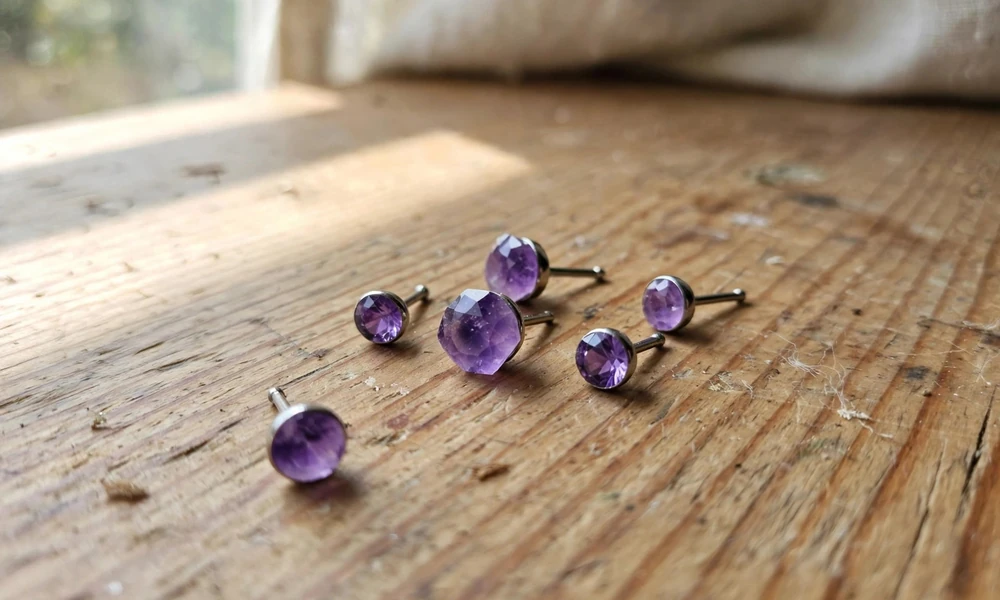
Look next at the post and the metal. A flat-back labret post is the most comfortable for a healed nostril piercing, because it sits flat inside the nose and does not poke or rotate. A screw-back post is also secure, but it can be fiddly to insert. For metal, implant-grade titanium and solid 14k or 18k gold are the safest choices for sensitive skin, and a well-made gold post will last far longer than a plated one. A diamond necklace may seem like a different world, but the same rule applies there too: the metal and the setting matter as much as the stone.
Finally, look at the size and the price. A stone of 2 to 3 millimetres is a good everyday size, easy to wear with anything and unlikely to snag. A stone of 4 millimetres or more makes a statement, but it is heavier and better saved for occasions. Price should reflect the stone, the metal and the workmanship, not just the brand name.
The 9 best amethyst nose studs of 2027
The Classic Violet Amethyst Stud
What we like: A rich violet stone in a simple four-prong setting, the most familiar amethyst colour, bright without being loud. What to consider: The colour is strong, so it suits confident wearers more than minimalists. Best For: Everyday wear and first amethyst studs. Material: Violet amethyst, 14k gold setting, titanium post. Price Range: Mid-range. Standout Feature: The classic purple that suits most skin tones.
This is the amethyst nose stud to start with. The stone is small enough to feel effortless, the colour is unmistakably purple, and the setting is simple enough that nothing distracts from the stone itself.
The Deep Purple Amethyst Stud
What we like: A dark, saturated purple stone with a rich, almost wine-like tone. What to consider: The dark colour can look nearly black in poor light, so it suits evening wear more than bright daylight. Best For: Evenings and formal occasions. Material: Deep purple amethyst, 14k white gold setting. Price Range: Mid-range. Standout Feature: The deep, dramatic purple that feels more grown-up than lilac.
Deep purple amethyst has a richness that the paler shades do not, and it pairs beautifully with white gold, which keeps the stone looking cool and elegant. It is a good choice if you want an amethyst stud that feels sophisticated rather than playful.
The Pale Lilac Amethyst Stud
What we like: A soft lilac stone with a gentle, airy colour, pretty without being childish. What to consider: The pale colour can look washed out in dim light, and it shows dirt more quickly than a darker stone. Best For: Soft, feminine looks and spring outfits. Material: Pale lilac amethyst, 14k white gold setting. Price Range: Affordable to mid-range. Standout Feature: The delicate lilac that feels fresh and modern.
Pale lilac amethyst is the quietest shade on this list, and that is part of its charm. The colour is soft and wearable, it suits fair and cool skin tones beautifully, and it pairs well with silver and white gold.
The Amethyst Hoop
What we like: A small hoop with a single amethyst stone set into the front, combining the movement of a hoop with the colour of a gemstone. What to consider: A hoop moves more than a stud, so it needs a well-healed piercing and a secure closure. Best For: Healed piercings and a more relaxed look. Material: Violet amethyst, 14k gold hoop. Price Range: Mid-range. Standout Feature: The hoop shape that catches the light as it moves.
An amethyst hoop is for days when a stud feels too quiet. The stone sits at the front of the hoop, so it catches the light with every turn of the head, and the shape feels more casual and bohemian than a classic stud.
The Bezel-Set Amethyst Stud
What we like: A smooth bezel setting that wraps the stone in metal, protecting it from knocks and snags. What to consider: The bezel covers the edges of the stone, so it shows slightly less of the amethyst than a prong setting. Best For: Active days and everyday wear. Material: Violet amethyst, 14k gold bezel, titanium post. Price Range: Mid-range. Standout Feature: The smooth, snag-free setting that is the most practical design here.
The bezel-set stud is the most sensible choice on this list, and the one most likely to survive daily life. There are no prongs to catch on a towel or a jumper, the stone is well protected, and the smooth profile sits comfortably against the skin.
The Rose Gold Amethyst Stud
What we like: A violet amethyst stone set in warm rose gold, a combination that softens the purple and flatters warm skin. What to consider: Rose gold is a warmer metal, so the stone can look slightly less purple than it does in white gold. Best For: Warm skin tones and romantic looks. Material: Violet amethyst, 14k rose gold setting. Price Range: Upper mid-range. Standout Feature: The warm rose gold that makes the purple feel softer and more romantic.
Rose gold and amethyst are a natural pair. The warm metal takes the edge off the cool purple, and the combination looks especially good with golden and olive skin, where it adds warmth to the face without overwhelming it.
The Vintage-Style Amethyst Ring
What we like: An ornate, vintage-inspired design with an amethyst stone surrounded by small accent stones, full of character. What to consider: The detailed setting is harder to clean, and the design is more noticeable than a plain stud. Best For: Special occasions and vintage lovers. Material: Violet amethyst with accent stones, 14k gold setting. Price Range: Upper mid-range. Standout Feature: The vintage detailing that makes it feel like a piece with a story.
This is the most decorative stud on the list, and it is meant to be noticed. The vintage setting gives the amethyst a sense of history, and the accent stones add sparkle without overwhelming the main stone.
The Amethyst and Diamond Accent Stud
What we like: A violet amethyst stone flanked by two small clear accent stones, adding sparkle and a touch of luxury. What to consider: The accent stones add cost, and the setting needs more care when cleaning. Best For: Special occasions and a touch of luxury. Material: Violet amethyst with clear accent stones, 14k gold setting. Price Range: Upper mid-range. Standout Feature: The accent stones that make the amethyst look brighter by contrast.
The accent stones do more than add sparkle. They frame the amethyst and make its purple look richer by contrast, which is why this design feels more expensive than a plain stud, even when the amethyst itself is modest in size.
The Siberian-Style Amethyst Stud
What we like: A deep violet stone with a reddish flash, the most prized amethyst colour, warm and vivid at once. What to consider: True Siberian amethyst is rare and costly, so most studs in this style use a similar deep violet stone instead. Best For: Collectors and anyone who wants the richest purple. Material: Deep violet amethyst, 14k gold setting. Price Range: Upper mid-range to premium. Standout Feature: The reddish flash that makes the stone look alive in the light.
Siberian-style amethyst is the most dramatic stone on this list. The reddish flash gives the purple a warmth that other amethysts do not have, and it looks particularly good in the evening, when the colour deepens and the stone seems to glow.
Which amethyst nose stud is right for you
Start with your skin tone. Cool skin tones, with pink or blue undertones, usually suit classic violet, deep purple and pale lilac amethyst best, because the cool stones echo the coolness of the skin. Warm skin tones, with golden or olive undertones, often look better in a violet stone set in rose gold or yellow gold, which warms the purple and stops it looking cold.
Think next about your piercing and your routine. A fresh or recently healed piercing needs a simple, smooth stud with a flat-back post, in implant-grade titanium or solid gold, and nothing else. A long-healed piercing gives you more freedom, including hoops and more decorative settings. If you work with your hands, play sport, or change clothes often, a bezel-set stud is the practical choice, because it will not snag. The best nose rings for women cover the wider range of nose jewellery styles, so you can compare studs against rings and hoops before you decide.
Finally, think about how often you will wear it. A stud you wear every day should be comfortable, secure and easy to clean, and a 2 to 3 millimetre stone in a bezel or four-prong setting is hard to beat.
The caveats that matter
Amethyst is a hard stone, but it is not indestructible. It can chip if it is knocked hard against a hard surface, and an amethyst stud that is dropped on a tiled floor can lose a corner. The setting matters as much as the stone, because a loose prong is the most common reason a nose stud loses its stone, and a stud that is too heavy can stretch a piercing over time.
| Detail | What is known |
|---|---|
| Best colours for cool skin | Classic violet, deep purple, pale lilac amethyst |
| Best colours for warm skin | Violet amethyst in rose gold or yellow gold settings |
| Best everyday size | A stone of 2 to 3 millimetres, in a bezel or four-prong setting |
| Safest metals | Implant-grade titanium and solid 14k or 18k gold |
| Most secure post | A flat-back labret post, or a well-fitted screw-back post |
| Cleaning | Warm water and mild soap, with a soft brush for detailed settings |
| Who should avoid amethyst studs | Anyone with an unhealed piercing, or a known reaction to the metal used |
| What amethyst does not do | It does not suit every skin tone, and it can fade with strong heat and sunlight |
If your piercing is new, unhealed, or irritated, do not change your jewellery to an amethyst stud yet. Wait until it is fully healed, follow your piercer’s aftercare advice, and choose your first stud with your piercer’s help if you are unsure.
Checklist: buying an amethyst nose stud honestly
Use these checks before you buy, and again after two weeks of wear.
- Check the stone: it should be evenly coloured, free of cloudiness, and firmly set with no wobble.
- Check the metal: implant-grade titanium or solid gold is safest, especially for sensitive skin.
- Check the post: a flat-back labret post is the most comfortable for a healed nostril piercing.
- Check the size: a 2 to 3 millimetre stone is best for everyday wear, larger stones are for occasions.
- Check the colour in daylight: amethyst looks different under shop lights, so compare it near a window.
- Check the setting every few weeks: look for loose prongs, a wobbling stone, or rough edges.
Frequently asked questions
Is amethyst a good stone for a nose stud?
Yes. Amethyst is hard enough for daily wear, it comes in many shades of purple, and it is more affordable than diamond or sapphire.
Which amethyst colour is best for a nose stud?
Classic violet is the most popular and suits most skin tones. Pale lilac suits fair and cool skin, deep purple suits evening wear, and a rose gold setting warms the stone for warm skin tones.
Can I wear an amethyst nose stud in a new piercing?
Not until the piercing is fully healed. A new piercing needs simple, implant-grade jewellery chosen with your piercer, and you should only change to a decorative amethyst stud once healing is complete.
How do I clean an amethyst nose stud?
Remove the stud, wash it in warm water with a drop of mild soap, and use a soft brush for detailed settings. Rinse well, dry it completely, and check the setting before putting it back in. A statement necklace needs the same gentle care, and the same rule applies: mild soap, soft cloth, no harsh chemicals.
Does amethyst fade over time?
Amethyst can fade with long exposure to strong heat and sunlight. Keep it away from radiators and sunny windowsills, and it will hold its colour for years.
Is amethyst cheaper than diamond for a nose stud?
Yes, considerably. An amethyst nose stud costs far less than a comparable diamond stud, which is why it is a popular choice for everyday wear and for trying a purple stone without a large spend.
The bottom line
The best amethyst nose stud in 2027 is the one that suits your skin tone, your piercing and your daily life. For most people, that means a 2 to 3 millimetre stone in classic violet or pale lilac, set in solid gold or titanium, with a flat-back post and a setting that will not snag. The bezel-set stud is the most practical everyday choice, and the classic violet stud is the easiest starting point.
Choose your shade in daylight, check the setting before you buy, and give a new stud two weeks of wear before you judge it. Look after it, and it will keep looking good for years.