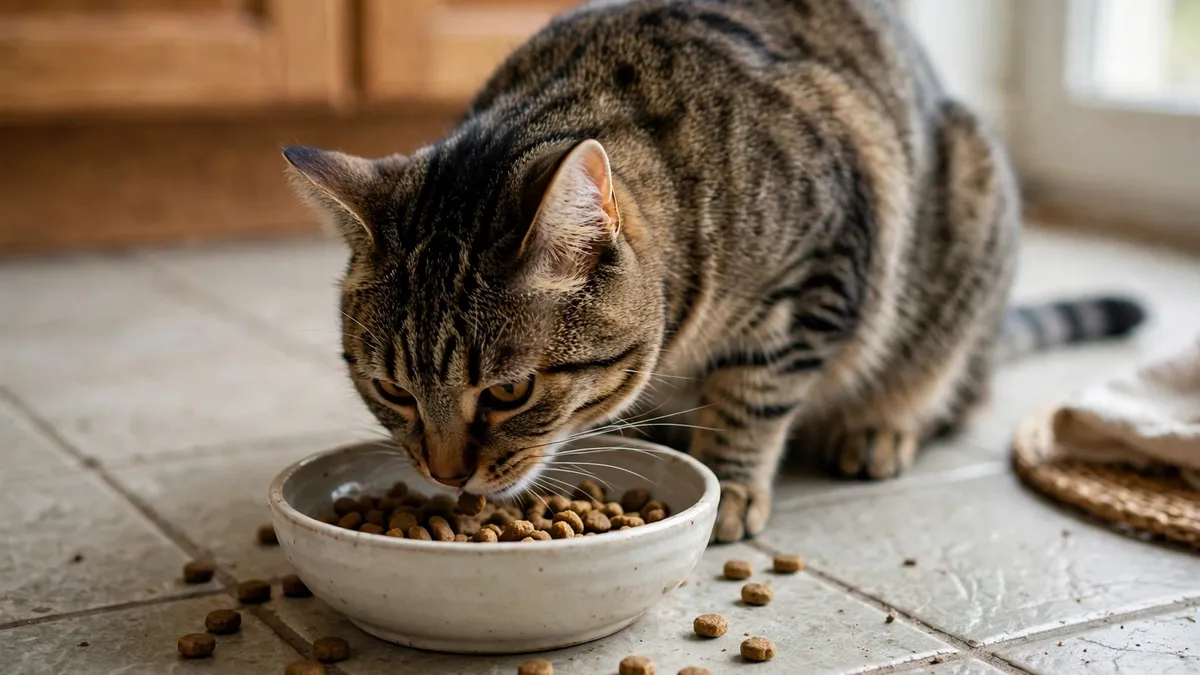

The best dry cat food in 2027 is the one that matches your cat’s age, lifestyle and digestion, in a kibble your cat will actually eat. Dry food suits busy households: it keeps well and is easy to measure.
So which dry food should you buy? No single recipe suits every cat, so this guide compares ten dry food types, from kitten and senior recipes to grain-free and hairball formulas. Our guide to the best cat food brands in 2027 names the makers behind them.
Key takeaways
- Match the recipe to your cat’s age first: kittens, adults and seniors need different food.
- Indoor cats and sensitive stomachs do better on made-for-them recipes.
- Check kibble size and the feeding guide before you buy.
- Change foods slowly, and ask a vet about diet changes for a poorly cat.
How to Choose the Best Dry Cat Food
Start with your cat’s age. Kittens, adults and seniors have different needs, and the ranges on the shelf are built around those life stages. A kitten recipe is made for growth, while a senior recipe suits older cats that move less.
Think about lifestyle next. An indoor cat burns less energy than one that roams the garden, so indoor recipes are usually lighter. A long-haired cat may need a hairball recipe, and a delicate stomach may need a gentle one.
Finally, read the bag. Look at the feeding guide and weigh the daily portion, since a scoop can creep up over time. Check the kibble size too: small kibble suits kittens and older cats, while larger pieces suit cats that gulp. Keep the bag sealed between meals, since stale kibble loses its smell and crunch.
The 10 Best Dry Cat Foods in 2027
Kitten Dry Food
Best for: kittens from weaning to their first birthday.
Kitten dry food is made for fast growth, with small kibble for tiny mouths. Purina ONE Kitten and Royal Canin Kitten are two well-known ranges. The makers say each recipe is balanced for growing kittens, with nutrients that support healthy development.
Feed a kitten little and often, with fresh water always beside the bowl, and move to adult food at around twelve months.
Adult Everyday Dry Food
Best for: healthy adult cats on a daily routine.
An adult everyday recipe is the workhorse of the cat food shelf, made for cats aged one to seven with no special needs. Hill’s Science Plan Adult and Purina ONE Adult are two familiar names here. The makers describe these recipes as complete and balanced for everyday feeding.
Keep the portion steady, store the bag sealed and dry, and weigh the food rather than filling the bowl by eye.
Senior Dry Food
Best for: cats aged seven and over.
Senior dry food is made for older cats, whose digestion slows with age. Hill’s Science Plan Senior and Royal Canin Ageing 11+ are two ranges built for this stage of life. The makers say their senior recipes are easy to digest and made to support older cats.
Watch your older cat’s weight and appetite closely, and see a vet if it eats less, drinks more or loses weight.
Indoor-Cat Dry Food
Best for: cats that live mostly indoors.
Indoor cats move less and groom more, so their food is usually lighter and helps with hairballs. Royal Canin Indoor and ACANA Indoor Entree are two ranges aimed at this group. The makers say indoor recipes help control weight and reduce hairballs in cats that spend their days inside.
Build in a daily game with a wand toy or puzzle feeder, since food alone cannot replace movement.
Sensitive-Stomach Dry Food
Best for: cats with delicate digestion.
A sensitive-stomach recipe uses gentle ingredients that are easy to digest, and many are made with a single protein. Purina ONE Sensitive and James Wellbeloved are two ranges often chosen for upset stomachs. The makers say their gentle recipes are kind to delicate digestion and help firm up loose stools.
Change foods slowly over about a week, and see a vet if vomiting or diarrhoea goes on.
Grain-Free Dry Food
Best for: owners who prefer a recipe without grains.
Grain-free dry food leaves out wheat, maize and rice, using potato, pea or sweet potato instead. Applaws and Orijen are two well-known grain-free ranges. The makers describe their grain-free foods as closer to a natural diet, with meat as the main ingredient.
Grain-free is a choice, not a cure, and it suits some cats better than others. If your cat does well on a grain recipe, there is no need to change.
High-Protein Dry Food
Best for: active cats and owners who want a meat-led recipe.
High-protein dry food puts meat first, with a larger share of animal ingredients than a standard recipe. Orijen and Acana are two ranges known for this approach, both listing named meats first. The makers say their recipes are rich in animal protein and made for active cats.
Match the recipe to your cat’s real activity level, since extra calories soon show on the waistline.
Weight-Control Dry Food
Best for: cats that need to watch their waistline.
Weight-control dry food is lighter in calories and higher in fibre, so a cat can eat well without overeating. Royal Canin Light Weight Care and Hill’s Science Plan Perfect Weight are two ranges made for this job. The makers say their light recipes help cats reach and hold a healthy weight.
Weigh your cat before you start, weigh the food daily, and ask a vet to set a safe target if your cat is very overweight.
Hairball-Control Dry Food
Best for: long-haired cats and frequent hairballs.
Hairball-control dry food is made with extra fibre, which the maker says helps swallowed hair pass through the gut instead of coming back up. Royal Canin Hairball Care and James Wellbeloved Hairball are two ranges in this group. Both are complete everyday foods, so they can replace a standard recipe.
Brush a long-haired cat a few times a week, and see a vet if hairballs are frequent or your cat strains without producing one.
Vet-Recommended Dry Food
Best for: owners who want a vet-trusted everyday recipe.
Some ranges are the ones vets reach for most often, and Hill’s Science Plan is among the best known of them. Vets stock and recommend it widely, and the maker says its recipes are developed with veterinary nutritionists. It comes in life-stage versions, so one name can cover a cat from kitten to senior.
Ask your own vet which recipe fits, especially if your cat has a health condition, since no dry food can treat or cure an illness.
What Feeding Time Feels Like
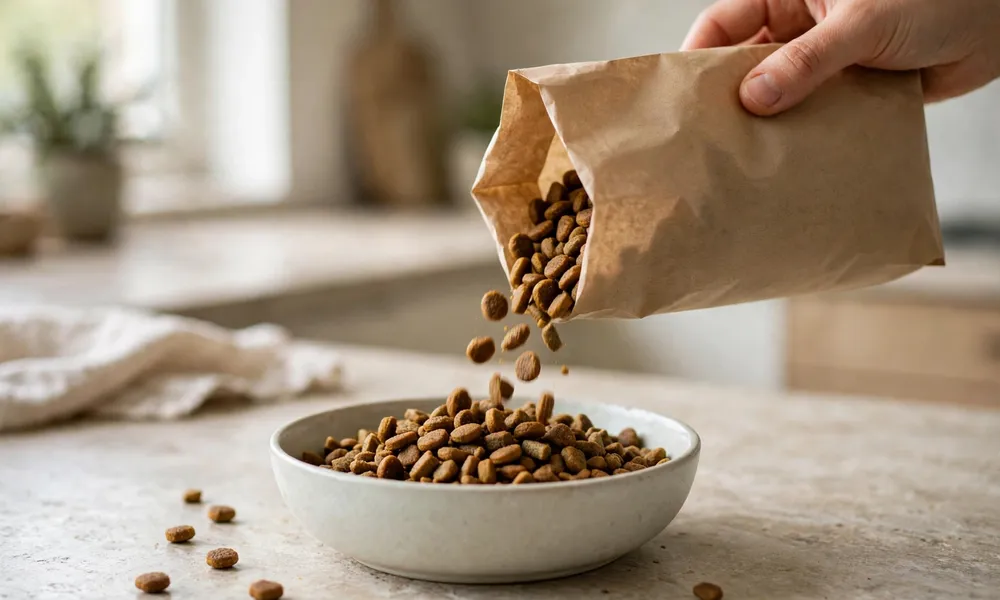
Feeding time has a rhythm of its own. The bag rustles, the kibble rattles into the bowl, and the cat appears from nowhere, winding around your ankles. It is a small daily ritual, and cats learn it fast.
A good dry food makes that ritual easy. The kibble pours cleanly, and the cat eats with a steady crunch rather than picking and leaving half. A cat that crunches happily is usually a cat that likes its food.
Keep the ritual calm and regular. Feed at roughly the same times each day, wash the bowl often, and keep fresh water in a separate spot. A cat that eats in peace gets the most from its food.
Dry Cat Foods Compared
| Dry food | Best for | Typical maker | Key feature |
|---|---|---|---|
| Kitten dry food | Growing kittens | Purina ONE, Royal Canin | Small kibble |
| Adult everyday dry food | Healthy adult cats | Hill’s Science Plan, Purina ONE | Complete daily feeding |
| Senior dry food | Cats seven and over | Hill’s Science Plan, Royal Canin | Easy to digest |
| Indoor-cat dry food | Cats that live indoors | Royal Canin, Acana | Lighter recipe |
| Sensitive-stomach dry food | Delicate digestion | Purina ONE, James Wellbeloved | Gentle ingredients |
| Grain-free dry food | Grain-free owners | Applaws, Orijen | No wheat, maize or rice |
| High-protein dry food | Active cats | Orijen, Acana | Meat-led recipe |
| Weight-control dry food | Overweight cats | Royal Canin, Hill’s Science Plan | Lighter calories |
| Hairball-control dry food | Long-haired cats | Royal Canin, James Wellbeloved | Extra fibre |
| Vet-recommended dry food | Owners wanting trusted food | Hill’s Science Plan | Vet nutritionists |
What to Check Before You Buy
Check the life-stage label first, and buy the recipe that matches your cat’s age. A kitten food fed to an adult cat, or an adult food fed to a senior, will not match what that cat needs.
Look at the feeding guide and the kibble size next. The guide gives a daily amount by weight, and weighing the portion is the best way to keep a cat at a healthy size. Small kibble suits kittens and older cats, while gulpers may do better with a larger piece.
Finally, talk to a vet before changing the diet of a cat with a health condition, such as kidney trouble, diabetes or a food allergy. A vet can say which recipe fits and how to switch safely.
Your Dry Cat Food Checklist
- Match the recipe to your cat’s age and life stage.
- Choose a recipe for your cat’s lifestyle and digestion.
- Check the kibble size suits your cat’s mouth.
- Weigh the daily portion using the feeding guide.
- Store the bag sealed, dry and away from heat.
- Ask a vet before changing a poorly cat’s diet.
Frequently Asked Questions
Is dry food enough on its own for a cat?
A complete dry food can be a cat’s whole diet, since complete recipes are made to provide everything a healthy cat needs. Many owners mix dry with wet food for variety and extra moisture, and our guide to the best canned cat food in 2027 covers the wet side. Fresh water should always be available.
How much dry food should I feed my cat each day?
Follow the feeding guide on the bag for a daily amount based on your cat’s weight. Weigh the portion with kitchen scales, and split it into two meals if your cat prefers. Adjust it if your cat gains or loses weight.
How do I switch my cat to a new dry food?
Mix a small amount of the new food into the old food, and raise the share of new food a little each day over about a week. A slow switch is kinder to the stomach and gives a fussy cat time to adjust. If your cat refuses it entirely, try a different flavour.
Does dry food help clean a cat’s teeth?
Crunchy kibble can help rub the tooth surface as a cat chews. Dry food alone is not dental care, though, and it will not remove tartar that has already formed. Ask your vet about tooth checks.
When should a kitten move to adult dry food?
Most kittens move to adult food at around twelve months. Larger breeds may need kitten food for longer, and your vet can advise on the right time. Our guide to the best cat food for kittens in 2027 covers the first year in more detail.
The Bottom Line
The best dry cat food is the one that fits your cat’s age, lifestyle and digestion, and comes in a kibble your cat enjoys eating. Start with the life stage, then pick the recipe that matches how your cat lives, and weigh every portion.
Keep the routine steady, change foods slowly, and ask a vet about any diet change for a cat with a health condition. A measured portion, a clean bowl and fresh water complete the routine. Get those basics right, and the right dry food will serve your cat well.