The best canned cat food is the one your cat finishes, meal after meal, without fuss. For most cats in 2027, that means a simple recipe built around a named meat, a texture they enjoy, and a tin size that suits one or two servings.
This guide compares ten wet foods that work for everyday feeding, from smooth paté to shreds in gravy and grain-free recipes. Each pick earns its place for a specific job, whether that is tempting a fussy eater, feeding a kitten, or keeping things simple for a busy household.
Key takeaways
- Texture matters as much as flavour: many cats refuse paté but love shreds, and some will only eat food in jelly.
- Look for a named meat first on the label, such as chicken, tuna or salmon, rather than a vague description.
- Grain-free recipes suit cats that do better without grains, but they are not better for every cat.
- Buy a few single tins before committing to a multipack, because a cat that loved one flavour may reject the next.
How to choose canned cat food
Start with texture. Paté is smooth and easy to eat, which suits kittens, older cats and cats with sore mouths. Shreds and flakes in gravy or jelly give more to chew on, and many adult cats prefer them.
Next, look at the main ingredient. A recipe built around chicken, fish or another named meat is a clearer choice than one built around meat derivatives.
Think about grain-free recipes in the same practical way. Some cats do well on them, and the maker claims they are easier to digest, but a cat that is happy on a recipe with rice or oats has no reason to change. Choose what suits your cat, not what sounds newest.
Tin size is a small detail that makes a big difference. A large tin saves money, but an opened tin needs covering and chilling, and some cats refuse food that has been in the fridge. Smaller tins suit single-cat homes, while larger tins suit multi-cat households.
Finally, consider your routine. If you feed wet food twice a day, you need a recipe you can buy easily and serve quickly. A wet food guide can help you compare textures, but the real test is always the bowl: does your cat eat it, and does it agree with them?
The 10 Best Canned Cat Foods in 2027
1. Lily’s Kitchen Chicken and Turkey Casserole
Best for: most cats that want a hearty, everyday wet food.
Lily’s Kitchen Chicken and Turkey Casserole is a generous, casserole-style recipe with chicken and turkey in a soft, moist mix. It suits cats that like a fuller texture than a smooth paté, and it works well as a regular morning or evening meal.
It is the pick to start with if you want one reliable tin for a cat that is not fussy. Serve it at room temperature and keep the routine steady.
2. Applaws Chicken Breast in Broth
Best for: fussy cats that only eat simple, recognisable food.
Applaws Chicken Breast in Broth is about as simple as canned cat food gets: chicken breast in a light broth, with nothing to hide. Cats that pick at mixed recipes often eat this one straight away, which makes it useful for tempting a cat that has gone off its food.
It also works as a topper over a plainer paté. Keep a few tins in the cupboard for fussy days.
3. Thrive Complete Chicken Breast and Tuna
Best for: cats that like fish and chicken together.
Thrive Complete Chicken Breast and Tuna combines two flavours that many cats love, in a light, flaked texture. The maker says it is a complete recipe, designed to be fed as a main meal rather than a treat or topper.
Rotate it with a plain chicken recipe for a short, steady weekly menu.
4. Blink! Chicken and Tuna
Best for: everyday feeding on a sensible budget.
Blink! Chicken and Tuna is a straightforward wet food with a soft texture that most cats accept without a fuss. It comes in handy single-serve portions, so there is no half tin waiting in the fridge.
It suits busy households: open the tub, tip it in, and dinner is done.
5. Untamed Chicken in Gravy
Best for: cats that love gravy and lick the bowl clean.
Untamed Chicken in Gravy is a single-protein recipe with chicken served in gravy, according to the maker. It suits cats that drink little water, since the gravy adds moisture to every meal.
It suits cats that eat in small bursts through the day, as the gravy keeps food moist.
6. Nature’s Menu Country Hunter Chicken
Best for: cats that do well on a grain-free recipe.
Nature’s Menu Country Hunter Chicken is a grain-free recipe with chicken as the main ingredient, in a firm, meaty texture. It suits cats that prefer a more substantial bite, and owners who want a recipe without grains.
Rotate it with a fish recipe from the same range for easy variety.
7. Encore Chicken Breast with Tuna
Best for: cats that eat best when the food looks like real meat.
Encore Chicken Breast with Tuna is a simple recipe of chicken breast with tuna, with visible flakes rather than a blended mix. Cats that refuse smooth food often accept this one, because it looks and smells like something they recognise.
Keep it for a cat that needs tempting after a change of routine, and serve a small portion first.
8. HiLife It’s Only Natural Chicken Breast
Best for: owners who want a short, plain ingredient list.
HiLife It’s Only Natural Chicken Breast is a plain, simple recipe with chicken breast as its heart. The maker says it contains no added artificial colours or preservatives, which suits owners who read labels carefully.
Pair it with a fish flavour through the week to keep the menu interesting.
9. Sheba Fine Flakes in Jelly
Best for: cats that will only eat flakes in jelly.
Sheba Fine Flakes in Jelly is the classic jelly recipe, with fine flakes that are easy for small mouths to manage. It suits cats that have eaten this style of food for years, and see no reason to change.
It suits multi-cat homes: buy a mixed box and let each cat choose its flavour.
10. Scrumbles Chicken and Salmon
Best for: cats with sensitive stomachs that still want variety.
Scrumbles Chicken and Salmon combines chicken with salmon in a gentle recipe, according to the maker. It suits cats that do better on a limited, careful diet, but still enjoy a change of flavour.
Introduce it slowly over several days, mixing a little into the old food first.
What Feeding Time Feels Like
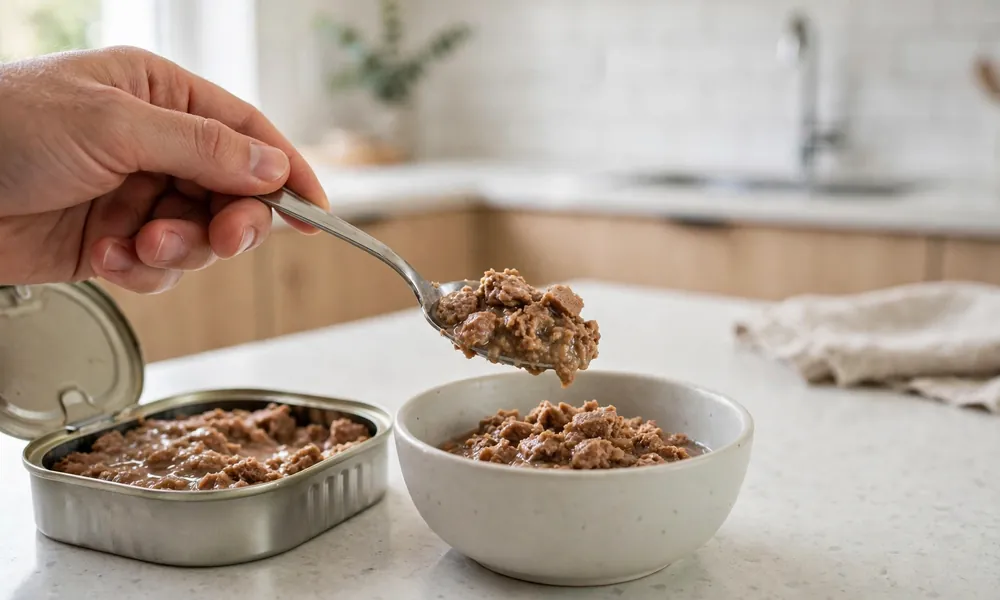
Feeding time has a rhythm of its own. The tin opens, the spoon scrapes, and the cat appears from nowhere, winding around your legs before the bowl even touches the floor.
The best canned cat food fits that rhythm without fuss: it spoons out cleanly, smells fresh, and disappears within minutes, leaving a clean bowl and a cat that settles down to wash. That quiet moment is the whole point.
How do the best canned cat foods compare?
| Food | Texture | Key feature | Best for |
|---|---|---|---|
| Lily’s Kitchen Casserole | Casserole | Chicken and turkey | Most cats |
| Applaws Chicken Breast | Shreds in broth | Simple recipe | Fussy cats |
| Thrive Complete | Flaked | Chicken and tuna | Fish and chicken lovers |
| Blink! Chicken and Tuna | Soft | Single-serve portions | Everyday feeding |
| Untamed Chicken | Chunks in gravy | Single protein, gravy | Gravy lovers |
| Nature’s Menu Country Hunter | Firm, meaty | Grain-free chicken | Grain-free feeding |
| Encore Chicken and Tuna | Visible flakes | Real meat look | Cats that refuse paté |
| HiLife It’s Only Natural | Chicken breast | Short ingredient list | Plain, gentle food |
| Sheba Fine Flakes | Flakes in jelly | Classic jelly recipe | Jelly lovers |
| Scrumbles Chicken and Salmon | Soft | Chicken and salmon | Sensitive stomachs |
What to Check Before You Buy
Check the feeding guide on the tin against your cat’s weight and age. Kittens, adult cats and older cats need different amounts, and an overweight cat needs less than the guide suggests for its size. Your vet can help you set the right daily amount. Weigh your cat regularly, so small changes do not creep up unnoticed over the months.
Look at how the food is stored once opened. Most opened tins need covering and chilling, and should be used within a day or two. If your cat refuses chilled food, warm it briefly to room temperature, but never microwave it in the tin.
Think about the full diet, not just the tin: wet food works well alongside dry food and fresh water, and a cat food guide can help you balance the two. Keep treats small.
Finally, watch your cat, not the label. A glossy coat, steady weight and regular litter tray habits tell you more than any claim on the tin. If anything changes, talk to your vet before switching foods again.
Your Canned Cat Food Checklist
- Pick a texture your cat already enjoys, whether paté, shreds or flakes in jelly.
- Choose a recipe built around a named meat, such as chicken, tuna or salmon.
- Decide whether grain-free suits your cat, or whether a recipe with grains is fine.
- Buy single tins first, and only buy a multipack once your cat has eaten it happily.
- Check the feeding guide for your cat’s age and weight, and ask your vet if unsure.
- Store opened tins covered in the fridge, and serve food at room temperature.
Frequently Asked Questions
Is canned cat food better than dry food?
Neither is better for every cat. Canned food has more moisture, which helps cats that drink little, while dry food is convenient and good for grazing. Many cats do well on a mix of both, with fresh water always available.
How much canned cat food should I feed my cat?
It depends on your cat’s age, weight and activity, and on the food itself. Follow the feeding guide on the tin as a starting point, then adjust so your cat keeps a steady, healthy weight. Your vet can confirm the right daily amount.
Can I leave canned cat food out all day?
No, not for long. Wet food dries out and can spoil, especially in a warm room. Serve a portion, give your cat time to eat it, and throw away anything left after an hour or two.
Is grain-free canned cat food better for cats?
Not necessarily. Some cats do better without grains, but many cats digest recipes with grains perfectly well. Choose grain-free if your cat needs it, not because the label sounds healthier.
Can kittens eat canned cat food?
Yes, but choose a recipe made for kittens, or one the maker says suits all life stages. Kittens need more energy and nutrients per mouthful than adult cats, so an adult recipe may not be enough on its own. An automatic cat feeder can help with regular small meals.
The Bottom Line
The best canned cat food is the one your cat eats happily, day after day. For most cats, that is a simple recipe built around a named meat, in a texture they enjoy, served at room temperature twice a day. Start there, and adjust only if your cat tells you otherwise.
Start with the Lily’s Kitchen casserole as an everyday staple, or Applaws chicken breast for a fussy cat. Try single tins first, then buy in bulk.
Feeding a cat well is a small, daily kindness, repeated hundreds of times a year. Get the tin right, keep the routine steady, and the rest of the day takes care of itself.