

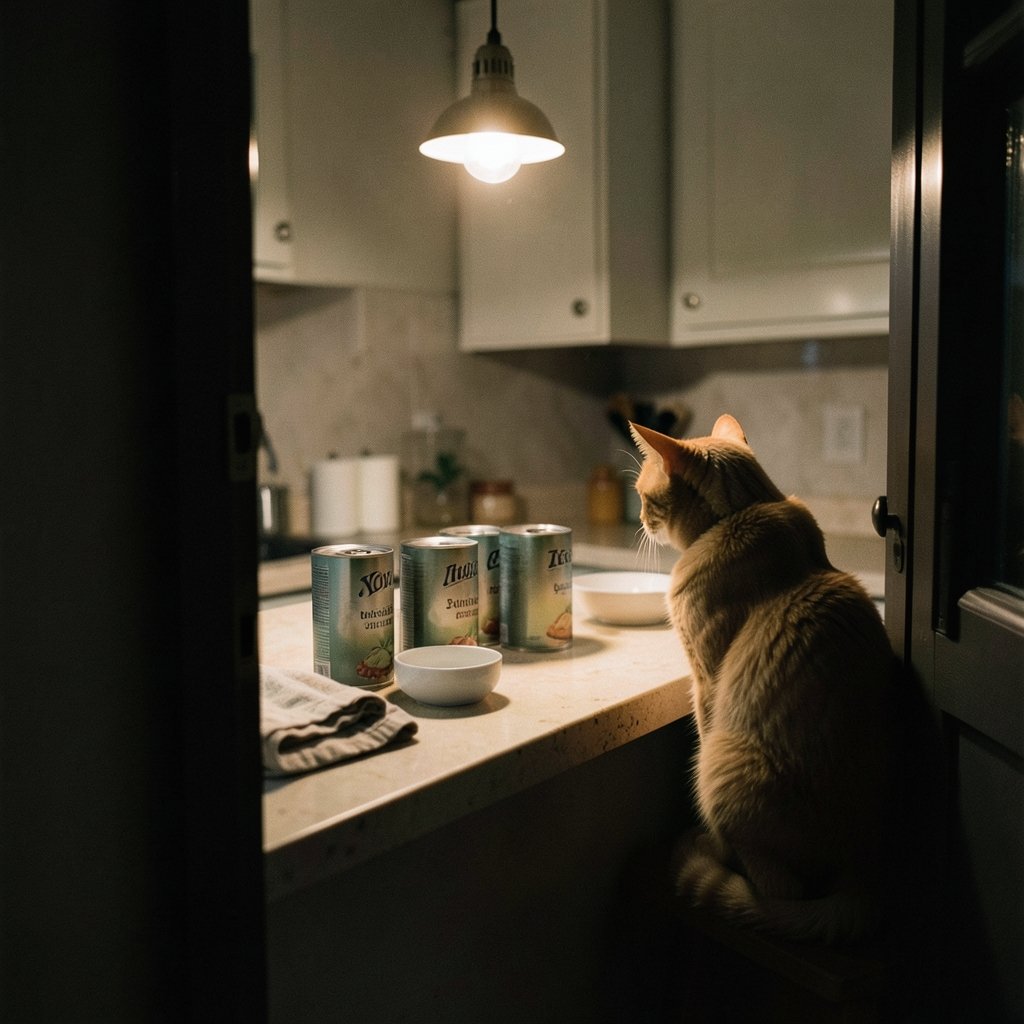
What if the most expensive can on the shelf is not the best wet cat food for your cat at all? That question trips up a lot of shoppers. Walk down any pet aisle and you will see cans promising “premium,” “human-grade,” “grain-free,” and “vet-recommended” in bold letters. The labels are loud. The actual information is buried in fine print most people never read.
Here is the good news: picking a great wet food is a learnable skill, not a mystery. It comes down to a handful of label checks, a little math, and an honest look at your cat’s age and health. This guide walks through the whole process, including the mistakes that even experienced owners make.
Why wet food deserves a serious look
Cats evolved as desert hunters. Their bodies are built to get much of their water from prey, which means many cats run on the low side of hydration when they eat dry food only. Wet food closes that gap naturally.
Canned and pouch foods are typically around 75 to 85 percent moisture, compared with roughly 10 percent or less in dry food. That single difference explains a lot. It supports urinary tract health, helps with kidney function over time, and often makes food more appealing to picky eaters or cats with a reduced sense of smell.
Wet food is not automatically better in every case. It costs more per calorie, spoils faster once opened, and some cats do perfectly well on dry. But for hydration, palatability, and managing certain health conditions, wet food earns its place. If you are also weighing dry options for a multi-cat household, this breakdown of a barn cat dry cat food 32 lb bag practical buying feeding covers the practical side of feeding a crowd.
Start with the nutritional adequacy statement

Before you look at protein sources or price, find the nutritional adequacy statement. It is usually a small block of text near the ingredients list, and it tells you whether the food is complete for a specific life stage.
A food labeled “complete and balanced” should meet a recognized nutrient profile, either for growth and reproduction or for adult maintenance. In the United States, that benchmark comes from the Association of American Feed Control Officials, commonly shortened to AAFCO. Manufacturers can support the claim in a few different ways:
| Substantiation method | What it means | What to watch for |
|---|---|---|
| Formulated to meet a profile | Recipe is designed to hit nutrient targets on paper | Common for wet foods; check the life stage named |
| Feeding trial | Food was tested on real animals following a set protocol | Usually a stronger real-world signal |
| Family or product-family comparison | Food is compared to a similar tested product | Fine, but less direct |
The label should say which method was used. Many wet foods are formulated rather than trial-tested, which is not automatically a flaw, but it is worth knowing. If the statement is missing entirely, or says “for intermittent or supplemental feeding only,” that food is a topper or treat, not a complete diet.
Learn the dry-matter trick before comparing cans
This is where most shoppers go wrong. They compare the protein percentage on a wet food label to the protein percentage on a dry food bag and conclude the wet food is weak. It is not a fair fight.
Because wet food is mostly water, its nutrient percentages look small. To compare fairly, convert to a dry-matter basis: divide the nutrient percentage by the fraction of dry matter, which is 100 percent minus the moisture percentage.
Say a can lists 10 percent protein and 80 percent moisture. Dry matter is 20 percent, so 10 divided by 0.20 gives 50 percent protein on a dry-matter basis. That is a genuinely protein-rich food. Run the same math on fat, fiber, and phosphorus if your vet has flagged them. Once you start doing this, labels that looked impressive suddenly look ordinary, and modest-looking cans turn out to be excellent.
Read the guaranteed analysis with realistic eyes
The guaranteed analysis lists crude protein (minimum), crude fat (minimum), crude fiber (maximum), and moisture (maximum). Notice the words minimum and maximum. These are not precise measurements. Two foods with identical guaranteed analyses can differ in what is actually inside the can.
Treat the guaranteed analysis as a rough sketch, not a portrait. It tells you the general shape of the food. It will not tell you the quality of the protein, the balance of amino acids, or whether the recipe was properly tested. For that, you need the adequacy statement and the ingredient panel together.
Judge ingredients without falling for marketing
Ingredients are listed by weight before cooking, which creates some quirks. A named meat first is a good sign, but “chicken” listed first includes its water weight, and that water cooks off. Look for a named protein source in the top few slots and a recognizable overall pattern.
A few practical rules that hold up:
- Named proteins beat vague ones. “Chicken” or “salmon” tells you more than “meat” or “animal by-products.”
- By-products are not poison. They are organ meats and trim, and they carry nutrients cats need. The bigger question is sourcing and consistency.
- Grain-free is not a quality badge. Grain-free became a marketing juggernaut, but it is not inherently better for cats. Concerns about certain grain-free diets and heart disease in dogs got a lot of attention, though the evidence is much stronger for dogs than cats. Do not pay extra for grain-free unless your cat has a specific reason to avoid grains.
- “Human-grade” and “premium” are not regulated nutrient claims. They say nothing about whether the food meets a nutrient profile.
Wet food is not the only place these label lessons apply. The same skepticism about buzzwords pays off when reading claims about how diet affects skin and coat, a topic covered in this piece on how food reduce dry skin eat softer stronger barrier.
Match the food to your cat’s life stage
There is no single best wet food, because there is no single cat. Life stage does more to narrow the field than brand loyalty ever will.
Kittens need growth-formula food with more calories, protein, and specific nutrients. Pregnant and nursing queens need even more energy and should generally eat kitten food. Adult cats do well on maintenance formulas. Senior cats often benefit from highly digestible protein and attention to phosphorus, especially if kidney values are creeping up.
Cats with diagnosed conditions, such as kidney disease, diabetes, urinary crystals, or food allergies, need a diet chosen with a veterinarian. Prescription wet foods exist for a reason, and no over-the-counter can substitutes for that guidance.
The transparency test that separates brands
A useful filter that goes beyond the can itself: how much does the manufacturer tell you? Strong signs include a named company you can contact, a clear nutritional adequacy statement, and disclosure of who formulated the food, ideally a board-certified veterinary nutritionist.
Global nutrition guidelines from the World Small Animal Veterinary Association emphasize exactly these points: named manufacturer, named contact, adequacy statement, and formulator qualifications. A brand that answers these questions plainly is usually a brand that takes formulation seriously. A brand that hides behind a maze of sub-brands and vague claims is telling you something too.
Safety, recalls, and storage habits that matter
Even good food can run into trouble. Pet food recalls happen regularly, and wet foods have been pulled for pathogens like Salmonella and Listeria, and occasionally for excess vitamins. Check recall notices periodically rather than assuming a favorite brand is forever safe. If a recall hits a food you feed, stop using it and follow the notice’s instructions.
Storage habits matter just as much:
- Refrigerate opened cans immediately and use within about three days unless the label says otherwise.
- Serve at room temperature or slightly warm. Cold food straight from the fridge is a common reason cats walk away from a bowl.
- Never leave wet food out for hours. Bacteria multiply fast in warm, moist food.
- Match portion size to the can. Buying smaller cans reduces waste if your cat eats little at a time.
One common mistake: owners leave a half-eaten can on the counter “for later” and then wonder why their cat turns up its nose at dinner. Freshness is part of palatability.
How to run a real food trial at home
Switching foods abruptly is a recipe for digestive upset. A slow transition over seven to ten days works better: start with a small amount of the new food mixed into the old, and increase the ratio gradually.
Watch for concrete signals rather than vibes. Note stool quality, coat condition, energy, and how eagerly your cat approaches the bowl. Give any new food at least a couple of weeks before judging, since adjustment takes time. If a food causes vomiting, diarrhea, or itching that persists, stop and talk to your vet.
Also resist the urge to rotate flavors constantly just for variety. Some cats do fine with rotation; others get loose stools from constant change. Pick a small rotation of foods your cat tolerates and stick with it.
Cost per calorie beats price per can
A cheap can that your cat eats half of is not cheap. Compare foods by cost per calorie, not cost per can. Higher-calorie wet foods often cost less per day because you feed less volume.
Here is a simple way to think about the trade-off:
| Priority | What to look for | What to accept |
|---|---|---|
| Tight budget | Larger cans, higher calorie density, complete-and-balanced statement | Fewer exotic proteins, simpler recipes |
| Picky eater | Strong aroma, pate or shredded textures, small cans for freshness | Slightly higher cost per calorie |
| Senior or medical needs | Vet-guided formula, phosphorus and protein awareness | Prescription pricing |
Feeding well is a budget conversation, and pretending otherwise does not help anyone. The goal is the best nutrition your household can sustain long term, not the most expensive can on the shelf.
Where food fits into a cat’s whole life
Nutrition is one thread in a larger picture. A cat that eats well, drinks adequately, plays daily, and gets regular vet checkups is set up far better than one fed a perfect diet in isolation. Food also carries emotional weight for people. Shared meals and the rituals around feeding time shape bonds, a theme that shows up whenever people talk about how food language love shared meals really do people connect. The same is true for the small daily ritual of opening a can and watching your cat come running.
Conclusion
The best wet cat food is the one that clears a few objective hurdles: a clear nutritional adequacy statement for your cat’s life stage, a sensible ingredient panel, a fair cost per calorie, and a manufacturer willing to be transparent. Everything else, from the gold foil to the word “premium,” is decoration.
Start with the label, do the dry-matter math, match the food to your cat’s age and health, and transition slowly. Do that, and you will make a better choice than most shoppers ever do, without paying for marketing you do not need.
Frequently asked questions
Is wet food better than dry food for cats?
Wet food has a real edge on hydration and palatability, and it is often the easier choice for cats with urinary or kidney concerns. Dry food is more convenient and cheaper per calorie. Many cats do well on a mix of both, and the right answer depends on your cat’s health and your budget.
How much wet food should I feed my cat?
It depends on the food’s calorie density and your cat’s weight and activity level. Check the feeding guide on the can as a starting point, then adjust based on body condition. Your vet can give you a calorie target if your cat needs to lose or gain weight.
Does wet cat food need to be refrigerated after opening?
Yes. Refrigerate opened cans right away and use them within about three days unless the label says otherwise. Serve slightly warmed, and never leave wet food sitting out at room temperature for long stretches.
What does “complete and balanced” mean on a cat food label?
It means the food is formulated to meet a recognized nutrient profile, or was supported by a feeding trial or a comparable tested product. The label should name the life stage it is complete for. If that statement is missing, the food is not a complete diet.
Is grain-free wet cat food better?
Not automatically. Grain-free is a marketing category, not a nutritional guarantee. Most cats digest grains fine, and the health concerns that drew attention were centered on dogs. Choose grain-free only if your cat has a specific reason to avoid grains.
How do I switch my cat to a new wet food?
Transition gradually over seven to ten days, mixing a little new food into the old and increasing the ratio slowly. Watch stool quality and appetite. If digestive upset persists beyond a few days, slow down or check with your vet.














