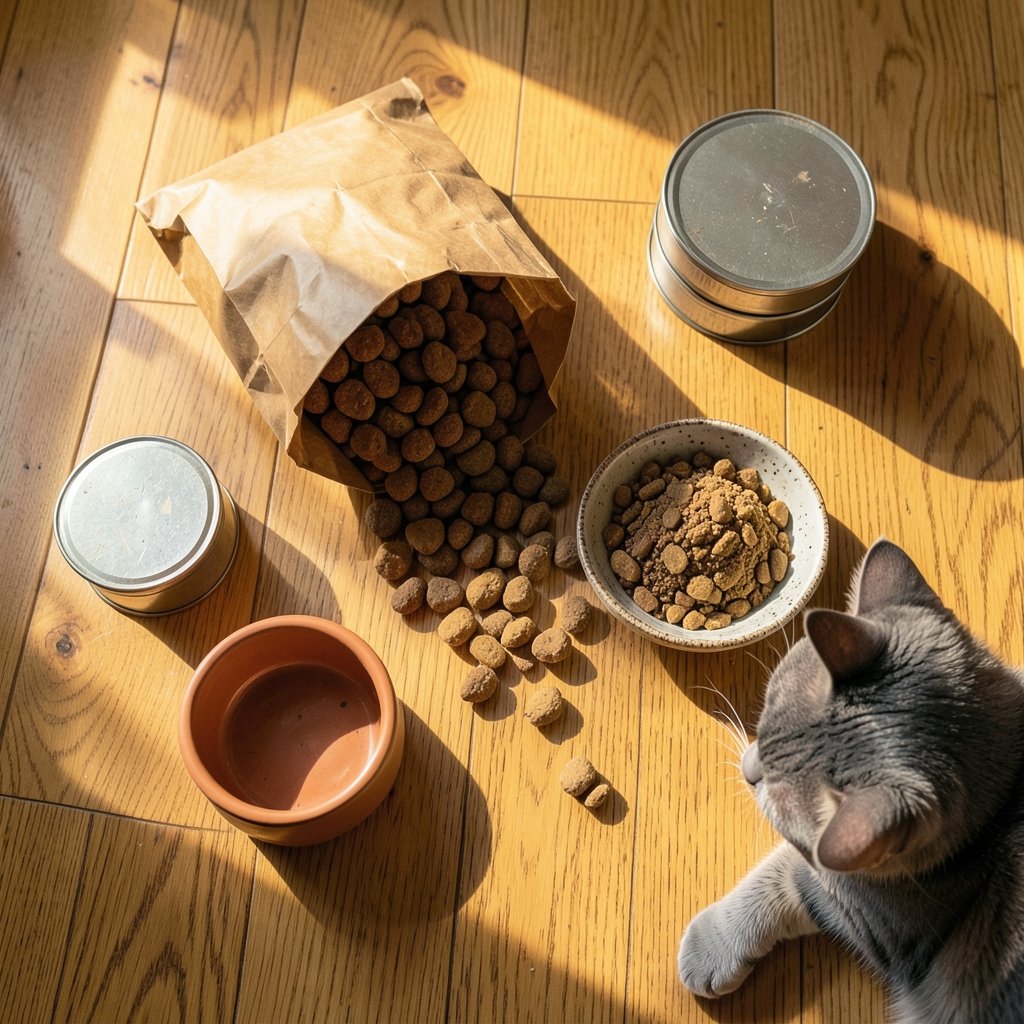
What if the “best” cat food on the shelf is a label trick rather than a nutritional promise? Walk down any pet aisle and you’ll see bags shouting “premium,” “holistic,” “grain-free,” and “vet recommended.” None of those words are regulated. None of them tell you whether the food inside actually meets a cat’s needs. The real answer to “what is the best cat food” is less glamorous and far more useful: the best food is the one that fits a specific cat’s life stage, body condition, health history, and your household budget, and that is backed by a manufacturer who can prove what it claims.
This guide breaks down how to read labels like someone who knows what matters, which claims are meaningful, which are marketing noise, and how to match a food to the cat in front of you.
Why “Best” Is Always a Conditional Word
Veterinary nutrition guidance consistently frames food choice around the individual animal rather than a universal winner. Life stage, body condition score, existing health conditions, and owner resources all shift the answer. A food that’s ideal for a lean, active two-year-old indoor cat may be wrong for a senior with kidney changes or a kitten who needs far more calories per pound.
That means any list of “best cat foods” is really a list of good fits for categories of cats. Treat rankings as starting points, not verdicts. The practical move is to learn the handful of standards that separate a well-formulated product from a hopeful one, then apply them to your cat’s situation.
The Label Standard That Actually Means Something
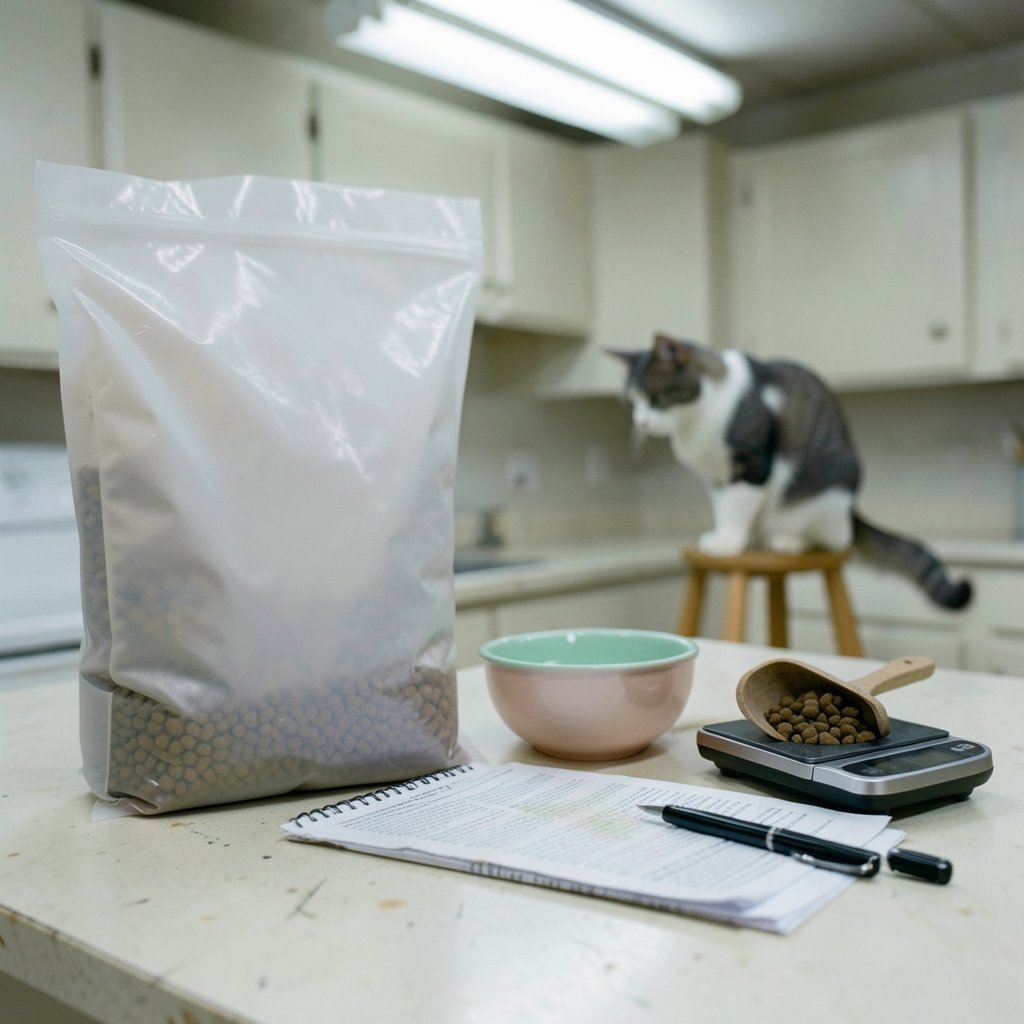
In the United States, the phrase complete and balanced is the closest thing to a quality benchmark on a pet food label. It isn’t a grade or a ranking. It’s a defined claim tied to nutrient profiles published by the Association of American Feed Control Officials (AAFCO), a private nonprofit made up of state regulators rather than a federal agency.
A product can substantiate that claim in more than one way:
| Method | What it means | What it tells you |
|---|---|---|
| Formulated to a nutrient profile | The recipe is calculated to meet minimum and maximum nutrient levels on paper | Nutrients should be present at required levels, but the food was not necessarily fed to real cats in a trial |
| Feeding trial | The food was tested on cats following set protocols | Real animals maintained health and weight on the diet |
| Product family | A similar product in the same family passed one of the above | The claim extends by association |
Here’s where people get tripped up. A food that meets a profile by formulation alone is legal and can be perfectly good. But it hasn’t been through a feeding trial, and some nutritionists argue that trial-tested foods offer more assurance. Others point out that formulation is a rigorous process in its own right. This is a genuine debate, not a settled fact, so treat “feeding trial” as a plus rather than a pass-fail test.
Life stage is not a suggestion
AAFCO profiles separate growth and reproduction from adult maintenance, plus an all-life-stages category. Kittens and pregnant or nursing queens need the higher growth profile. Feeding an adult-maintenance food to a growing kitten is a recognized mismatch, and it’s one of the most common mistakes owners make when they buy one bag for a multi-cat house. If you live with a kitten and an adult, either feed separately or choose an all-life-stages food that meets the growth profile.
What the Guaranteed Analysis Does and Doesn’t Tell You
Every label carries a guaranteed analysis: minimum crude protein, minimum crude fat, maximum crude fiber, and maximum moisture. New owners often compare these numbers straight across products, which is a mistake for two reasons.
First, these are labeling minimums and maximums, not measured values. A food guaranteeing 30% protein might contain considerably more. Second, canned food looks dramatically lower in protein than dry food simply because it’s mostly water. To compare fairly, convert to dry matter basis by subtracting moisture and recalculating. A 10% protein canned food at 78% moisture is roughly 45% protein on a dry matter basis, which is far higher than it appears.
Practically, this means a wet food can be an excellent protein source even though its label looks weak next to kibble. It also means you should not pick a food by scanning for the biggest protein number.
Cats Are Obligate Carnivores, and That Shapes Everything
Cats evolved as obligate carnivores. They have dietary requirements for nutrients their bodies cannot make in sufficient amounts, including taurine, arachidonic acid, and preformed vitamin A. Taurine deficiency is linked to dilated cardiomyopathy and retinal degeneration in cats, which is why taurine supplementation is standard in commercial cat food and why unbalanced homemade diets are risky.
This physiology explains a few practical points:
- Protein quality and quantity matter more for cats than for many other species.
- Carbohydrate is not a required nutrient, though it appears in most commercial foods as a binder, texture agent, or energy source. If you’re curious how starches and eggs hold food together, this explainer on what a binder in cooking actually does covers the same chemistry that shows up in pet food manufacturing.
- Vegetarian or vegan diets for cats require carefully formulated supplementation and veterinary oversight; they are not a do-it-yourself project.
How to Vet a Manufacturer in Five Minutes
Label reading gets you partway. The rest is about the company behind the bag. Global nutrition guidelines for veterinarians recommend asking a short list of questions, and you can ask them too:
- Does the company employ a full-time qualified nutritionist, such as a board-certified veterinary nutritionist or someone with an advanced degree in animal nutrition?
- Does it own or operate the plants where its food is made, or does it outsource to a co-packer it doesn’t control?
- Does it conduct nutrient analysis and feeding trials on finished products?
- Does it publish a real phone number or address where you can reach a person?
- Can it tell you which specific product formulas have been trial-tested?
A company that answers all five clearly is signaling that it takes formulation seriously. A company that answers with slogans is telling you something too. This single step filters out more questionable products than any ingredient-panel debate.
Grain-Free, Raw, and Other Loaded Labels
Grain-free is a marketing category, not a nutritional standard. No major regulatory body defines it as healthier. The FDA opened an investigation in 2018 into a possible link between certain grain-free diets and dilated cardiomyopathy in dogs, and later updates did not establish causation. The question remains unresolved, and some later research and industry positions dispute the link. For cats specifically, grains are not inherently harmful; they’re a carbohydrate source some cats tolerate well and others don’t need.
Raw and home-prepared diets carry documented risks. Public health and veterinary bodies caution that raw animal-source diets can shed pathogens like Salmonella and Listeria, and that unbalanced homemade diets risk serious nutrient deficiencies. Pro-raw advocates argue for perceived benefits, and that position exists, but the caution from health authorities is broad and consistent. If you want to feed raw or cook at home, do it with a veterinary nutritionist’s recipe rather than a blog formula.
By-products deserve a fair hearing too. The word sounds unappetizing, but organ meats are nutrient-dense and are exactly the kind of tissue obligate carnivores would eat in the wild. Judging a food by whether “by-product” appears on the label is less useful than judging the nutrient profile and the manufacturer.
Matching Food to the Cat in Front of You
Here’s where the practical work happens. Use body condition as your guide, not the feeding chart alone. The chart is a starting point; you adjust portions based on how the cat looks and feels.
| Cat situation | What to prioritize | Common mistake |
|---|---|---|
| Kitten under one year | Growth-profile food, frequent small meals | Feeding adult maintenance food to save money |
| Lean, active adult | All-life-stages or adult food with strong protein | Free-feeding unlimited kibble |
| Overweight adult | Measured portions, wet food for volume and satiety | Cutting food drastically without veterinary input |
| Senior cat | Veterinary check first; kidney and dental health often change the plan | Assuming senior food is automatically right |
| Cat with urinary history | Higher moisture intake, veterinary guidance | Relying on “urinary” labels without a diagnosis |
| Multi-cat household | All-life-stages food or separate feeding stations | One bag for a kitten and a senior |
Two habits make the biggest difference in practice. First, transition slowly over seven to ten days, mixing increasing amounts of the new food, because sudden switches cause digestive upset. Second, measure portions with an actual measuring cup or a kitchen scale. Most overfeeding happens because owners eyeball the scoop. The same portion discipline applies to treats, which are easy to overdo and should stay under roughly a tenth of daily calories.
Wet food deserves a specific mention. Cats evolved to get much of their water from prey, and many cats drink little. Adding wet food is one of the simplest ways to raise moisture intake, and it helps with weight management because the volume is satisfying without the calorie density of kibble. If cost is a barrier, mixing a little wet food into a dry-food routine still helps. For households managing budgets across several animals, the same practical buying logic in this guide to barn cat dry cat food in a 32 lb bag applies to any multi-cat or outdoor-cat feeding setup.
Reading the Ingredient List Without Overreading It
Ingredients are listed by weight before cooking, which makes fresh meat appear higher than it ends up in the finished product. “Chicken” weighs more than “chicken meal” because of water content, so a food listing chicken first isn’t automatically meatier than one listing chicken meal first. Both are valid. What matters more is the total nutrient profile and whether the manufacturer can back its claims.
Watch for splitting, where one ingredient appears under several names (peas, pea protein, pea fiber) so no single entry tops the list. It’s a legal labeling tactic, not a safety issue, but it tells you the list is being managed for appearance. None of this makes a food bad. It just means the ingredient panel is a weak tool compared to the nutrient profile and manufacturer transparency.
Where Expertise and Everyday Eating Meet
Food choices are personal, and cat food sits at the intersection of nutrition science and household routine. The same instincts that make people care about what goes on their own plates apply to their cats. Shared meals and the language of feeding carry real emotional weight, as this piece on how food is a language of love and shared meals really do matter explores. For cats, that care shows up as consistent portions, clean water, and a food that matches their stage of life rather than the loudest package on the shelf.
If you enjoy exploring food culture more broadly, the regional variety in Indian food by region and what people actually eat is a reminder that “best” always depends on context, tradition, and the individual eater. Cat nutrition works the same way.
Conclusion
The best cat food isn’t a single bag with a gold medal on it. It’s a food that meets a recognized nutrient profile for your cat’s life stage, comes from a manufacturer that can answer hard questions about who formulates and tests it, and fits your cat’s body condition and health history. Read the complete and balanced statement and check which life stage it covers. Convert to dry matter before comparing protein numbers. Add moisture where you can. Measure portions instead of guessing. And when something changes, whether it’s weight, water intake, or litter box habits, loop in a veterinarian before switching foods on a hunch. Do those things and you’ll land on a genuinely good choice, no marketing vocabulary required.
What does “complete and balanced” mean on cat food?
It’s a defined claim that the food meets a nutrient profile for a specific life stage, such as growth or adult maintenance. It can be substantiated by formulating to the profile, by passing a feeding trial, or through a product family member that passed one. It is not a quality grade or a ranking.
Is grain-free cat food better?
Not automatically. Grain-free is a marketing category, not a nutritional standard, and no major regulatory body defines it as healthier. An investigation into a possible link between certain grain-free diets and heart disease in dogs did not establish causation, and the question remains unresolved. Grains are not inherently harmful to cats.
Should I compare protein percentages on the label directly?
No. The guaranteed analysis lists minimums and maximums, not measured values, and canned food looks low in protein only because it contains so much water. Convert to a dry matter basis first by subtracting moisture and recalculating, then compare.
How do I switch my cat to a new food?
Transition gradually over seven to ten days, mixing increasing amounts of the new food into the old. Sudden switches commonly cause digestive upset. Measure portions rather than free-feeding, and keep treats under about a tenth of daily calories.
Is wet food better than dry food for cats?
Wet food raises moisture intake, which matters because many cats drink little, and its volume helps with weight management. Dry food is convenient and cost-effective. Many households do well with a mix, and the best ratio depends on the individual cat’s health and your budget.
How often should I check whether my cat’s food still fits?
Review the plan at least once a year at a wellness visit, and sooner if weight, water intake, appetite, or litter box habits change. Senior cats and cats with diagnosed conditions often need more frequent adjustments, so ask the veterinarian before changing diets.