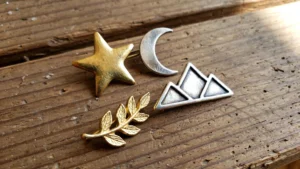
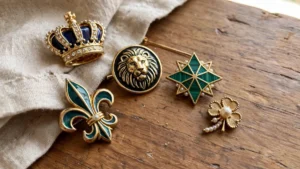
What Is a Lapel Pin? 2027
A lapel pin is the smallest piece of jewellery a man or woman can wear with a jacket, and often the one that gets noticed first. It is a small decorative pin, usually no bigger than a coin, fixed to the left lapel of a suit jacket, blazer, or coat. It does not hold anything together, it does not keep you warm, and it serves no practical purpose at all, which is exactly why people wear it. A lapel pin is a choice, a small signal of taste, personality, or belonging, worn where everyone can see it.
The confusion around lapel pins is understandable. They look like brooches, they are sometimes called badges, and they sit in the same display cases as cufflinks and tie bars. The difference is simple. A brooch is usually larger, worn by women on a dress or coat, and often fastened with a hinged pin. A lapel pin is smaller, designed for the buttonhole or the fabric of a jacket lapel, and it is worn by men and women alike. A badge usually carries a logo, a flag, or a message. A lapel pin can do all of those things, but it can also be purely decorative, a small flower, a knot, a stone, or a piece of enamel in a colour you like.
Below are nine facts that explain what a lapel pin is, how it works, and how to choose one in 2027, from the size that looks right to the fastening that keeps it in place, so you can wear one with confidence instead of guessing.
Key takeaways
- A lapel pin is a small decorative pin worn on the left lapel of a jacket, blazer, or coat, through the buttonhole or pinned to the fabric.
- Most lapel pins are under an inch across, and the classic size is between half an inch and three quarters of an inch.
- Enamel, solid metal, and floral styles cover almost every occasion, from a wedding to a working day.
- Clutch backs are the most common fastening, screw backs are the most secure, and magnetic backs suit delicate fabrics.
- A lapel pin does not replace a pocket square or a tie bar, and a cheap pin with a weak fastening can fall off or damage fine cloth.
What a lapel pin actually is
A lapel pin is a decorative fastening worn on the lapel, the folded flap of fabric on the front of a jacket. Most jackets have a buttonhole on the left lapel, originally made for a flower, and that is where a lapel pin usually goes. The pin passes through the buttonhole or through the fabric just behind it, and a small clutch, screw, or magnet holds it in place from behind. The visible part is the design itself, which can be as simple as a plain gold bar or as detailed as a tiny enamel flower.
The pin is small by design. A lapel is a narrow strip of fabric, and a pin that is too large looks heavy and out of proportion. The classic size is between half an inch and three quarters of an inch across, roughly the size of a coin. Larger pins exist, usually for evening wear or for statement looks, but they work best on a wide lapel and a heavier jacket. On a slim suit, a small pin is almost always the better choice.
What makes a lapel pin different from other jewellery is where it sits. It is at chest height, near the face, and it is one of the first details people notice when they look at a jacket. That is why it works so well as a finishing touch. It does not need to be expensive or loud.
How we chose these facts and what to look for
Look first at the size and the weight. A lapel pin should sit flat against the lapel without pulling the fabric down or swinging when you move. Hold it in your hand before you buy it if you can. If it feels heavy for its size, it will feel heavier on a fine wool jacket.

Look next at the fastening, because that is what decides whether the pin stays put. A clutch back, the small metal disc that pushes onto the pin post, is the most common and the easiest to use, but it can loosen over time. A screw back, which twists onto a threaded post, is more secure and worth choosing for an expensive pin. A magnetic back needs no hole at all, which makes it kind to silk and fine cashmere, though it holds best on lighter pins. Knowing how to tie a tie is useful here too, because a lapel pin sits just above the tie, and the two should work together rather than compete.
Finally, look at the finish and the metal. Gold, silver, and gunmetal are the safe choices, and they match the other metal you are wearing, such as a watch or a belt buckle. Enamel adds colour, which is useful when the rest of the outfit is plain.
The 9 facts about lapel pins in 2027
It sits on the left lapel, through the buttonhole
What we like: The left lapel is the traditional home of a lapel pin, and most jackets have a buttonhole there ready to use. The position is flattering, near the face, and it balances the pocket square on the other side. What to consider: Some jackets have no lapel buttonhole, and a pin pushed straight through the fabric can leave a small hole, so check before you commit. Best For: Suits, blazers, and tailored coats. Cost: No extra cost, the buttonhole is already there. Time Needed: A few seconds to fix in place.
It comes in three main styles, enamel, metal, and floral
What we like: Three styles cover almost every occasion. Enamel pins add colour, solid metal pins are quiet and formal, and floral pins, usually a small fabric or enamel flower, are the classic wedding choice. What to consider: Floral pins can look dated if they are too large, and bright enamel can clash with a patterned tie. Best For: Enamel for everyday, metal for formal, floral for weddings. Cost: About £10 to £60 for most pins. Time Needed: A few minutes to choose the right style.
The size should stay small, under an inch for most jackets
What we like: A small pin looks deliberate and neat, and it does not pull the lapel out of shape. The classic size, half an inch to three quarters of an inch, suits almost every jacket. What to consider: A pin larger than an inch can look heavy on a slim lapel, and it may swing when you walk. Best For: Slim and regular-fit jackets. Cost: Smaller pins are often cheaper, from about £10. Time Needed: A minute to check the size against the lapel.
It fastens with a clutch, a screw back, or a magnetic back
What we like: Each fastening has a clear strength. A clutch back is quick and easy, a screw back is the most secure, and a magnetic back needs no hole and suits delicate fabric. What to consider: Clutch backs can loosen over months of use, and magnetic backs hold best on light pins only. Best For: Clutch for everyday, screw for valuable pins, magnetic for silk and cashmere. Cost: Screw and magnetic backs cost a little more, usually £5 to £15 extra. Time Needed: A few seconds to fasten, a minute to check it is secure.
Gold, silver, and enamel all work well
What we like: Gold suits warm skin tones and dark suits, silver suits cool skin tones and grey suits, and enamel adds a touch of colour to a plain outfit. What to consider: Mixing gold and silver in the same outfit can look untidy, so match the pin to your watch and belt buckle. Best For: Gold for navy and black, silver for grey, enamel for plain suits. Cost: About £15 to £80 for a good metal or enamel pin. Time Needed: A few minutes to match the metal to your other accessories.
It suits formal dress first, but not only formal dress
What we like: A lapel pin is at home at a wedding, a formal dinner, or a business meeting, but a simple enamel pin also works with a smart blazer and no tie. What to consider: A large or glittering pin can look out of place at work, and a novelty pin can undermine a formal outfit. Best For: Weddings, formal events, smart workwear, and evening wear. Cost: No extra cost to wear it more often. Time Needed: A few seconds to decide if the occasion suits it.
It needs a jacket with a lapel to work at all
What we like: A lapel gives the pin a natural home, and the pin in turn gives the lapel a finishing detail. The two were made for each other. What to consider: A lapel pin does not work on a shirt, a jumper, or a coat with no lapel, and it can look odd pinned to a collar. Best For: Suit jackets, blazers, sports jackets, and tailored coats. Cost: Nothing, if you already own a jacket. Time Needed: None, once you have the right jacket.
It can carry meaning, a cause, a club, or a milestone
What we like: A lapel pin can quietly say something about you, a charity you support, a club you belong to, a team you follow, or a milestone you are proud of. What to consider: A message pin can start a conversation you do not want, and a political pin can be the wrong choice at work. Best For: Charity pins, club pins, and milestone gifts. Cost: About £5 to £40 for most message and cause pins. Time Needed: A few minutes to choose a pin that means something to you.
A good one holds its value when the metal is good
What we like: A lapel pin in solid gold, silver, or a well-made enamel holds its value far better than a cheap plated pin, and it can be worn for years. What to consider: Plated pins wear through with time, and a pin with a weak fastening is worth little once the plating is gone. Best For: Gifts, milestones, and anyone building a small collection. Cost: About £50 to £300 for a solid metal pin. Time Needed: A few minutes to check the hallmark or the maker’s mark.
Which lapel pin is right for you
Start with the jacket you wear most. A dark navy suit suits a gold or enamel pin, a grey suit suits silver, and a black suit suits either, as long as the pin is small and simple. If you wear a suit only for weddings and formal events, a floral pin or a slightly larger enamel pin is a better choice, because it marks the occasion.
Think next about how often you will wear it. A pin you wear once a year can be lighter and more decorative, because it will not be tested by daily wear. The best silk ties for men are a useful comparison here, because the same logic applies, a daily piece should be durable and simple, while an occasion piece can be bolder.
Finally, buy one good pin before you buy five cheap ones. A single well-made pin in gold or silver, with a secure fastening and a clean finish, will look better and last longer than a handful of plated pins that lose their colour.
The caveats that matter
A lapel pin is a small thing, but it can go wrong in a few predictable ways. The most common is a pin that is too big, too heavy, or too bright for the jacket it sits on. The second is a weak fastening that lets the pin fall off, which is how good pins get lost. The third is a pin that damages the fabric, either because the post is too thick for a fine cloth, or because a rough back catches on the lining.
| Detail | What is known |
|---|---|
| Where it goes | Left lapel, through the buttonhole or pinned to the fabric |
| Classic size | Half an inch to three quarters of an inch across |
| Main styles | Enamel, solid metal, and floral, in that order of versatility |
| Fastenings | Clutch back for everyday, screw back for security, magnetic for delicate fabric |
| Best metals | Gold for navy and black, silver for grey, enamel for plain suits |
| When to wear it | Weddings, formal events, smart workwear, and evening wear |
| What to avoid | Pins larger than an inch, weak fastenings, and sharp or rough backs |
| What it does not do | It does not replace a pocket square or a tie bar, and it does not suit a shirt or jumper |
If you are buying a pin as a gift, check the recipient’s jacket style first. A pin that suits a wide peak lapel may look wrong on a slim notch lapel, and a magnetic back is a safer gift than a screw back, because it needs no hole and fits any jacket.
Checklist: choosing a lapel pin honestly
Use these checks before you buy, and again before you wear the pin out.
- Check the size: half an inch to three quarters of an inch, sitting comfortably within the lapel.
- Check the weight: it should feel light in your hand and sit flat without pulling the fabric.
- Check the fastening: clutch, screw, or magnetic, and test it before you leave the house.
- Check the metal: match it to your watch and belt buckle, not to the pin alone.
- Check the back: smooth and clean, with no sharp edges that could catch on the lining.
- Check the occasion: simple metal for work, floral or enamel for weddings and evenings.
Frequently asked questions
Which side does a lapel pin go on?
The left lapel, which is where most jackets have a buttonhole.
Can women wear lapel pins?
Yes. Lapel pins are worn by men and women alike, on suit jackets, blazers, and tailored coats. Women often choose slightly smaller pins, or enamel and floral styles, but there is no rule that limits them to one style.
Can I wear a lapel pin with a pocket square?
Yes, and they work well together, as long as one of them is simple. A plain pocket square with a decorative pin, or a decorative pocket square with a plain pin, is the safe combination.
Will a lapel pin damage my jacket?
It can, if the post is thick or the back is rough. A fine post and a smooth back are safe on most wool, and a magnetic back needs no hole at all, which makes it the safest choice for silk and fine cashmere. Check the back of the pin before you buy it.
Can I wear a lapel pin without a tie?
Yes. A lapel pin works with an open collar and a blazer, and it can be the one detail that keeps a tieless outfit looking smart. A guide to luxury gifts under £1,000 includes lapel pins among the small gifts that suit a smart wardrobe, which is a useful place to look if you are buying one as a present.
How do I stop a lapel pin falling off?
Use a screw back for valuable pins, check a clutch back regularly for looseness, and give the pin a gentle tug before you leave the house. A spare clutch back in your pocket is a cheap safeguard, and it takes up no room at all.
The bottom line
A lapel pin is a small, simple accessory, and that is its strength. It sits on the left lapel, it should be under an inch across, and it should match the metal you already wear. Enamel adds colour, solid metal adds quiet formality, and a floral pin marks a wedding or a special occasion.
Choose one good pin, in the right size and the right metal, with a fastening you trust, and wear it with a jacket you love. That is all a lapel pin needs to do its job, and it will do it well for years.