How to Wear a Lapel Pin 2027
A lapel pin is one of the smallest details in menswear, and one of the easiest to wear badly. It is a tiny piece of metal or fabric on the left lapel of a jacket, and when it is placed well it finishes the outfit in a way that nothing else can. When it is placed badly, it pulls the lapel out of shape, fights the tie, or looks like it was pinned on as an afterthought.
The good news is that wearing a lapel pin well is mostly a matter of position and restraint. The pin goes on the left lapel, it should be small, it should match your other metal, and it should be the only loud detail on your chest. Get those four things right and the rest is a matter of taste.
Below are nine ways to wear a lapel pin in 2027, from choosing the right lapel to knowing when to leave the pin at home. Each tip is described by what works, what to watch for, and how long it takes, so you can wear a pin with confidence rather than guesswork.
Key takeaways
- Wear a lapel pin on the left lapel, through the buttonhole or just above it, and keep it small.
- Match the pin’s metal to your watch, belt buckle, and cufflinks for a coherent look.
- Keep the pin level and flat against the lapel, and check it in a mirror before you leave.
- A bold or floral pin works for weddings and evenings, while a plain metal pin suits work and daytime.
- A lapel pin does not suit every outfit, and wearing one with a tie bar and a pocket square at once can look overdone.
What wearing a lapel pin actually involves
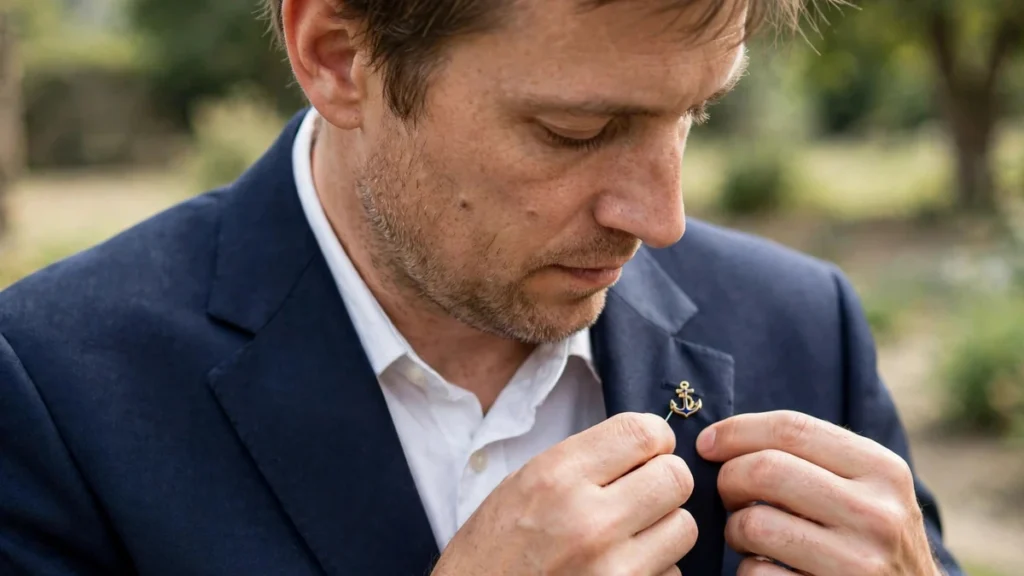
Wearing a lapel pin involves three small actions: choosing the pin, placing it on the left lapel, and fastening it so it sits flat. The left lapel is the traditional side, and most jackets have a buttonhole there made for exactly this purpose. The pin goes through the buttonhole, or just above it if there is no buttonhole, and the fastening sits behind the lapel where it cannot be seen.
What matters most is the balance of the outfit. A suit, a shirt, and a tie already fill the chest with colour and pattern. A lapel pin adds one more small element, and it should be the quietest of them. A plain pin with a patterned tie works. A floral pin with a plain tie works. A floral pin with a patterned tie and a patterned pocket square does not, because the eye has nowhere to rest.
What wearing a lapel pin does not involve is a lot of fuss. It takes less than a minute to put on, it costs very little, and it can be removed just as quickly if the occasion changes. That is part of its appeal. It is the easiest formal accessory to add, and the easiest to take away.
How we chose these tips and what to look for
Look first at the lapel itself. A wide peak lapel can carry a slightly larger pin, while a narrow notch lapel suits a small one. A heavy wool jacket holds a pin firmly, while a light linen jacket can sag under a heavy pin. Check the lapel width and the fabric weight before you choose a pin, because the jacket decides what will work.

Look next at the rest of your outfit. The pin should match your metals, so a gold pin goes with a gold watch and gold cufflinks, and a silver pin goes with silver. It should also sit comfortably with your tie. Our guide on how to tie a tie covers the knot and the length, and the same care applies here, because the pin sits just above the tie and the two are always seen together.
Finally, look at the occasion. A work meeting calls for a plain metal pin. A wedding calls for something with a little more character. A funeral calls for no pin at all. The occasion is the simplest guide to whether a pin belongs, and it is the one most men forget.
The 9 ways to wear a lapel pin in 2027
Wear it on the left lapel
What we like: The left lapel is the traditional side, and it is where the buttonhole is. What to consider: Wearing it on the right looks wrong to anyone who knows the convention, so keep it on the left. Best for: Every occasion where a pin belongs. Cost: Nothing. Time needed: A few seconds.
This is the first rule and the simplest. Left lapel, every time, and the pin will look like it belongs there. The convention comes from the buttonhole, which tailors place on the left lapel, and from the way a jacket is cut. A pin on the right lapel looks like a mistake to anyone who knows the rule, and it will also sit awkwardly because there is no buttonhole to hold it.
Use the buttonhole
What we like: The buttonhole holds the pin in place and stops it from slipping. What to consider: If there is no buttonhole, use a magnetic back rather than forcing a pin through plain fabric. Best for: Jackets with a working lapel buttonhole. Cost: Nothing. Time needed: A few seconds.
The buttonhole exists for this purpose. Use it, and the pin will sit where it should without damaging the fabric. Push the pin through from the front, let the fastening sit behind the lapel, and give the pin a small turn so it lies flat. If the buttonhole is stitched shut, as it is on some new jackets, have a tailor open it rather than cutting it yourself.
Keep it small
What we like: A small pin, 15 to 25 millimetres across, looks refined and does not pull the lapel. What to consider: A pin larger than the lapel width looks like a brooch, which is a different accessory. Best for: Every jacket, but especially narrow lapels. Cost: Nothing. Time needed: A moment to check the size.
Small is the safest choice. If you can see the pin clearly from across a room, it is probably too big. Measure it against the lapel before you buy, and remember that a pin looks larger on the jacket than it does in your hand. A pin that covers most of the lapel width is too large, whatever the shop assistant tells you.
Match the metal to your watch
What we like: Matching metals make the outfit look considered, even when the pin is small. What to consider: Mixing gold and silver can work, but only if it is deliberate and the rest of the outfit is simple. Best for: Men who wear a watch every day. Cost: Nothing. Time needed: A few seconds to check.
Look at your watch, your belt buckle, and your cufflinks before you choose a pin. If they are silver, choose silver. If they are gold, choose gold. This is not a hard rule, and a two-tone pin can bridge the gap, but matching metals is the easiest way to make an outfit look coherent without thinking about it.
Keep the pin level and straight
What we like: A level pin looks intentional and neat. What to consider: A pin that tilts or droops makes the whole jacket look careless. Best for: Photographs, weddings, and formal events. Cost: Nothing. Time needed: Ten seconds in a mirror.
Check the pin in a mirror before you leave, and check it again after you sit down. Pins shift when you move, and a quick straighten is all it takes. A pin that droops at one end usually means the fastening is loose or the pin is too heavy for the fabric, so try a lighter pin or a firmer clutch back.
Pair a bold pin with a plain tie
What we like: A floral or coloured pin adds colour that a plain tie cannot. What to consider: A bold pin with a bold tie makes the chest look crowded. Best for: Weddings and summer events. Cost: Nothing. Time needed: A moment to choose the tie.
One strong detail per outfit is the rule. If the pin is the strong detail, keep the tie plain. If the tie is the strong detail, keep the pin plain. This matters most in photographs, where a busy chest draws the eye away from the face, and it matters at weddings, where the pin should add colour without competing with the tie.
Save the bold pins for evenings and weddings
What we like: Evenings and weddings are the occasions where a little more colour and character is welcome. What to consider: A floral pin at a work meeting can look out of place. Best for: Weddings, dinners, and evening events. Cost: Nothing. Time needed: A moment to decide.
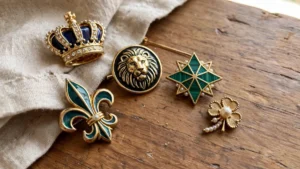
Keep the bold pins for the occasions that suit them. A plain metal pin covers work, and a floral pin covers the weekend. If you are unsure whether a pin is too bold for an occasion, it probably is, and the plain pin is the safer choice. You can always add colour with a pocket square instead.
Wear a lapel pin without a tie for a relaxed look
What we like: A pin on a blazer worn without a tie adds polish to a relaxed outfit. What to consider: The pin should be simple, because without a tie there is nothing else to balance it. Best for: Smart-casual outfits and summer blazers. Cost: Nothing. Time needed: A few seconds.
A blazer without a tie can look unfinished. A small pin fills that gap without making the outfit formal, which is exactly what a relaxed look needs. Choose a matte or brushed pin for this, rather than a polished one, because a shiny pin without a tie can look like it is trying too hard.
Take the pin off before you hang the jacket
What we like: Removing the pin stops it from snagging other clothes or pulling the lapel out of shape in the wardrobe. What to consider: Pins left in jackets can bend, and bent pins do not sit flat. Best for: Every jacket, every time. Cost: Nothing. Time needed: A few seconds.
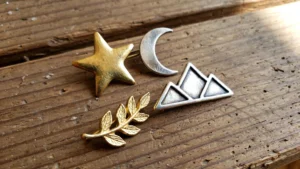
Take the pin off at the end of the day and store it separately. It takes seconds, and it keeps both the pin and the jacket in good shape. Keep pins in a small box or a lined tray, with enamel pins kept apart from metal ones so they do not scratch each other.
Which approach is right for you
If you wear a suit to work every day, start with a plain metal pin in the metal of your watch. It is the most versatile choice, it suits every working day, and it never looks out of place. Wear it on the left lapel, keep it small, and check it in the mirror before you leave.
If you are dressing for a wedding, choose a pin with a little more character, a pearl, a flower, or a gold bar, and pair it with a plain tie. A tuxedo guide is useful here, because black tie has its own rules and a lapel pin is one of the few places where you can add a personal touch.
If you rarely wear a suit, a single matte steel pin is enough. It works with a blazer, it works without a tie, and it does not demand a matching set of accessories. One good pin, worn well, is better than a box of pins worn badly.
The caveats that matter
Lapel pins are easy to wear, but there are a few ways to get them wrong. The most common is wearing a pin that is too big or too heavy for the jacket, which pulls the lapel down and leaves a visible hole. The second is wearing a pin with a tie bar and a pocket square all at once, which crowds the chest. The third is pinning through plain fabric where there is no buttonhole, which leaves a hole that does not close.
| Detail | What is known |
|---|---|
| Which lapel | Left lapel, through the buttonhole or just above it |
| Best size | 15 to 25 millimetres across, smaller than the lapel width |
| Matching metal | Match the pin to your watch, belt buckle, and cufflinks |
| Best pin for work | A plain metal bar in gold or silver, small and quiet |
| Best pin for weddings | Pearl, floral, or gold, paired with a plain tie |
| When to skip it | Funerals, very casual outfits, and when the suit has a strong pattern |
| Care | Remove the pin before hanging the jacket, and store pins separately |
| What it does not do | It does not fix a poorly fitting suit or replace a good tie |
If your jacket has no lapel buttonhole, do not force a pin through the fabric. Choose a magnetic pin instead, or wear the pin on a waistcoat or a coat. A hole in a good jacket is a high price for a small detail.
Checklist: wearing a lapel pin honestly
Use these checks before you leave the house, and again after you sit down.
- Check the side: left lapel, through the buttonhole or just above it.
- Check the size: 15 to 25 millimetres, smaller than the lapel width.
- Check the metal: it should match your watch, belt buckle, and cufflinks.
- Check the level: the pin should sit flat and straight, not tilted or drooping.
- Check the balance: if the tie is bold, keep the pin plain, and skip the pocket square if both are strong.
- Check the occasion: plain metal for work, floral or pearl for weddings, nothing for funerals.
Frequently asked questions
Can you wear a lapel pin every day?
Yes, if it is small and simple. A plain gold or matte steel pin works for daily wear. Save the floral and statement pins for occasions.
Do lapel pins work without a tie?
Yes. A pin on a blazer worn without a tie adds polish to a relaxed outfit. Keep the pin simple, because there is no tie to balance it.
Should a lapel pin match the tie?
It should sit comfortably with the tie, not match it exactly. A plain pin works with a patterned tie, and a coloured pin works best with a plain tie. If both are bold, the chest looks crowded.
Can you wear a lapel pin and a pocket square together?
Yes, but keep one of them quiet. A plain pin with a patterned pocket square works, and a floral pin with a plain white pocket square works. Two strong details together usually look busy.
Do lapel pins damage jackets?
They can leave a small hole if you pin through plain fabric, which is why the buttonhole exists. Use the buttonhole where possible, and remove the pin before hanging the jacket. A luxury gift guide is a good place to look if you want to give a pin as a present without risking a favourite jacket.
What is the best lapel pin for a beginner?
A plain gold or silver bar pin, 15 to 20 millimetres across, in the metal of your watch. It suits almost any suit, it works for work and weddings, and it is the easiest pin to wear well.
The bottom line
Wearing a lapel pin well comes down to four things: left lapel, small size, matching metal, and one strong detail at a time. Get those right and the pin will finish your outfit without drawing attention to itself. A plain metal pin is the safest first buy, and a floral or pearl pin is the right addition for weddings and evenings.
Put the pin on, check it in the mirror, and then forget about it. A lapel pin that you keep adjusting is a lapel pin that is not sitting right, and the best pins are the ones you do not have to think about once they are on.