Your haircare shelf is full of products for the lengths of your hair, yet the skin underneath it gets almost nothing. A scalp serum treats the skin itself: a light, water-based treatment made to sit directly on the scalp and stay there.
Think of it as skincare for your head. Your scalp is living skin, with oil glands, sweat glands, hair follicles and its own microbiome. A scalp serum treats that skin with the same kind of active ingredients you already trust on your face, such as niacinamide, caffeine and peptides, in a thin liquid that sinks in without coating your hair in grease.
It is not an oil, and it is not a hair serum either. This guide explains what a scalp serum is, what goes into one, how it differs from both, what it can do, and how to use it.
Key takeaways
- A scalp serum is a water-based, leave-in treatment for the skin of the scalp, not for the lengths of the hair.
- It delivers actives such as niacinamide, caffeine, peptides and salicylic acid directly to the scalp and stays on for hours.
- It differs from a scalp oil, which is oil-based and often washed out, and from a hair serum, which coats the hair shaft to smooth frizz and add shine.
- Apply a few drops along partings on a clean scalp, massage gently with your fingertips, and leave it in: no rinsing needed.
- It is a cosmetic, not a medicine, so judge it over eight to twelve weeks and see a doctor for sudden shedding, bald patches or a sore, broken scalp.
What Is a Scalp Serum?
A scalp serum is a lightweight, leave-in liquid applied directly to the skin of the scalp. It usually comes in a small bottle with a dropper or a precision nozzle, and it is used in small amounts: a few drops dotted along partings, massaged in with the pads of your fingers, and then left alone. The formula is deliberately thin and water-based, so it sinks into the skin and dries down without leaving the roots greasy or flat.
Its job is the environment around the follicle: hydration, exfoliation, oil balance and blood flow. A serum does not work on the hair you can see. It works on the skin you usually ignore, so the product has to reach the scalp itself, not sit on top of the hair. A serum stays on the skin for hours, usually overnight, so its actives have far longer contact time.
Scalp Serum vs Scalp Oil
The easiest way to tell a scalp serum from a scalp oil is by the base. A serum is water-based: it absorbs quickly, dries down clean and is meant to be left in. An oil is oil-based: it sits on the surface longer, conditions the skin by replacing lost surface moisture, and is often used as a pre-wash treatment that you shampoo out after twenty to thirty minutes. Because a serum is water-based, it can carry water-soluble actives such as niacinamide, caffeine and peptides without a greasy film, and it suits daily use between washes, while an oil suits a weekly ritual before washing.
What Is Inside a Scalp Serum?
Every scalp serum has the same basic shape: a light water-based carrier, usually water with glycerin or hyaluronic acid, plus one or two active ingredients that give it its purpose. Matching the active to your concern matters far more than choosing a brand.
Niacinamide, also known as vitamin B3, is one of dermatology’s most studied barrier ingredients. It supports the skin barrier, helps regulate oiliness and calms irritation, which makes it a good fit for scalps that feel oily, easily irritated or sensitive. Our guide to the best niacinamide serums explains more.
Caffeine is the most studied cosmetic ingredient in the category. Lab work on follicles has shown that caffeine can counter the effect of testosterone on hair shaft growth. It typically appears at around one to two per cent, with supportive rather than dramatic evidence, strongest for early thinning.
Peptides are the most marketed actives in scalp care. Redensyl, Capixyl and Procapil are the three complexes you will see most often. They are designed to signal to the follicle and support the skin around it, and the early research is plausible but mostly small and industry-funded, as our guide to the best peptide serums explains.
Salicylic acid is the workhorse for oily, flaky scalps. As a beta-hydroxy acid, it loosens flakes and clears buildup around the follicle opening, which is often the physical reason a serum seems to stop working: it is sitting on top of scale instead of reaching the skin.
Scalp Serum vs Hair Serum
If the scalp oil comparison is about the base, the hair serum comparison is about the target. A scalp serum targets skin. A hair serum targets the hair shaft: a concentrated, leave-in liquid that forms a thin film over the cuticle, smoothing frizz, adding shine and protecting against heat and humidity. A scalp serum does none of that. It will not smooth frizz or add shine to your lengths, because it is not designed to coat the hair at all, and smoothing it through your lengths is the most common way to waste it.
| Ingredient | What it does | Best for | Keep in mind |
|---|---|---|---|
| Niacinamide (vitamin B3) | Supports the skin barrier and helps balance oil | Oily, itchy or easily irritated scalps | Gentle enough for daily use |
| Caffeine (1–2%) | Supports follicle activity and the growth phase | Early thinning and daily maintenance | Supportive, not a regrowth drug |
| Peptides (Redensyl, Capixyl, Procapil) | Signal follicle support and skin around the root | Density support without acids | Early evidence, mostly small studies |
| Salicylic acid | Exfoliates flakes and clears buildup at follicles | Flaky, congested or oily scalps | Use a few times a week, not daily |
| Hyaluronic acid and glycerin | Draw moisture into the scalp surface | Dry, tight-feeling scalps | Hydration only, not treatment |
| Rosemary extract | Stimulating scent and traditional scalp care | People who enjoy a herbal ritual | Patch test if your skin is reactive |
| Panthenol and allantoin | Calm and comfort the skin after washing | Sensitive scalps and post-colour care | Comfort actives, not growth actives |
| Minoxidil (a drug, not a cosmetic) | Clinically proven support for pattern hair loss | Diagnosed pattern thinning | Needs a pharmacist or doctor |
How to Use a Scalp Serum
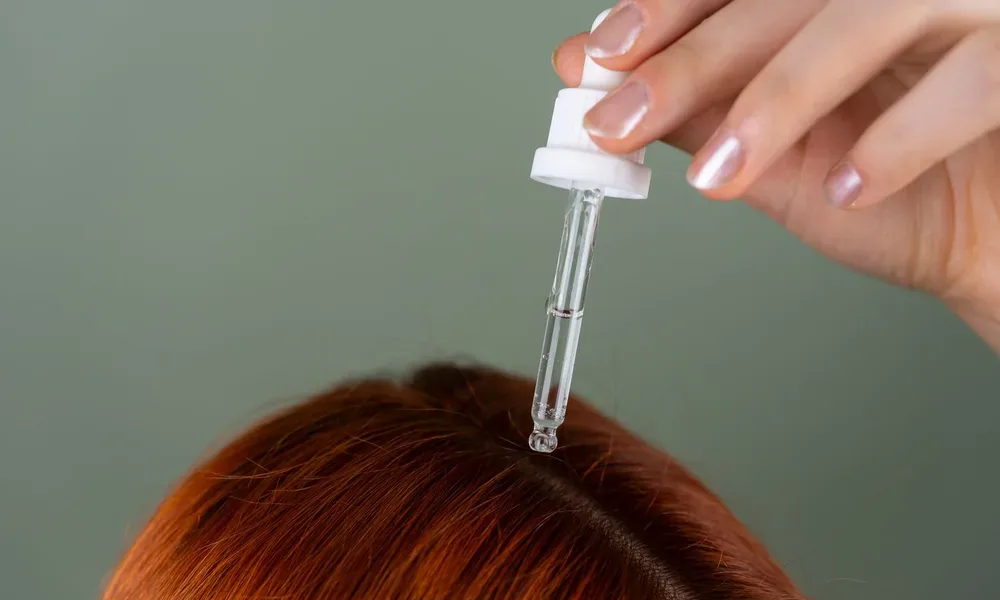
Technique decides whether a scalp serum works at all, and most disappointing results come from applying it to the hair instead of the skin. Start on a clean scalp, ideally after washing, when the hair is towel-dried or fully dry. Part the hair in three or four rows, using the nozzle or dropper tip to place one or two drops directly on the skin along each parting. Massage gently with the pads of your fingers in small circles for about a minute.
Do not rinse afterwards: a leave-on serum is designed to stay on the skin for hours. Most daily serums are used once a day, often at night, while exfoliating serums with salicylic acid are usually used two or three times a week, because daily acid can irritate the skin. Our guide to how to wash hair properly covers the double-shampoo method that clears buildup without stripping the scalp. Patch test first, and stop if the scalp feels sore or itchier after a week.
What Can a Scalp Serum Actually Do?
A scalp serum does three honest things. First, it hydrates and comforts the scalp surface, easing the tight, dry feeling that follows overwashing, colouring or cold weather. Second, in formulas with salicylic acid, it clears buildup and flakes, so the scalp feels cleaner and less itchy between washes. Third, it supports the environment around the follicle with caffeine, niacinamide and peptides, which can make existing hair look denser over time.
What it cannot do matters just as much. A scalp serum cannot regrow hair on a bald patch, cure hair loss or make hair grow faster: hair grows at roughly one centimetre a month, a rate set by genetics, health and hormones, and no cosmetic changes that. It cannot cure dandruff, which needs a medicated antifungal shampoo, and it cannot fix psoriasis, seborrhoeic dermatitis or eczema, which need a dermatologist. Minoxidil is a drug with real clinical trials behind it; everything else here is a cosmetic. Give any serum at least eight weeks before you judge it, and ideally twelve weeks for shedding or density.
Who Should Use One, and Who Should Skip It?
A scalp serum suits people whose scalp feels dry, tight, itchy or oily between washes, people with early thinning who want supportive daily care, and anyone whose scalp feels stripped after colouring or frequent washing. Some scalps should skip it, or at least check first: if your scalp is sore, broken or sunburnt, wait until it heals; if you have dandruff, seborrhoeic dermatitis, psoriasis or eczema, treat the condition first; and if you are losing a lot of hair suddenly, see a doctor first.
Your First Scalp Serum: A Checklist
- Name the job first: flakes and oil, itch and irritation, or shedding support need different ingredients.
- Choose one active that matches that job, such as niacinamide for calm, salicylic acid for flakes, or caffeine for density support.
- Patch test behind your ear or on your inner arm and wait 24 hours before your first full application.
- Part your hair in rows and place a few drops directly on the scalp skin, never smoothed over the lengths.
- Massage for about a minute with your fingertips, then leave the serum in: do not rinse it out.
- Judge it over eight to twelve weeks, changing nothing else, and stop if the scalp gets sorer or flakier.
Frequently Asked Questions
Is a scalp serum the same as a hair serum?
No. A scalp serum is a water-based, leave-in treatment for the skin of the scalp, applied in drops along partings and left in. A hair serum is a coating for the hair shaft, applied from the mid-lengths to the ends to smooth frizz and add shine.
Do I use a scalp serum on wet or dry hair?
Most leave-on serums work best on a clean, towel-dried or dry scalp, because surface oil and residue can block absorption. Some acid-based formulas are the exception: they are pre-shampoo treatments, left on for ten to fifteen minutes and then washed out.
Can a scalp serum regrow hair?
No cosmetic serum can regrow hair on a bald patch or cure hair loss. Caffeine and peptides can support the follicle environment and make existing hair look denser, but the only ingredient here with strong clinical trial evidence is minoxidil, a drug, not a cosmetic.
How long does a scalp serum take to work?
Give it at least eight weeks, and ideally twelve weeks for shedding or density. Hair grows at roughly one centimetre a month, so visible change takes time. Judge it by how your scalp feels first: less tightness, itch and flaking usually appear before any change in the hair.
Can I use a scalp serum every day?
Most daily serums are designed for once-a-day use, often at night. Exfoliating serums with salicylic acid are usually used two or three times a week instead.
Can I use a scalp serum and a scalp oil together?
Yes, if you keep their jobs separate. Use the serum daily between washes, and the oil as a weekly pre-wash ritual that you shampoo out after twenty to thirty minutes. Do not layer an oil over a freshly applied serum.
The Bottom Line
A scalp serum is skincare for the skin under your hair: a thin, water-based, leave-in treatment that carries active ingredients such as niacinamide, caffeine and peptides to the scalp and stays there for hours. It is not an oil, which conditions the surface and is often washed out, and it is not a hair serum, which coats the lengths to fight frizz and add shine. Used correctly, a few drops along partings on a clean scalp, massaged in and left alone, it can make the scalp feel calmer and cleaner, and the hair growing from it look fuller. Match the ingredient to your concern, patch test first, and give it eight to twelve weeks.
Note: This guide is for general information only and is not medical advice. If you have sudden hair loss, bald patches, a sore or broken scalp, or a diagnosed skin condition, speak to your doctor or a dermatologist before starting a new scalp treatment.