A satin slip dress looks simple, which is exactly why it is easy to style badly. There are no sleeves, no collar, and no buttons to hide behind, so every choice you make shows: the shoes, the layer on top, the jewellery, the bag, and above all the fit. Get one of them wrong and the whole outfit looks unfinished, however good the dress is.
The good news is that styling a satin slip dress follows a small number of rules, and once you know them you can repeat them with any colour or length. The fabric is the star, so everything else should be quieter than it. The shine of satin does the talking, which means matte textures, simple shoes, and one piece of jewellery will always beat a busy combination. And because satin shows every line, the underwear and the lining matter as much as anything you can see.
Below are nine steps that take you from a bare dress on a hanger to a finished outfit, in the order that makes the decisions easiest. Each step covers what to do, what to avoid, and how long it takes, so you can work through them in ten minutes on a normal morning, or take longer when the occasion matters.
Key takeaways
- Let the satin be the star: pair it with matte textures, simple shoes, and one piece of jewellery, not several.
- Sort underwear, lining, and straps before you add layers, because satin shows every line and every slip.
- Layer with a blazer, cardigan, or denim jacket for daytime, and remove the layer for evening.
- Match the shoes to the shine: simple heels or flat sandals work, while busy or heavy shoes fight the dress.
- No styling trick fixes a dress in the wrong size or a thin satin, so check the fit and the fabric first.
What styling a satin slip dress actually means
Styling a slip dress is mostly about balance. The dress itself is soft, shiny, and close-fitting, so the things you add should provide contrast: a structured blazer against the fluid fabric, matte leather shoes against the shine, a single bold earring against a bare neckline. When everything in the outfit is soft and shiny, the look blurs into one sheen. When one or two pieces are structured or matte, the dress stands out properly.
It also means thinking about the dress as a base rather than a finished outfit. It is how the shape works, and the same is true of a silk slip dress, as our guide to how to style a silk dress explains, because the construction and the styling problems are the same in both fabrics.
The third thing styling means is honesty about the fit. A slip dress hangs from the shoulders, so if the straps are too long the neckline drops, the waist drops with it, and the whole dress looks a size too big. If the dress is too tight, the bias cut pulls and the satin creases across the hips. No layer or accessory corrects either problem. Check the fit first, adjust the straps, and only then start adding pieces.
What to have ready before you start
Before you put the dress on, gather the pieces you are likely to need: seamless nude underwear, a strapless or backless bra if the dress needs one, a steamer, and the layer you plan to wear. Steaming the dress while it hangs takes two minutes and makes more difference than any accessory, because satin holds creases from the hanger and from being folded in a drawer. Steam it, let it hang for a few minutes, and then put it on.
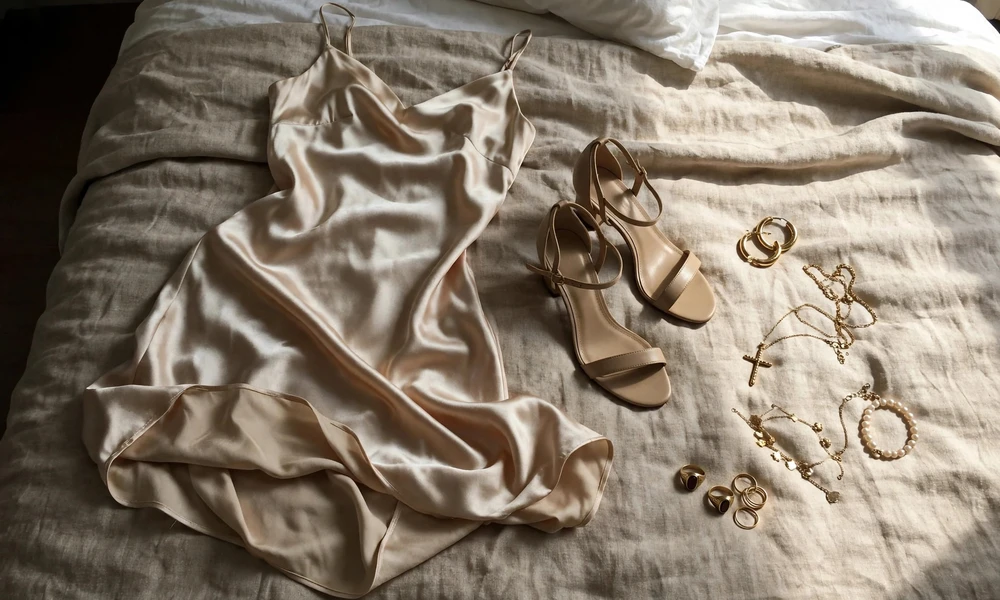
Next, lay out the shoes and the bag together and look at them as a pair. The most common styling mistake with a satin slip dress is choosing shoes and a bag that fight each other: a heavy boot with a delicate clutch, or a glittering heel with a glittering bag. Simple leather heels with a plain clutch, or flat sandals with a small leather bag, are the combinations that work most reliably.
Finally, decide on the jewellery before you put the dress on, not after. A slip dress leaves the neck and shoulders bare, which tempts people to add a necklace, earrings, a bracelet, and a ring all at once. You can always add more, but it is much harder to take pieces off once you have decided the outfit is finished.
The 9 steps, in order
Start with the right slip dress for the occasion
What to do: Choose the length and colour for where you are going, not just for what you like. A midi in a dark or neutral colour suits most plans; a maxi suits formal evenings. What to avoid: Wearing a pale or floor-length satin to a casual daytime event, where it will look overdressed. Best For: Every outing, because this decision shapes all the others. Time Needed: Two minutes. Standout Tip: If you are unsure, the darker midi is the safer choice.
The occasion decides the dress, and the dress decides everything else. Picking the wrong length first means fighting the outfit for the rest of the morning.
Sort the underwear and lining first
What to do: Put on seamless, nude-toned underwear and check the dress lining sits smoothly over it. Wear a strapless bra if the straps will show. What to avoid: White or patterned underwear under satin, which shows through, and a bra with visible straps under thin straps. Best For: Anyone wearing satin, because the fabric hides nothing. Time Needed: Three minutes. Standout Tip: Check yourself from the side and the back, not just the front.
Underwear is not a detail with satin. It is the foundation the whole outfit sits on, and getting it wrong undermines everything that follows.
Fix the straps before anything else
What to do: Adjust the straps so the neckline sits where it should and the waist falls at your natural waist. Shorten them if the dress hangs too low. What to avoid: Leaving the straps long and hoping a layer will hide the problem, because it will not. Best For: Every slip dress, since the whole fit hangs from the straps. Time Needed: Two minutes. Standout Tip: Raise your arms: if the dress shifts, the straps need tightening.
Straps are the cheapest fix in the outfit and the most commonly skipped. Two minutes here saves constant tugging for the rest of the day.
Add a layer on top for daytime
What to do: Add a structured blazer, a fine cardigan, or a denim jacket for daytime. The layer should end at the waist or hip, not mid-thigh. What to avoid: A long, shapeless cardigan that hides the dress entirely, or a shiny jacket that competes with the satin. Best For: Daytime, work, and cooler weather. Time Needed: Two minutes. Standout Tip: A blazer in a matte fabric is the most reliable daytime layer.
The layer is what turns an evening dress into a daytime outfit. Without it, a satin slip dress reads as nightwear in daylight, however good the shoes are.
Choose shoes that match the shine
What to do: Pick simple shoes in a matte finish: plain leather heels, flat sandals, or clean trainers for a casual look. Let the dress carry the shine. What to avoid: Glittering heels, heavy boots, or shoes with too much detail, which fight the satin for attention. Best For: Evenings and daytime alike, because the shoes set the tone of the outfit. Time Needed: One minute. Standout Tip: Nude or black heels disappear under a midi and let the dress lead.
Shoes are the second most visible choice after the dress itself.
Add one piece of jewellery, not three
What to do: Choose one lead piece, usually drop earrings or a single bracelet, and keep everything else plain. Gold suits warm satins, silver suits cool ones. What to avoid: A necklace, earrings, bracelet, and rings all at once, which crowds the bare neckline. Best For: Evenings, where one strong piece reads as deliberate. Time Needed: One minute. Standout Tip: If you wear a statement earring, skip the necklace entirely.
A bare neckline is an invitation to overdo it. One piece of jewellery looks like a choice; four pieces look like indecision.
Carry a bag that does not fight the dress
What to do: Choose a small, plain bag in leather or suede, in a colour that matches the shoes rather than the dress. A clutch or a small shoulder bag works best. What to avoid: A large tote, a glittering bag, or a bag with heavy hardware that catches on the satin. Best For: Evenings and occasions where you carry little. Time Needed: One minute. Standout Tip: Match the bag to the shoes, not to the dress.
A loud bag next to a shiny dress makes both look cheaper than they are.
Tame the shine with texture
What to do: Add one matte texture somewhere in the outfit: a leather bag, suede shoes, a wool blazer, or a cotton shirt layered underneath. The contrast calms the shine. What to avoid: Pairing satin with more satin, sequins, or patent leather, which turns the whole outfit into one glare. Best For: Daytime, where too much shine looks out of place. Time Needed: One minute. Standout Tip: One matte piece is enough; two is plenty.
Shine needs something to sit against. A single matte texture is what makes satin look expensive instead of flashy.
Check the whole look in daylight before you leave
What to do: Stand in natural light, check the front, back, and sides, sit down, and walk a few steps. Look for gaping, clinging, and creases. What to avoid: Checking only in a bedroom mirror under warm light, which flatters satin and hides its problems. Best For: Every outing, because satin changes in different light. Time Needed: Two minutes. Standout Tip: Sit down in the dress: most satin problems only appear when you sit.
The daylight check is the last line of defence. It catches the gaping neckline, the visible underwear line, and the crease across the hips before anyone else sees them.
Styling a satin slip dress for different occasions
For daytime, the formula is simple: a dark or neutral midi, a matte layer on top, flat sandals or clean trainers, and no jewellery beyond a pair of small earrings. The layer does most of the work, turning an evening shape into a daytime outfit, and the flat shoes keep the shine from reading as formal. Our guide to how to wear a satin dress uses the same daytime formula, because the rules for satin do not change much between a slip dress and any other satin shape.
For evening, remove the layer, add heels, and add one piece of jewellery. A maxi in a dark colour with plain heels and drop earrings is the most reliable evening combination, and it needs nothing else. For a wedding as a guest, the same formula applies, with the added rule of avoiding white and near-white shades, and choosing a length that suits the formality of the day.
For work, a satin slip dress needs the most careful handling. Wear it under a structured blazer that stays on, choose a midi in a dark colour, and wear closed shoes. The blazer is not optional here: without it, a slip dress reads as evening wear in an office, however good the fabric is. Keep the jewellery minimal and the bag plain, and the outfit will read as deliberate rather than accidental.
The mistakes that matter
Most satin slip dress mistakes are not about taste. They are about skipping a step: forgetting the lining, leaving the straps long, or choosing shoes that fight the dress. Each one is easy to fix once you know to look for it, and each one is obvious to everyone else if you do not. The table below lists the mistakes that come up most often, and the simple fix for each.
| Detail | What is known |
|---|---|
| Biggest mistake | Skipping the underwear and lining check; satin shows every line |
| Most skipped step | Adjusting the straps; the whole fit hangs from them |
| Daytime rule | Add a matte layer and flat shoes; without them the dress reads as evening |
| Evening rule | Remove the layer, add heels and one piece of jewellery |
| Shoe rule | Simple and matte; glittering or heavy shoes fight the satin |
| Jewellery rule | One lead piece only; four pieces look like indecision |
| Bag rule | Small and plain, matched to the shoes rather than the dress |
| Final check | Daylight, front and back, sitting down; most problems only appear then |
If you only remember one thing, remember the straps. A slip dress that hangs correctly from the shoulders looks intentional even with plain shoes and no jewellery. A slip dress with long straps looks unfinished even with the best styling in the world, and no layer or accessory will hide it.
Checklist: styling a satin slip dress honestly
Run through these checks before you leave the house.
- Steam the dress and let it hang for a few minutes before you put it on.
- Check underwear, lining, and straps from the front, the side, and the back.
- Add a layer for daytime; remove it for evening.
- Choose simple, matte shoes and a small, plain bag matched to the shoes.
- Add one piece of jewellery only, and skip the necklace if you wear statement earrings.
- Check the whole outfit in daylight, sitting down, before you leave.
Frequently asked questions
Can you wear a satin slip dress with trainers?
Yes, for a casual daytime look. Choose clean, plain trainers in white or a neutral colour, and wear the dress with a denim jacket or a blazer. The trainers calm the shine of the satin, which is what makes the combination work. Avoid chunky or brightly coloured trainers, which fight the dress.
What jacket goes with a satin slip dress?
A structured blazer is the most reliable choice, because its shape contrasts with the fluid dress. A denim jacket works for casual daytime, and a fine cardigan works when you want something softer. Avoid long, shapeless layers and shiny jackets, which either hide the dress or compete with it.
Can you wear a bra with a satin slip dress?
Yes, but it needs to be the right one. A strapless bra works with most slip dresses, and a backless bra or adhesive cups work with a low back. Check from the side and the back before you leave, because satin shows a bra strap or a bra edge that a matte fabric would hide.
How do you keep a satin slip dress from clinging?
Choose a lined dress in a heavier satin, wear seamless underwear, and use an anti-static spray on the inside of the dress. If it still clings, the fabric is too thin or the fit is too tight, and a different size is the honest fix. Our guide to how to care for a silk dress covers the same fabric problems, because satin and silk share them.
Is a satin slip dress appropriate for work?
It can be, with the right styling. Wear a midi in a dark colour under a structured blazer that stays on, with closed shoes and minimal jewellery. Without the blazer, a slip dress reads as evening wear in most offices, so the layer is not optional.
What colour satin slip dress is most versatile?
Black is the most versatile, because it suits day and evening, hides wrinkles, and pairs with any shoe or layer. Champagne is the most flattering light colour, but it shows marks and can look bridal. A deep jewel tone, such as emerald or burgundy, is a good middle ground if black feels too plain.
The bottom line
Styling a satin slip dress comes down to a short list: check the fit and the straps, sort the underwear and the lining, add a matte layer for daytime, keep the shoes and the bag simple, and choose one piece of jewellery. None of these steps is difficult on its own, and together they take about ten minutes. The dress does the rest, because satin, worn well, needs very little help.
Start with the dress you already own, work through the steps in order, and check the result in daylight before you leave. That is the honest way to wear a satin slip dress, without the clinging, the gaping, and the feeling that the outfit is wearing you.