
A silk dress is the most rewarding dress to own and the easiest to ruin by accident. One hot wash, one hard wring, or one afternoon in direct sun can take a dress from luminous to limp. The good news is that silk is not as fragile as its reputation suggests. It is a strong natural fibre, and with a little care it can last for years, looking better with wear than most fabrics do.
The problem is that most silk damage is not caused by wearing the dress. It is caused by washing it the wrong way, storing it badly, or treating it like cotton. Silk is weaker when it is wet, it spots easily with water, and it fades in sunlight.
Below are nine steps for caring for a silk dress, from reading the label to storing it between seasons. Each step is described by what to do, what to avoid, and how long it takes, so you can look after a silk dress properly without turning it into a chore.
Key takeaways
- Silk is weaker when wet than when dry, so never wring, twist, or scrub a wet silk dress.
- Cool water and a gentle, silk-safe detergent are enough for most silk dresses; hot water and harsh detergent are the two most common causes of damage.
- Always read the care label first, because some silks, linings, and trims genuinely need dry cleaning.
- Dry silk flat or on a padded hanger, away from direct sunlight, which fades and weakens the fibre.
- No care routine can reverse damage from a hot wash, a harsh bleach, or months in sunlight, so prevention matters more than repair.
What silk care actually involves
Silk is a protein fibre, like wool, which is why it behaves differently from cotton or linen. It likes cool water, gentle handling, and mild detergent. It dislikes heat, harsh chemicals, and rough treatment. That is the whole principle, and every step below follows from it. If you remember that silk is closer to hair than to a cotton shirt, most of the decisions become obvious.
The first thing to understand is that water itself is not the enemy. Silk can be washed, and most silk dresses can be hand-washed safely. What damages silk is heat, agitation, and alkaline detergent.
The second thing to understand is that sunlight is a slow form of damage. Silk fades in direct sun, and the fibre weakens with long exposure. That is why a silk dress should never be dried in direct sunlight, and why it should be stored away from a sunny window. Our guide to how to care for a silk blouse follows the same principles, because a blouse and a dress are made of the same fibre, even if the dress has more of it to look after.
How to care for a silk dress: what you need first
You do not need special equipment. A clean basin, cool water, a gentle detergent made for silk or delicates, a clean white towel, and a padded hanger are enough. Keep a bottle of white vinegar in the cupboard too, because a spoonful in the rinse water helps keep silk soft and removes detergent residue, which is what makes silk feel stiff after washing.
What you should not use is just as important. Do not use bleach, even a mild one, because it destroys silk fibres. Do not use a detergent with enzymes or optical brighteners, which are designed for cotton and are too harsh for silk. Do not use a washing machine, even on a delicate cycle, unless the care label specifically says it is safe, because the agitation is what damages the fabric. If you are unsure whether a product is safe, test it on a hidden seam first.
Before you wash, check the dress for stains, loose threads, and delicate trims. A lace trim, a beaded detail, or a hand-finished hem may need dry cleaning even if the silk itself can be washed. If the dress has a lining, check what the lining is made of, because a silk dress with a acetate lining needs different care from one with a silk lining. When in doubt, a silk versus satin comparison is useful, because satin is a weave, not a fibre, and a satin dress made of polyester follows completely different care rules from a silk one.
The 9 steps to care for a silk dress
Read the care label before anything else
What to do: Read the label, including the small print, and follow it. If it says dry-clean only, do not wash it at home. What to avoid: Guessing from the feel of the fabric, because a silk blend can look like pure silk and need different care. Best for: Every silk dress, every time, before the first wash. Time needed: One minute. Standout tip: Photograph the label when you buy the dress, so you still have it after the label fades.
Spot-clean small marks first
What to do: Dab a small mark with cool water and a little gentle detergent on a clean white cloth, working from the outside in. What to avoid: Rubbing, which pushes the mark deeper and can damage the weave, and using coloured cloths, which can transfer dye. Best for: Food spots, makeup marks, and small splashes. Time needed: Five minutes. Standout tip: Test on a hidden seam first, because some dyes bleed even with plain water.
Most marks on a silk dress do not need a full wash. A quick spot-clean saves the dress a wash, and every wash you skip is a wash the silk does not have to endure.
Hand-wash in cool water
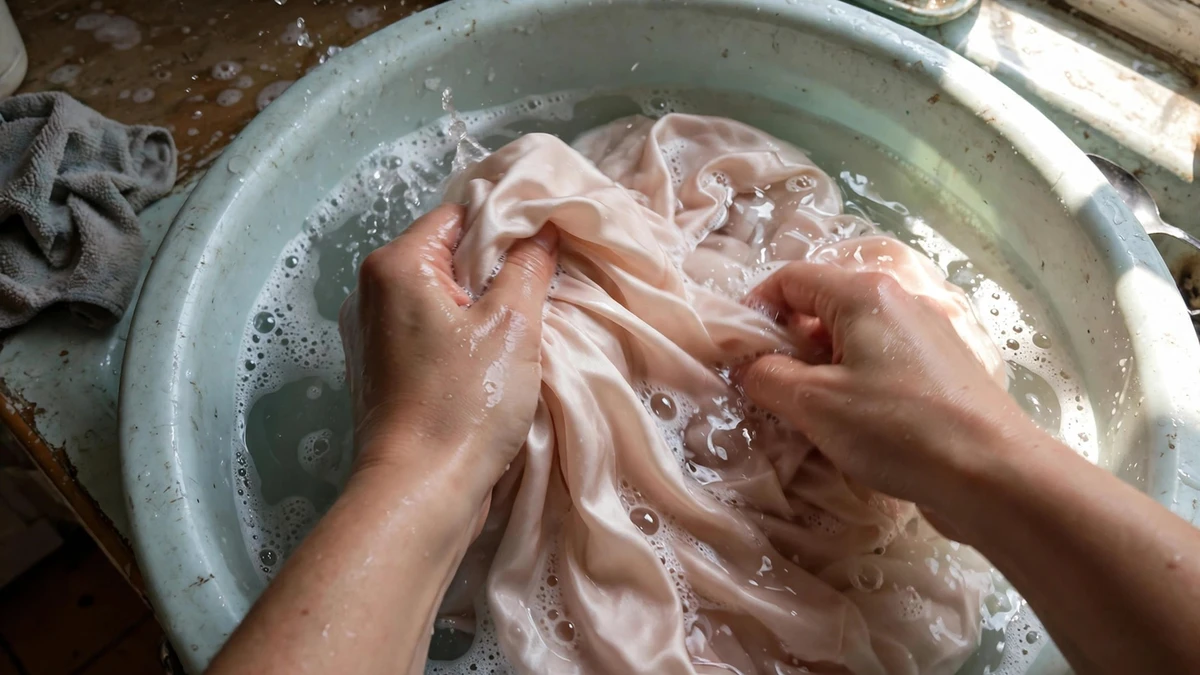
What to do: Fill a clean basin with cool water, add a small amount of gentle detergent, and submerge the dress. Let it soak for three to five minutes, then move it gently through the water. What to avoid: Hot water, which shrinks silk and dulls its shine, and soaking for more than ten minutes, which can loosen dyes. Best for: Most washable silk dresses, especially after a few wears. Time needed: Ten minutes. Standout tip: Wash a silk dress on its own, because other garments can snag it or transfer colour.
Use a gentle, silk-safe detergent
What to do: Use a detergent made for silk or delicates, in the small amount the bottle suggests. A little goes a long way. What to avoid: Ordinary laundry detergent, which is too alkaline for silk, and fabric softener, which coats the fibres and dulls the shine. Best for: Every hand-wash, without exception. Time needed: No extra time. Standout tip: If you have no silk detergent, a small amount of gentle baby shampoo works as a stopgap.
The right detergent is cheap insurance. A bottle lasts for months, and it is the difference between silk that stays luminous and silk that turns dull and stiff.
Rinse without wringing
What to do: Drain the basin, refill with clean cool water, and rinse the dress gently. Add a spoonful of white vinegar to the final rinse to remove detergent residue. What to avoid: Wringing or twisting the dress, which breaks wet silk fibres, and rinsing under a hard-running tap, which can stretch the fabric. Best for: Every wash. Time needed: Five minutes. Standout tip: Press the water out by rolling the dress in a clean white towel, which removes water without twisting.
Silk is at its weakest when it is wet. The towel-roll method is the gentlest way to remove water, and it takes less than a minute.
Dry flat, away from direct sun
What to do: Lay the dress flat on a clean towel, reshape it gently, and leave it to dry in a shaded, well-ventilated room. What to avoid: Hanging a wet silk dress, which stretches it out of shape, and drying it in direct sunlight, which fades and weakens the fibre. Best for: Every wash, especially for heavier silk dresses. Time needed: A few hours, mostly unattended. Standout tip: Turn the dress once while it dries, so both sides dry evenly.
Drying is where most silk damage happens, and it is the easiest step to get right. Shade and patience are all it takes.
Steam, do not iron
What to do: Use a steamer on a low setting, holding it a few centimetres from the fabric, and let the steam relax the creases. What to avoid: A hot iron directly on silk, which can scorch it and leave a shine, and ironing a dry silk dress, which is when damage is most likely. Best for: Removing creases after washing or storage. Time needed: Five to ten minutes. Standout tip: If you must iron, use the lowest setting, a pressing cloth, and the reverse side of the fabric.
Steam is kinder than an iron and faster too. A steamer is one of the best small purchases for anyone who owns silk.
Store on a padded hanger
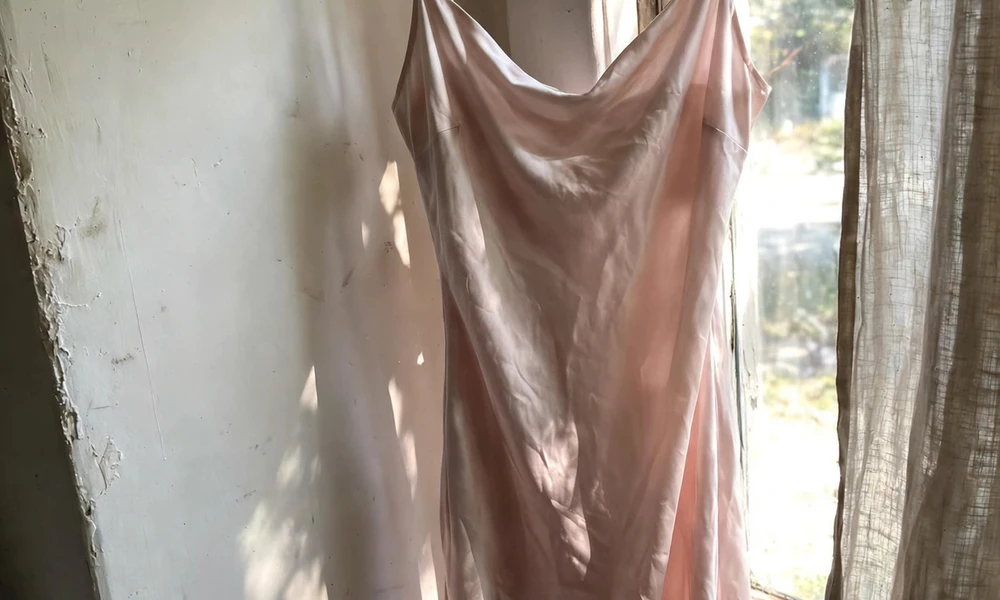
What to do: Hang the dress on a padded hanger in a cool, dark wardrobe, with space around it so the fabric can breathe. What to avoid: Wire hangers, which leave marks on the shoulders, and plastic garment bags, which trap moisture and can cause mildew. Best for: Between wears and between seasons. Time needed: One minute. Standout tip: Use a breathable cotton garment bag for long-term storage, not plastic.
Good storage is what keeps a silk dress looking new between wears. A padded hanger costs little and prevents the shoulder marks that are hard to remove.
Deal with stains and storage between wears
What to do: Treat stains as soon as you notice them, air the dress after wearing it before putting it away, and check it for moths or mildew at the start of each season. What to avoid: Leaving a stain to set, putting a damp dress away, and using mothballs, which can damage silk and leave a smell that is hard to remove. Best for: Keeping a silk dress in good condition for years. Time needed: A few minutes after each wear. Standout tip: Cedar blocks or lavender sachets protect against moths without the smell or the risk of mothballs.
A silk dress that is aired, checked, and stored properly will last far longer than one that is worn hard and put away damp. The habits are small, and they add up.
Washing versus dry cleaning: which to choose when
Hand-washing is the right choice for most washable silk dresses. It is gentler than dry cleaning, it costs nothing, and it gives you control over the water temperature and the detergent. A dress that is hand-washed well will keep its shine and its drape for longer than one that is dry-cleaned often, because dry cleaning uses solvents that can strip the natural oils from silk over time.
Dry cleaning is the right choice when the label says so, when the dress has a lining or trim that cannot be washed, or when a stain is beyond spot-cleaning. It is also the right choice for a heavily structured silk dress, such as one with boning or a stiff interlining, which can lose its shape in water. In those cases, find a dry cleaner who handles silk regularly, and tell them what the dress is made of.
What matters most is consistency. A dress that is always hand-washed, or always dry-cleaned, will last longer than one that is washed one way and cleaned another, because each method affects the fabric slightly differently. Our guide to caring for silk scarves makes the same point, because a scarf and a dress are the same fibre, and the same logic applies to both.
The caveats that matter
Silk care is simple, but there are limits to what care can do. A dress that has been shrunk in a hot wash will not stretch back to its original size. A dress that has been bleached will not regain its colour. A dress that has faded in the sun will not brighten again. That is why prevention matters more than repair, and why the habits in this guide are worth learning before the first wash, not after the first accident.
| Detail | What is known |
|---|---|
| Water temperature | Cool water only; hot water shrinks silk and dulls its shine |
| Detergent | Gentle, silk-safe detergent; no bleach, no enzymes, no optical brighteners |
| Washing method | Hand-wash, gently, for three to five minutes; no machine, no wringing |
| Drying | Dry flat on a towel, in shade, away from direct sunlight |
| Ironing | Steam on a low setting; iron only on the reverse, with a pressing cloth, at the lowest heat |
| Storage | Padded hanger, cool dark wardrobe, breathable cotton bag for long-term storage |
| Stains | Spot-clean quickly with cool water; take stubborn stains to a professional |
| What care cannot fix | Shrinkage from hot water, bleaching, sun fading, or moth damage |
If you are unsure whether a dress can be washed, take it to a dry cleaner who handles silk and ask. A professional opinion costs little, and it is far cheaper than replacing a dress that was washed the wrong way.
Checklist: caring for a silk dress honestly
Use these checks before every wash, and again when you put the dress away.
- Check the label: read it before the first wash, and photograph it so you still have it later.
- Check for stains: spot-clean small marks first, so you can skip a full wash.
- Check the water: cool, never hot, and a gentle detergent in a small amount.
- Check your hands: no wringing, no twisting, no scrubbing; press water out with a towel instead.
- Check the drying spot: flat, in shade, with good air flow, never in direct sun or on a radiator.
- Check the storage: padded hanger, space to breathe, away from sunlight and moths.
Frequently asked questions
Can I wash a silk dress in the washing machine?
Usually no. Even a delicate cycle twists and rubs the fabric, which weakens silk and causes pilling. Hand-washing takes ten minutes and is far gentler. Only use a machine if the care label specifically says it is safe.
What should I do if my silk dress gets wet in the rain?
Let it dry naturally, away from direct heat, and do not rub the wet spots. Water marks on silk often fade as the dress dries evenly. If marks remain, a gentle hand-wash will usually remove them.
Can I use regular detergent on silk?
It is not a good idea. Ordinary detergent is too alkaline for silk and can strip its shine over time. A gentle detergent made for silk or delicates costs little and lasts for months.
How do I remove a stain from a silk dress?
Spot-clean quickly with cool water and a little gentle detergent on a white cloth, working from the outside in. For oil stains, dust with cornflour and leave it overnight before brushing it off. For stubborn stains, take the dress to a professional rather than risking a home remedy.
Why does my silk dress feel stiff after washing?
Detergent residue is the usual cause. A spoonful of white vinegar in the final rinse removes it and keeps silk soft. Rinsing thoroughly in cool water helps too, as does avoiding fabric softener, which coats the fibres.
How should I store a silk dress for the winter?
Clean it first, then hang it on a padded hanger in a breathable cotton garment bag, in a cool, dark wardrobe. Add a cedar block or lavender sachet for moth protection, and check it once during the season for damp or mildew.
The bottom line
Caring for a silk dress comes down to a handful of habits: cool water, gentle detergent, no wringing, dry flat in shade, steam rather than iron, and store on a padded hanger. None of them takes more than a few minutes, and together they are the difference between a silk dress that lasts for years and one that looks tired after a season.
Start with the care label, learn the habits once, and they become second nature. A silk dress that is looked after properly is not a fragile luxury. It is a practical, long-lasting piece, and it will repay the small amount of care it asks for.