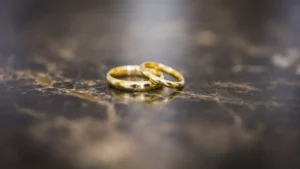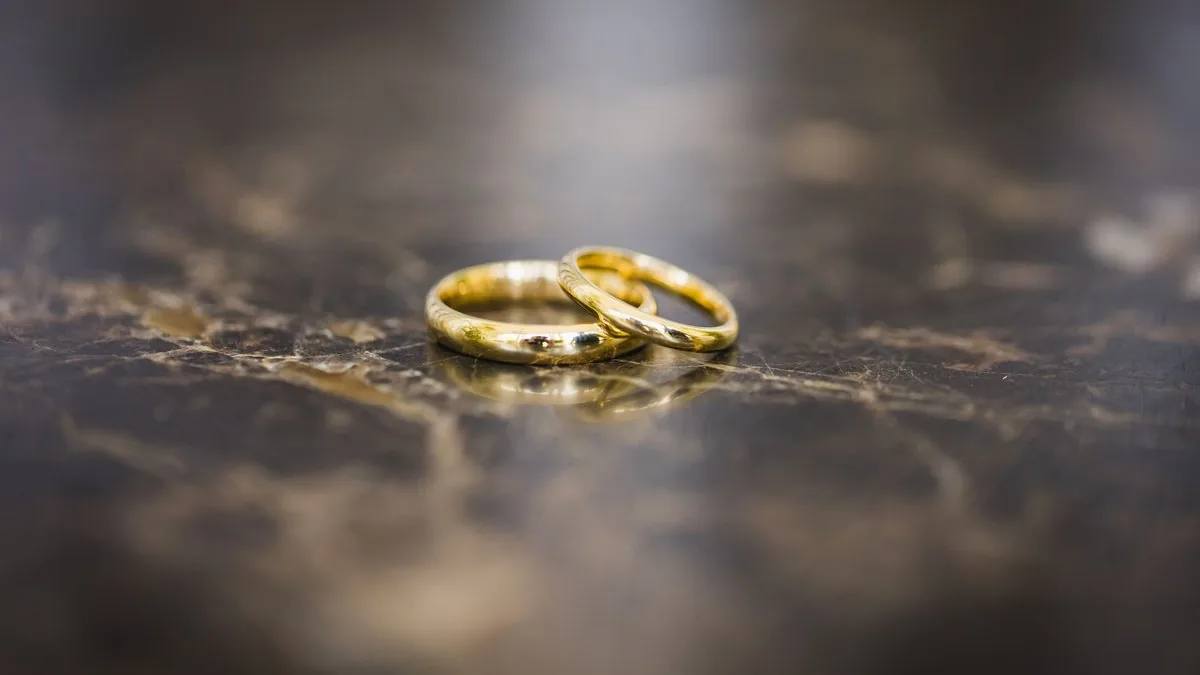

A gold ring is the hardest-working piece of jewellery most people will ever own. It sits on the most active part of your hand, knocks against desks and keys all day, and should still look good in ten years.
Two rings that look identical in a shop window can be very different purchases. One is a solid, well-made band, and the other is a thin, hollow or plated lookalike that bends, wears through or loses its stones.
This guide covers the checks in order: fit, karat and colour, how the ring is made, the setting, and the paperwork and price.
Key takeaways
- Size the finger, not the ring: measure late in the day, allow for the knuckle, and remember wide bands fit tighter.
- Match the karat to your life: 14K for daily wear, 18K for richer colour, 22K is soft.
- Check the hallmark inside the shank: 585 means 14K, 750 means 18K, 916 means 22K, and an unmarked ring is unverified.
- Feel the shank: a solid, well-weighted band with a comfort-fit profile outlasts a thin or hollow one.
- If the ring holds a stone, the setting matters most: low prongs, a bezel or a channel setting keep it safe.
Start with the fit: a ring size is not just a number
Fit comes first, and it is the decision buyers get wrong most often. A ring size measures the inside of the band, and in the US system each full size is only about 0.8 millimetres of inside diameter, roughly the thickness of a credit card.
That sounds tiny, yet it is the difference between a ring that slides on easily and never comes off, and one that spins, pinches or slips off. Most women wear a size 6 or 7, most men a 9 or 10, but measure the actual finger.
Measure at the right moment and in the right way. Fingers are largest late in the afternoon and in warm weather, and smallest in the morning and in the cold, so measure mid-to-late afternoon with warm hands, and repeat it three times on different days.
Band width changes everything about fit. A wide band, anything over about 5 millimetres, grips more skin, so it feels a half size tighter than a narrow band in the same size, and most jewellers will size you up a half size for a wide wedding band.
Ask about resizing before you pay. A plain solid-gold band can usually be resized up or down by a size or two for roughly $40 to $80 at a US jeweller, but an eternity band, a tension-set ring or a very thin band often cannot be resized at all.
Karat: choose for your finger, not for the display case
Karat measures how much of the metal is pure gold, on a scale of 24 parts. Pure gold is 24 karat, but it is far too soft for a ring, so jewellers alloy it with copper, silver, zinc or palladium for strength and colour.
For a ring worn every day, 14K is the sweet spot for most buyers. It resists scratches and dents, holds its colour, and costs far less per gram than 18K.
At late-November 2026 gold prices, with spot gold around $3,570 a troy ounce, the melt value inside was roughly $67 a gram for 14K and $86 a gram for 18K. Gold moves daily, so check the spot price on the day you buy.
Eighteen-karat gold is the choice when colour and prestige matter most: engagement rings, heirloom pieces and rings worn for occasions. Its deeper yellow is genuinely richer, but it is softer, so it scratches more easily and a thin 18K shank shows wear sooner than a 14K one. Ten-karat is the hardest and cheapest; 22-karat is soft and best for occasions. For everyday wear, gold jewellery made for daily wear follows the same rule: the harder the life, the lower the karat.
The shank: width, profile and weight decide how a ring ages
The shank is the band itself, and it is where a good ring earns its price. Pick the ring up and feel it before you look at anything else. A well-made ring feels weighty for its size, with smooth edges and a shank that does not flex when pressed gently.
A ring that feels light or flimsy for its size is usually hollow, and a hollow ring is the most common disappointment in gold ring buying. Hollow shanks dent and crush, and once dented they cannot be properly rounded out again.
A solid shank can be polished, repaired and resized for decades, so ask whether the shank is solid or hollow, and ask for the weight in grams, written on the receipt. Weight is the fairest way to compare two similar-looking rings. A plain 14K band typically weighs 4 to 6 grams.
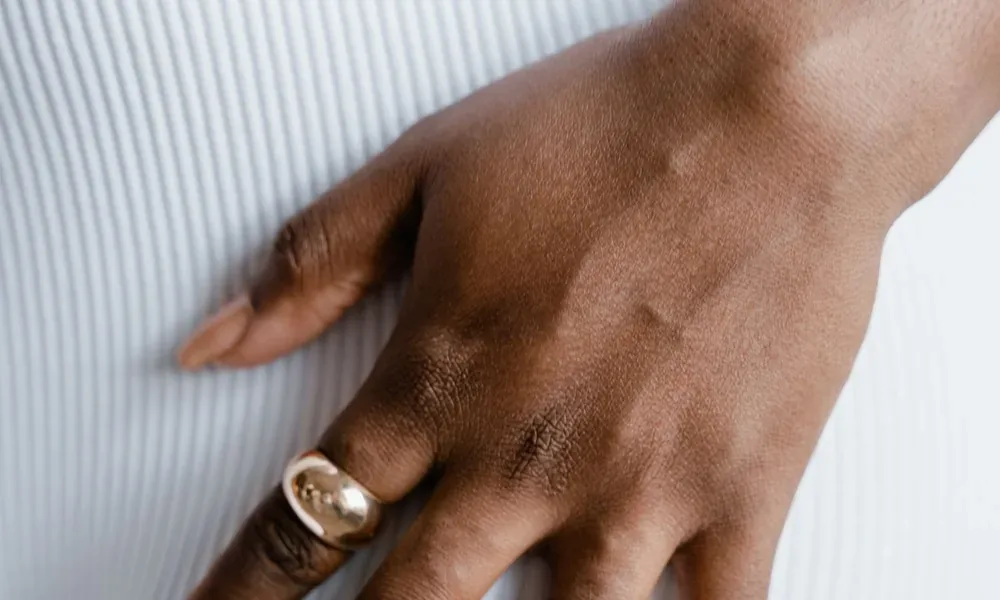
Solid, filled, vermeil or plated: the layer decides the lifespan
Not everything golden is solid gold, and for rings the difference matters more than for any other jewellery, because a ring rubs against surfaces all day. Solid gold is gold alloy all the way through, in the karat stamped inside the shank, and it is the only option that can be polished, repaired and resized indefinitely.
Gold-filled is the strongest middle ground. By the US Federal Trade Commission’s standard, the gold layer must be at least one-twentieth, or 5 percent, of the item’s total metal weight, pressure-bonded to a base metal, usually jeweller’s brass. That thick layer lasts for years and often decades of daily wear.
Gold vermeil, gold over sterling silver, lasts one to five years on a ring. Ordinary gold plating is a thin coat, usually 0.5 to 2.5 microns, and on a ring it can wear through in months, while gold tone means no gold at all. The stamp gives the game away: solid gold is stamped with just the karat, while letters after it, such as GF for gold-filled or GP for plated, mean the piece is not solid.
If it holds a stone, check the setting before the stone
A stone-set gold ring is judged twice: once for the metal and once for the engineering that holds the stone in place, and the engineering is what keeps the stone on your finger. Prong settings are the classic choice, lifting the stone high, but tall, thin prongs catch on clothing, bend, and loosen.
Under a loupe, prongs should be even, smooth and flat against the stone, with no gaps, and the stone should not wobble when touched gently. A bezel setting, where a rim of gold wraps around the stone, is the safest choice for daily wear: it never catches on anything and suits active hands. Channel settings suit eternity bands; pavé needs regular checking. Our diamond buying guide covers the four Cs in full.
Hallmarks, paperwork and the price maths
The hallmark is the ring’s identity card, and it takes ten seconds to read. Inside the shank, look with a loupe for the fineness mark: 585 for 14K, 750 for 18K, 916 for 22K, 417 for 10K and 999 for 24K. A maker’s mark should sit beside it.
Price a gold ring the way a jeweller does, in layers. First the metal: weight in grams multiplied by the per-gram melt value of its karat, worked out from the spot price per troy ounce divided by 31.1035, times the karat fraction.
Then the making charge, then the stones, if any, and finally the brand premium, the shop’s overheads and tax. A plain band should track its metal value fairly closely. The red flag is a ring whose price cannot be explained by any of those layers, or a seller who will not tell you the weight. Get weight, karat and stone details on the receipt before you pay.
| Check | What to look for | Best value |
|---|---|---|
| Fit and size | Measured late in the day, passes the knuckle, snug at the base | Plastic sizer, three readings |
| Karat | Matched to daily wear or occasions | 14K for daily wear, 18K for special rings |
| Hallmark | Clear fineness mark plus maker’s mark inside the shank | 585 for 14K, 750 for 18K |
| Construction | Solid shank, honest weight in grams | Solid gold, 4 to 6 grams for a plain band |
| Gold layer | Solid, filled, vermeil or plated stated in writing | Solid for forever rings, filled for value |
| Setting | Even prongs or a bezel, no wobble, no catching | Bezel for daily wear, low prongs otherwise |
| Finish and colour | Even colour, smooth inside, rhodium noted for white gold | Yellow or rose gold for lowest upkeep |
| Paperwork | Weight, karat, stone report and returns in writing | Receipt stating all four, plus resize policy |
Your pre-purchase checklist
- Measure late in the day with a plastic sizer, three times, and size up a half size for a wide band or a stack.
- Read the hallmark inside the shank with a loupe and match it to the karat on the ticket: 585, 750, 916 or 417.
- Ask whether the shank is solid or hollow and get the weight in grams written on the receipt before you agree a price.
- Check the setting: even prongs, no wobble, no catching, and a bezel or channel setting for daily wear.
- Confirm the alloy if you have sensitive skin, and ask about rhodium replating if you are choosing white gold.
- Get the returns window, the resize policy and any stone report in writing, and book the first free prong check before you leave.
Frequently asked questions
What karat of gold is best for a ring?
For a ring worn every day, 14K is usually the best balance of colour, durability and price, since it is hard enough to resist the knocks a ring takes. Choose 18K when colour and prestige matter most, such as an engagement ring, and 10K when budget and toughness matter most.
How do I know if a gold ring is real?
Read the hallmark inside the shank with a loupe: a clear fineness mark such as 585 or 750, plus a maker’s mark, is the first proof. Then check the weight, since real gold is heavy for its size, and ask for the karat, weight and construction in writing on the receipt.
Is 14K or 18K gold better for an engagement ring?
Both are good, and the choice is about lifestyle. Eighteen-karat gold has a richer colour and more gold value, but it scratches more easily. Fourteen-karat gold is tougher and cheaper per gram. If the ring will be worn every day, 14K is the safer choice.
Should I buy a solid gold ring or a gold-filled one?
Buy solid gold for any ring you want to keep for years, resize, repair or pass on, because only solid gold can be worked on indefinitely. Gold-filled is a genuine bargain for a simple everyday band, but it cannot be resized without exposing the core.
How much should a gold ring weigh?
There is no single right weight, but a plain 14K wedding band typically weighs 4 to 6 grams, and anything much lighter in the same size is likely hollow or very thin. Compare rings of the same karat, size and width by weight in grams.
Can a gold ring be resized?
Most plain solid-gold bands can be resized by a size or two, usually for $40 to $80 at a US jeweller. Eternity bands and very thin bands often cannot. Always ask whether the first resize is free. For inspiration, our best engagement rings for 2027 show how these choices look once karat, setting and size come together.
The bottom line
A good gold ring is not the shiniest one in the window or the one with the highest karat on the ticket. It is the one that fits your finger at the end of the day, in a karat that matches how you live, with a solid shank, a setting that keeps its stone, and a receipt that proves what you paid for.
Note: Gold prices move daily and vary by karat, weight and maker, so treat the per-gram figures in this guide as late-November 2026 reference points and check the live spot price before you buy. This guide is general buying advice, not investment advice.