
Wavy hair lives in the awkward middle. A good hair oil can be the difference between waves that look soft and defined and waves that look weighed down, greasy, or strangely straight by midday. The problem is that most hair oils were designed for either very dry hair or very curly hair, and wavy hair needs something lighter, more precise, and easier to control.
That is why this guide is organised by wave type and weight, not just by popularity. A rich, heavy oil can be wonderful on thick, coarse waves and a disaster on fine, loose waves, where two drops too many can flatten everything. A feather-light oil can add shine without disturbing the wave, but it may not be enough for thicker waves that frizz in humidity.
Below are nine hair oils worth considering for wavy hair in 2027, from a classic lightweight argan treatment to silicone-free options for people who prefer a cleaner formula. The nine oils below cover every wave type, from fine and loose to thick and frizz-prone.
Key takeaways
- Wavy hair needs a light oil used sparingly: two to three drops on the mid-lengths and ends is usually enough, and more will flatten the wave.
- Apply oil to damp hair before styling for definition, or to dry hair as a finishing step for shine, but rarely both in the same routine.
- Fine, loose waves suit feather-light oils and dry oils, while thicker, frizz-prone waves can handle richer formulas and a little more product.
- Silicone-based oils give the smoothest finish and the best humidity defence, while silicone-free oils suit people who prefer a lighter, more natural feel.
- No oil will change your wave pattern or repair split ends, and an oil that leaves hair greasy, limp, or coated after one use is the wrong weight for your hair.
What wavy hair actually needs from an oil
Wavy hair is usually at its best when it is neither too dry nor too coated. The wave pattern forms best when the hair has some slip and some moisture, but a heavy film of oil pulls the wave straight and makes the hair look flat at the roots. That is the central tension. An oil for wavy hair has to smooth the surface and calm frizz without adding enough weight to undo the wave, and that balance is different for every head of hair.
Loose, fine waves are the most easily overwhelmed. The hair is often smooth already, so it needs shine and a little frizz control rather than deep nourishment, and the lightest oils work best: a dry oil, a fine mist, or a couple of drops of a light silicone oil smoothed over the ends. Thicker waves, and waves that frizz in humidity, can take more.
Porosity matters too. Low-porosity wavy hair resists absorbing product, so oil tends to sit on the surface and look greasy if you use too much. High-porosity wavy hair, often from colouring or heat styling, drinks oil up quickly and may need a second, smaller application on the ends. Getting that balance right is the whole skill of oiling wavy hair.
How we chose these oils and what to look for
Look first at the weight and the finish. A light oil should feel almost like nothing between your fingers, spread easily, and disappear into the hair within a minute.
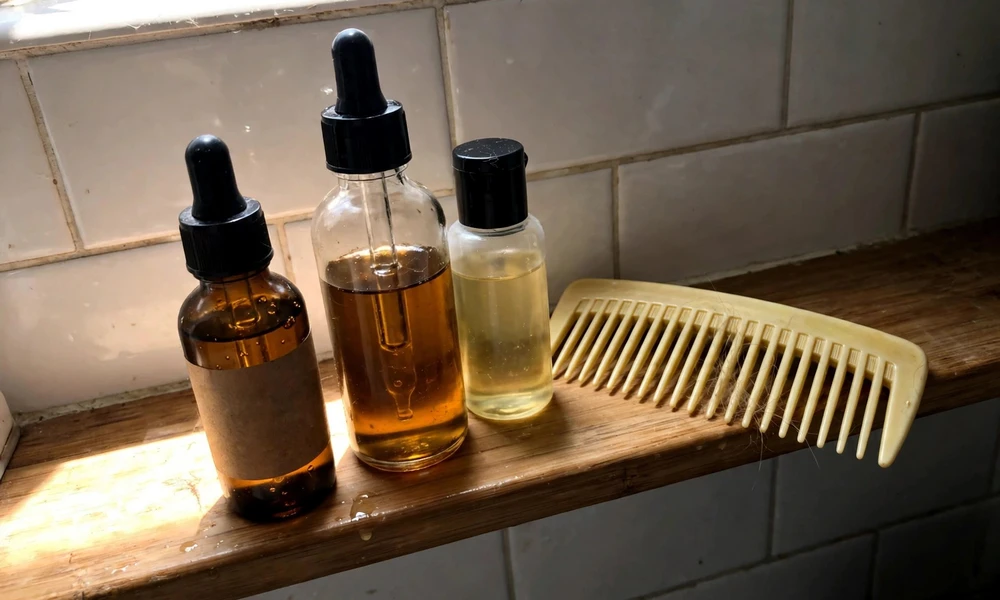
Look next at the formula. Silicone oils, usually built around dimethicone or cyclopentasiloxane, give the smoothest, shiniest finish and the best defence against humidity, which is why they are popular for wavy hair. Plant-based oils, such as argan, camellia, and jojoba, feel lighter and more natural, but they can be less effective at sealing out humidity.
Finally, look at the application. A pump or dropper gives you control over the amount, which matters more for wavy hair than for any other type, because the difference between the right amount and too much is often a single drop. Our guide to how to use hair oil explains the basic method, because the amount and the placement matter more than the brand for wavy hair.
The 9 best hair oils for wavy hair of 2027
Moroccanoil Treatment Light
What we like: A lighter version of the classic argan oil treatment, designed for fine and wavy hair, with a smooth, non-greasy finish and a warm, familiar scent. What to consider: It contains silicones, so it is not a silicone-free choice, and the scent is noticeable. Best for: Fine to medium wavy hair that needs shine without weight. Material: Argan oil and linseed extract. Price range: Mid to premium. Standout feature: The light formula absorbs quickly and rarely flattens the wave.
This is the safest first oil for wavy hair. It is light enough for most wave patterns, it smooths frizz without making the hair look coated, and two drops are genuinely enough.
Olaplex No. 7 Bonding Oil
What we like: A very light, concentrated oil that adds shine and heat protection up to 450 degrees, with a little going a long way. What to consider: The bottle is small, so it feels expensive, and it is easy to use too much if you are not careful with the dropper. Best for: Colour-treated or heat-styled wavy hair that needs protection as well as shine. Material: Bis-aminopropyl diglycol dimaleate and fermented green tea seed oil. Price range: Premium. Standout feature: Strong heat protection in a genuinely lightweight oil.
A good choice if you blow-dry or diffuse your waves. It protects the hair while adding shine, and because it is so concentrated, a single drop can be enough for the ends.
Gisou Honey Infused Hair Oil
What we like: A honey-based oil that adds softness and a gentle shine, with a sweet, light scent and a texture that feels nourishing without being heavy. What to consider: It is richer than the lightest oils, so fine waves should use a single drop, and the honey scent is distinctive. Best for: Medium to thick wavy hair that feels dry or rough at the ends. Material: Mirsalehi honey and sustainably sourced oils. Price range: Premium. Standout feature: Honey infusion that softens the ends without a sticky residue.
This oil suits waves that feel dry rather than fine.
Kérastase Elixir Ultime L’Huile Originale
What we like: A versatile, lightweight oil with a polished finish, suitable for use before styling, as a finishing step, or as a pre-wash treatment. What to consider: Premium price, and the fragrance is strong, so people sensitive to scent may prefer something plainer. Best for: Wavy hair that needs versatility, from a styling aid to a finishing oil. Material: Camellia oil, argan oil, and maize oil. Price range: Premium. Standout feature: One oil that works at every stage of the routine.
If you want a single oil that can do everything, this is a strong candidate. It is light enough for waves, it adds a noticeable shine, and it behaves well under heat.
Verb Ghost Oil
What we like: A very light, weightless oil that smooths frizz and adds shine without any heavy or greasy feeling, at a friendlier price than most luxury oils. What to consider: It is so light that very thick or very dry waves may find it is not enough on its own. Best for: Fine, loose waves that are easily weighed down. Material: Moringa seed oil and bamboo extract. Price range: Affordable to mid. Standout feature: A genuinely weightless feel, even on fine hair.
This is the best option for fine wavy hair that has been burned by heavy oils before. It smooths and adds shine without flattening the wave, and the price makes it easy to try.
Davines OI Oil
What we like: A light, fast-absorbing oil with a soft, powdery scent, that adds shine and detangles without leaving a residue. What to consider: The bottle is small for the price, and the scent divides opinion. Best for: Wavy hair that tangles easily and needs a detangling, shine-boosting oil. Material: Roucou oil and vitamin E. Price range: Mid to premium. Standout feature: Detangling and shine in one very light formula.
A good everyday oil for waves that knot easily. It helps a brush or comb glide through without pulling, and it leaves the hair looking polished rather than coated.
Ouai Hair Oil
What we like: A light, multi-use oil that smooths frizz, adds shine, and protects against heat, with a pleasant, understated scent. What to consider: It is richer than the lightest oils, so fine waves should stick to one drop, and it is premium-priced. Best for: Medium wavy hair that needs frizz control and a polished finish. Material: Ama oil, baobab seed oil, and borage oil. Price range: Premium. Standout feature: Frizz control and heat protection in a single light oil.
This oil is a good middle ground. It is not the lightest, but it is not heavy either, and it handles humidity better than most plant-based oils.
JVN Complete Nourishing Hair Oil Shine Drops
What we like: A silicone-free oil that adds shine and smoothness with a clean, light feel, and a dropper that makes it easy to control the amount. What to consider: It is less effective against heavy humidity than silicone-based oils, and the shine is more subtle. Best for: Wavy hair that prefers a silicone-free formula and a natural finish. Material: Camellia seed oil, meadowfoam seed oil, and hemisqualane. Price range: Mid. Standout feature: Silicone-free shine with precise dropper control.
A good choice if you avoid silicones. The shine is softer and more natural-looking than a silicone oil, and the dropper makes it easy to use just enough.
Shu Uemura Essence Absolue
What we like: A rich but fast-absorbing oil that nourishes dry ends and adds a deep, healthy shine, with a light camellia scent. What to consider: It is the richest oil on this list, so it suits thicker waves best, and fine waves should use it only as a pre-wash treatment. Best for: Thick, dry, or frizz-prone wavy hair that needs real nourishment. Material: Japanese camellia oil. Price range: Premium. Standout feature: Deep nourishment that still absorbs cleanly.
This is the oil for waves that feel genuinely dry. It is too rich for fine hair as a leave-in, but for thicker waves it softens the ends beautifully, and as a pre-wash treatment it works for almost every wave type.
Which hair oil is right for your wave pattern
Loose, fine waves, often called type 2A, need the lightest oils and the smallest amounts. A dry oil, a weightless formula, or a single drop of a light silicone oil is usually enough, and the oil should go on the ends only. Anything more will pull the wave straight, and the hair will look flat by the afternoon.
Classic waves, type 2B, can handle a little more. They have a visible S-shape that holds better, and they often frizz at the crown or the ends in humidity. A light to medium oil works well, applied to damp hair before styling, with an extra drop on the ends if the day is humid.
Thicker, more defined waves, type 2C, are closest to curly hair and can take the richest oils on this list. They frizz more easily and the ends dry out faster, so a slightly heavier oil, or a pre-wash oil treatment once a week, can make a real difference. Our roundup of the best hair oils for dry hair is useful here, because thicker waves often have the same dryness problems as dry hair, and the same richer formulas can help.
The caveats that matter
Hair oil is a finishing and conditioning product, not a treatment that changes your hair. It cannot repair split ends, it cannot change your wave pattern, and it cannot replace a good conditioner or a regular trim. Expecting more than that leads to using too much, which is the most common mistake with wavy hair.
| Detail | What is known |
|---|---|
| How much to use | Two to three drops for most waves; one drop for fine, loose waves |
| Where to apply it | Mid-lengths and ends only; keep oil away from the roots |
| When to apply it | On damp hair before styling for definition, or on dry hair for shine |
| Best oil weight | Light or dry oils for fine waves; richer oils for thick, frizz-prone waves |
| Silicone or silicone-free | Silicones give the smoothest finish and best humidity defence; silicone-free feels lighter and more natural |
| What to avoid | Applying oil to the roots, using too much at once, and layering oil over heavy styling products |
| How often to use it | Every wash day, or as needed for frizz; a pre-wash treatment once a week for dry waves |
| What it does not do | It does not repair split ends, change your wave pattern, or replace conditioner |
If your hair is very fine and gets greasy quickly, be cautious with any oil, even a light one. If you have a sensitive scalp, keep oil off the scalp entirely, since even a light oil can irritate it or make it look greasy.
Checklist: choosing a hair oil for wavy hair honestly
- Check the weight: it should feel light between your fingers and disappear into the hair within a minute.
- Check the amount: start with one to two drops on the ends only, and add more only if your hair still looks dry.
- Check the finish: your waves should look shinier and smoother, not flatter or greasier.
- Check the roots: if your roots look oily or flat by midday, the oil is too heavy or too close to the scalp.
- Check the humidity: if your waves frizz in damp weather, you may need a silicone-based oil or a little extra on the ends.
- Check the wash: if your hair feels coated or heavy after washing, you may be using too much oil, or it may not be washing out fully.
Frequently asked questions
Can I use hair oil on wavy hair every day?
Yes, if you use a small amount and keep it on the ends. A single drop on dry ends can refresh shine and calm frizz between washes.
Should I apply hair oil to wet or dry wavy hair?
Both work, for different results. On damp hair, oil helps define the wave and lock in moisture as the hair dries. On dry hair, oil adds shine and smooths frizz as a finishing step.
Will hair oil make my wavy hair straight?
It can, if the oil is too heavy or you use too much. Oil adds weight, and weight pulls the wave out. If your waves disappear after oiling, switch to a lighter formula and use less.
Is silicone-free hair oil better for wavy hair?
Not necessarily. Silicone-free oils feel lighter and more natural, and they suit people who prefer a cleaner formula. Silicone oils, however, give a smoother finish and better humidity defence, which matters for waves that frizz.
How do I stop hair oil making my roots greasy?
Keep oil away from the roots entirely. Apply it to the mid-lengths and ends only, and warm it between your palms first so it spreads thinly.
Can I use hair oil as a pre-wash treatment for wavy hair?
Yes, and it is often the best way to use a richer oil on wavy hair. Apply it generously to the lengths and ends thirty minutes before washing, then shampoo as normal. Sleeping on a silk pillowcase also helps, and our guide to the best silk pillowcases for hair explains why protecting waves overnight makes the morning routine easier.
The bottom line
The best hair oil for wavy hair in 2027 is not the richest or the most expensive. It is the lightest oil that still does the job for your wave type, used in the smallest amount that makes a difference. For fine, loose waves, a weightless oil used on the ends is usually enough. For thicker, frizz-prone waves, a slightly richer oil, or a weekly pre-wash treatment, can make a real difference without flattening the wave.
Choose one oil, start with one or two drops on the ends, and judge it after two weeks of regular use, not after a single application.