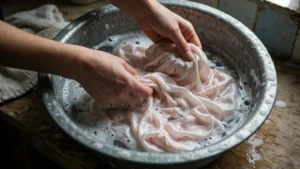
A silk blouse is a pleasure to wear and a small responsibility to own. The same fine fibres that make it drape beautifully also make it vulnerable to water marks, heat, and rough handling. A blouse that is washed the wrong way once can lose its sheen, shrink, or come out with marks that never quite leave.
The good news is that caring for silk is mostly about patience, not skill. Cool water, a gentle touch, and drying it flat will take you most of the way, and the few things you must never do are easy to remember once you know them.
Below is a step-by-step guide to caring for a silk blouse in 2027, from reading the label to storing it properly between wears. Each step explains what to do, what to avoid, and how long it takes, so you can keep a good blouse looking good for years. If you are still choosing your first one, our guide to buying your first silk blouse is a useful place to start.
Key takeaways
- Hand-wash silk in cool water with a gentle detergent, or dry-clean it if the label says so, and never use hot water or a harsh detergent.
- Never wring, twist, or tumble-dry silk; press water out gently and dry it flat, away from sun and radiators.
- Steam removes creases safely, while a hot iron can scorch silk and leave a permanent shine.
- Treat stains quickly with cool water and a little detergent, and never rub a stain into silk.
- Some silk blouses are dry-clean only, and home washing can shrink or damage them, so always read the care label first.
Why silk needs different care
Silk is a natural protein fibre, made by silkworms, and its structure is what gives it that smooth feel and soft sheen. The same structure is also what makes it delicate. Hot water can shrink it, strong detergents can strip its natural oils, and rough handling can break the fine fibres. Cotton and polyester forgive a lot of rough treatment. Silk does not, and that is the first thing to understand before you wash a silk blouse.
The second thing is water. Silk and water have a complicated relationship. A little cool water is fine, and it is how you wash silk by hand. But water can also leave marks on silk if it dries unevenly, which is why a splash on a dry blouse can leave a ring, and why you should never spot-clean silk with water alone.
The third thing is heat. Silk is damaged by high heat, whether from water, an iron, or a tumble dryer. A hot iron can scorch silk in seconds, leaving a shiny patch that does not wash out. A tumble dryer can shrink it and ruin the drape. Steam is different: it is gentle, it relaxes the fibres, and it is the safest way to remove creases. If you remember only one rule about silk, make it this one: cool water and steam are friends, hot water and a hot iron are not.
What you need before you start
You need very little, and you probably already own most of it. A clean basin or sink, cool water, a gentle detergent made for delicates or wool, a clean white towel, and a flat surface for drying are enough for hand-washing. A padded hanger is worth having for storage, because a wire hanger can leave marks on the shoulders of a silk blouse.

What you do not need is also worth knowing. You do not need a special silk wash, although a gentle detergent helps. You do not need fabric softener, which can coat silk and dull its sheen. You do not need bleach, which damages silk fibres and can yellow white silk. And you do not need a washing machine: even a delicate cycle is rougher than hand-washing, and the spin can crease and stress the fabric. The same gentle approach works for other silk pieces too, as our guide to caring for silk scarves shows.
Before you wash a blouse for the first time, test a hidden spot. Dab a little cool water and detergent on an inside seam, wait a few minutes, and check for colour change or stiffness. If the colour runs or the fabric feels different, take the blouse to a professional cleaner instead.
How to care for a silk blouse, step by step
Read the care label before anything else
What to Do: Read the label fully, including the symbols, and follow it even if it seems cautious. What to Avoid: Assuming a blouse is washable because it looks sturdy, or ignoring a dry-clean-only label. Best For: Every silk blouse, every time, before the first wash. Time Needed: Two minutes. Standout Tip: Photograph the label so you still have it if it fades.
The label comes from the maker, who knows the exact fabric and finish, so if it says dry-clean only, believe it.
Hand-wash in cool water with a gentle detergent
What to Do: Fill a clean basin with cool water, add a small amount of gentle detergent, and submerge the blouse for three to five minutes. What to Avoid: Hot water, harsh detergent, and leaving the blouse to soak for a long time. Best For: Washable silk blouses that are lightly soiled. Time Needed: Ten minutes. Standout Tip: Wash one blouse at a time so colours cannot transfer.
Move the blouse gently through the water with your hands, paying attention to the collar and cuffs, which carry the most wear. Do not scrub, and do not leave it soaking while you do something else.
Never wring or twist the fabric
What to Do: Lift the blouse out of the water and let it drip, then press it gently between your hands or against the side of the basin. What to Avoid: Wringing, twisting, or squeezing the fabric hard, which breaks fibres and sets creases. Best For: Every silk blouse, every wash. Time Needed: Two minutes. Standout Tip: Think of it as coaxing the water out, not forcing it.
Wringing is the single most common way people damage silk at home.
Rinse carefully and remove water gently
What to Do: Rinse in clean, cool water until the water runs clear, then lay the blouse flat on a clean white towel and roll the towel up to absorb the water. What to Avoid: Rinsing in warm water, or hanging a wet silk blouse, which stretches it out of shape. Best For: Every hand-wash, without exception. Time Needed: Five minutes. Standout Tip: Use a white towel so no dye can transfer to the silk.
The towel roll is the gentlest way to remove water from silk. Unroll it, lift the blouse out, and it will be damp but not dripping, which is exactly the state you want for drying.
Dry flat, away from direct sun and heat
What to Do: Lay the blouse flat on a dry towel or a mesh drying rack, smooth it into shape, and leave it in a shaded, ventilated room. What to Avoid: Direct sunlight, radiators, and hanging a wet blouse on a hanger. Best For: Every silk blouse, after every wash. Time Needed: A few hours, mostly unattended. Standout Tip: Turn the blouse over once halfway through drying so both sides dry evenly.
Sunlight fades silk and weakens its fibres, and heat from a radiator can do the same.
Steam, do not iron, to remove creases
What to Do: Use a handheld steamer held a few centimetres from the fabric, or hang the blouse in a steamy bathroom for ten minutes. What to Avoid: A hot iron directly on silk, which can scorch it and leave a permanent shine. Best For: Creases after washing, storage, or travel. Time Needed: Five to ten minutes. Standout Tip: Steam from the inside of the blouse first, where any mark would be hidden.
If you must use an iron, use the lowest silk setting, a pressing cloth between the iron and the fabric, and no steam burst. But a steamer is safer, quicker, and kinder to silk, and it is worth owning one if you wear silk often.
Treat stains quickly and gently
What to Do: Blot the stain with a clean cloth, rinse the area with cool water, and apply a little gentle detergent before washing the whole blouse. What to Avoid: Rubbing the stain, using hot water, or applying stain remover directly to dry silk. Best For: Food, drink, and makeup marks caught early. Time Needed: Five minutes, then a normal wash. Standout Tip: Blot from the outside of the stain inward, so it does not spread.
Speed matters more than strength with silk stains. A mark treated within minutes often comes out completely, while the same mark left overnight can set permanently, especially red wine and oil.
Store it properly between wears
What to Do: Hang the blouse on a padded hanger in a cool, dry cupboard, with space around it, or fold it loosely with acid-free tissue paper. What to Avoid: Wire hangers, plastic bags, and cramming it between heavy garments. Best For: Every silk blouse, between every wear. Time Needed: Two minutes. Standout Tip: A cedar block or lavender sachet keeps moths away without chemicals.
Silk needs air. A sealed plastic bag traps moisture, which can lead to mildew and a musty smell, while a wire hanger leaves dents in the shoulders that are hard to steam out.
Know when to take it to a professional cleaner
What to Do: Take the blouse to a cleaner you trust if the label says dry-clean only, if a stain has set, or if the blouse has beading, lining, or a delicate finish. What to Avoid: Trying to rescue a valuable or dry-clean-only blouse at home after a stain has set. Best For: Dry-clean-only blouses, set stains, and special-occasion pieces. Time Needed: A trip to the cleaner and a few days. Standout Tip: Point out the stain and what caused it, so the cleaner can treat it correctly.
A good cleaner is not a luxury for silk; it is part of owning it. The cost of a clean is small compared with the cost of replacing a blouse, and a cleaner can often save a stain that home washing cannot.
What damages silk most often
Water marks are the most common problem, and they usually come from a splash on a dry blouse, or from spot-cleaning with water alone. The mark is not dirt, but a change in the fibre where the water dried unevenly, and it is hard to remove once it has set. The best defence is to wash the whole blouse, so it dries evenly, rather than trying to clean one spot. If a blouse is already marked, a professional cleaner is the best hope, and even then the mark may not come out completely.
Heat damage is the second most common problem. A hot iron, a tumble dryer, or a radiator can scorch silk, leaving a shiny patch that does not wash out. Perspiration is the third, because the salts in sweat can weaken silk fibres and yellow light colours over time. Perfume and deodorant can also stain silk, so spray perfume before you dress, and let deodorant dry before you put a blouse on.
Snags and pulls are the last common problem, and they usually come from jewellery, rough bag straps, or Velcro. A snag does not always ruin a blouse: a fine needle can often ease a pulled thread back into place from the inside, but a torn fibre cannot be repaired. Keep bracelets smooth, avoid rough surfaces, and check the inside of a bag strap for exposed Velcro before you carry it over a silk shoulder.
The caveats that matter
Not every silk blouse can be washed at home, and that is the most important caveat in this guide. Some silk is labelled dry-clean only because of the dye, the finish, or the construction, and home washing can shrink it, fade it, or leave water marks that cannot be removed. If the label says dry-clean only, follow it, even if the blouse looks sturdy. The cost of a clean is small compared with the cost of a ruined blouse.
| Detail | What is known |
|---|---|
| Water temperature | Cool water only; hot water can shrink silk and set stains |
| Detergent | A gentle detergent for delicates or wool; no bleach, no softener |
| Washing method | Hand-wash for three to five minutes; no machine, no wringing |
| Drying | Flat, in shade, with good air flow; never tumble-dry or hang wet |
| Creases | Steam is safest; a hot iron can scorch silk permanently |
| Stains | Treat quickly with cool water and gentle detergent; never rub |
| Storage | Padded hanger or loose fold with tissue; no plastic bags |
| When to use a cleaner | Dry-clean-only labels, set stains, beading, or delicate finishes |
If a blouse has beading, sequins, a bonded lining, or a special finish, do not wash it at home, even if the silk itself seems washable. The trims and the construction are often more delicate than the fabric, and a cleaner will know how to handle them.
Checklist: caring for a silk blouse honestly
Use these checks before you wash, and again when you put a blouse away.
- Read the care label first, and follow it even if it seems cautious.
- Test a hidden seam with cool water and detergent before the first wash.
- Hand-wash in cool water with a gentle detergent, and never wring or twist the fabric.
- Dry flat in shade, away from radiators and direct sun.
- Steam creases out, and keep a hot iron away from silk.
- Store on a padded hanger with space around it, never in a plastic bag.
Frequently asked questions
Can I wash a silk blouse in the washing machine?
It is not recommended, even on a delicate cycle. A machine is rougher than hand-washing, the spin can crease and stress the fabric, and the temperature is harder to control. Hand-washing takes ten minutes and is far kinder to silk.
What detergent is safe for silk?
A gentle detergent made for delicates or wool is the safest choice. Avoid bleach, which damages silk fibres, and fabric softener, which coats silk and dulls its sheen. Use a small amount; more detergent does not mean cleaner silk.
How do I remove a stain from a silk blouse?
Blot it quickly with a clean cloth, rinse the area with cool water, and apply a little gentle detergent before washing the whole blouse. Never rub a stain, never use hot water, and take the blouse to a cleaner if the stain has set or the label says dry-clean only.
Can I iron a silk blouse?
Steam is safer than ironing. If you must use an iron, use the lowest silk setting, a pressing cloth between the iron and the fabric, and no steam burst. A hot iron can scorch silk in seconds and leave a permanent shine.
How should I store a silk blouse?
Hang it on a padded hanger in a cool, dry cupboard with space around it, or fold it loosely with acid-free tissue paper. Avoid wire hangers, plastic bags, and cramming it between heavy garments.
Why does my silk blouse have water marks?
Water marks happen when water dries unevenly on silk, usually from a splash or spot-cleaning with water alone. Wash the whole blouse so it dries evenly, or take it to a professional cleaner if the marks have set.
The bottom line
Caring for a silk blouse is mostly about patience: cool water, a gentle touch, flat drying, and steam instead of a hot iron. None of it is difficult, and none of it needs special equipment. The habits that matter are simple ones, and they are easy to keep once you know them.
Read the label, wash by hand or dry-clean as it directs, treat stains quickly, and store the blouse with space and air. Our roundup of the best silk blouses of 2027 is a good place to choose your next one, now that you know how to look after it.