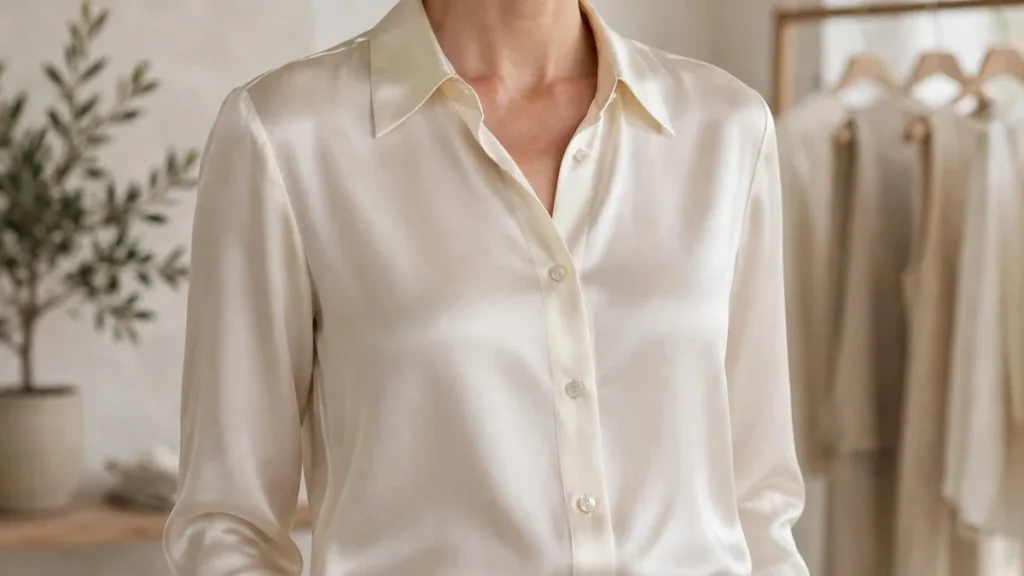
A silk blouse looks effortless the moment you put it on, yet choosing the right one for the first time can feel complicated. The fabric is light and cool, the sheen is soft rather than shiny, and the drape falls in a way that cotton rarely manages.
Not all silk blouses are alike, and the differences are not always visible in a photograph. Two blouses can look almost identical online and yet feel completely different. One may be smooth mulberry silk, while the other is a thin blend that clings and loses its shape.
This guide walks through the whole decision in plain language: which silk to look for, how to judge quality, how to get the fit right, which colours are the safest first choices, and how to care for the blouse once it is yours.
Key takeaways
- Look for 100% mulberry silk, in a momme weight of about 16 to 19.
- Choose crepe de chine for a first work blouse, charmeuse for evening, and a lined weave if you want to avoid sheerness.
- Try the blouse on with the trousers or skirt you will wear it with, and check the fit while you move.
- Inspect the seams, buttons, and hem: French seams and secure stitching are signs of a blouse made to last.
- Plan for the care before you buy: most silk blouses need hand washing or dry cleaning.
Start with how you will actually wear it
Before you look at a single blouse, think about your week. Do you need something for the office most days, or a top for evenings? Do you live in tailored trousers, or mostly in denim? A first silk blouse should match the life you already have.
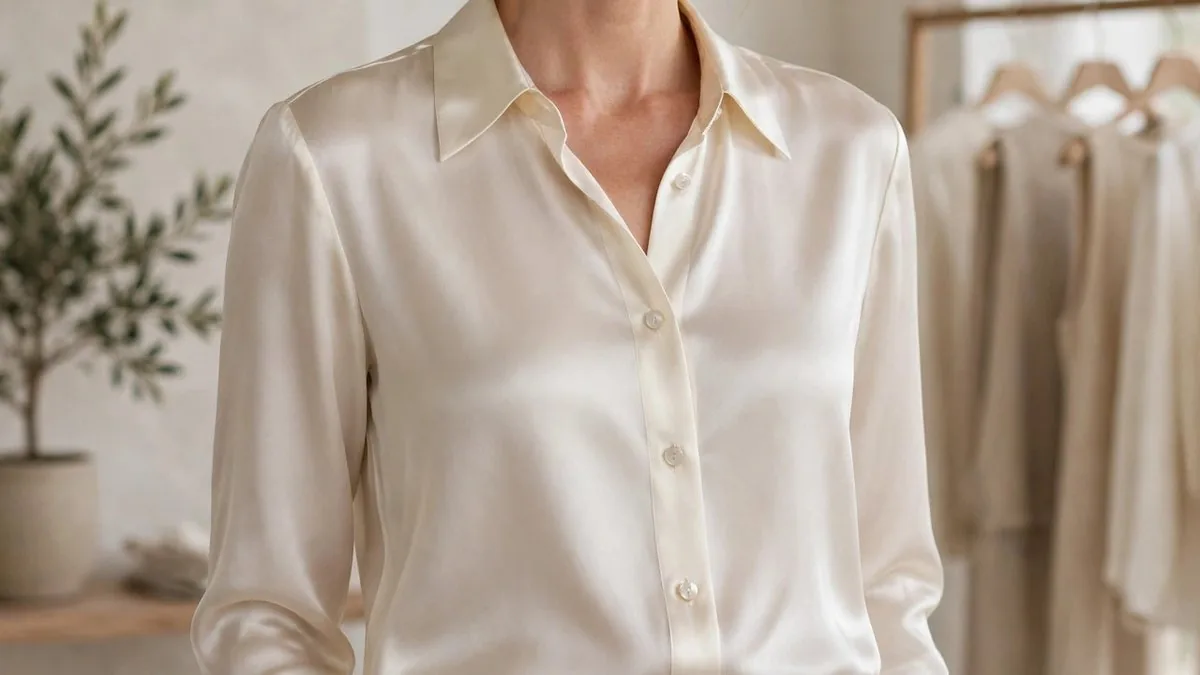
For work, the safest first choice is a classic button-front shirt in a solid colour, with long sleeves and a collar that sits neatly under a blazer. For evenings, a softer shape works better: a relaxed fit, a V-neck or tie neck, and a fabric with a little more shine. A sleeveless silk shell is useful under jackets, but it makes a better second purchase.
Understand the silk: types, weaves, and weight
Most silk used for blouses today is mulberry silk, from silkworms fed on mulberry leaves. It is smooth, uniform, and strong for its weight, and takes dye with real depth. When a label says 100% mulberry silk, that is the baseline to look for. Terms such as silk-like usually mean a synthetic fabric.
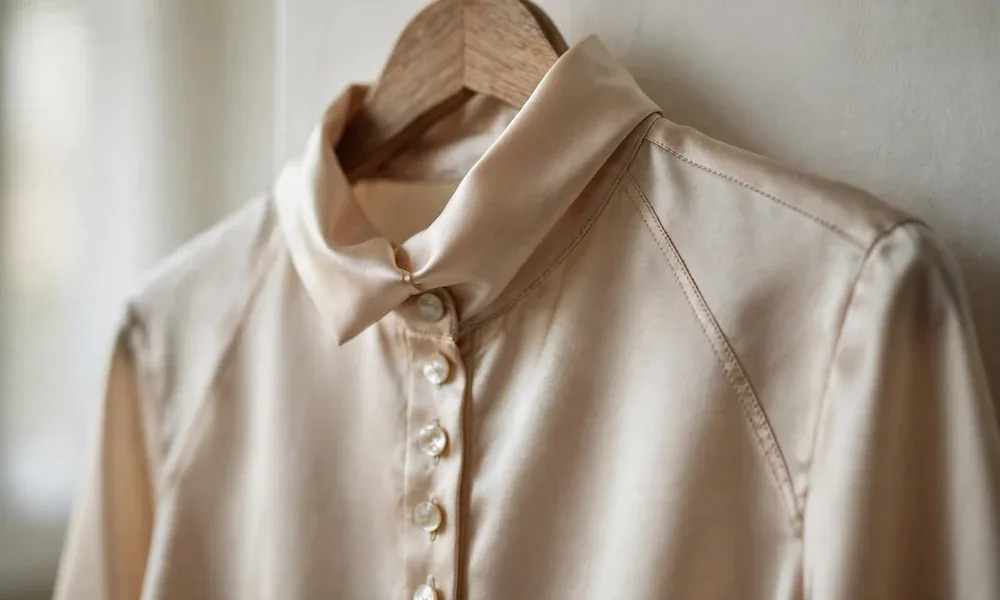
Weave matters as much as fibre, because it decides how the blouse moves and how opaque it is. Crepe de chine has twisted yarns that give it a faint pebbled texture and a soft, matte glow; it drapes beautifully and is the most practical weave for everyday wear. Charmeuse has a satin face and a matte back, so it catches the light, which makes it lovely for evening but a little slippery.
Weight is measured in momme, written as mm, and it tells you how dense the silk is. For blouses, about 16 to 19 momme is a good target: light enough to drape and breathe, yet substantial enough to feel smooth rather than flimsy. Below about 16 momme, silk can feel sheer. Above 19 momme, it becomes heavier, which suits dresses more than a soft blouse.
| Silk type or weave | Feel and look | Best for | Watch out for |
|---|---|---|---|
| Crepe de chine | Soft, matte, faintly pebbled | Work and everyday wear | Can look plain in very pale colours |
| Charmeuse | Smooth, glossy, fluid drape | Evening and special occasions | Shows water spots and slips on the body |
| Habotai | Light, soft, slightly sheer | Warm weather and layering | Needs a camisole and gentle handling |
| Silk chiffon | Sheer, airy, delicate | Layered looks and evenings | Snags easily and needs lining |
| Silk georgette | Sheer crepe with grip and bounce | Relaxed blouses and prints | Can feel dry and needs careful pressing |
| Silk satin | High shine, smooth, heavy drape | Formal and occasion wear | Shows every crease and mark |
| Silk twill | Fine diagonal texture, firm hand | Printed blouses and shirts | Less fluid than crepe or charmeuse |
| Raw or tussah silk | Textured, slightly slubbed, matte | Casual and rustic styles | Less smooth and harder to dye evenly |
If you want one safe answer, start with crepe de chine in a solid colour. It is the easiest silk to wear. Our guide to the best silk blouses of 2027 compares the styles that work best for different wardrobes.
How to read the label and judge quality
The care label is the most honest part of any blouse, so read it before you fall in love with the colour. It should state the fibre content clearly, for example 100% silk, and give care instructions you can follow. If the label is vague, or says silk blend without percentages, ask the shop.
Hold the fabric up to the light. Good silk should have an even weave with no thin patches or loose threads. Run your fingers across it: it should feel smooth and slightly warm, never plastic-cool or squeaky, which can be a sign of a synthetic fabric. Crush a small corner gently and let it go; crepe de chine should recover with soft folds.
Now look at the construction. French seams, which encase the raw edges, and flat-felled seams are signs of care, and they matter most on sheer silk. Check that the stitching is even and secure, with no skipped stitches, and that the buttons are sewn on firmly. A narrow rolled hem and a collar that lies flat are details that separate a well-made blouse from a rushed one.
Getting the fit right
Silk has no memory: it conforms to the body rather than springing back, so precise tailoring matters more, not less. A silk blouse should skim the body with a little ease, about one to two inches beyond your measurements, rather than pulling tight or hanging like a tent. If it pulls across the bust, the buttons will gape.
Start with your shoulders: the seam should sit at the edge of your shoulder, not drooping down the arm. Then check the bust and waist while you sit and reach forward, because a blouse that fits standing still can pull badly when you move. Try it on with the trousers or skirt you will wear it with.
Choosing a colour and style you will actually wear
The best first silk blouse is one you will reach for again and again, so choose a colour that already works with most of your wardrobe. Ivory, champagne, soft white, and black are the classic starting points: they go with tailored trousers, denim, and suits, and look as good at work as they do at dinner.
Bold prints and bright colours are tempting, but they are harder to wear often, because a strong print limits the outfits a blouse can join. Save the statement print for your second silk blouse. A classic collar and button front is the most versatile shape.
How much should you spend?
Silk blouses vary widely in price, and the most expensive option is not always the best one. A very cheap blouse that claims to be pure silk deserves a careful look at the label, because genuine mulberry silk and neat finishing all cost money. A high price may reflect a designer name rather than better silk, so judge the fabric in front of you.
Think in terms of cost per wear. A well-chosen silk blouse worn once a week for two or three years costs very little each time you put it on, while a cheaper blouse worn twice and then abandoned costs far more. Set your budget before you shop, and include the care costs. Keep the receipt until you have worn and washed the blouse once.
How to care for silk so it lasts
Silk is stronger than its reputation suggests, but it does need gentle handling. Always follow the care label first, because different weaves and dyes need different treatment. Most silk blouses are labelled dry clean only or hand wash in cool water with a mild detergent. Never use hot water or bleach, and never wring a silk blouse out: press the water out gently between clean towels.
To hand wash, fill a basin with cool water and a small amount of gentle detergent, and let the blouse soak briefly. Rinse in cool water, roll it in a towel, and lay it flat or hang it on a padded hanger to dry away from direct sunlight. Iron on a low setting while the fabric is slightly damp.
Your first silk blouse checklist
- Decide where you will wear it most, and choose a style and colour that fits that life.
- Check the label for 100% mulberry silk, about 16 to 19 momme, and care instructions you can follow.
- Hold the fabric to the light and check for thin patches or loose threads.
- Inspect the seams, buttons, and hem, and look for French seams and secure stitching.
- Try it on with the trousers or skirt you will wear it with, and move, sit, and reach in it.
- Confirm the return policy, keep the receipt, and plan the care routine before you buy.
Frequently asked questions
Is a silk blouse worth the price?
Yes, if you choose well and wear it often. Silk is breathable, comfortable in warm and cool weather, and it drapes in a way that few other fabrics match. A classic silk blouse in a neutral colour can be worn for years, which makes the cost per wear very reasonable.
What momme weight is best for a silk blouse?
About 16 to 19 momme is a good target for a first blouse. That range is light enough to drape and breathe, yet substantial enough to feel smooth and hold its shape. Lighter silk below 16 momme can feel sheer, while heavier silk above 19 momme is better suited to dresses. Always judge weight alongside the weave.
Can you wash a silk blouse at home?
Many silk blouses can be hand washed in cool water with a mild detergent, but always follow the care label. If it says dry clean only, follow that, especially for printed or sheer silk. When hand washing, never wring the fabric, and dry it away from direct sunlight.
How do you stop a silk blouse looking see-through?
Choose a slightly heavier weave such as crepe de chine, look for a lined yoke, and wear a camisole in a shade close to your skin tone underneath. Pale colours and lightweight weaves such as habotai and chiffon are the most likely to be sheer, so hold the blouse up to the light before you buy.
What should you wear with a silk blouse?
Almost anything, which is part of its appeal. For work, tuck it into tailored trousers or a pencil skirt with a blazer. For a relaxed look, wear it half-tucked into straight-leg jeans with loafers. For evenings, pair it with wide-leg trousers and one piece of jewellery. Keep the rest of the outfit simple so the silk itself is the focus.
How long should a good silk blouse last?
With gentle care, a well-made silk blouse should last for several years of regular wear. The most common reasons silk blouses fail are poor construction, harsh washing, and snags. Buying a blouse with good seams and following the care label will do more for its lifespan than any special product.
The bottom line
A first silk blouse should be a classic, not a gamble. Choose 100% mulberry silk in crepe de chine at about 16 to 19 momme, in a neutral colour and a button-front shape that fits with a little ease. Check the label, the seams, and the fit in person.
Once you have that first blouse, the rest of your wardrobe becomes easier to build. If you are planning the wardrobe around it, our guide to organizing your closet will help you make room for the pieces you love, and our look at the best luxury fashion brands of 2027 is a good place to explore what to add next.
Note: Silk weights, weaves, and care advice vary between makers, so treat the figures in this guide as a starting point and always follow the care label on the blouse you buy.