Old money style is the art of looking polished without ever looking like you tried: the navy blazer that fits perfectly, the camel coat worn for a decade that still looks new, the cream shirt that needs no logo. The look takes its name from inherited wealth, but it has very little to do with money. It is a set of choices about fit, fabric, colour and restraint, and anyone can learn them.
The style has surged again as people tire of fast fashion and trend-chasing. Search interest in quiet luxury, capsule wardrobes and timeless dressing keeps climbing, and the reason is simple: a wardrobe built on classic pieces lasts longer and is easier to get dressed in every morning. Old money style is the most disciplined version of that idea.
This guide explains what old money style actually is, where it comes from, the pieces and colours that define it, how it is evolving in 2027, and how to build the look yourself without buying a whole new wardrobe. You will also find a capsule table, a checklist and answers to the most-asked questions.
Key takeaways
- Old money style is about fit, fabric and restraint, not logos or price tags.
- The palette is narrow and muted: navy, cream, camel, grey, olive and white, with small doses of burgundy or forest green.
- Natural fibres do the heavy lifting: wool, cashmere, cotton, linen, silk and leather age better than synthetics.
- A few well-chosen pieces, tailored properly, beat a large wardrobe of trend-led items.
- In 2027 the look is softening: defined waists, polished lace-up shoes and heirloom-style accessories replace the plainest quiet-luxury staples.
What Old Money Style Actually Means
At its heart, old money dressing is the opposite of fashion. Trends arrive and disappear; this wardrobe barely moves. A navy blazer, grey flannel trousers, a cashmere jumper worn so often it has softened into the shape of its owner: these are the foundations. The clothes look like they could have been worn ten years ago and will still work ten years from now.
The aesthetic borrows from several traditions at once: the American Ivy League campus of the fifties and sixties, the English country house with its tweed and well-worn brogues, the Riviera summer of linen shirts and espadrilles, and the Milanese office, where tailoring is taken seriously but never worn stiffly.
It is worth naming what the look is not. It is not a claim about anyone’s actual finances or family history. As a style category it is simply a set of visual choices open to anyone. The goal is not to dress like you are wealthy; it is to dress like you prioritise quality.
The Core Principles
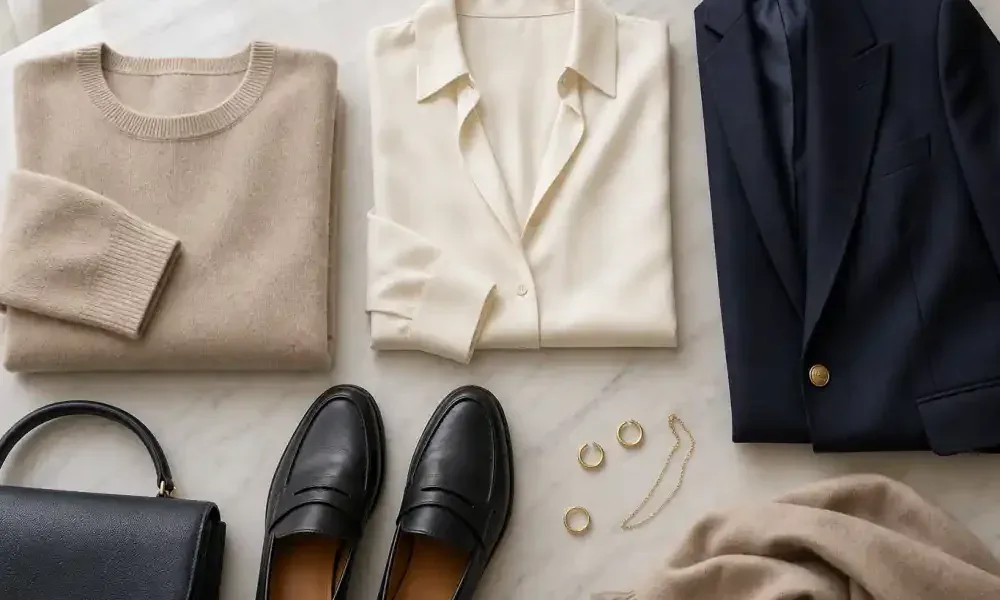
Four principles carry almost the whole look. The first is fit and proportion over labels. Old money style reads quiet because the loudest element is usually the silhouette: a clean shoulder line, a crisp waist, trousers that skim without clinging, hems that land exactly where they should. Tailoring matters more than the label.
The second principle is quality materials that wear well. Natural fibres hold their shape, drape better and develop a softness that synthetic blends do not. Wool, cotton poplin, linen, cashmere, silk, leather, suede and sturdy denim are the core fabrics. A cashmere sweater in a soft neutral is one of the fastest ways to lift an everyday outfit into this territory.
The third principle is a restrained colour story. The palette is not only beige: it is a mix of neutrals and deep classics that allow endless repetition without clashing. Navy, cream, camel, charcoal, white and soft grey carry almost every outfit, while forest green, burgundy and dusty blue arrive in small doses.
The fourth principle is understatement that still looks intentional. It means fewer competing focal points: one strong piece at a time, a great coat, a crisp shirt, a pair of polished loafers, with everything else supporting it. Logos stay hidden or absent, jewellery is simple, and nothing shouts for attention.
The Colour Palette
Colour discipline is a large part of why old money outfits always look coordinated, even when they are casual. Keeping to four to six hues means almost anything in the wardrobe works with anything else. Cream and ivory appear in sweaters, blouses and wide trousers. Camel and tan carry coats, trousers and bags. Navy anchors blazers, knitwear and trousers, while hunter green and burgundy work as outerwear and accessories. Black is used sparingly, mostly for evening.
The Essential Pieces for Women
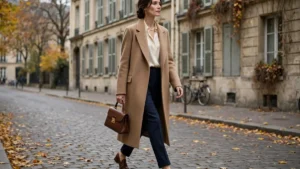
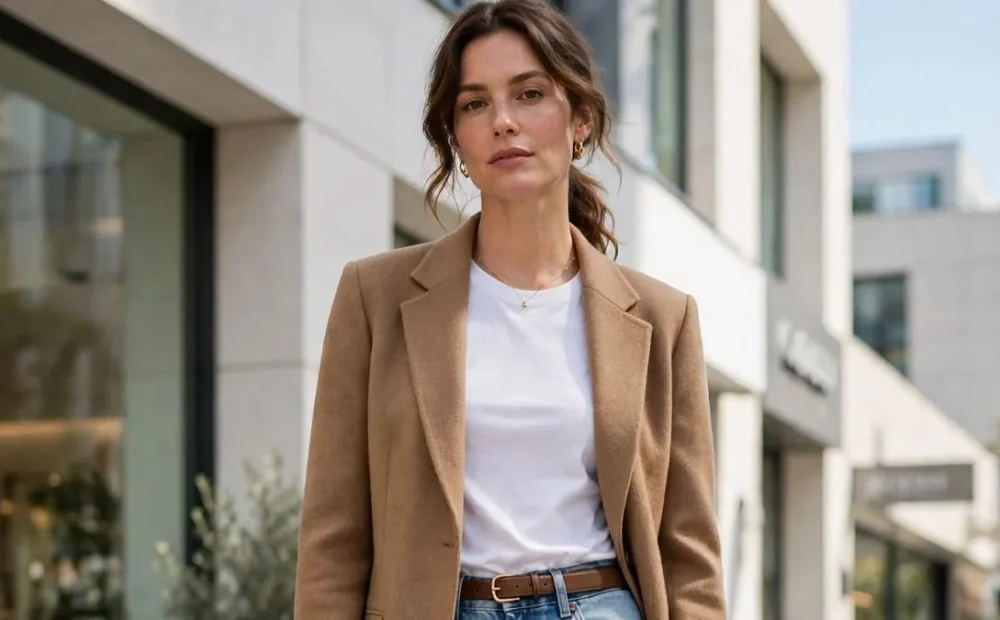
A camel coat is the single piece that does the most work in a women’s old money wardrobe. Long, in wool or cashmere, cut simply, it sits over almost everything and instantly sets the tone. Under it, silk blouses and crisp cotton shirts in cream, ivory and white, worn tucked into high-waisted tailored trousers or a knee-length A-line skirt, form the everyday base. A navy blazer, worn open over a simple top, is the most versatile jacket in the wardrobe.
Knitwear is the quiet heart of the look: cashmere or merino crew necks in navy, grey and camel, a cable knit for weekends, a fine polo knit layered over a collared shirt. For outerwear beyond the camel coat, the classic trench is the other pillar. It began as military wear in the United Kingdom and has barely changed since. A good guide to trench coats is worth reading before choosing one, since length, fabric weight and belt detail make all the difference.
Shoes stay polished and simple: penny loafers, suede ballet flats, plain white leather trainers for summer, and tall riding boots in tan or black for colder months. Bags are structured and unbranded, in smooth leather that ages and burnishes rather than peeling. Jewellery is minimal: a slim gold watch, a strand of pearls, small gold hoops, a signet ring.
The Essential Pieces for Men
For men, the navy blazer is the starting point. Single or double-breasted, in wool, hopsack or flannel, it works with grey trousers, chinos and even dark jeans, which makes it the most useful jacket a man can own. Oxford shirts in white and pale blue, with a button-down collar, slightly soft rather than crisp, sit underneath, with a few fine stripes for variety without noise.
Trousers are grey flannels, stone chinos and pleated wool trousers with a clean, short break over the shoe. Knitwear means cashmere or merino crew necks in navy, grey and camel, a cable knit for weekends and a shawl-collar cardigan for evenings at home. Outerwear is a navy or camel overcoat, a waxed field jacket or a classic trench, while shoes are penny loafers, suede chukka boots, brown brogues and plain white trainers for summer.
Old Money Style in 2027: What Has Changed
The look is not frozen in time, and 2027 is bringing noticeable shifts. Spring 2027 runway coverage shows the plainest version of quiet luxury losing ground: designers in New York, London, Milan and Paris moved toward gold, gloss and richer colour. The idea behind quiet luxury, buying fewer, better things, is stronger than ever, but the all-beige, logo-free uniform itself now feels dated.
Several concrete changes are worth knowing. Ballet flats are giving way to polished, menswear-inspired lace-ups: brogues, derbies and oxfords appeared at houses including Celine, Ralph Lauren and Bottega Veneta. Oversized silhouettes are yielding to the defined waist, with statement belts at Altuzarra, Celine and Ferragamo. The plain stealth-wealth tote is being replaced by bags that look like heirlooms, covered in embroidery or beading.
None of this breaks the old money formula; it refines it. The silhouette stays classic and the palette stays disciplined, but a little polish and personality are now welcome, and the best luxury fashion brands remain the reference point for this kind of tailoring.
A Starter Capsule: The Pieces That Matter Most
Twelve pieces are enough to build dozens of outfits in this style. The table below is a starting point, not a list to buy all at once: add one piece at a time, choose the best quality you can afford, and let the wardrobe grow slowly.
| Piece | Best colour | Best fabric | Wear it with |
|---|---|---|---|
| Navy blazer | Navy | Wool or hopsack | White shirt, grey trousers, loafers |
| Camel coat | Camel | Wool or cashmere blend | Almost everything, day and evening |
| White oxford shirt | White | Cotton poplin | Blazer, chinos, tailored skirt |
| Cashmere crew neck | Cream or grey | Cashmere or merino | Over a collared shirt, with trousers |
| Tailored trousers | Charcoal or navy | Wool | Silk blouse, knit, blazer |
| Classic trench coat | Stone or beige | Cotton gabardine | Shirt, trousers, loafers or boots |
| Penny loafers | Black or brown leather | Polished leather | Trousers, chinos, midi skirts |
| Structured leather bag | Black or tan | Smooth leather | Carried, never overstuffed |
How to Build the Look on Any Budget
Old money style rewards patience more than spending. Start with what you already own: a white shirt, dark trousers, a simple knit and leather shoes will already get you most of the way there. Then invest in fit before labels. A tailor can transform an ordinary blazer or pair of trousers for far less than a designer replacement.
Buy slowly and buy well. One good coat beats three average ones, and a wardrobe that grows by one considered piece a season will look better in five years than one bought in a weekend. Second-hand and vintage shops are natural allies here, since the pieces are by definition timeless. Care matters too: store knitwear folded and polish leather shoes.
The Checklist
- Choose four to six muted colours and keep every new purchase inside them.
- Tailor what you own before buying anything new.
- Pick natural fibres over synthetics wherever the budget allows.
- Hide the logos and let fit, fabric and silhouette do the talking.
- Keep accessories simple: one watch, one bag, one quiet piece of jewellery.
- Buy one considered piece at a time and care for it properly.
Frequently Asked Questions
What is old money style in simple terms?
It is a way of dressing built on tailoring, quality fabrics and restraint. The look favours classic pieces in muted colours, with no visible logos and nothing trend-led, so outfits look polished and timeless rather than fashionable for one season.
Is old money style the same as quiet luxury?
They overlap heavily, but they are not identical. Quiet luxury is a broader trend about understated, high-quality clothing, while old money style is a specific version of it rooted in Ivy League, English country and Riviera traditions, with a narrower palette and heritage pieces like tweed, loafers and the trench coat.
Do you need to be wealthy to dress old money?
No. The style is a set of choices about fit, fabric and colour, not a bank balance. Tailoring an affordable blazer, choosing natural fibres and keeping a disciplined palette will do far more than an expensive logo. Vintage pieces are often the best route to the look.
What colours define old money style?
Navy, cream, camel, grey, olive and white carry most outfits, with small doses of burgundy, forest green and oxblood as accents. Black is used sparingly, mostly for evening wear and shoes.
What is the most important old money piece to buy first?
A well-fitting navy blazer is the best first investment for both men and women, because it works with almost everything you already own. A camel coat comes second, followed by a quality knit in a neutral colour.
How is old money style changing in 2027?
The core stays the same, but the plainest beige version is fading. Spring 2027 runways show defined waists, polished lace-up shoes instead of ballet flats, richer colour and heirloom-style bags, so the 2027 version allows a little more polish, colour and personality.
The bottom line
Old money style endures because it is built on principles, not trends: fit over labels, natural fibres over synthetics, a narrow palette over novelty, and restraint over display. Those principles do not go out of fashion, which is why the wardrobe lasts for years. In 2027 the look is gaining a little warmth and polish, but its foundations have not moved.
Start small. Choose your colours, tailor what you own, add one good piece at a time, and let the wardrobe grow slowly. The result is not a costume; it is simply the calm confidence of being well dressed without ever needing to say so.
Note: Old money style is a fashion category, not a statement about wealth or background. The pieces and principles in this guide are open to everyone, whatever your budget.