A chain bracelet is the easiest piece of jewellery to wear every day, and the hardest to choose well. It looks simple, just links in a row, but the link shape, the weight, the clasp and the finish change everything. A fine cable chain disappears on the wrist and works with a watch. A chunky curb chain makes a statement on its own and needs nothing else. Buy the wrong one and it snags on knitwear, flips over, or sits in a drawer because it never feels quite right.
The good news is that chain bracelets are forgiving. Unlike a ring, there is no exact size to get wrong, and unlike a necklace, the length is easy to adjust. What matters most is matching the chain to how you actually live: whether you type all day, wash your hands often, or wear a watch on the same wrist.
Below are nine chain bracelets worth considering in 2027, from a classic gold curb chain to a delicate silver cable chain and a mixed-metal mariner link. Each one is described by what it does well, what to watch for, and who it suits best, so you can choose a chain you will actually wear, not one you admire in a box.
Key takeaways
- Chain bracelets suit everyday wear because they have no stones to catch and no exact size to get wrong.
- Link shape decides the look: curb and Cuban links read bold, cable and Figaro links read delicate, paperclip links read modern.
- A secure clasp matters more than the metal: look for a lobster clasp or a box clasp with a safety chain.
- Gold vermeil and gold-filled chains hold their colour far longer than gold-plated ones, and solid silver needs regular polishing.
- No chain bracelet is truly maintenance-free, and a bracelet that is too heavy or too loose will end up unworn, however beautiful it is.
What a chain bracelet actually is
A chain bracelet is a bracelet made from a series of connected metal links, worn around the wrist and closed with a clasp. That sounds obvious, but the definition matters because it separates chain bracelets from bangles, which are rigid circles, and from cuffs, which are open and hold their shape. A chain bracelet drapes. It moves with your wrist, folds flat when you take it off, and can be worn loose or close, depending on the length you choose.
The link is the whole design. In a curb chain, the links are twisted and flattened so they lie smooth against the skin. In a cable chain, the links are simple ovals, one after another, and the result is light and quiet. A Figaro chain mixes one long link with two or three short ones, which gives it a rhythm you can spot across a room. A rope chain twists two strands together so it catches the light from every angle, and a paperclip chain uses long, flat links that look clean and modern. Each link style has its own weight, its own shine, and its own tendency to tangle, snag or stay put.
Chain bracelets are also the most practical everyday bracelet. There are no stones to chip, no prongs to catch on a jumper, and no setting to loosen. The trade-off is that a chain bracelet shows its quality plainly: a well-made chain feels smooth, closes cleanly and keeps its colour, while a poorly made one feels rough, kinks, and turns dull within months.
How we chose these chain bracelets and what to look for
Look first at the link and the weight. A chain should feel balanced, not top-heavy, and the links should move freely without catching on each other. Run a finger along the inside of the bracelet. If it feels rough or scratchy, it will feel worse after eight hours on your wrist. A chain that is too light can feel insubstantial and kink easily, while a chain that is too heavy will slide down your wrist all day and tire your arm.
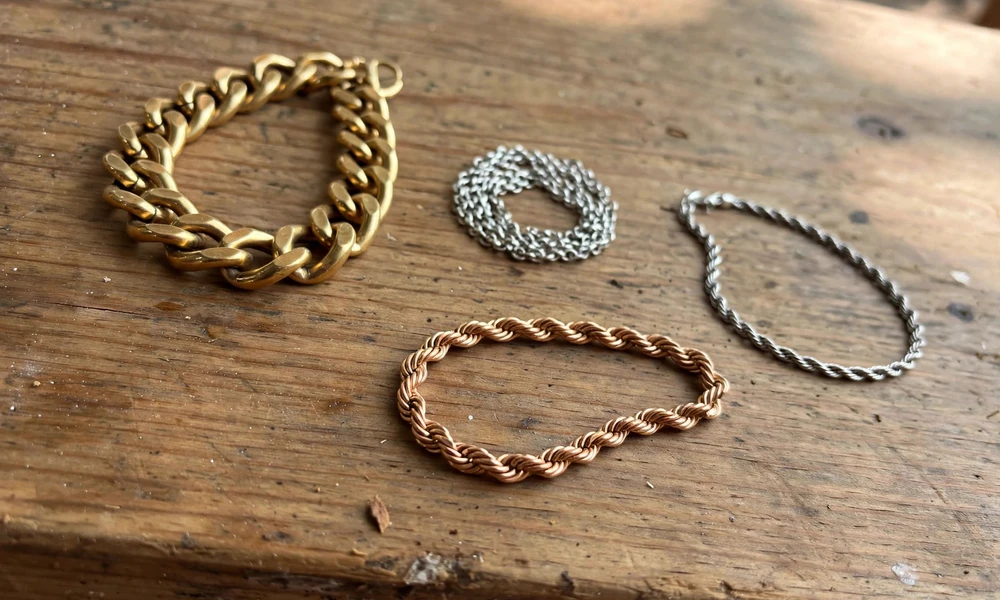
Look next at the clasp and the length. A lobster clasp is the most reliable everyday choice, and a box clasp with a safety chain is the most secure. Avoid a simple spring ring on a heavier chain, because it can work itself open. On length, measure your wrist and add about one to two centimetres for a close fit, or two to three for a looser drape. A bracelet that is too tight will leave marks and feel uncomfortable by evening, while one that is too loose will slide over your hand and catch on everything. The same idea applies here: a tape measure and two minutes will save you a return.
Finally, look at the metal and the finish. Gold-filled and gold vermeil chains hold their colour much longer than gold-plated ones, which can wear through to the base metal within a year of daily wear. Solid sterling silver is durable and easy to polish, but it tarnishes and needs regular care. Stainless steel is the most low-maintenance option and suits people who swim or wash their hands often. If you wear a watch on the same wrist, choose a chain in a similar tone and check that it does not scratch the watch case.
The 9 best chain bracelets for everyday 2027
The Classic Gold Curb Chain Bracelet
What we like: A timeless curb chain in warm gold, with flattened links that sit smooth against the wrist, a secure lobster clasp, and a weight that feels substantial without being heavy.
What to consider: The links can catch on fine knitwear if the bracelet is worn loosely, and a gold finish needs occasional cleaning to keep its shine. Best for: Everyday wear, alone or beside a watch. Material: Gold vermeil over sterling silver. Price range: Mid-range. Standout feature: The smooth, flat links that never twist.
The Slim Silver Figaro Chain Bracelet
What we like: A slim Figaro chain in bright sterling silver, light on the wrist, with a long-short link pattern that adds interest without bulk, and a clasp that is easy to fasten one-handed.
What to consider: Silver tarnishes, so it needs a polish every few weeks, and the slim links are less suited to very rough handling. Best for: Office wear, layering, and sensitive skin that prefers silver. Material: Sterling silver. Price range: Affordable to mid-range. Standout feature: The rhythmic long-and-short link pattern.
The Gold Paperclip Chain Bracelet
What we like: A modern paperclip chain in gold, with long, flat links that lie neatly on the wrist, a clean silhouette, and a look that feels current without chasing a trend.
What to consider: The flat links can show scratches more readily than a round link, and the modern look suits some wardrobes more than others. Best for: Minimal outfits, modern styling, and wearing with a plain watch. Material: Gold-filled. Price range: Mid-range. Standout feature: The long, flat links that catch the light in a single line.
The Two-Tone Rope Chain Bracelet
What we like: A rope chain in two tones, gold and silver twisted together, which catches the light from every angle and pairs with both gold and silver jewellery.
What to consider: The twisted links can trap moisture and need drying after washing, and two-tone pieces are a matter of taste. Best for: People who wear both gold and silver and want one bracelet that goes with both. Material: Gold and silver tones over stainless steel. Price range: Affordable to mid-range. Standout feature: The twisted rope texture that sparkles as you move.
The Chunky Cuban Link Bracelet
What we like: A bold Cuban link bracelet with thick, interlocking links, a strong box clasp with a safety chain, and a confident weight that makes it a statement piece on its own.
What to consider: It is heavy, so it suits looser wear, and it can overwhelm a slim wrist or a delicate outfit. Best for: Evenings, statement styling, and anyone who wants one bold piece. Material: Gold vermeil over sterling silver. Price range: Mid-range to premium. Standout feature: The thick, interlocking links and the secure box clasp.
The Delicate Cable Chain Bracelet
What we like: A fine cable chain in gold, almost weightless, with small oval links and a neat lobster clasp, that sits close to the wrist and never gets in the way.
What to consider: Fine links can kink if the bracelet is stored carelessly, and the delicate look suits a light touch rather than rough handling. Best for: Daily wear with a watch, layering, and small wrists. Material: Gold-filled. Price range: Affordable. Standout feature: How light it feels, like wearing almost nothing.
The Gold Rolo Chain Bracelet
What we like: A rolo chain in gold, with round, even links that roll smoothly over the wrist, a sturdy feel for its weight, and a classic look that never dates.
What to consider: The round links can show wear at the joins over time, and the style is traditional rather than fashion-forward. Best for: Classic styling, everyday wear, and anyone who likes a smooth, even chain. Material: Gold vermeil over sterling silver. Price range: Mid-range. Standout feature: The round links that roll rather than lie flat.
The Mixed-Metal Mariner Chain Bracelet
What we like: A mariner chain in mixed metals, with oval links and a central bar, that reads nautical without being themed, and pairs with both warm and cool tones.
What to consider: The bar detail can catch on loose sleeves, and the mixed-metal look is bolder than a single tone. Best for: Summer wear, casual outfits, and mixing metals. Material: Stainless steel with gold-tone accents. Price range: Affordable to mid-range. Standout feature: The mariner link with its central bar, which sets it apart from every other chain.
The Pearl and Chain Bracelet
What we like: A fine chain bracelet with small freshwater pearls spaced along its length, which softens the metal, adds a classic touch, and works for both day and evening.
What to consider: Pearls need gentle care, away from perfume and water, and the bracelet is dressier than a plain chain. Best for: Dressier days, weddings, and anyone who likes pearls without a full pearl strand. Material: Freshwater pearls with a gold-filled chain. Price range: Mid-range. Standout feature: The pearls, spaced evenly so the chain still shows.
Adding pearls softens the metal and makes the bracelet dressier, while the chain keeps it modern. Our guide to the best everyday bracelets includes more pieces in this spirit, if you want to compare styles before you decide.
Which chain bracelet is right for you
Start with your wrist and your day, not with a photo. If you type all day, a slim, smooth chain such as a cable or Figaro will stay out of the way, while a chunky Cuban link will rest on the desk. If you wear a watch on the same wrist, choose a chain in a similar tone and a similar weight, so the two pieces sit together instead of competing. If you wash your hands often or swim, stainless steel or gold-filled will cope far better.
Then think about how much jewellery you like to wear at once. If you like one piece and nothing else, a bold chain such as a curb or Cuban link will carry the look. If you like to layer, choose a fine chain, a cable or a paperclip, that leaves room for a second bracelet or a bangle. A chain bracelet that is too heavy or too loose will end up unworn, however beautiful it is, so comfort is not a minor detail. It is the whole point of an everyday bracelet.
Finally, think about the metal you already own. If your rings are gold, a gold chain will tie your jewellery together, and if your watch is silver, a silver or two-tone chain will do the same. A link bracelet guide is worth a look if you want to compare link styles side by side.
The caveats that matter
Chain bracelets are practical, but they are not indestructible. The most common problems are a clasp that opens, usually a weak spring or a clasp too small for the chain’s weight, a link that kinks, usually from tangled storage, and a finish that wears through, almost always gold plating, which cannot be repaired at home once it wears.
| Detail | What is known |
|---|---|
| Best everyday link | Curb, cable or Figaro, smooth links that sit flat and do not snag |
| Most secure clasp | Lobster clasp, or a box clasp with a safety chain for heavier pieces |
| Best fit | Wrist measurement plus one to two centimetres for a close fit |
| Most durable finish | Gold-filled and gold vermeil hold colour far longer than gold-plated |
| Lowest maintenance metal | Stainless steel, which resists tarnish and water |
| What to avoid | Gold-plated chains for daily wear, and spring-ring clasps on heavy chains |
| Storage | Flat or hanging, never tangled, and kept dry and away from perfume |
| What they do not do | They do not suit very formal dress on their own, and fine chains kink if stored badly |
If you have a metal allergy, choose stainless steel, titanium, or a high-quality gold-filled chain, and avoid nickel-heavy base metals. If your bracelet starts to feel rough, snag on clothing, or open on its own, take it to a jeweller rather than forcing the clasp. A small repair is cheap, and a lost bracelet is not.
Checklist: choosing a chain bracelet honestly
Use these checks before you buy, and again after a week of wearing it.
- Check the links: they should move freely, feel smooth on the inside, and lie flat without twisting.
- Check the clasp: a lobster clasp or a box clasp with a safety chain, easy to fasten one-handed.
- Check the fit: one to two centimetres looser than your wrist for a close fit, and it should not slide over your hand.
- Check the metal: gold-filled or gold vermeil for lasting colour, stainless steel for low maintenance, silver if you do not mind polishing.
- Check the weight: it should feel balanced, not top-heavy, and comfortable after a full day.
- Check the wear: after a week, look for kinks, a loose clasp, or colour wear, and return it if any appear.
Frequently asked questions
What is the best chain bracelet for everyday wear?
A medium-weight curb, cable or Figaro chain in gold-filled or stainless steel, with a lobster clasp, is the safest everyday choice. It is smooth, secure, and easy to wear with a watch or on its own.
How tight should a chain bracelet be?
It should sit close to the wrist without pinching, with about one to two centimetres of slack for a close fit. You should be able to slip one finger under it, but it should not slide over your hand.
Do chain bracelets tarnish?
Silver tarnishes and needs polishing, gold-plated chains wear through to the base metal, and gold-filled, gold vermeil and stainless steel hold their colour far longer. Store your bracelet dry and away from perfume to slow tarnish.
Can I wear a chain bracelet with a watch?
Yes, and most people do. Choose a chain in a similar tone and weight to your watch, and wear the bracelet on the same wrist, beside the watch, or on the opposite wrist if the chain is chunky. Our guide to layering bracelets explains how to stack a chain with other pieces without tangling.
Are chain bracelets suitable for work?
Yes, a slim, quiet chain such as a cable or Figaro is ideal for work, because it does not make noise, catch on a keyboard, or distract. Save chunky Cuban or rope chains for evenings or days when you want a statement.
How do I stop a chain bracelet from tangling?
Store it flat or hanging, never in a tangled pile, and fasten the clasp before you put it away. If it tangles, tease the links apart gently on a flat surface, rather than pulling.
The bottom line
The best chain bracelet for everyday wear in 2027 is not the boldest or the most expensive. It is the one that fits your wrist, suits your metal, fastens securely, and feels comfortable after a full day. A medium curb or Figaro chain in gold-filled or stainless steel is the safest first choice, and a fine cable chain is the easiest to layer with a watch.
Choose one chain, wear it for a week, and judge it on how it feels at the end of the day, not on how it looks in the box. A chain bracelet you reach for every morning is worth far more than a beautiful one you leave behind.